
Reliable, low-maintenance heat for Athens County winters.
Thermostat-controlled warmth for the hollows and hilltops of Athens County—from Athens and Nelsonville to The Plains and Glouster. We'll help you find the right pellet stove and connect you with a trusted local dealer.
Every Project Starts From One of These Five Situations
Convenient heat for Appalachian Ohio's hills and hollows.
Athens County sits on the unglaciated Allegheny Plateau in southeastern Ohio—steep ridges, narrow hollows, and a Hocking River valley that runs through the middle of it, with Wayne National Forest holding land along the county's edges. Winters here average lows around 22°F, with a heating season that stretches on for roughly seven months of steady cold—real cold, though nothing close to the depths of Duluth or International Falls. It's the kind of climate where a home needs steady, dependable heat for months at a stretch, not just an occasional cold snap.
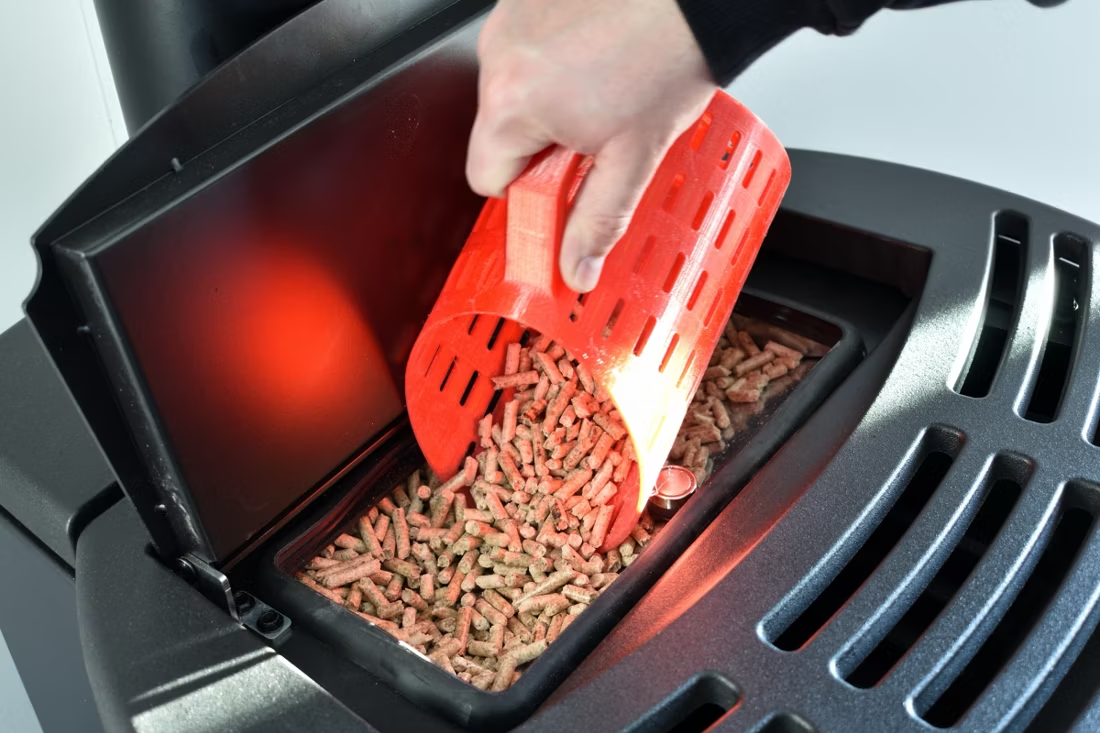
The oak, hickory, maple, and cherry that fill the hardwood forests around Athens, Glouster, and Amesville have long supported wood heat in this county, but pellet stoves have carved out a real niche for homeowners who want that same radiant warmth without splitting, stacking, or hauling cordwood. Athens County has no air quality non-attainment issues or winter burn curtailments, so the appeal of pellet heat here is less about regulation and more about convenience—a hopper you fill every day or two, thermostatic control, and a clean, steady burn. Regional pellet supply runs through brands like Lignetics, Somerset Pellet Fuel, and Indeck Energy Services, all of which distribute into Appalachian Ohio.
Three steps. No salesperson until you're ready.
Tell us about your project
Your zip code, your situation, and the fuel you're leaning toward—or let the answers point you to one.
See what's actually available
The brands dealers within 100 miles genuinely carry—real options, never a catalog mirage.
Get your dealer & Project Guide
A trusted local dealer, plus the free Project Guide & Parts List that names every component of the job.
Frequently Asked Questions
How much does a pellet stove installation cost in Athens County?
Pellet stove and insert installations in Athens County generally run in the $3,000 to $6,000 range, with the total depending on the unit, whether you're venting through an existing masonry chimney or need a new through-wall vent kit, and whether electrical work is needed for the hopper and blower. Older Athens County farmhouses and historic homes near downtown Athens often need a fresh vent run since many weren't built with a masonry flue at all; homes converting an existing wood fireplace to a pellet insert tend to land on the lower end. A local dealer will give you a firm number after seeing your chimney or wall setup in person.
What's the difference between a pellet stove and a pellet insert?
A pellet stove is a freestanding unit that sits on the floor and vents through an exterior wall or existing chimney—it can go almost anywhere in a home, including additions or rooms without a fireplace. A pellet insert is built to slide into an existing masonry fireplace opening, using a stainless liner run up the old chimney as its vent path. For Athens County's older housing stock—plenty of it built in the 1800s and early 1900s around Athens, Nelsonville, and Glouster with a masonry fireplace already in place—an insert is often the simpler retrofit. Homes without an existing fireplace, or newer construction in areas like The Plains, are usually better matched to a freestanding stove.
Where can I buy pellet fuel in Athens County?
Regional pellet supply in and around Athens County runs through brands like Lignetics, Somerset Pellet Fuel, and Indeck Energy Services, along with farm and hardware retailers that stock bagged pellets seasonally. Buying by the ton—usually delivered on a pallet of 40-to-50-pound bags—is typically the most cost-effective route and worth arranging before the first cold snap in November, since supply can tighten mid-winter. Your local dealer can point you toward whichever brand burns cleanest in the specific stove model you choose, since ash content and BTU output vary noticeably between pellet brands.
Do I need a permit to install a pellet stove in Athens County?
In most cases, yes—a new pellet stove or insert that requires a wall penetration or new venting typically needs a building permit, whether you're inside the City of Athens or in one of the county's townships. Your local dealer typically handles the permit application as part of the installation, so it's rarely something you have to manage yourself. Because Athens County has no air quality non-attainment designation or winter burn restrictions, permitting here is strictly about safe venting and clearances—not about emissions curtailment like you'd see in some western states.
What size pellet stove do I need for my home?
Sizing depends on square footage, ceiling height, and how drafty the house is—and Athens County's older housing stock (plus homes tucked into hollows that hold cold air longer than ridge-top properties) often runs a bit leakier than newer construction. As a rough guide: smaller units in the 40,000–50,000 BTU range suit a single large room or a well-insulated 1,000–1,500 square foot home; larger units above 60,000 BTU are better for whole-home heating in bigger farmhouses or homes with high ceilings. A local dealer can size your specific home during an in-person visit—undersizing is the most common mistake, since a hopper that runs constantly on the coldest nights burns through pellets fast without keeping up.
What's the best pellet stove for Athens County's climate?
For a climate like Athens County's—cold but not extreme, with lows regularly in the 20s from December through February—most mid-size pellet stoves from established manufacturers handle the job well. Look for a larger hopper capacity (40+ pounds) if you want to go a full day or overnight without refilling, and auto-ignition if convenience matters more than shaving a few dollars off the unit price. Homes in the county's hillier, more exposed spots may want to size up slightly compared to sheltered valley properties. A local dealer familiar with the terrain around Nelsonville, Glouster, or Athens proper can steer you toward the right model for your specific setup.
How much maintenance does a pellet stove need?
Pellet stoves need more frequent attention than gas but less than wood: expect to empty the ash pan every few days to weekly depending on use, and clean the burn pot and glass regularly to keep combustion efficient. Most manufacturers recommend a full professional service and venting inspection once a year, ideally before the season starts in the fall. Because pellet stoves rely on a auger motor and combustion blower, keeping those components clean and lubricated matters more than it does for a simple wood stove—a service technician can handle this during the annual visit.
Will my pellet stove work if the power goes out?
No—this is the one honest tradeoff worth knowing before you buy. Pellet stoves rely on an electric auger to feed fuel and a blower to circulate heat, so they shut down the moment power is lost. That matters in Athens County, where ice storms and downed lines through the county's wooded hollows can knock out power for hours or, occasionally, days. Some homeowners pair a pellet stove with a small battery backup or generator specifically to keep the auger and blower running during outages; others keep a wood-burning option as backup heat. It's worth discussing with your local dealer if outage resilience matters for your household.
Pellet stove vs. wood stove—which is right for my Athens County home?
Wood stoves burn cordwood from the oak, hickory, maple, and cherry that fill the hills around Athens County, work without electricity, and give you the most heat per dollar if you're cutting or buying local firewood. Pellet stoves trade some of that self-sufficiency for real convenience—no splitting or stacking, more consistent heat output, and a cleaner burn with less ash—but they need electricity to run, so they're not a fallback during an outage. For Athens County homeowners with access to hardwood and a tolerance for the extra work, wood still makes sense. For those who want steady, hands-off heat and don't mind an occasional electric dependency, pellet is usually the better everyday fit. Local dealers carry both, and can walk through the tradeoffs based on your specific property.
Why is a fireplace insert so efficient?
An insert does two things: it seals the chimney completely, so you stop losing air you already paid to heat, and it radiates warmth into the room through the firebox and glass. Most add a heat-exchange fan that pulls cool room air underneath, wraps it around the hot firebox, and pushes it back out warm. Your home is more efficient before you've even lit the first fire.
What's the difference between an insert and a zero-clearance fireplace?
An insert is a fireplace that slides into a pre-existing wood-burning fireplace—if you don't have one, there's nothing to insert it into. A zero-clearance fireplace is built into a framed wall, which makes it the answer for remodels and new construction. Simple test: existing masonry fireplace means insert; blank or framed wall means zero-clearance.
How much should I budget for a fireplace?
For an average home—covering the fireplace, the vent pipe, and basic installation—a budget between $3,900 and $5,500 gives you a lot of options across wood, gas, and pellet. By the time you add finish work, gas line, and electrical, the average complete installation lands between $5,000 and $12,000 all-in. In a remodel or new build, a good rule is to put about 2.5% of the total project cost toward the fireplace.
What is an in-home preview and do I need one?
It's a visit where a hearth professional measures your space, confirms the model you picked actually works in your home, and walks the specs—framing, gas line, venting, finish work—before anything is ordered. Some details you just can't know until you see the house. Never make a down payment without one; it's the single most-skipped step that burns buyers.
Stove and Fireplace Dealers in Athens County
Pellet Brands Stocked Around Athens County
Manufacturers will point you to the nearest stocking dealer.
Find your pellet stove in Athens County.
Tell us a bit about your home and we'll put together a free Project Guide & Parts List—the right pellet stove or insert, the vent kit it needs, and a trusted local dealer to install it.
Find Your Fireplace →