
Reliable gas heat for Athens County's hill-country winters.
From downtown Athens to Nelsonville, Glouster, and the farm roads around Chauncey and Amesville, gas fireplaces deliver instant heat without hauling wood up a hillside driveway. Find the right unit and get matched with a trusted local dealer.
Every Project Starts From One of These Five Situations
Steady warmth for the hills between Athens and Nelsonville.
Athens County sits in the Appalachian foothills of southeastern Ohio, home to Ohio University and a landscape of steep ridges, hollows, and river valleys along the Hocking. With roughly 5,400 heating degree days and winter lows averaging in the low 20s, the cold season here runs a solid five to six months—milder than places like Madison, WI or Minneapolis, but long enough that a supplemental or primary gas fireplace earns its keep every winter. Older housing stock is common throughout the county, from Victorian-era homes near the Athens historic district to farmhouses scattered through Trimble, Glouster, and Coolville, and many of these homes already have a masonry fireplace that's a natural fit for a gas insert.
Columbia Gas of Ohio serves much of the city of Athens and the more built-up parts of the county; homes further out—around Amesville, Chauncey, or the ridge roads near The Plains—more commonly run on propane from a regional supplier. Either fuel path gets you the same result: heat at the flip of a switch or the press of a remote, no wood to split or stack, and, with the right ignition system, a fireplace that still works when an ice storm on the county's hilly back roads knocks the power out. For a lot of Athens County households, that reliability during winter outages is as big a draw as the convenience.
Three steps. No salesperson until you're ready.
Tell us about your project
Your zip code, your situation, and the fuel you're leaning toward—or let the answers point you to one.
See what's actually available
The brands dealers within 100 miles genuinely carry—real options, never a catalog mirage.
Get your dealer & Project Guide
A trusted local dealer, plus the free Project Guide & Parts List that names every component of the job.
Frequently Asked Questions
How much does a gas fireplace installation cost in Athens County?
Costs vary with the unit, the venting path, and whether new gas line work is needed, but a typical gas fireplace or insert installation in Athens County runs roughly $4,000 to $10,000. A direct-vent insert going into an existing masonry fireplace—common in the older homes around downtown Athens and Nelsonville—tends toward the lower end if a gas line is already nearby. New construction or a fireplace built into a wall from scratch, with fresh venting and gas line runs, sits higher. Homes on propane that need a new tank installed will also see costs shift upward. A local dealer can give you a firm number after seeing the space.
Can I convert my existing wood-burning fireplace to gas in Athens County?
Yes, and it's a common upgrade in the county's older homes—plenty of houses near the Ohio University campus and out along the county roads toward Glouster and Chauncey still have the original masonry fireplace. A gas insert typically slides into that existing firebox and vents through a stainless liner run up the same chimney, which keeps the cost down compared to building new venting. Whether the final hookup runs to natural gas or a propane line depends on which fuel serves that address—your dealer will confirm before quoting the job.
Is natural gas available in Athens County, or will I need propane?
It depends on where in the county you are. Columbia Gas of Ohio provides natural gas service to the city of Athens and the more densely built areas nearby. Outside those service areas—much of rural Athens County, including areas around Amesville, Coolville, and the ridges above The Plains—propane from a local supplier is the standard option. Most gas fireplace models can be set up for either fuel with the correct orifice and regulator, so fuel availability affects your setup cost more than your choice of fireplace.
Will a gas fireplace still work if the power goes out?
Most will, which matters in a county where ice storms on hilly, tree-lined roads can knock out power for hours or longer. Units with intermittent pilot ignition (IPI) run on a small battery backup that kicks in the moment the power drops, so the fireplace lights and runs as normal. Valor fireplaces go a step further—their pilot assembly generates its own electricity through the thermocouple, so there's no battery to remember to replace. Ask your local dealer about the ignition system on any model you're considering if outage backup matters to you.
What's the difference between a gas fireplace, insert, and stove?
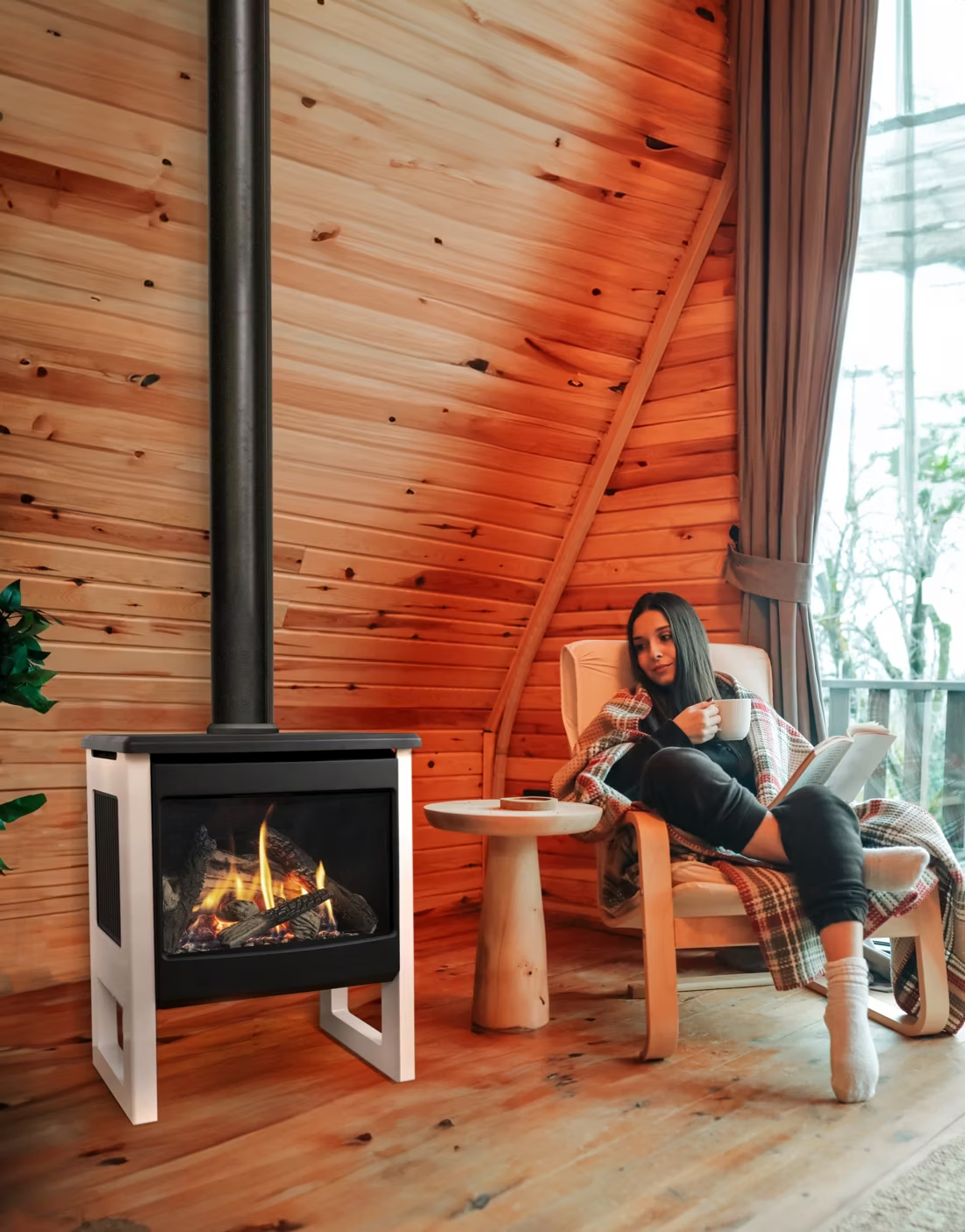
A gas fireplace is a fully built-in unit framed into a wall—the right choice for new construction or a remodel without an existing hearth. A gas insert is sized to slide into an existing masonry firebox, which fits a lot of the older homes scattered through Athens, Nelsonville, and the county's rural townships. A gas stove is a freestanding cabinet-style unit that sits on the floor like a wood stove but runs on gas or propane—a good option for a room with no chimney at all. Most homeowners with an existing fireplace they want to upgrade end up choosing an insert.
Do I need a permit to install a gas fireplace in Athens County?
Most new gas fireplace installations require both a building permit and a gas line permit, whether you're inside Athens city limits or in unincorporated parts of the county. The gas line portion has to be run by a licensed gas-fitter, which is one of the reasons it's worth using a certified hearth dealer rather than a general handyman—they coordinate the permit, the gas work, and the final inspection as one job instead of three separate headaches. Check with your local building department for the exact permit process at your address.
Should I choose a vented or vent-free gas fireplace?
Vented (direct-vent) gas fireplaces draw combustion air from outside and exhaust it back outside through sealed venting—they're the standard recommendation almost everywhere, including Athens County, because they don't affect indoor air quality. Vent-free units burn directly into the room and are legal in Ohio, but they come with strict room-sizing rules and require an oxygen depletion sensor. For most Athens County homes, direct-vent is the simpler, more universally recommended choice, and it's what most local dealers will steer you toward for a primary living space.
How often does a gas fireplace need to be serviced?
Plan on an annual inspection, ideally before the cold really sets in each fall. A technician checks the burner, pilot assembly, venting, and any gas connections, and cleans the glass and interior. It's a lighter lift than sweeping a wood chimney, but skipping it is how pilot and ignition problems go unnoticed until the coldest week of the year—not when you want to discover it in a county where a service call might mean a drive out past Chauncey or Trimble.
Gas vs. wood—which makes more sense for an Athens County home?
Wood has deep roots here—Athens County's hillsides are thick with oak, hickory, maple, and cherry, and there's no local air quality restriction on burning, unlike counties dealing with winter inversions. Wood also keeps working with the power off, which matters on the more remote ridge roads. Gas trades that self-sufficiency for convenience: instant heat with no splitting, stacking, or ash cleanup, and steadier output for a primary living space. A lot of households in the county end up with both—gas in the main room they use daily, and a wood stove or insert somewhere else as backup heat for when winter storms take the power down.
Can I put a TV above my fireplace?
Yes—with an asterisk. Fireplaces are hot and TVs don't like heat. Either put a mantel between them to deflect rising warmth, or choose a fireplace with heat-management technology that creates a cool zone on the wall above—the wall stays around 125 degrees, barely warm, while the room still gets full heat. If you like clean lines and don't want a mantel, heat management is the answer.
Is my gas fireplace wasting gas?
If it was installed more than 15 years ago, probably. Older gas fireplaces keep a standing pilot light burning all the time, and that little flame can cost a couple hundred dollars a year. Newer models use pilot-on-demand ignition—the pilot lights only when you use the fireplace and goes out when you turn it off.
What is an in-home preview and do I need one?
It's a visit where a hearth professional measures your space, confirms the model you picked actually works in your home, and walks the specs—framing, gas line, venting, finish work—before anything is ordered. Some details you just can't know until you see the house. Never make a down payment without one; it's the single most-skipped step that burns buyers.
Can a fireplace actually lower my heating bill?
Yes—by creating a comfort zone. A furnace heats every square foot of the house just to warm the one room you're in; a gas fireplace on low burns roughly a sixth of the gas a typical furnace does. Set the furnace around 55–60 degrees as a baseline, then heat the rooms your family actually uses. Families who heat this way commonly save $20–$60 a month.
Stove and Fireplace Dealers in Athens County
Find your gas fireplace in Athens County.
Tell us a little about your home and we'll match you with a trusted local dealer and send over a free Project Guide & Parts List—the exact parts, vent kit included, for your Athens County gas fireplace project.
Find Your Fireplace →