
Warm up your Athens County home without the wood pile or the gas line.
From century-old rentals near Ohio University to newer builds out toward Nelsonville, electric heat gives Athens County homeowners and landlords a no-venting, low-hassle way to add real warmth to a room. Find the right unit and get matched with a trusted local dealer.
Every Project Starts From One of These Five Situations
Real warmth, zero venting, from Athens to The Plains.
Athens County sits in the Appalachian foothills of southeastern Ohio, in climate zone 5A with roughly 5,386 heating degree days and winter lows that average around 22°F but regularly dip into the teens between December and February. It is hilly, rural, and full of older housing stock—brick storefronts and century homes downtown, mobile and manufactured housing out toward Glouster and Chauncey, and a huge stock of student rentals around Ohio University where landlords need heat solutions that do not involve chimney work. Wood heat is common here too—oak, hickory, maple, and cherry are all abundant locally—but not every home wants or can support a wood stove or a masonry retrofit.
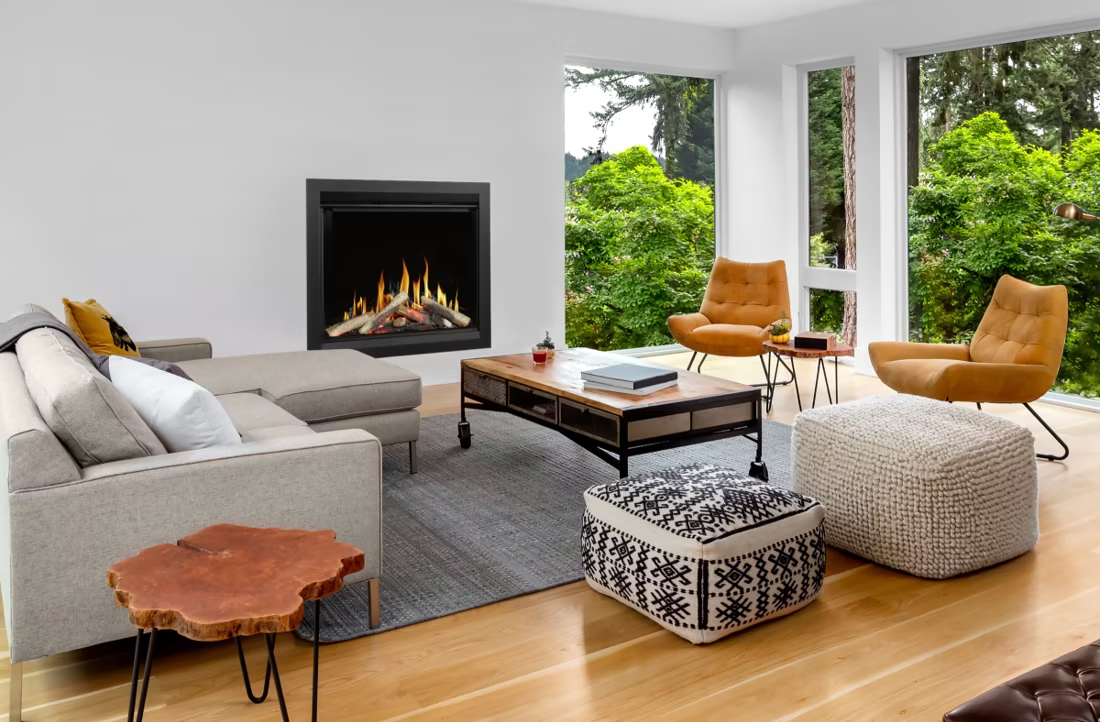
That is where electric fireplaces fit in. A plug-in insert or a built-in unit requires no chimney, no gas line, and no combustion air—which matters in older Athens County homes where the original masonry flue is unlined or unsafe to reuse, and in rental units where a landlord wants ambiance and a little supplemental heat without a code-triggered venting project. Electric also works in finished basements, sunrooms, and additions where running a flue simply is not practical. It will not replace a furnace on a sub-zero night the way a full HVAC system does, but for zone heating and year-round ambiance, it is the lowest-friction fuel option in the county.
Three steps. No salesperson until you're ready.
Tell us about your project
Your zip code, your situation, and the fuel you're leaning toward—or let the answers point you to one.
See what's actually available
The brands dealers within 100 miles genuinely carry—real options, never a catalog mirage.
Get your dealer & Project Guide
A trusted local dealer, plus the free Project Guide & Parts List that names every component of the job.
Frequently Asked Questions
How much does an electric fireplace installation cost in Athens County?
Costs vary widely because electric covers such a range of products. A plug-in insert or freestanding stove that drops into an existing fireplace opening or sits against a wall typically runs $150 to $800 for the unit itself, with no electrical work required beyond an existing outlet. A built-in electric fireplace set into new framing or a remodeled wall usually needs a dedicated 20-amp circuit, which means an electrician—often $1,200 to $2,500 installed once you factor in the unit, the wall finish work, and the electrical run. Older Athens County homes with dated panels or knob-and-tube wiring sometimes need a panel upgrade first, which adds to the cost but is worth flagging early with your installer.
Will an electric fireplace actually heat my Athens County home?
Most electric fireplaces are rated around 1,500 watts, which translates to roughly 5,000 BTU of heat—enough to comfortably warm a single room of 300 to 500 square feet, but not enough to serve as primary heat once Athens County temperatures drop into the teens. Think of it the way homeowners in Madison, WI treat electric heat: a strong supplemental tool for a home office, sunroom, or finished basement, layered on top of a furnace or wood stove rather than replacing one. If you're trying to heat a larger, drafty, or poorly insulated space as a primary source, wood or gas will get you further in this climate.
Do I need a permit to install an electric fireplace in Athens County?
A simple plug-in unit that uses an existing outlet typically doesn't require a permit. A built-in electric fireplace that needs new wiring or a dedicated circuit does require an electrical permit, issued either through the City of Athens building department if you're within city limits or through the Athens County building department for unincorporated areas and other townships. Licensed electricians handling the circuit work will usually pull the permit as part of the job, so most homeowners never have to deal with the paperwork directly.
What's the difference between an electric fireplace, insert, and stove?
An electric fireplace is typically a built-in unit set into a wall or cabinetry, often paired with a mantel, and designed to look like a traditional fireplace. An electric insert is sized to slide into an existing fireplace opening—a common choice for Athens County homes with an old, unused masonry firebox that homeowners don't want to run a liner through. An electric stove is a freestanding unit styled like a wood stove, popular in homes without any existing fireplace opening at all, including many of the ranch and manufactured homes scattered through the county. All three plug into standard household power or a dedicated circuit—none require venting.
What does an electric fireplace cost to run?
Most units draw around 1,500 watts on the heat setting. At typical AEP Ohio residential rates, running one for several hours a day during the coldest months adds a modest but noticeable amount to a monthly bill—usually less than the cost of running a space heater, since most electric fireplaces let you run the flame effect alone without the heater engaged. That flexibility is part of the appeal in Athens County homes that want fireplace ambiance in the evening without heating a room that's already warm from the furnace.
Is electric a good option for Ohio University rentals in Athens?
Yes—it's one of the most common electric fireplace use cases in the county. Landlords with rental housing near campus often choose a plug-in electric insert or wall-mounted unit specifically because it adds a real amenity without triggering any chimney work, gas line permitting, or combustion safety requirements in a building with multiple tenants over the years. It's also a lower-liability option than a wood stove in a rental where tenant turnover makes ongoing maintenance and proper operation harder to guarantee.
Electric vs. wood—which makes more sense for my Athens County home?
Wood remains a practical primary or supplemental heat source across rural Athens County, where oak, hickory, maple, and cherry are all locally abundant and many homes already have a working chimney. Electric doesn't compete with wood on raw heat output or on keeping a home warm through a power outage—a wood stove keeps running when the grid doesn't. But electric wins on convenience: no wood to split or stack, no ash to clean, no chimney to sweep, and no combustion byproducts to manage. For a rental, a sunroom, or a home where a chimney retrofit isn't realistic, electric is usually the better fit; for a rural property that wants heat that works when the power's out, wood still has the edge.
Electric vs. gas—which is right for my home?
Propane is the more common gas option across much of rural Athens County, since natural gas lines don't reach every township, while electric power reaches essentially every home. Gas delivers more heat output and can be configured to run on battery backup during outages, which matters if you're outside town. Electric requires no fuel tank, no gas line, and no annual appliance service, and it installs faster and cheaper in almost every case. If your home already has natural gas or an existing propane tank, a gas fireplace is worth comparing; if you want the simplest, lowest-cost install with zero ongoing fuel logistics, electric is hard to beat.
What size electric fireplace do I need for my room?
For most Athens County living rooms and dens (150 to 400 square feet), a standard 1,500-watt insert or built-in unit is sufficient for supplemental heat and will look proportional in most fireplace openings or wall installations. Larger, open-concept spaces or rooms with high ceilings—common in some of the older farmhouses around Nelsonville and Glouster—may need two heat zones or a larger-BTU unit to feel the difference, since a single electric fireplace won't push heat far into an open floor plan. A local dealer can measure your specific room and fireplace opening to recommend the right width and heat output.
Does an electric fireplace need a vent or chimney?
No—that's its superpower. An electric fireplace needs a wall and an outlet, period. No vent pipe, no gas line, no clearances to design around, which is why it works in bedrooms, offices, apartments, and walls where venting a gas or wood unit would be impractical or impossible. Installation is typically the simplest and least expensive of any fireplace type.
Can I put a TV above my fireplace?
Yes—with an asterisk. Fireplaces are hot and TVs don't like heat. Either put a mantel between them to deflect rising warmth, or choose a fireplace with heat-management technology that creates a cool zone on the wall above—the wall stays around 125 degrees, barely warm, while the room still gets full heat. If you like clean lines and don't want a mantel, heat management is the answer.
How much should I budget for a fireplace?
For an average home—covering the fireplace, the vent pipe, and basic installation—a budget between $3,900 and $5,500 gives you a lot of options across wood, gas, and pellet. By the time you add finish work, gas line, and electrical, the average complete installation lands between $5,000 and $12,000 all-in. In a remodel or new build, a good rule is to put about 2.5% of the total project cost toward the fireplace.
Can a fireplace actually lower my heating bill?
Yes—by creating a comfort zone. A furnace heats every square foot of the house just to warm the one room you're in; a gas fireplace on low burns roughly a sixth of the gas a typical furnace does. Set the furnace around 55–60 degrees as a baseline, then heat the rooms your family actually uses. Families who heat this way commonly save $20–$60 a month.
Stove and Fireplace Dealers in Athens County
Find your electric fireplace in Athens County.
Tell us a bit about your home—or your rental property—and we'll match you with the right electric fireplace, insert, or stove, plus a free Project Guide & Parts List and a trusted local dealer to install it.
Find Your Fireplace →