
Pellet stoves are rare in Ramsey County—here's what actually works.
At Climate Zone 7 with a population of 517, Ramsey County runs on propane and electric heat, not bagged pellets. If a pellet stove still fits your project, we'll connect you with the nearest dealer who can actually service it.
Every Project Starts From One of These Five Situations
Gas and electric carry the load in Ramsey County.
Ramsey County sits in Climate Zone 7—the same brutal-winter category as International Falls, Minnesota—where sustained sub-zero stretches are routine and heating systems need to run without fail for months. With a population of just 517 spread across a sparsely settled stretch of north-central North Dakota, there's no dedicated pellet stove dealer, no local pellet retailer, and no service network built around biomass appliances. Oak, cottonwood, and ash grow along the Devils Lake basin and river bottoms, but even wood-burning has faded here—it's not a fuel infrastructure the county has built around, and pellet fits the same pattern for the same reasons: too few households to support a dedicated supply chain.
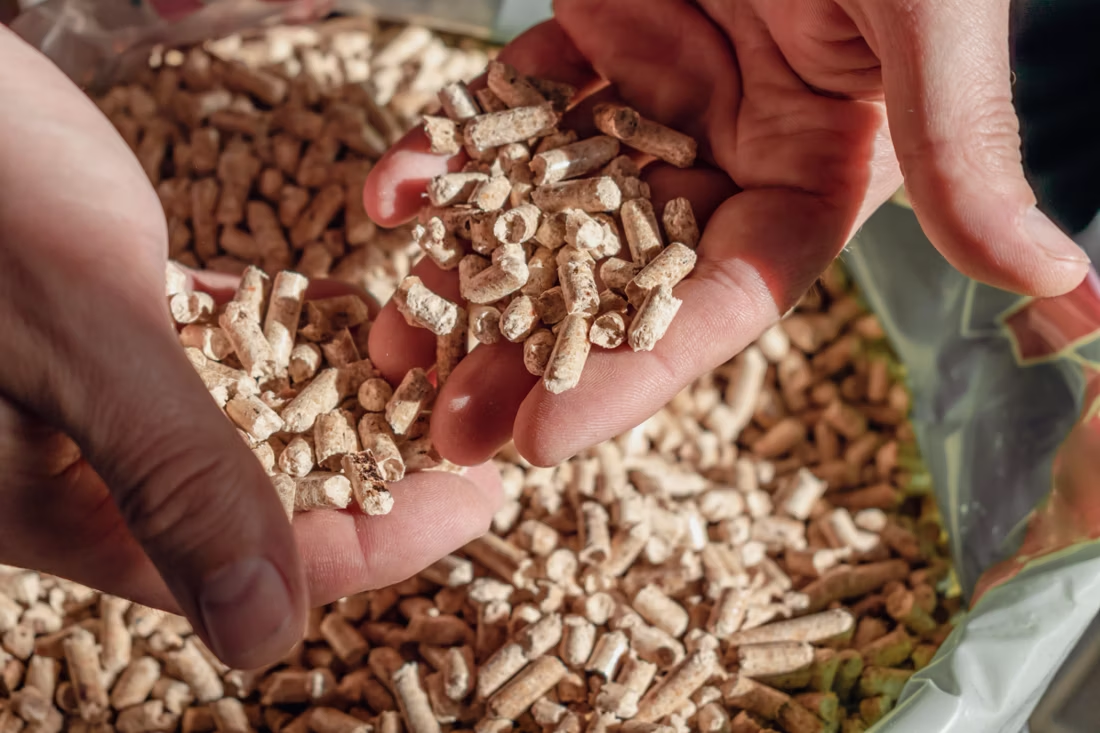
What Ramsey County homes actually run on is propane (standard here in the absence of natural gas mains) and electric heat, both of which show up reliably at every farm supply and utility co-op in the region. Pellet stoves need a steady auger and blower running on household power—a real liability when a Zone 7 blizzard knocks out electricity for days, which happens. Lignetics and Indeck Energy Services pellets do circulate through regional farm and hardware distribution, so bags aren't impossible to find, but you're looking at a special order or a drive to Devils Lake or Grand Forks rather than a shelf pickup. If pellet heat is still what you want—for a shop, cabin, or supplemental setup—it's achievable, just not the path of least resistance in this county.
Three steps. No salesperson until you're ready.
Tell us about your project
Your zip code, your situation, and the fuel you're leaning toward—or let the answers point you to one.
See what's actually available
The brands dealers within 100 miles genuinely carry—real options, never a catalog mirage.
Get your dealer & Project Guide
A trusted local dealer, plus the free Project Guide & Parts List that names every component of the job.
Frequently Asked Questions
Is a pellet stove a realistic choice for a Ramsey County home?
It can work, but go in with clear eyes. Ramsey County is Climate Zone 7—the coldest IECC tier, comparable to International Falls, Minnesota—and pellet stoves rely on an electric auger and blower to feed the fire. During a prolonged winter power outage, which does happen out here, a pellet stove goes cold unless you have a generator or battery backup wired in. Most Ramsey County households instead lean on propane or electric heat, which is why pellet is flagged not-applicable for this county rather than standard. If you still want one—for a shop, garage, or cabin—plan for a backup power source and a supply plan for pellets, since there's no dedicated dealer in the county itself.
What does a pellet stove installation cost in a county like Ramsey?
There isn't a local cost baseline because installs here are infrequent enough that no Ramsey County dealer has settled pricing around them. Regionally, a pellet stove installation typically runs $3,000 to $6,000 depending on the unit and venting work, but expect your quote to include a travel charge if the installer is coming from Devils Lake, Grand Forks, or Minot—none of which are next door. Get a firm number from whichever installer we match you with rather than assuming a regional average applies exactly to your address.
Where can I actually buy pellets near Ramsey County?
There's no dedicated pellet retailer inside the county, but Lignetics and Indeck Energy Services pellets do move through regional farm supply and hardware distribution in north-central North Dakota. Expect to special-order bags or pallets rather than grab them off a shelf, and budget for a trip to a larger town—Devils Lake or Grand Forks are the more likely sources—or arrange delivery in advance of heating season so you're not caught short mid-winter.
Why is gas so much more common than pellet heat in Ramsey County?
Propane infrastructure is built into rural North Dakota farm life—tanks, delivery routes, and service technicians are already in place across the county, which is why gas carries a standard relevance rating here. Pellet fuel never got that same distribution network, since it depends on bagged product logistics rather than a tank and a delivery truck. In a county of 517 people, the fuel with the existing supply chain wins, and that's propane, not pellets.
Will a pellet stove keep working during a North Dakota power outage?
No—not without a backup power source. Pellet stoves need continuous electricity to run the auger that feeds fuel into the burn pot and the blower that distributes heat. In Climate Zone 7, where outages during severe winter storms aren't rare, that's a real vulnerability. If backup heat during outages matters to you, a propane heater or a wood-burning appliance (despite wood also being uncommon locally) will outperform a pellet stove on that specific point. A generator or battery backup can close the gap if you're set on pellet.
What heating fuels do people in Ramsey County actually use?
Propane and electric are the standard choices, reflecting both the county's small, dispersed population and the lack of natural gas mains this far from a metro distribution system. Wood, despite oak, cottonwood, and ash growing along the Devils Lake basin, has also become uncommon as a primary heat source—most households have moved to fuels with dependable delivery and service infrastructure. Pellet heat follows the same pattern as wood: technically usable, but not what the local supply chain is built around.
Is there a local dealer who installs or services pellet stoves in Ramsey County?
Not inside the county itself—the population base doesn't support a dedicated hearth dealer specializing in pellet appliances. The nearest qualified installers are typically based out of Devils Lake, Grand Forks, or Minot, and most will travel for the right job. If a pellet stove is still what you're after, we'll match you with the closest dealer who actually stocks and installs pellet units and can service them going forward, rather than leaving you to guess who covers your area.
Pellet stove vs. propane heater—which makes more sense for my Ramsey County home?
Propane wins on infrastructure: tanks, delivery routes, and service techs are already established throughout the county, and propane appliances keep running through a power outage as long as the pilot and thermostat have battery backup. Pellet stoves offer a wood-like flame and burn a renewable fuel, but they need household electricity for the auger and blower, and the nearest pellet supply is a drive away rather than a phone call to a local propane company. For a Zone 7 county with 517 residents, propane is simply the fuel the local market is set up to support.
I already have a pellet stove—can I get it serviced in Ramsey County?
Basic maintenance is possible, but you'll likely need a technician who travels into the county rather than one based here, since there's no dedicated pellet stove dealer locally. Some regional propane and HVAC service companies will handle general hearth appliance cleaning and inspection as part of a broader service call. We can match you with the nearest technician who actually works on pellet units so you're not stuck troubleshooting an auger jam solo in January.
Why is a fireplace insert so efficient?
An insert does two things: it seals the chimney completely, so you stop losing air you already paid to heat, and it radiates warmth into the room through the firebox and glass. Most add a heat-exchange fan that pulls cool room air underneath, wraps it around the hot firebox, and pushes it back out warm. Your home is more efficient before you've even lit the first fire.
What do I measure to size a fireplace insert?
Four numbers tell you what fits: the front width, the front height, the back width, and the overall depth of your existing fireplace opening. Grab a tape measure, jot those down, and snap a photo of the wall—those two things do more to move your project forward than anything else you can do today.
What is an in-home preview and do I need one?
It's a visit where a hearth professional measures your space, confirms the model you picked actually works in your home, and walks the specs—framing, gas line, venting, finish work—before anything is ordered. Some details you just can't know until you see the house. Never make a down payment without one; it's the single most-skipped step that burns buyers.
Can I install a fireplace myself?
If you're putting a fire in your house on purpose, it's best to work with an expert. Unless you're genuinely experienced in framing, gas line, vent pipe, and the national code on clearances to combustibles, have a professional do it—and ideally the same company that sells you the fireplace, so warranty, service, and liability all live under one roof.
Pellet Brands Stocked Around Ramsey County
Manufacturers will point you to the nearest stocking dealer.
Get matched with the nearest dealer who covers Ramsey County.
If a pellet stove still fits your project—shop, cabin, or supplemental heat—tell us a bit about your home and we'll send a free Project Guide & Parts List with the exact parts, including the vent kit, and connect you with the closest trusted dealer who can actually install and service it.
Find Your Fireplace →