
Fireplace heat that holds up in Ramsey County's zone 7 winters.
Fireplace resources for Devils Lake and every township in Ramsey County—propane and electric are the standard fuels in this zone 7 cold. Wood and pellet options exist but are uncommon this far out on the prairie.
Every Project Starts From One of These Five Situations
Prairie cold, propane heat, and Devils Lake living.
Ramsey County sits in the prairie pothole region of northeastern North Dakota, anchored by Devils Lake—the county seat and the state's largest natural lake. Winters here fall in climate zone 7, among the coldest classifications used in U.S. building codes, with sustained sub-zero stretches that rival International Falls, Minnesota. The county's open terrain supports oak, cottonwood, and ash along the Sheyenne River corridor and the lake bottomlands, but Ramsey County was never heavily forested the way the northern Great Lakes or Cascade regions are—so cordwood never developed into a countywide heating industry here the way it has elsewhere.
This hub covers Ramsey County's roughly 517 residents spread across its rural townships and small towns—Devils Lake, Starkweather, Webster, Crary, Brinsmade, and Edmore among them. Propane and natural gas fireplaces are the standard for real heat output here, and electric units cover secondary rooms and supplemental warmth on the coldest nights. Wood and pellet stoves show up occasionally—mostly older installations or supplemental setups—but neither fuel has the local dealer network or supply infrastructure that gas and electric have in this county. Pick your fuel below to see what's actually available and installable near you.
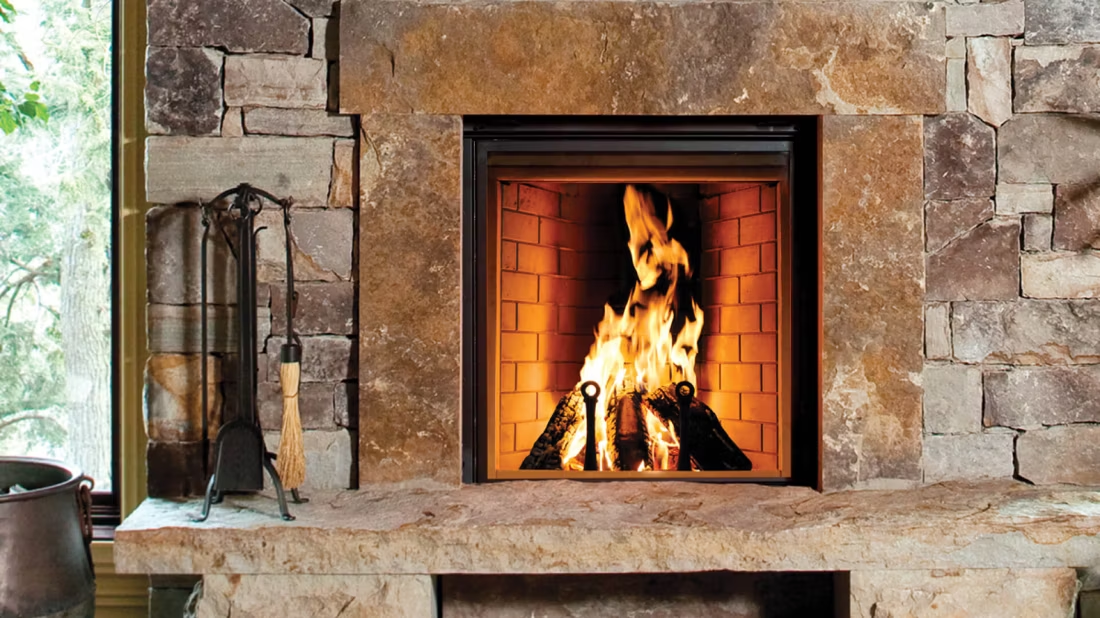
Four fuels. One honest answer for Ramsey County.
Three steps. No salesperson until you're ready.
Tell us about your project
Your zip code, your situation, and the fuel you're leaning toward—or let the answers point you to one.
See what's actually available
The brands dealers within 100 miles genuinely carry—real options, never a catalog mirage.
Get your dealer & Project Guide
A trusted local dealer, plus the free Project Guide & Parts List that names every component of the job.
Frequently Asked Questions
Which fuel works best in Ramsey County?
For most Ramsey County homes, propane and electric are the practical choices. Zone 7 winters here mean sustained sub-zero stretches similar to International Falls, Minnesota, and propane fireplaces and inserts deliver the steady heat output needed to hold a room through that kind of cold—useful as backup heat if the furnace or grid has an issue. Natural gas is available through Montana-Dakota Utilities in Devils Lake proper, though most of the county's rural townships rely on propane tanks instead. Electric fireplaces and inserts work well as supplemental heat in bedrooms and additions, and the local grid—served by Nodak Electric Cooperative—is reliable enough that electric units are a low-maintenance option for secondary rooms. Wood and pellet stoves exist in the county but are uncommon: the prairie pothole landscape here never supported the kind of forestland that makes cordwood a countywide heating fuel, and pellet retail infrastructure is thin outside of special-order suppliers like Lignetics.
Do I need a permit to install a fireplace in Ramsey County?
Yes, in most cases. New gas fireplaces, gas inserts, and gas stoves require a building permit through the Ramsey County building/zoning office, or the City of Devils Lake if you're inside city limits, plus licensed gas-fitter work for the propane or natural gas line connection. Electric fireplace installations typically don't require a permit unless you're hardwiring a built-in unit into a new circuit—plug-in units are exempt. If you're one of the rare households installing a wood or pellet stove, that also requires a permit and should meet current EPA emissions standards, though your installer will likely have to source a certified unit since local wood-stove dealers are scarce this far out on the prairie. Most local retailers handle the permit paperwork as part of the installation quote.
Is wood burning common in Ramsey County?
Not really, despite the cold. Ramsey County's climate zone 7 winters are cold enough to justify a wood stove on paper, but the county sits in open prairie pothole terrain rather than forestland—oak, cottonwood, and ash grow along the Sheyenne River and the Devils Lake shoreline, but not in the volume that supports a cordwood supply chain the way it does in more wooded cold-climate regions like northern Minnesota. The handful of wood stoves you'll find here tend to be older installations on farm properties or supplemental units rather than a primary heat source. If you're set on wood heat, plan on sourcing your own cordwood and expect a longer search for a local dealer who stocks EPA-certified units.
Are there air quality restrictions on burning in Ramsey County?
No—Ramsey County has no non-attainment designation, no winter burn advisories, and no county-level restrictions on wood or gas appliance use. That's a real difference from western counties in places like Oregon or California that deal with winter inversions and mandatory curtailment days. Whatever fuel you choose here, air quality regulation isn't a factor in your decision—the limiting factor is availability of local dealers and fuel supply, not regulatory restriction.
How does service work in a small county like Ramsey?
With a population near 517 spread across the county's townships, Ramsey County doesn't support a large roster of dedicated hearth technicians. Most gas and electric service calls are handled by HVAC and propane technicians based in Devils Lake who also cover general appliance service, rather than by chimney-sweep specialists you'd find in more wood-heavy counties. If you're in Starkweather, Webster, Crary, Brinsmade, or Edmore, expect a technician to travel out from Devils Lake, and plan ahead for pre-winter service appointments since scheduling windows tighten once the cold sets in.
What's the typical cost range for fireplace installation in Ramsey County?
Costs run close to regional Upper Midwest averages, adjusted for the extra travel most installers factor into rural jobs. Gas fireplace, insert, or stove: roughly $4,000–$9,000 depending on whether you're tapping into existing natural gas service in Devils Lake or setting up a new propane line and tank for a rural property. Electric fireplace: $200–$2,500 for the unit itself, plus $300–$900 in labor for anything beyond a plug-in installation, such as a built-in or wall-mount unit needing new wiring. Wood or pellet stove installs are less standardized here given how few local dealers carry them—budget for both the unit and additional delivery or travel costs from an installer coming from outside the county.
Can a fireplace actually lower my heating bill?
Yes—by creating a comfort zone. A furnace heats every square foot of the house just to warm the one room you're in; a gas fireplace on low burns roughly a sixth of the gas a typical furnace does. Set the furnace around 55–60 degrees as a baseline, then heat the rooms your family actually uses. Families who heat this way commonly save $20–$60 a month.
How much should I budget for a fireplace?
For an average home—covering the fireplace, the vent pipe, and basic installation—a budget between $3,900 and $5,500 gives you a lot of options across wood, gas, and pellet. By the time you add finish work, gas line, and electrical, the average complete installation lands between $5,000 and $12,000 all-in. In a remodel or new build, a good rule is to put about 2.5% of the total project cost toward the fireplace.
What is an in-home preview and do I need one?
It's a visit where a hearth professional measures your space, confirms the model you picked actually works in your home, and walks the specs—framing, gas line, venting, finish work—before anything is ordered. Some details you just can't know until you see the house. Never make a down payment without one; it's the single most-skipped step that burns buyers.
Wood, gas, pellet, or electric—how do I choose?
Match the fuel to your life, not the other way around. Wood: lowest fuel cost and total power-outage independence, but you're hauling and stacking. Gas: press a button, set a thermostat, no maintenance to speak of. Pellet: wood economics with automatic feeding, in exchange for weekly cleaning and a need for electricity. Electric: plugs in anywhere with honest supplemental heat. Nobody regrets the fuel that fits how they actually live.
Stove and Fireplace Dealers in Ramsey County
Listings include WhyFire partner dealers, dealers we have verified as authorized for the brands we recommend, and established local businesses that carry hearth products. Every listing shows which one it is. The ones marked Preferred run on WhyFire's software, so they can show you real pricing and book your appointment right here. No manufacturer pays for placement. How we verify dealers →
Sunrooms Plus Inc.
Country Fireplaces Nd
Sawmill Lumber & Hardware
Find your fireplace in Ramsey County.
Get matched with a trusted local dealer and a free Project Guide & Parts List—the exact parts, vent kit, and dealer recommendation for your gas or electric fireplace project in Ramsey County.
Find Your Fireplace →