
Warmth that keeps up with a Zone 7 winter.
Pierce County sits in Climate Zone 7 with roughly 9,801 heating degree days a year and average winter lows near -4°F—the kind of cold that punishes an old fireplace and rewards a properly sized, properly vented gas unit. Find the right one and get matched with a local dealer who can actually install it.
Every Project Starts From One of These Five Situations
Instant heat for the coldest stretch of the northern plains.
Pierce County is flat, open wheat and cattle country in north-central North Dakota, centered on Rugby—the town that marks the geographic center of North America. With roughly 2,800 residents spread across the county, tree cover is limited mostly to farmstead shelterbelts of cottonwood, ash, and oak rather than the kind of forest acreage that supports a wood-heat culture. At 9,801 heating degree days, Pierce County runs colder for longer than Fargo or Bismarck and is in the same league as International Falls, Minnesota—one of the coldest inhabited spots in the Lower 48. That combination—extreme cold, sparse local wood supply—is a big part of why gas has become the practical default for supplemental and zone heat here.
Most homes outside Rugby's core don't sit on a natural gas main, so propane is the standard fuel for gas fireplaces and inserts across rural Pierce County, typically supplied by regional propane services and farm co-ops rather than a municipal utility. That's not a drawback for performance—a properly configured propane unit delivers the same instant, thermostatically controlled heat as natural gas, and it doesn't care whether the county's mains network reaches your section road. For a place where an arctic outbreak can drop temperatures for days at a time, a gas fireplace with battery-backed ignition gives you dependable zone heat in the room you actually live in, without waiting on the furnace to catch up.
Three steps. No salesperson until you're ready.
Tell us about your project
Your zip code, your situation, and the fuel you're leaning toward—or let the answers point you to one.
See what's actually available
The brands dealers within 100 miles genuinely carry—real options, never a catalog mirage.
Get your dealer & Project Guide
A trusted local dealer, plus the free Project Guide & Parts List that names every component of the job.
Frequently Asked Questions
How much does a gas fireplace installation cost in Pierce County?
We don't have a Pierce County-specific number pinned down, but in comparably cold, rural counties across the northern plains, a direct-vent gas fireplace or insert install typically lands between $4,500 and $10,000. Where you fall in that range depends heavily on whether you're converting an existing masonry fireplace (lower end, since the chimney does the venting work) versus a new build or a room with no existing flue, where framing and a fresh vent run push costs up. Because most Pierce County homes run on propane rather than piped gas, tank setup or a line run from an existing tank is usually the other line item to plan for. A local dealer will give you a firm number after seeing your home.
Can I convert an existing wood fireplace to gas in Pierce County?
You can, though it's a less common request here than in forested parts of the country—wood-burning fireplaces are relatively rare in Pierce County to begin with, since the prairie landscape around Rugby never supported the kind of wood-heat tradition you'd see in a timbered region. If you do have an older masonry fireplace burning shelterbelt cottonwood or ash, converting it to a gas insert with a stainless liner run through the existing chimney is usually the most cost-effective path, and it eliminates the hassle of sourcing and hauling wood across open farm country. Expect the propane tank and line to be the main added cost if the fireplace wasn't previously gas-plumbed.
Should I plan on natural gas or propane for my fireplace?
Propane. Outside a limited footprint near Rugby's town core, Pierce County doesn't have the kind of natural gas distribution network that makes piped gas a default choice—most rural homes, farms, and ranch properties run on propane for heating appliances already, so adding a gas fireplace usually means tying into an existing tank or setting a new one with a regional propane supplier. Nearly every gas fireplace and insert on the market today can be configured for propane with the correct orifice and regulator, so fuel type shouldn't limit your choice of unit—it just changes what your installer sets up.
Will my gas fireplace still work if the power goes out?
Most will, which matters in a county where winter storms and grid interruptions aren't rare. Units with intermittent pilot ignition (IPI) run on battery backup that kicks in automatically when power drops, so the fireplace lights and operates normally off AA batteries until service returns—just remember to keep fresh ones in the unit. Valor's gas fireplaces go a step further: their pilot assembly generates its own electricity through the thermocouple, so there are no batteries to maintain at all. For a Zone 7 county where an arctic front can knock out power for a day or more, that kind of built-in reliability is worth asking your local dealer about directly.
What's the difference between a gas fireplace, insert, and stove?
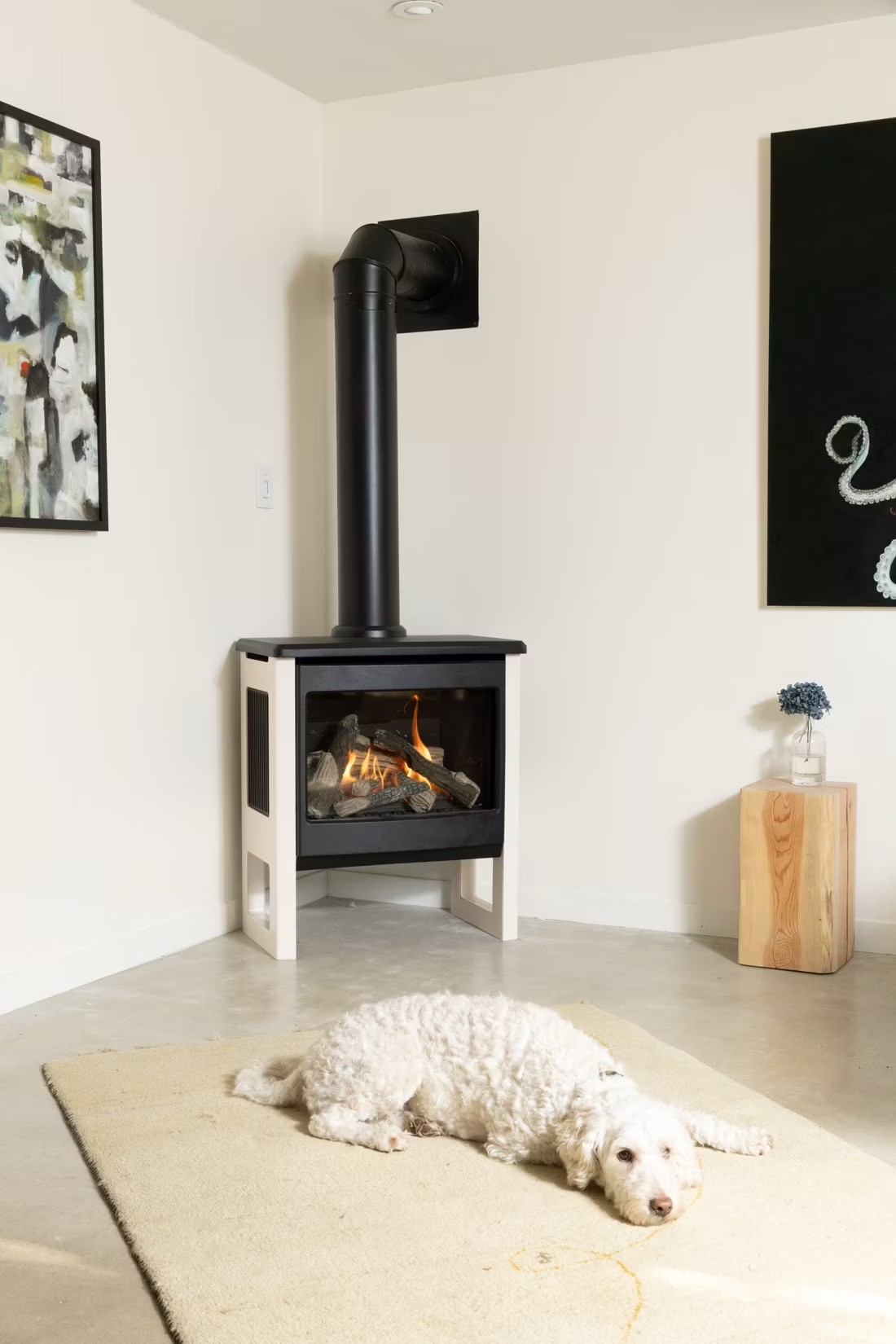
A gas fireplace is a fully built-in unit framed into a wall—the right call for new construction or a remodel with no existing chimney. A gas insert slides into an existing masonry fireplace opening and vents through the chimney you already have, which is the more common upgrade for Pierce County's older farmhouses with a fireplace that was originally built for wood. A gas stove is freestanding, sits on its own hearth pad, and can go almost anywhere with the right clearances and vent run—often the simplest option for a shop, addition, or a home without an existing fireplace at all.
Do I need a permit to install a gas fireplace in Pierce County?
Yes—new gas fireplace and insert installations typically require both a building permit through Pierce County's building department and licensed gas-fitter work for the propane line and connection. Most hearth dealers who serve the county coordinate the permitting and the gas-line trade as part of the install, so you're not left managing two separate contractors. Given how spread out the county is, confirm with your installer up front whether they handle county paperwork directly or whether you'll need to file with Rugby or the county office yourself.
Should I get a vented or vent-free gas fireplace?
Pierce County has no listed air quality restrictions that would rule out either option, but vented (direct-vent) units are still the stronger choice for a Zone 7, 9,801-HDD climate. Direct-vent fireplaces draw combustion air from outside and exhaust it back outside through a sealed pipe, which means consistent, real heat output even during the extended cold stretches Pierce County sees most winters. Vent-free units burn into the room and release some moisture and combustion byproducts indoors—workable in smaller spaces but less ideal for a county where the fireplace may be running for weeks at a stretch during the coldest months. Ask your local dealer to walk through both if you're undecided.
How often does a gas fireplace need to be serviced?
Plan on an annual inspection, ideally before the heating season ramps up in the fall. A technician checks the burner, pilot assembly, venting, and gas connections, and cleans the glass and interior—a quick job compared to wood chimney sweeping, but not one to skip given how much use a gas unit sees through a Pierce County winter. Local service providers typically charge in the $150–$250 range for this kind of annual check.
Why gas instead of wood or pellet in Pierce County?
Wood and pellet heat are both genuinely uncommon here, and for good reason: Pierce County is open prairie farm country, not timberland, so the local wood supply is limited to shelterbelt oak, cottonwood, and ash rather than the abundant cordwood you'd find in a forested county. Pellet stoves face a similar issue—brands like Lignetics and Indeck Energy Services produce pellets sold regionally, but there isn't the retail or delivery infrastructure here that pellet heat depends on. Gas, almost always propane in this county, sidesteps both problems: no fuel to source or store, no ash, and heat that keeps pace with a climate that runs colder and longer than Fargo or Bismarck. For most Pierce County homes, gas is simply the fuel that matches the landscape.
Can I put a TV above my fireplace?
Yes—with an asterisk. Fireplaces are hot and TVs don't like heat. Either put a mantel between them to deflect rising warmth, or choose a fireplace with heat-management technology that creates a cool zone on the wall above—the wall stays around 125 degrees, barely warm, while the room still gets full heat. If you like clean lines and don't want a mantel, heat management is the answer.
Is my gas fireplace wasting gas?
If it was installed more than 15 years ago, probably. Older gas fireplaces keep a standing pilot light burning all the time, and that little flame can cost a couple hundred dollars a year. Newer models use pilot-on-demand ignition—the pilot lights only when you use the fireplace and goes out when you turn it off.
Can I install a fireplace myself?
If you're putting a fire in your house on purpose, it's best to work with an expert. Unless you're genuinely experienced in framing, gas line, vent pipe, and the national code on clearances to combustibles, have a professional do it—and ideally the same company that sells you the fireplace, so warranty, service, and liability all live under one roof.
What is an in-home preview and do I need one?
It's a visit where a hearth professional measures your space, confirms the model you picked actually works in your home, and walks the specs—framing, gas line, venting, finish work—before anything is ordered. Some details you just can't know until you see the house. Never make a down payment without one; it's the single most-skipped step that burns buyers.
Find your gas fireplace in Pierce County.
Tell us about your home and your propane setup, and we'll put together a free Project Guide & Parts List—the exact fireplace or insert, vent kit, and recommended local dealer for your Pierce County project.
Find Your Fireplace →