
Add real warmth to a Pierce County home built for brutal cold.
With winter lows averaging -4°F and roughly 9,801 heating degree days a year, Pierce County sits in one of the harshest climate zones in the country. Electric fireplaces won't replace your furnace, but they add real, comfortable zone heat to the room you actually live in—no chimney, no venting, no gas line. Find the right unit and connect with a trusted local dealer.
Every Project Starts From One of These Five Situations
Warmth that plugs in, even at forty below.
Pierce County is small—about 2,800 people spread across the prairie around Rugby, the county seat and home to the geographical center-of-North-America marker. It's also brutally cold: climate zone 7, winter lows that average -4°F, and roughly 9,801 heating degree days a year, putting it in the same company as International Falls, Minnesota, for sheer heating load. Homes here are built to fight the cold for seven or eight months at a stretch, and most rely on propane, fuel oil, or electric furnaces and baseboards as primary heat, since natural gas mains rarely reach this far out onto the prairie.
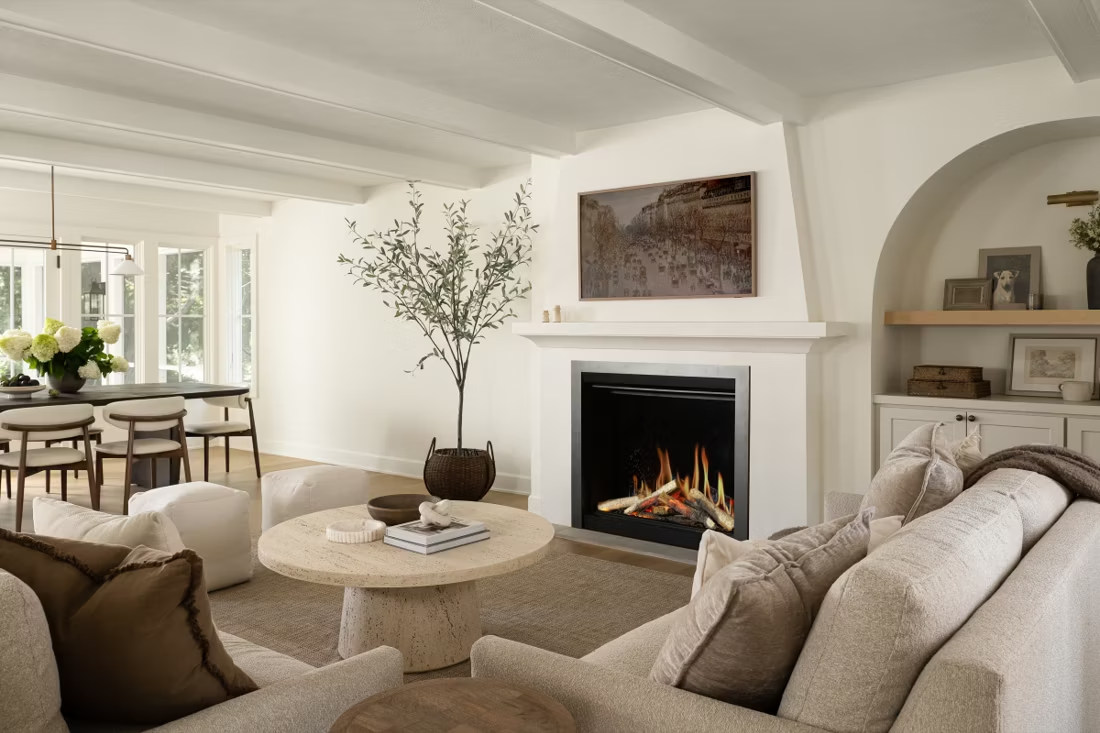
Electric fireplaces and inserts have found a real place inside that heating picture—not as a replacement for the furnace, but as targeted comfort in a living room, bedroom, or finished basement, run off the same Verendrye Electric Cooperative service that powers the rest of the house. There's no cordwood to split (oak, cottonwood, and ash grow along the Souris River bottoms and in shelterbelts, but few Pierce County households burn wood as a heat source), no chimney to maintain, and no combustion byproducts to vent. Plug in a freestanding unit or have an electrician wire a built-in on a dedicated circuit, and you've got instant, adjustable heat and a real flame look for the room where your family actually spends the evening.
Three steps. No salesperson until you're ready.
Tell us about your project
Your zip code, your situation, and the fuel you're leaning toward—or let the answers point you to one.
See what's actually available
The brands dealers within 100 miles genuinely carry—real options, never a catalog mirage.
Get your dealer & Project Guide
A trusted local dealer, plus the free Project Guide & Parts List that names every component of the job.
Frequently Asked Questions
How much does an electric fireplace installation cost in Pierce County?
A plug-in electric insert or freestanding unit typically runs $300 to $1,200 installed, and in most cases that's mostly carpentry—building or modifying a surround or mantel—since the unit simply plugs into a standard outlet. A built-in wall unit that needs a dedicated 15- or 20-amp circuit runs higher, usually $1,500 to $4,000, once you factor in the unit itself, framing, and a licensed electrician's time. Because Pierce County is rural, expect a modest trip charge if your electrician or installer is coming from Rugby or a neighboring town rather than working locally.
Will an electric fireplace heat my whole house in this climate?
No—and this matters more in Pierce County than almost anywhere. Most electric fireplaces top out around 5,000 to 9,000 BTU, which is enough to noticeably warm a single room but nowhere near enough to carry a whole home through a climate zone 7 winter with 9,801 heating degree days. Think of it as zone heat: it takes the edge off the room you're in and lets you turn down the thermostat elsewhere, while your propane furnace, fuel oil system, or electric baseboards continue doing the real work of keeping the whole house above freezing.
Do I need a permit to install an electric fireplace in Pierce County?
A plug-in electric insert or freestanding unit generally doesn't require a permit—it's no different than plugging in any other major appliance. A built-in unit that requires a new dedicated circuit is electrical work, which typically does require an electrical permit and inspection through the county. Any licensed electrician working in Pierce County will know the local process and can pull the permit as part of the job, so you're not left coordinating it yourself.
Will my electric fireplace still work during a power outage?
No. An electric fireplace needs power to run its heater and flame effect, so it goes dark the moment the lights go out—which matters in a county where winter ice and wind can knock out Verendrye Electric Cooperative service for hours at a stretch. Because wood heat isn't common in Pierce County and cordwood isn't something most households keep on hand, the more realistic outage backup here is a propane heater, a generator sized to run your furnace's blower, or simply a plan for where the family goes if the power stays off through a hard freeze.
What's the difference between an electric insert, an electric stove, and a built-in electric fireplace?
An electric insert is designed to slide into an existing fireplace opening, most often used to convert an old masonry hearth into usable heat without the chimney maintenance. A freestanding electric stove sits on the floor like a small wood stove and just needs an outlet. A built-in wall unit is framed into new construction or a remodel for a flush, linear look and usually needs its own dedicated circuit. For Pierce County homes without an existing fireplace opening, a freestanding stove or built-in unit is usually the simpler path.
What's the best electric fireplace for a Pierce County home?
Look for a unit with a strong ceramic or infrared heater rated close to 1,500 watts—that's the practical ceiling for a 120-volt plug-in unit and gives you the most real heat output for a cold-climate room. Brands like Dimplex, Napoleon, and Touchstone are widely available through hearth dealers and offer realistic flame effects along with adjustable heat settings, which matters when you want ambiance on a mild fall evening but real warmth once temperatures head toward -4°F. A local dealer can size the unit to your room and confirm whether your existing wiring supports it or whether a dedicated circuit makes sense.
How much does it cost to run an electric fireplace on Verendrye Electric Cooperative rates?
Rural electric cooperative rates in this part of North Dakota typically run somewhere around 11 to 14 cents per kilowatt-hour. A 1,500-watt heater running on high costs roughly 17 to 21 cents an hour, or about $1.50 to $2.50 for an evening of use—noticeably cheaper than most people expect, and generally less than heating that same room with a propane space heater. It's still supplemental heat, not a substitute for your primary furnace, but it's an inexpensive way to add comfort to the room you use most.
Why don't more Pierce County homes use wood or pellet heat?
Pierce County is prairie country—oak, cottonwood, and ash grow along the Souris River valley and in planted shelterbelts, but there isn't the kind of accessible forest land that makes cutting and hauling your own firewood practical the way it is in mountain or timber counties. Pellet fuel faces a similar problem: with no local pellet mills and limited retail supply this far out, keeping a pellet stove fed through a 9,801-heating-degree-day winter becomes a logistics headache rather than a convenience. Propane, fuel oil, and electricity fill that gap instead, which is also why electric fireplaces have become a popular supplemental option—they need no fuel deliveries and no storage at all.
Electric vs. propane fireplace—which is right for my home?
Propane fireplaces and inserts put out real heat—often enough to serve as a legitimate secondary heat source during a cold snap—and many can run on battery backup during a power outage, which is valuable given how exposed Pierce County is to winter storms. Electric fireplaces can't match that heat output or run without grid power, but they cost far less to install, need no gas line or venting, and can go almost anywhere there's an outlet. For a home that already has propane for its furnace, adding a propane fireplace in the main living space often makes sense. For a bedroom, basement, or a room where installing gas line isn't practical, electric is usually the better fit.
Can I put a TV above my fireplace?
Yes—with an asterisk. Fireplaces are hot and TVs don't like heat. Either put a mantel between them to deflect rising warmth, or choose a fireplace with heat-management technology that creates a cool zone on the wall above—the wall stays around 125 degrees, barely warm, while the room still gets full heat. If you like clean lines and don't want a mantel, heat management is the answer.
Do electric fireplaces actually produce heat?
Yes—most put out around 4,800–5,000 BTUs from a standard outlet, which comfortably warms a bedroom, office, or den as a comfort-zone heater. What they won't do is carry a whole house the way wood, gas, or pellet can. Think of electric as ambiance-first with honest supplemental heat: flames on with no heat in July, flames plus warmth in January.
Can a fireplace actually lower my heating bill?
Yes—by creating a comfort zone. A furnace heats every square foot of the house just to warm the one room you're in; a gas fireplace on low burns roughly a sixth of the gas a typical furnace does. Set the furnace around 55–60 degrees as a baseline, then heat the rooms your family actually uses. Families who heat this way commonly save $20–$60 a month.
Does a fireplace add value to my home?
On average, a fireplace adds back to the home about the same amount you spent installing it. Add the monthly savings from heating the rooms you actually use instead of the whole house—often hundreds of dollars a year—and the value case is strong before you even count what a fire does for how your family uses the room.
Find your electric fireplace in Pierce County.
Tell us about your home and we'll match you with a trusted local dealer and send over a free Project Guide & Parts List—a plan for your electric fireplace project in Pierce County, with the exact parts you'll need and a recommended installer.
Find Your Fireplace →