
Find the right fireplace for Pierce County, North Dakota winters.
Rugby, Balta, Wolford, and the rest of Pierce County see some of the harshest heating demand in the Lower 48—Zone 7, 9,801 heating degree days, average winter lows near -4°F. Here's what actually works locally, and the trusted retailers who install it.
Every Project Starts From One of These Five Situations
Extreme cold on the North Dakota prairie.
Pierce County sits on the open prairie around Rugby, near the geographic center of North America—flat, treeless terrain with heating demand that rivals International Falls, Minnesota. At 9,801 heating degree days and average winter lows around -4°F, this is Climate Zone 7 territory: the heating season runs long, and backup heat matters. What's different here is timber. The oak, cottonwood, and ash you'll find are riparian species along the Mouse River bottomlands and old shelterbelt plantings, not forest stands—there's no comparable public-land firewood supply to what you'd find in a wooded region, and hauling cordwood any real distance gets expensive fast. That's why wood stoves and wood inserts are genuinely uncommon here, even with weather this cold.
With a county population under 3,000 spread across small towns and farmland, gas (mostly propane, since natural gas mains don't reach most of the county) and electric fireplaces are the two fuels that actually make sense for the climate and the supply chain. Pellet stoves show up occasionally—Lignetics and Indeck Energy Services both distribute into the region—but pellet delivery infrastructure here serves agricultural drying and outbuilding heat more than home hearths, so pellet inserts remain rare. Pick your fuel below for local dealers, install costs, and unit recommendations that match how homes in Pierce County are actually built and heated.
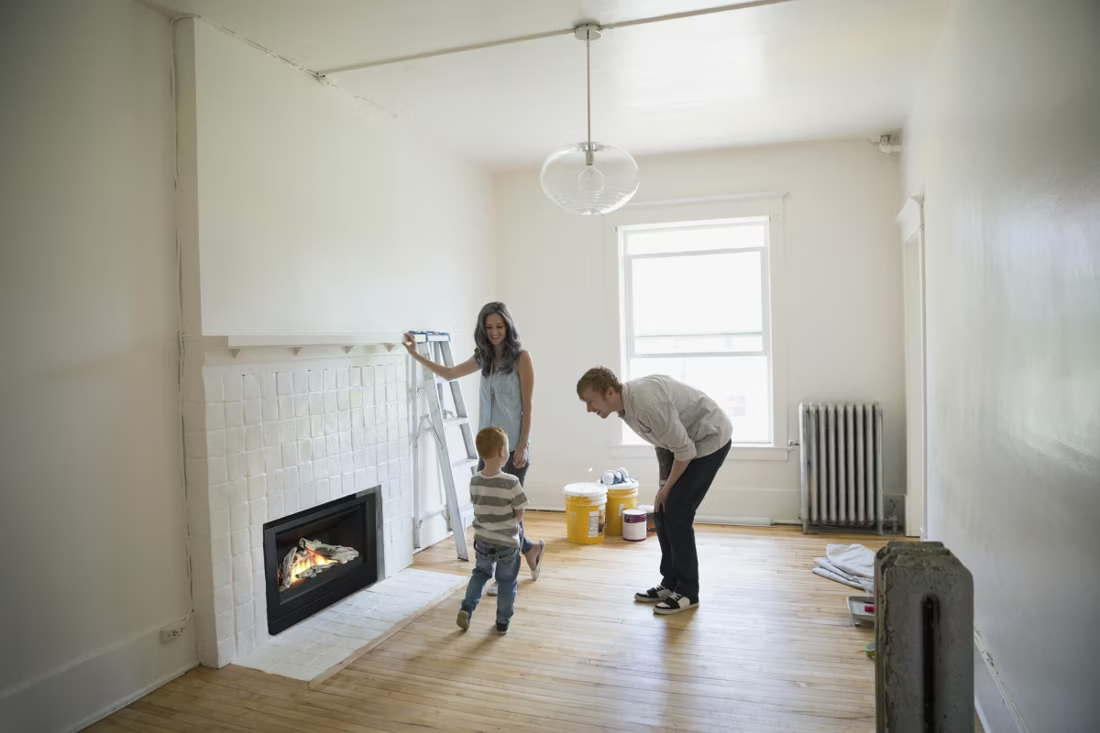
Four fuels. One honest answer for Pierce County.
Three steps. No salesperson until you're ready.
Tell us about your project
Your zip code, your situation, and the fuel you're leaning toward—or let the answers point you to one.
See what's actually available
The brands dealers within 100 miles genuinely carry—real options, never a catalog mirage.
Get your dealer & Project Guide
A trusted local dealer, plus the free Project Guide & Parts List that names every component of the job.
Frequently Asked Questions
Which fuel actually works in Pierce County?
Gas and electric are the two realistic choices, despite how cold it gets here. Propane is the workhorse fuel for most Pierce County homes since natural gas mains don't reach far outside Rugby—a propane fireplace or insert gives real backup heat during outages and handles -4°F nights without depending on the grid. Electric fireplaces are common for supplemental warmth in bedrooms and additions, but on their own they're not enough for a Zone 7 winter with 9,801 heating degree days—they pair with a home's furnace, not replace it. Wood is genuinely rare here: this is open prairie, not timber country, and the oak, cottonwood, and ash along the Mouse River don't add up to a local firewood supply worth building a stove around. Pellet stoves are similarly uncommon—the pellet distribution that does exist locally (Lignetics, Indeck Energy Services) leans toward agricultural and outbuilding use, not home hearths.
Do I need a permit to install a fireplace in Pierce County?
Yes, for gas and any hardwired electric fireplace installation. Pierce County's building permit office requires permits for gas fireplace, insert, and stove installs, and propane line work must be done by a licensed LP gas installer—this isn't optional given how much of the county runs on propane rather than piped natural gas. A dedicated electrical circuit for a built-in electric fireplace also needs a permit and licensed electrician; a simple plug-in electric unit typically doesn't. Most local retailers handle permitting as part of the installation, so you're not filing paperwork yourself in most cases.
Why don't more people burn wood in a county this cold?
It comes down to supply, not preference. Pierce County's average winter low near -4°F and 9,801 heating degree days would normally point toward wood heat—that's the kind of cold where a catalytic stove in a place like Duluth or International Falls runs a fire all night. But this is prairie farmland with no significant public or private timber stands. The oak, cottonwood, and ash that grow here are limited to river bottomlands and shelterbelt rows, and there's no comparable cut-your-own firewood culture or National Forest permit system to draw on. Trucking in cordwood from wooded regions further east adds real cost, which is why most households here lean on propane and electric instead.
Can one local dealer handle both gas and electric fireplaces?
Most hearth retailers that serve Pierce County carry both gas and electric lines, since those are the two fuels that fit local supply and climate realities. A dealer that stocks propane fireplaces and inserts will typically also carry a range of electric units for secondary rooms, so you can compare a propane insert against an electric option in the same visit rather than working with two separate vendors. If you're also curious about pellet, expect a narrower selection—most dealers here don't carry a deep pellet-stove lineup given how little local demand there is.
How does fireplace service work in a county with under 3,000 people?
Service technicians covering Pierce County are typically based in Rugby or drive in from Minot, and they run scheduled routes rather than daily rounds through the smaller communities like Balta and Wolford. Expect to book propane appliance service and annual inspections a few weeks ahead of the heating season rather than calling for same-week service once the cold sets in. A modest trip fee for the more remote farms and townships is normal. Given the reliance on propane for backup heat, scheduling fall service before the first hard freeze matters more here than in areas with denser dealer coverage.
What's the typical cost range for gas vs. electric fireplace installation in Pierce County?
Propane fireplace, insert, or stove installs typically run $4,000–$9,000 depending on whether a new propane line and tank setup is needed versus tying into existing service—a meaningful factor in a county where most homes rely on delivered propane rather than piped gas. Electric fireplaces are considerably cheaper: $200–$2,500 for the unit itself, with $400–$1,000 in labor if it needs a dedicated circuit for a built-in installation; plug-in units need no electrical work at all. Given how few dealers stock pellet units locally, pellet stove pricing here tends to run slightly above national averages due to shipping and installer availability.
Can a fireplace actually lower my heating bill?
Yes—by creating a comfort zone. A furnace heats every square foot of the house just to warm the one room you're in; a gas fireplace on low burns roughly a sixth of the gas a typical furnace does. Set the furnace around 55–60 degrees as a baseline, then heat the rooms your family actually uses. Families who heat this way commonly save $20–$60 a month.
How much should I budget for a fireplace?
For an average home—covering the fireplace, the vent pipe, and basic installation—a budget between $3,900 and $5,500 gives you a lot of options across wood, gas, and pellet. By the time you add finish work, gas line, and electrical, the average complete installation lands between $5,000 and $12,000 all-in. In a remodel or new build, a good rule is to put about 2.5% of the total project cost toward the fireplace.
What is an in-home preview and do I need one?
It's a visit where a hearth professional measures your space, confirms the model you picked actually works in your home, and walks the specs—framing, gas line, venting, finish work—before anything is ordered. Some details you just can't know until you see the house. Never make a down payment without one; it's the single most-skipped step that burns buyers.
Can I install a fireplace myself?
If you're putting a fire in your house on purpose, it's best to work with an expert. Unless you're genuinely experienced in framing, gas line, vent pipe, and the national code on clearances to combustibles, have a professional do it—and ideally the same company that sells you the fireplace, so warranty, service, and liability all live under one roof.
Stove and Fireplace Dealers in Pierce County
Listings include WhyFire partner dealers, dealers we have verified as authorized for the brands we recommend, and established local businesses that carry hearth products. Every listing shows which one it is. The ones marked Preferred run on WhyFire's software, so they can show you real pricing and book your appointment right here. No manufacturer pays for placement. How we verify dealers →
Sawmill Lumber & Hardware
North Central Services, Inc
Find your fireplace in Pierce County.
Tell us about your home and we'll match you with a trusted local dealer and send a free Project Guide & Parts List—the exact parts, including the vent kit, sized for a -4°F Pierce County winter.
Find Your Fireplace →