
Automated heat for a county that logs 9,917 heating degree days.
Along the Canadian border and the Turtle Mountains, winter lows average -4°F and the heating season runs October through April. I'll match you with a trusted local dealer who can size a pellet stove or insert—stocked with fuel from regional suppliers like Lignetics and Indeck Energy Services—to actually carry a Zone 7 winter.
Every Project Starts From One of These Five Situations
Thermostat-style heat for a Zone 7 winter.
Bottineau County sits at the top of North Dakota, hard against the Canadian border and rising into the Turtle Mountains around Lake Metigoshe. It's IECC Climate Zone 7—the coldest zone found in the Lower 48 outside pockets of the northern Rockies—with an average winter low of -4°F and 9,917 heating degree days, a season length and severity in the same range as International Falls, MN. With just 3,197 residents spread across farms, shelterbelts, and the town of Bottineau itself, wood heat has deep roots here: oak, cottonwood, and ash cut from local wood lots and windbreaks are the standbys. But feeding a firebox by hand through a heating season that starts in October and doesn't let go until April is a lot of physical work, night after night, for six-plus months.
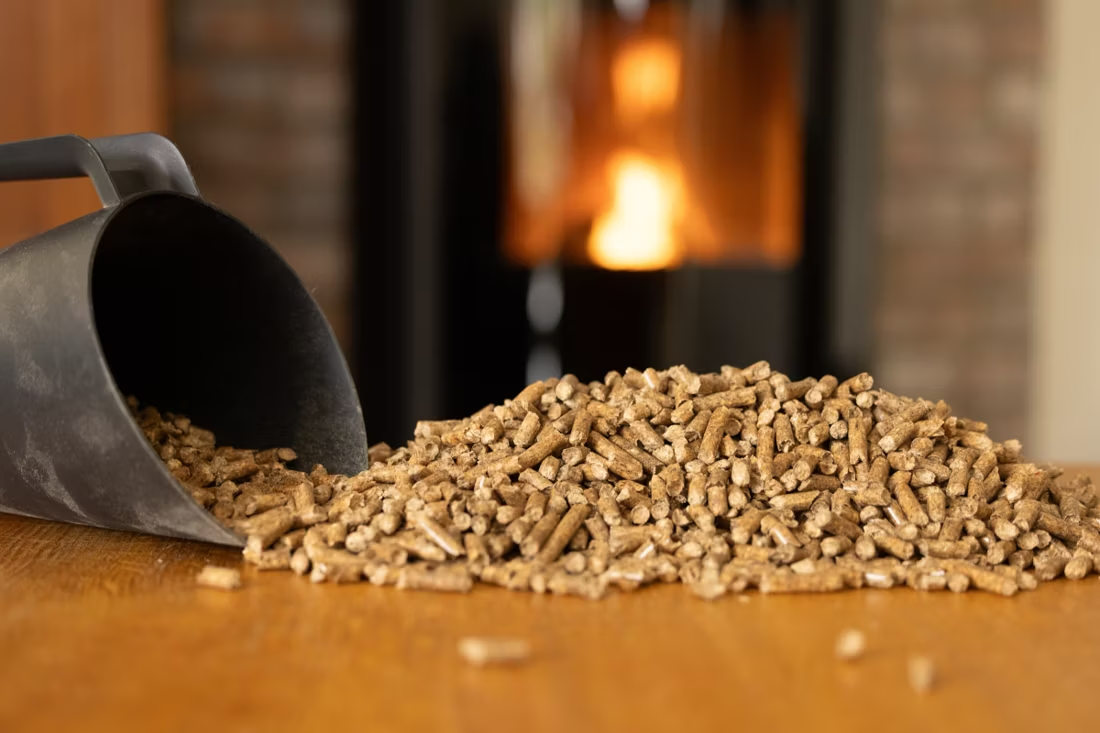
That's the gap pellet appliances fill. A hopper-fed pellet stove holds a thermostatically controlled burn for roughly 24 to 100 hours depending on the unit and hopper size, so you're loading fuel every day or two instead of every few hours—a real difference across a winter this long. Bottineau County has no air quality non-attainment concerns, so there's no burn-curtailment rule to navigate, but pellet appliances still burn cleaner and more completely than an open wood stove, which matters in tightly built, well-insulated Zone 7 homes. Regional pellet supply through brands like Lignetics and Indeck Energy Services moves through area farm supply stores and hearth dealers, though buying your season's fuel early—before county roads get difficult in a hard winter—is standard practice up here.
Three steps. No salesperson until you're ready.
Tell us about your project
Your zip code, your situation, and the fuel you're leaning toward—or let the answers point you to one.
See what's actually available
The brands dealers within 100 miles genuinely carry—real options, never a catalog mirage.
Get your dealer & Project Guide
A trusted local dealer, plus the free Project Guide & Parts List that names every component of the job.
Frequently Asked Questions
How much does a pellet stove installation cost in Bottineau County?
Cost depends on a few things a local dealer will walk through with you: the BTU output needed to handle 9,917 heating degree days and -4°F average lows, whether your home already has a 120-volt circuit near the install site for the auger and blower, the venting path through an exterior wall, and hearth pad clearance for your framing. Farmhouses and older county homes without existing venting or electrical near the intended stove location will run higher than a straightforward wall-vent job. Because hopper size and home layout vary so much across the county, the only reliable number is a firm in-home quote from a trusted local installer.
What size pellet stove do I need for a home in Bottineau County?
With 9,917 heating degree days—a season comparable to International Falls, MN—and average winter lows sitting at -4°F, Bottineau County calls for a stove sized toward the upper end of a manufacturer's square-footage rating, not the middle. A unit rated for 2,000 square feet in a moderate climate may only comfortably cover 1,400 to 1,600 square feet here once you account for the length and severity of the season. Older farmhouses with less insulation and newer, tighter-built homes near town will size differently even at the same square footage, which is why a local dealer's in-home visit beats a generic online sizing chart.
Do I need a permit to install a pellet stove in Bottineau County?
Most pellet stove installations require a building permit through the county's building and zoning office, and a through-wall vent penetration typically needs inspection sign-off, especially on a direct-vent unit. Pellet installs are common enough in this part of North Dakota that local hearth dealers generally handle the permit paperwork as part of the job rather than leaving it to the homeowner.
How much pellet fuel will I need for a winter, and where do I buy it?
Running a pellet stove as a primary or heavy supplemental heat source through a 9,917-HDD season, October to April, typically burns somewhere in the range of 3 to 5 tons, depending on your home's size and how hard the coldest stretches run. Regional pellet fuel from brands like Lignetics and Indeck Energy Services is available through area farm supply stores and hearth dealers. Given how remote Bottineau County is and how quickly winter roads near the Canadian border can turn difficult, most local households buy their season's supply in fall rather than restocking mid-winter.
What maintenance does a pellet stove need?
Plan on emptying the ash pan every few days and cleaning the burn pot weekly during heavy use, plus an annual professional service to check the auger motor, exhaust blower, and door gasket. Given how many hours a day a pellet stove runs as primary or near-primary heat through a Bottineau County winter, scheduling that annual service in September, before the season starts, keeps you from losing heat mid-winter to a part that needed attention.
What happens to my pellet stove during a power outage?
Pellet stoves rely on electricity to run the auger and combustion blower, so a standard unit stops producing heat the moment the power goes out—worth being honest about in a county exposed to blizzards and ice storms off the Turtle Mountains and near the Canadian border. Some models accept a battery backup for short outages, and many rural Bottineau County households pair a pellet stove with a small generator or keep a wood stove burning oak, cottonwood, or ash as backup heat for longer outages.
Pellet vs. wood—which makes more sense in Bottineau County?
Wood—cut locally from oak, cottonwood, and ash growing in farm wood lots and shelterbelts—works with zero electricity, which matters when a winter storm knocks out power for a day or more. Pellet stoves trade that off for thermostatic, hands-off heat and far less daily labor across a long season. A lot of rural households in the county end up running both: pellet for the convenience of day-to-day heat, wood as the backup that still works when the lights go out.
What pellet stove brands are available through local dealers?
It's worth separating pellet fuel from the stove itself. Lignetics and Indeck Energy Services are the regional pellet fuel suppliers you'll find through area farm stores and hearth dealers—they make the bags of fuel, not the appliance. For the stove or insert itself, local dealers serving Bottineau County typically carry established manufacturers such as Harman, Enviro, or Quadra-Fire. A trusted local dealer will know which of those brands they can actually service and get parts for within a reasonable drive of the county.
Are there rebates or tax credits for installing a pellet stove in Bottineau County?
The federal Energy Efficient Home Improvement Credit covers qualifying wood and pellet stoves with a thermal efficiency rating of 75% or higher at 30% of the installed cost, up to $2,000 per year. There's no county-specific rebate on top of that, but a local dealer can tell you which models in stock meet the efficiency threshold and how to document the purchase for your tax filing.
Why is my open fireplace making my house colder?
Open fireplaces suck—literally. As the fire burns, it consumes air your furnace already paid to heat and pulls it out through the chimney, so the house is actually colder after the fire goes out than before you lit it. An insert fixes this: it seals the chimney, puts fixed glass across the front, and turns that hole in your house into a real heat source.
What do I measure to size a fireplace insert?
Four numbers tell you what fits: the front width, the front height, the back width, and the overall depth of your existing fireplace opening. Grab a tape measure, jot those down, and snap a photo of the wall—those two things do more to move your project forward than anything else you can do today.
Can a fireplace actually lower my heating bill?
Yes—by creating a comfort zone. A furnace heats every square foot of the house just to warm the one room you're in; a gas fireplace on low burns roughly a sixth of the gas a typical furnace does. Set the furnace around 55–60 degrees as a baseline, then heat the rooms your family actually uses. Families who heat this way commonly save $20–$60 a month.
Does a fireplace add value to my home?
On average, a fireplace adds back to the home about the same amount you spent installing it. Add the monthly savings from heating the rooms you actually use instead of the whole house—often hundreds of dollars a year—and the value case is strong before you even count what a fire does for how your family uses the room.
Pellet Brands Stocked Around Bottineau County
Manufacturers will point you to the nearest stocking dealer.
Get your free pellet heat Project Guide & Parts List for Bottineau County.
Tell me about your home, its size, and how you plan to use the stove, and I'll match you with a trusted local Bottineau County dealer and send a free Project Guide & Parts List—the exact parts, including the vent kit, for a pellet heat setup built for a Zone 7 winter.
Find Your Fireplace →