
Add real warmth to a Bottineau County room—no chimney required.
From Bottineau to Westhope to the cabins around Lake Metigoshe, electric fireplaces bring instant ambiance and zone warmth to rooms where running a chimney or gas line isn't practical. Find the right unit and connect with a trusted local dealer.
Every Project Starts From One of These Five Situations
Zone heat for a county where furnaces do the heavy lifting.
Bottineau County sits in climate zone 7 against the Turtle Mountains and the Canadian border, and the numbers back up what anyone who's wintered here already knows: an average winter low near -4°F and roughly 9,900 heating degree days a year—colder, on paper, than International Falls, Minnesota. That kind of load is carried by propane furnaces, fuel oil, and wood heat (oak, cottonwood, and ash split from local farm shelterbelts and river bottoms), not by a plug-in fireplace. Electric fireplaces here play a different role: supplemental warmth and visual comfort in a bonus room, a finished basement in Bottineau, an addition in Westhope or Souris, or a manufactured home in Willow City or Landa where a masonry chimney was never in the plan.
That's also exactly why electric works so well around Lake Metigoshe State Park and the Peace Garden area, where a lot of housing stock is seasonal cabins. Owners who are gone for weeks at a stretch don't want to worry about a chimney, a gas line, or carbon monoxide risk in an unattended structure—an electric insert or mantel unit gives them real flame-effect ambiance and a bit of room heat on demand, with nothing to inspect or sweep when they're back in town. Most of rural Bottineau County is served by a rural electric cooperative, with the city of Bottineau on its own municipal system—either way, a licensed electrician can usually get a dedicated circuit run in an afternoon.
Three steps. No salesperson until you're ready.
Tell us about your project
Your zip code, your situation, and the fuel you're leaning toward—or let the answers point you to one.
See what's actually available
The brands dealers within 100 miles genuinely carry—real options, never a catalog mirage.
Get your dealer & Project Guide
A trusted local dealer, plus the free Project Guide & Parts List that names every component of the job.
Frequently Asked Questions
How much does an electric fireplace installation cost in Bottineau County?
Electric fireplaces are the least expensive hearth product to install because there's no chimney, no gas line, and no masonry work. A plug-in freestanding unit or a basic insert that uses a standard 120V outlet can run as little as a few hundred dollars for the unit itself, self-installed. A built-in wall unit or a larger insert that needs a dedicated 240V circuit typically adds $200 to $600 in electrician labor on top of the unit cost, depending on how far the panel is from the install location—a bigger factor in older farmhouses around Willow City or St. John than in newer Bottineau construction. There's no chimney or venting cost, which is the main reason electric runs so far below wood or gas installs in this county.
Will an electric fireplace actually heat my home through a Bottineau County winter?
No—and it's worth being direct about that. With roughly 9,900 heating degree days a year and average lows near -4°F, this county needs a real primary heat source: a propane furnace, fuel oil, or a wood stove burning local oak or ash. Most electric fireplace heaters top out around 5,000-6,000 BTU, enough to take the edge off a single room but nowhere near enough for whole-home heating in this climate. Think of electric as zone heat for a specific room—a den, a bonus room over the garage, a basement—used alongside whatever is already heating the rest of the house, not as a replacement for it.
Do I need a permit to install an electric fireplace in Bottineau County?
Usually not for the fireplace itself—since there's no venting, no gas line, and no chimney involved, electric units generally fall outside the building permit requirements that apply to wood and gas installs. If your installation requires a new dedicated circuit, the electrical work itself should be done by a licensed electrician and may require an electrical permit through the county or city, depending on where you're located. A plug-in unit on an existing outlet typically needs no permit at all. Check with the Bottineau County building office or your local electrician if you're unsure which category your project falls into.
Are electric fireplaces a good fit for manufactured and mobile homes?
Yes—this is one of the strongest use cases for electric in a rural county like Bottineau, where manufactured and mobile homes are common in places like Landa, Souris, and outside Westhope. Wood stoves and gas fireplaces both come with clearance-to-combustible rules and roof or wall penetrations that can be complicated in manufactured housing. Electric units sidestep all of that—no venting, no roof penetration, no chimney chase—and most models are listed for use in manufactured housing when installed per the manufacturer's clearance specs. It's often the simplest hearth upgrade available for this type of home.
What about electric fireplaces for cabins around Lake Metigoshe?
Electric is a strong fit for seasonal cabins in the Lake Metigoshe State Park area for a simple reason: no maintenance burden while the place sits empty. A wood stove needs a chimney sweep and dry fuel on hand; a gas fireplace needs an annual service check and carries a small combustion-safety consideration in an unoccupied building. An electric fireplace just needs power. Many owners run a smaller unit on a timer or app control so the cabin looks warm and lived-in when they arrive, without worrying about anything smoldering while they're back in Minot or Bottineau during the week.
Electric vs. wood—which makes sense for my Bottineau County home?
Wood is the workhorse here—oak, cottonwood, and ash are all locally available, burn well in this climate, and a properly sized wood stove can genuinely carry primary heat through a -4°F winter, including during power outages when electric heat of any kind goes dark. Electric fireplaces can't compete on raw heat output or outage resilience, but they win on convenience: no ash, no chimney sweep, no wood to split and stack, and instant on-off operation from a wall switch or remote. For a primary heat source in this county, wood remains the more serious option. For ambiance and a warm-looking room with zero maintenance, electric is hard to beat.
Electric vs. pellet stove—what's the real difference for this area?
Pellet stoves burn bagged wood pellets—regional brands like Lignetics and Indeck Energy Services are both distributed in this part of North Dakota—and they put out meaningful heat, often enough to serve as a primary or near-primary heat source in a well-insulated home. But they still need venting through an exterior wall, a hopper to load, and ash to empty, and they need electricity to run the auger and blower, so they're not a backup option during an outage either. Electric fireplaces skip the venting and the pellet bags entirely but produce far less usable heat. If you want real supplemental BTUs with some maintenance, pellet is the stronger choice. If you want zero maintenance and mostly want the visual and a little warmth, electric is simpler.
Will my electric fireplace work if the power goes out?
No—and this matters more in Bottineau County than in milder climates, because winter storms here can knock out power for hours at a time in rural areas served by the local electric cooperative. An electric fireplace, like any electric heater, goes dark the moment the power does. If you're relying on hearth heat for anything beyond ambiance, it's worth having a wood stove or a propane heater with battery-free ignition somewhere in the house as backup—especially outside the city of Bottineau, where restoration times after a bad ice storm or blizzard can run longer than in town.
Where can I find someone to install an electric fireplace near Bottineau County?
Given the county's population of around 3,200, most hearth retailers and electricians who serve Bottineau, Westhope, and the surrounding area either operate locally out of Bottineau or travel up from Minot, about an hour south, which has a larger selection of hearth dealers. Either way, a trusted local pro will size the unit correctly for the room, confirm whether your electrical panel can support a dedicated circuit if needed, and handle any permit questions specific to your township or the city of Bottineau. That's the matching service I built Find My Fireplace to provide—a real local recommendation, not a guess off a big-box shelf.
Can I put a TV above my fireplace?
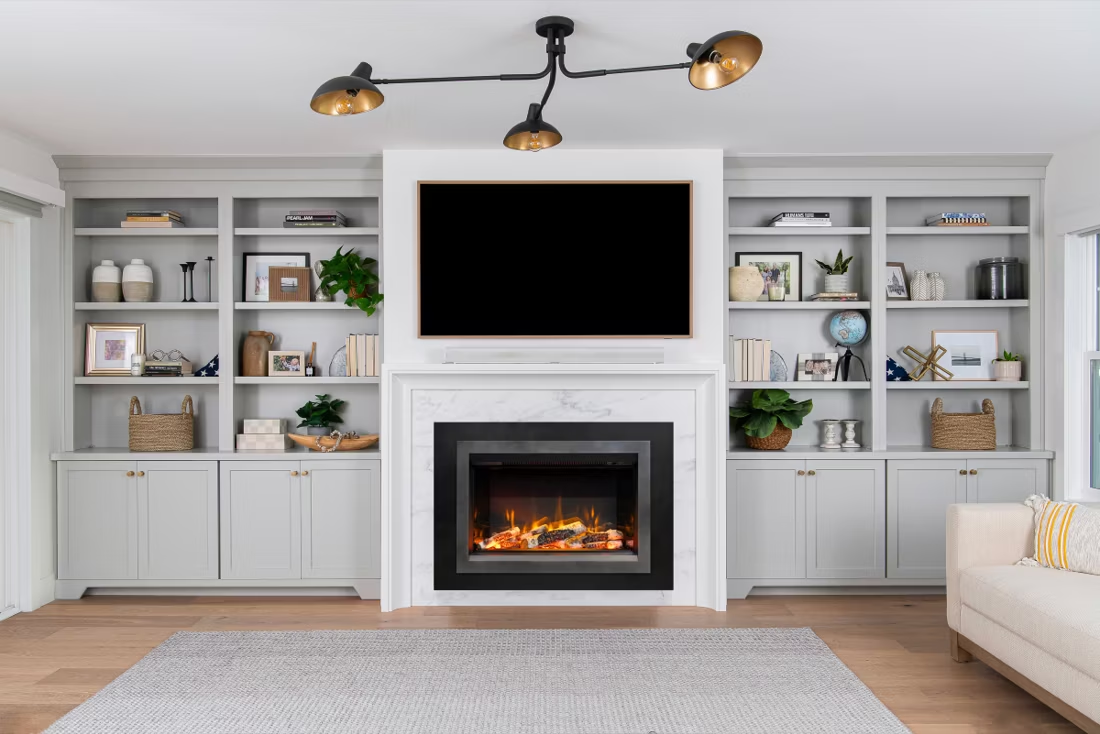
Yes—with an asterisk. Fireplaces are hot and TVs don't like heat. Either put a mantel between them to deflect rising warmth, or choose a fireplace with heat-management technology that creates a cool zone on the wall above—the wall stays around 125 degrees, barely warm, while the room still gets full heat. If you like clean lines and don't want a mantel, heat management is the answer.
How much does an electric fireplace cost to run?
With the heater on, a typical unit draws about 1,500 watts—at average electric rates that's roughly 20 cents an hour. Run the flame effect alone and it costs pennies; the flames are LED-driven and use about as much power as a light bulb. There's no pilot light, no fuel delivery, and essentially no maintenance.
Does a fireplace add value to my home?
On average, a fireplace adds back to the home about the same amount you spent installing it. Add the monthly savings from heating the rooms you actually use instead of the whole house—often hundreds of dollars a year—and the value case is strong before you even count what a fire does for how your family uses the room.
What is an in-home preview and do I need one?
It's a visit where a hearth professional measures your space, confirms the model you picked actually works in your home, and walks the specs—framing, gas line, venting, finish work—before anything is ordered. Some details you just can't know until you see the house. Never make a down payment without one; it's the single most-skipped step that burns buyers.
Find your electric fireplace in Bottineau County.
Tell us about your room and how you plan to use it, and we'll match you with a trusted local dealer and send over a free Project Guide & Parts List—the exact parts for your electric fireplace project in Bottineau County, plus the dealer we recommend.
Find Your Fireplace →