
Heat that holds through a Bottineau County winter.
Wood, gas, pellet, and electric fireplace resources for every town in Bottineau County—from Bottineau and Westhope to Willow City and Souris. Find the right unit for Zone 7 cold and connect with a trusted local hearth retailer.
Every Project Starts From One of These Five Situations
Prairie cold at the edge of the Canadian border.
Bottineau County sits against the Manitoba line in north-central North Dakota, where the Turtle Mountains break up an otherwise flat prairie and the International Peace Garden straddles the border. This is Climate Zone 7 territory—average winter lows around -4°F and roughly 9,917 heating degree days per year, a heat-loss burden in the same range as International Falls, Minnesota. Wind across the open prairie makes the cold feel worse than the thermometer says, and the heating season here often runs from October into April. Farm shelterbelts and the Turtle Mountain woodlots supply the oak, cottonwood, and ash that fuel a lot of local wood stoves, a tradition that predates rural electrification in this part of the state.
This hub rounds up hearth retailers, service technicians, and fuel suppliers for every community in the county—Bottineau, Westhope, Willow City, Souris, Landa, Maxbass, and Antler included. With just over 3,000 people spread across the county, dealer options are thinner than in bigger North Dakota markets, and a fair number of installers and technicians come out from Minot to cover rural calls. Pick a fuel below for local dealers, cost ranges, and what actually holds up here—whether you're heating a farmhouse outside Westhope or a lake cabin near the Peace Garden.
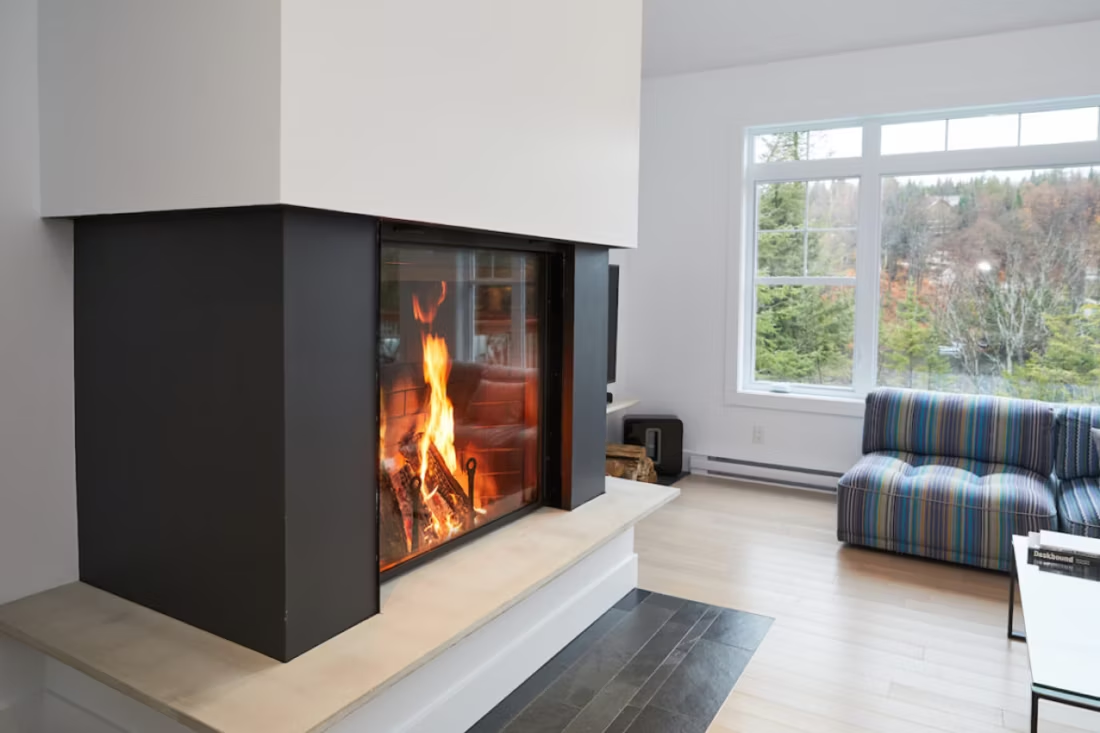
Four fuels. One honest answer for Bottineau County.
Three steps. No salesperson until you're ready.
Tell us about your project
Your zip code, your situation, and the fuel you're leaning toward—or let the answers point you to one.
See what's actually available
The brands dealers within 100 miles genuinely carry—real options, never a catalog mirage.
Get your dealer & Project Guide
A trusted local dealer, plus the free Project Guide & Parts List that names every component of the job.
Frequently Asked Questions
Which fuel works best in Bottineau County?
With average winter lows near -4°F and roughly 9,917 heating degree days a year, this county asks a lot of any heating appliance. Wood is the long-standing choice for rural homes—oak, ash, and cottonwood from farm shelterbelts and Turtle Mountain woodlots burn hot and long, and a catalytic stove can carry a farmhouse through an overnight prairie wind chill without power. Propane is the practical convenience fuel here, since natural gas mains don't reach most of the county—a propane fireplace or insert gives instant heat with none of the wood-splitting labor. Pellet stoves, stocked with regional brands like Lignetics and Indeck Energy Services, split the difference—steady, wood-like heat without a woodpile, though they do need electricity to run the auger and blower. Electric fireplaces are supplemental at best in this climate—good for a bedroom or a den, not a primary heat source when temperatures drop into single digits. Most homes in the county end up running two fuels: wood or propane as primary, something smaller for the rooms in between.
Do I need a permit to install a fireplace in Bottineau County?
Yes, in most cases. New wood stoves, wood inserts, gas appliances, and pellet stoves typically require a building permit through the Bottineau County Building Department, and wood-burning units need to meet current EPA 2020 NSPS emissions standards to be installed new. Propane installations—the common gas option in a county without natural gas mains—require a licensed propane installer for the tank and line work in addition to the appliance permit. Electric fireplaces generally skip the permit process unless you're doing a built-in installation that involves new wiring or a dedicated circuit. Most local hearth dealers handle the permit paperwork as part of the installation, so you're not filing it yourself.
Are there air quality restrictions on wood burning in Bottineau County?
No—Bottineau County doesn't have the winter temperature inversions or non-attainment designations that trigger burn advisories in some parts of the country. Open prairie and consistent wind keep smoke from settling the way it can in a mountain basin. That said, an EPA-certified wood stove still makes sense here on its own merits: it uses less firewood per BTU, produces far less creosote buildup in the chimney, and holds a longer, steadier burn through a cold prairie night than an old uncertified box stove.
Can one local hearth retailer handle all four fuel types?
Not always, and that's normal for a county this size. With just over 3,000 residents spread across Bottineau County, most in-town retailers concentrate on wood and propane—the two fuels that make the most sense without natural gas infrastructure—and carry pellet stoves as a secondary line. For a full side-by-side comparison across wood, gas, pellet, and electric, homeowners here often end up working with a dealer based in Minot, about 40 minutes south, who serves the wider region and stocks a broader range of display units. It's worth asking any local dealer directly which fuels they install versus which they only sell parts for.
How does service work in rural parts of Bottineau County?
Most technicians covering Bottineau County are based in or near the town of Bottineau or come out from Minot, and they build routes that cover Westhope, Willow City, Souris, and the farm roads in between on the same trip. Winter travel adds time and sometimes a modest trip fee for outlying properties. Because the heating season here runs long—often October through April—it pays to schedule your annual chimney sweep or gas inspection in late summer or early fall, before the pre-winter rush and before snow and ice make rural roads slower to travel. If you're heating with wood or pellet as your primary source, keeping a propane or electric backup on hand isn't a bad idea for the stretch between a breakdown and a service appointment.
What's the typical cost range for fireplace installation across all fuel types in Bottineau County?
Costs run close to regional Upper Midwest norms, with some upward pressure from rural travel fees. Wood stove or insert installation: roughly $4,000–$8,500 for a typical retrofit, more if new chimney work is required. Propane fireplace, insert, or stove: roughly $4,000–$10,000 depending on whether a new tank and line are needed versus tying into existing service. Pellet stove or insert: roughly $4,000–$7,000 installed. Electric fireplace: $200–$3,000 for the unit itself, plus $400–$1,200 in labor for anything beyond a simple plug-in install. Rural properties outside Bottineau and Westhope should budget on the higher end of each range to account for technician travel time.
Can a fireplace actually lower my heating bill?
Yes—by creating a comfort zone. A furnace heats every square foot of the house just to warm the one room you're in; a gas fireplace on low burns roughly a sixth of the gas a typical furnace does. Set the furnace around 55–60 degrees as a baseline, then heat the rooms your family actually uses. Families who heat this way commonly save $20–$60 a month.
Can I install a fireplace myself?
If you're putting a fire in your house on purpose, it's best to work with an expert. Unless you're genuinely experienced in framing, gas line, vent pipe, and the national code on clearances to combustibles, have a professional do it—and ideally the same company that sells you the fireplace, so warranty, service, and liability all live under one roof.
What are the biggest mistakes people make buying a fireplace?
Five come up constantly: budgeting for the unit but not the full job (vent, gas line, electrical, finish work); drowning in options instead of starting from style and fuel; buying without an in-home preview; handing installation to a handyman instead of a pro; and giving up out of sheer indecision. Every one is avoidable with a clear plan—step one, step two, step three.
What is an in-home preview and do I need one?
It's a visit where a hearth professional measures your space, confirms the model you picked actually works in your home, and walks the specs—framing, gas line, venting, finish work—before anything is ordered. Some details you just can't know until you see the house. Never make a down payment without one; it's the single most-skipped step that burns buyers.
Stove and Fireplace Dealers in Bottineau County
Listings include WhyFire partner dealers, dealers we have verified as authorized for the brands we recommend, and established local businesses that carry hearth products. Every listing shows which one it is. The ones marked Preferred run on WhyFire's software, so they can show you real pricing and book your appointment right here. No manufacturer pays for placement. How we verify dealers →
Sawmill Lumber & Hardware
North Central Services, Inc
Get matched with a Bottineau County hearth dealer.
Pick your fuel below and we'll match you with a trusted local dealer and send a free Project Guide & Parts List—the exact parts, including the vent kit, sized for your home and this county's winters.
Find Your Fireplace →