
Find pellet heat that lasts the whole Wyoming County winter.
Automated, hopper-fed heat for the hill country of western New York—from Warsaw to Arcade to the farmland ringing Letchworth State Park. I'll match you with a local dealer who can size the unit and get it installed right.
Every Project Starts From One of These Five Situations
Consistent, low-maintenance heat for a county built on hard winters.
Wyoming County sits in the rolling hill country of western New York, a climate zone 6A region where winters run long and lake-effect snow off Lake Erie regularly stacks up in the townships around Warsaw, Arcade, Attica, and Perry. It's dairy country first—big open fields, scattered farmsteads, and a population of under 2,000 spread thin across the county—which means woodlots of oak, maple, birch, and ash are common, but so is the appeal of a heat source that doesn't require splitting and stacking cordwood every fall.
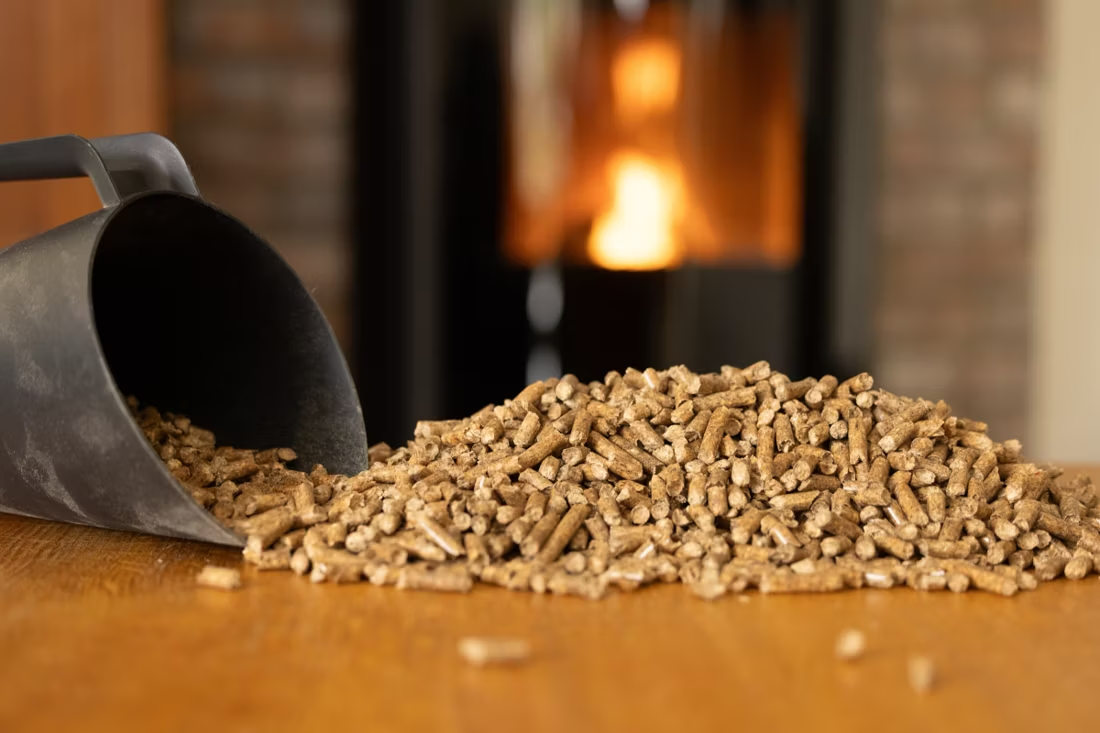
That's where pellet appliances fit in. A pellet stove or insert loads from a bag instead of a woodpile, burns cleaner than cordwood, and needs only an annual cleaning rather than a full chimney sweep—relevant here since Wyoming County has no local air quality restrictions or burn bans to navigate. Regional suppliers like Energex, Hamer Pellet Fuel, and Greene Team Pellet Fuel keep hardwood pellets reasonably accessible even in a rural county like this one, where the nearest big-box store might be forty-five minutes away in Batavia or Buffalo.
Three steps. No salesperson until you're ready.
Tell us about your project
Your zip code, your situation, and the fuel you're leaning toward—or let the answers point you to one.
See what's actually available
The brands dealers within 100 miles genuinely carry—real options, never a catalog mirage.
Get your dealer & Project Guide
A trusted local dealer, plus the free Project Guide & Parts List that names every component of the job.
Frequently Asked Questions
How much does a pellet stove or insert installation cost in Wyoming County?
Most pellet stove and insert installations in Wyoming County run $3,500 to $6,500, depending on the unit, whether it's a freestanding stove or an insert going into an existing masonry fireplace, and how much venting work is involved. Inserts going into a chimney you already have tend to land on the lower end; new installations requiring fresh through-wall or through-roof venting, plus a dedicated electrical outlet for the auger and blower, push toward the higher end. Because dealer density is thin in a county this size, expect your quote to include a modest travel charge if you're out toward Bliss, Java Center, or the far corners of the county.
What size pellet stove do I need for a home in Wyoming County?
Zone 6A winters and the lake-effect snow that piles up around Wyoming County mean you generally want to size a notch above what a mild-climate chart suggests. Small hopper-fed stoves (rated up to roughly 1,000 sq ft) suit a single farmhouse room or a seasonal camp near Letchworth; medium units (1,000–2,000 sq ft) cover most main living areas in the county's older farmhouses; larger units (2,000+ sq ft) are common in whole-home setups where a family is using pellet as primary heat rather than a supplement to propane or oil. An in-home visit from a local dealer is worth it—older farmhouses with poor insulation in this county often need more BTU capacity than the square footage alone suggests.
Where can I find certified pellet stove installers near Wyoming County?
Look for NFI (National Fireplace Institute)-certified technicians, which most established hearth dealers serving this part of western New York carry. Because Wyoming County itself has a small, spread-out population, several homeowners here end up working with dealers based in nearby Batavia, Rochester, or Buffalo who route service trucks through the county on a regular schedule. Ask about that route schedule up front—it affects both install timing and how quickly you can get warranty service if something goes wrong mid-winter.
What's the difference between a pellet stove and a pellet insert?
A pellet stove is a freestanding appliance that sits on its own hearth pad and vents through a wall or existing chimney chase—it can go almost anywhere with the right clearances. A pellet insert is built to slide into an existing masonry fireplace opening, which is common in Wyoming County's older farmhouses that already have a brick hearth but rarely use it because tending an open wood fire is impractical day to day. For a home with an existing fireplace, an insert usually makes more sense: it reuses the chimney, tidies up the look, and turns an underused fireplace into the home's main heat source.
Do I need a permit to install a pellet stove in Wyoming County?
Yes—pellet appliance installations fall under the New York State Uniform Fire Prevention and Building Code, and you'll need to pull a permit through your local town or village code enforcement office, whether that's Warsaw, Arcade, Attica, Perry, or one of the smaller townships. Most dealers who install pellet stoves in this county handle the permit paperwork as part of the job, since they already know which code officer to call in each township. Unlike open wood burning, there's no seasonal curtailment to worry about here—Wyoming County has no non-attainment or inversion-related air quality restrictions on the books.
What's the best pellet stove for a zone 6A climate like Wyoming County's?
For a cold, snow-heavy climate like this one, look for a pellet stove with a large hopper capacity—40 to 60 pounds—so it can run a full day or more between refills during a multi-day lake-effect snow event. Brands like Harman and Englander are common choices among western New York dealers for their cold-climate reliability, and either pairs well with regional hardwood pellet brands like Energex, Hamer Pellet Fuel, or Greene Team Pellet Fuel, all of which are distributed through this part of the state. Ask your local dealer about a battery backup or generator hookup too—pellet stoves need electricity to run the auger and blower, which matters when winter storms knock out power for a day or two.
How often does a pellet stove need to be serviced?
Plan on a full annual cleaning before the start of burning season—typically late summer or early fall—covering the burn pot, auger, exhaust fan, and venting. Heavy users running a pellet stove as primary heat through a Wyoming County winter often benefit from a mid-season burn pot cleaning as well, since ash buildup can affect ignition and efficiency. This is far less involved than a wood chimney sweep, but skipping it is still the most common cause of ignition problems and reduced heat output.
Where can I buy pellets in or near Wyoming County?
Regional producers including Energex, Hamer Pellet Fuel, and Greene Team Pellet Fuel supply hardwood pellets throughout western New York, and most local farm supply and hardware stores in Warsaw, Arcade, and Perry stock bags or can order pallets. Buying by the ton (a pallet of roughly 50 forty-pound bags) is usually more economical than buying by the bag if you have dry storage space—a garage or barn works well in a county where nearly every property has one. Stocking up before the first snow is wise here, since deliveries can slow once county roads see their first serious lake-effect accumulation.
Pellet stove vs. wood stove—which is right for my Wyoming County home?
Wood stoves burn the oak, maple, birch, and ash common on Wyoming County woodlots, work without electricity, and are the more traditional choice for the county's farming households that already cut and split their own firewood. Pellet stoves trade that self-sufficiency for convenience—load a hopper, set a thermostat, and get more consistent, lower-maintenance heat with less ash and no chimney creosote buildup. The tradeoff to weigh seriously here: pellet stoves need electricity, and this part of western New York sees real winter power outages during lake-effect snow events. If backup heat during an outage matters most, wood wins; if day-to-day convenience and cleaner burning matter more and you have a generator or battery backup, pellet is usually the better fit.
Why is my open fireplace making my house colder?
Open fireplaces suck—literally. As the fire burns, it consumes air your furnace already paid to heat and pulls it out through the chimney, so the house is actually colder after the fire goes out than before you lit it. An insert fixes this: it seals the chimney, puts fixed glass across the front, and turns that hole in your house into a real heat source.
What's the difference between an insert and a zero-clearance fireplace?
An insert is a fireplace that slides into a pre-existing wood-burning fireplace—if you don't have one, there's nothing to insert it into. A zero-clearance fireplace is built into a framed wall, which makes it the answer for remodels and new construction. Simple test: existing masonry fireplace means insert; blank or framed wall means zero-clearance.
Can I install a fireplace myself?
If you're putting a fire in your house on purpose, it's best to work with an expert. Unless you're genuinely experienced in framing, gas line, vent pipe, and the national code on clearances to combustibles, have a professional do it—and ideally the same company that sells you the fireplace, so warranty, service, and liability all live under one roof.
What is an in-home preview and do I need one?
It's a visit where a hearth professional measures your space, confirms the model you picked actually works in your home, and walks the specs—framing, gas line, venting, finish work—before anything is ordered. Some details you just can't know until you see the house. Never make a down payment without one; it's the single most-skipped step that burns buyers.
Pellet Brands Stocked Around Wyoming County
Manufacturers will point you to the nearest stocking dealer.
Get your Wyoming County pellet stove Project Guide & Parts List.
Tell me a bit about your home and I'll put together a free Project Guide & Parts List—the exact parts, including the vent kit, and a recommended local dealer who installs pellet stoves and inserts across Wyoming County.
Find Your Fireplace →