
Bring reliable heat to your Wyoming County home—no chimney required.
From Warsaw to Attica to Arcade, electric fireplaces give Wyoming County homeowners fast, no-venting heat for lake-effect winters—without a woodpile or a gas line. Find the right unit and connect with a trusted local dealer.
Every Project Starts From One of These Five Situations
The simplest way to add heat exactly where you need it.
Wyoming County sits in the climate zone 6A band of western New York, tucked between the Genesee Valley and the Lake Erie snowbelt—the kind of terrain where lake-effect systems can dump a foot of snow on Arcade or Silver Springs while Warsaw stays comparatively dry a few miles away. It's a small, rural county—under 2,000 residents in some of its outlying communities—with a lot of older farmhouses, camps, and mobile homes where running a new gas line or building a masonry chimney isn't practical. That's exactly the gap electric fireplaces fill.
Electric units plug into a standard outlet (or a dedicated circuit for larger built-ins) and produce real, immediate heat with zero venting, zero combustion byproducts, and none of the annual chimney sweep or gas-line inspection that wood and gas units require. National Grid serves electric across most of Wyoming County, and for a lot of homeowners here—especially renters, seasonal camp owners around Silver Lake, or anyone converting a spare bedroom or basement into usable living space—an electric fireplace is the fastest, least invasive way to add supplemental heat and ambiance without touching the home's existing heating system.
Three steps. No salesperson until you're ready.
Tell us about your project
Your zip code, your situation, and the fuel you're leaning toward—or let the answers point you to one.
See what's actually available
The brands dealers within 100 miles genuinely carry—real options, never a catalog mirage.
Get your dealer & Project Guide
A trusted local dealer, plus the free Project Guide & Parts List that names every component of the job.
Frequently Asked Questions
How much does an electric fireplace installation cost in Wyoming County?
A plug-in electric insert or freestanding stove that runs on a standard 120V outlet typically costs $300 to $900 installed, since there's no venting or gas line involved—often it's just the unit itself plus a bit of carpentry to fit it into an existing opening. A larger built-in wall unit or a model that needs a dedicated 240V circuit runs higher, generally $1,000 to $2,000, once an electrician is brought in to run new wiring. Homes in outlying parts of the county—Pike, Bergen, or the more rural stretches around Perry—may see a modest travel charge from electricians and installers based out of Warsaw or Batavia.
Do I need an electrician or a permit to install an electric fireplace?
If you're plugging a unit into an existing standard outlet, no permit is typically required—it's treated like any other major appliance. If the unit calls for a new dedicated circuit, a licensed electrician needs to run that wiring, and most local towns in Wyoming County (Warsaw, Arcade, Attica) require an electrical permit for new circuit work through the town building department. A reputable local dealer will tell you upfront whether the model you're considering needs new wiring, and most work with an electrician directly so you're not coordinating two separate trades.
What's the difference between an electric insert, a built-in, and an electric stove?
An electric insert is designed to slide into an existing masonry or wood-burning fireplace opening, giving you heat and a flame-effect display without touching your chimney (which you can now cap and leave unused). A built-in electric fireplace is designed into new framing—common in remodels or additions where there's no existing hearth. An electric stove is a freestanding cabinet-style unit that sits anywhere with an outlet nearby, which makes it a popular choice for camps around Silver Lake or older Wyoming County farmhouses without a fireplace at all. For homes with an unused wood fireplace, an insert is usually the simplest upgrade.
Will my electric fireplace work during a power outage?
No—this is the one real tradeoff to understand. Electric fireplaces need grid power to run the heater and flame display, so during a winter storm outage (not uncommon in Wyoming County's lake-effect snowbelt) an electric unit goes dark along with everything else. If backup heat during outages matters to you—particularly in the more rural parts of the county where restoration times can run longer—a wood stove burning local oak, maple, or ash is worth considering alongside or instead of an electric unit. Many homeowners here use electric for daily convenience and keep a wood stove as the outage backup.
How much heat does an electric fireplace actually put out?
Most electric fireplaces are rated around 4,600–5,200 BTU (roughly 1,500 watts), which comfortably heats a single room of 400 to 600 square feet depending on insulation and ceiling height. That makes them well suited as zone heat—warming the room you're actually in rather than running the furnace for the whole house—but they're not a realistic whole-home heat source for a Wyoming County winter, where sustained cold and lake-effect systems demand more capacity than a single unit can deliver. Homeowners looking to offset furnace use in more than one room typically install a unit per room rather than one oversized unit.
What's the best electric fireplace for an older Wyoming County farmhouse?
Older farmhouses common throughout the county often have drafty rooms, plaster walls, and no existing ductwork to a specific space—which makes a freestanding electric stove or a wall-mounted unit with a built-in thermostat a good fit, since it can be moved or repositioned more easily than a permanently framed-in unit. Look for models with a true heater element (not just a decorative flame effect) if you want it to meaningfully offset the room's heating load in a Wyoming County winter. A local dealer can walk you through wattage and coverage based on your room's actual square footage and insulation.
How much maintenance does an electric fireplace need?
Very little compared to wood or gas. There's no chimney to sweep, no gas line to inspect, and no combustion byproducts to worry about. Maintenance is mostly dusting the unit, occasionally checking or replacing the heater fan filter if the model has one, and replacing LED flame-effect bulbs every few years as they age out. There's no annual inspection requirement the way there is for wood-burning or gas appliances in Wyoming County—it's one of the reasons electric appeals to seasonal camp owners who aren't around to do upkeep.
Can I put an electric fireplace in my existing wood-burning fireplace opening?
In most cases, yes—an electric insert is sized to slide into a standard masonry fireplace opening, and since it doesn't need venting, you don't have to touch the existing chimney beyond capping it off if you're retiring it from wood use. This is a common project for older Wyoming County homes with a fireplace that's been unused for years—it restores the visual centerpiece of the room and adds real heat without the wood handling, ash cleanup, or chimney maintenance. A local dealer can confirm your opening's dimensions before you order.
Electric vs. wood—which is right for my Wyoming County home?
Wood stoves burning local oak, maple, birch, or ash deliver more total heat, work without any electricity (a real advantage during lake-effect storm outages), and suit homeowners who want a primary or serious backup heat source. Electric fireplaces install in an afternoon, need no chimney or wood supply, and produce zero mess or emissions—a better fit for supplemental warmth in a specific room, rental properties, or camps that sit empty part of the year. Many Wyoming County households end up with both: wood for reliable winter backup, electric for the convenience of instant heat in a bedroom or den on an ordinary evening.
Do electric fireplaces actually produce heat?
Yes—most put out around 4,800–5,000 BTUs from a standard outlet, which comfortably warms a bedroom, office, or den as a comfort-zone heater. What they won't do is carry a whole house the way wood, gas, or pellet can. Think of electric as ambiance-first with honest supplemental heat: flames on with no heat in July, flames plus warmth in January.
Can I put a TV above my fireplace?
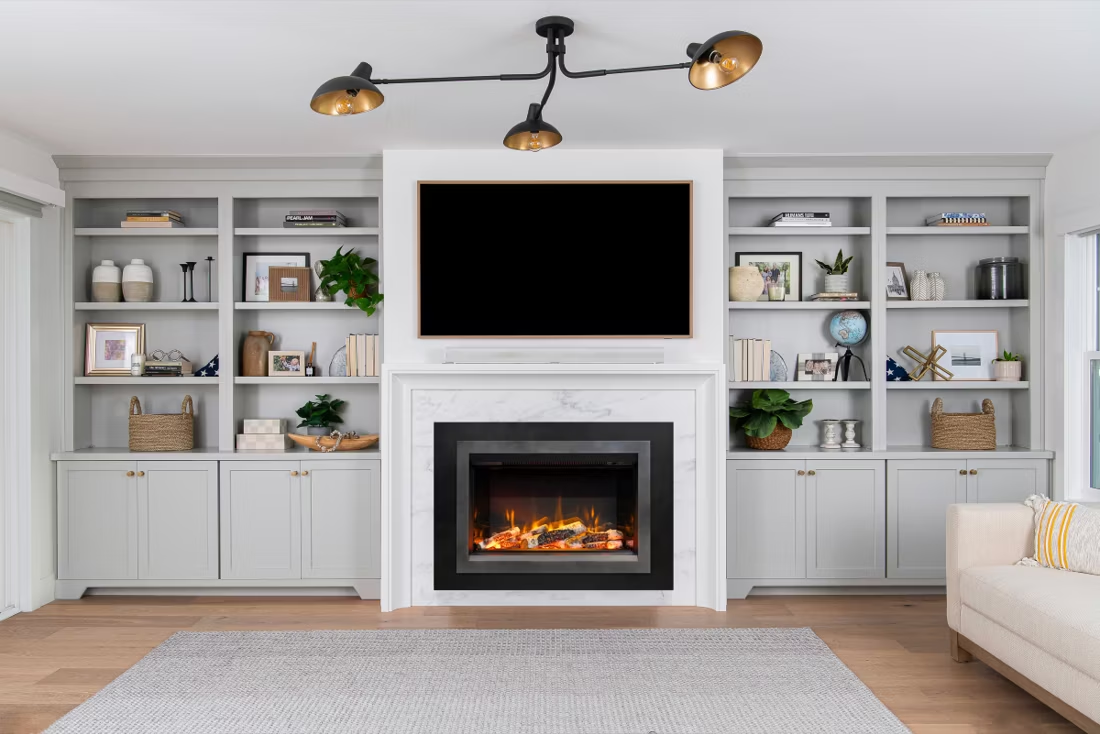
Yes—with an asterisk. Fireplaces are hot and TVs don't like heat. Either put a mantel between them to deflect rising warmth, or choose a fireplace with heat-management technology that creates a cool zone on the wall above—the wall stays around 125 degrees, barely warm, while the room still gets full heat. If you like clean lines and don't want a mantel, heat management is the answer.
What is an in-home preview and do I need one?
It's a visit where a hearth professional measures your space, confirms the model you picked actually works in your home, and walks the specs—framing, gas line, venting, finish work—before anything is ordered. Some details you just can't know until you see the house. Never make a down payment without one; it's the single most-skipped step that burns buyers.
Can a fireplace actually lower my heating bill?
Yes—by creating a comfort zone. A furnace heats every square foot of the house just to warm the one room you're in; a gas fireplace on low burns roughly a sixth of the gas a typical furnace does. Set the furnace around 55–60 degrees as a baseline, then heat the rooms your family actually uses. Families who heat this way commonly save $20–$60 a month.
Find your electric fireplace in Wyoming County.
Tell us a bit about your home and we'll put together your free Project Guide & Parts List—the right electric fireplace or insert for your space, matched with a trusted local dealer in Wyoming County.chdir
Find Your Fireplace →