
Heat Your Home Through Every Wyoming County Winter.
Wood, gas, pellet, and electric fireplace resources for every village and town in Wyoming County—from Warsaw and Attica to Arcade, Perry, and Silver Springs. Find the right unit and connect with a trusted local hearth retailer.
Every Project Starts From One of These Five Situations
Snowbelt heating in the hardwood hills of western New York.
Wyoming County sits in the rolling hardwood hills between the Genesee Valley and the Lake Erie snowbelt. Per this data, it's sparsely populated—under 2,000 residents spread across dairy farms, small villages, and forested ridges—and winters run long and cold. Zone 6A puts heating demand on par with Burlington, Vermont: sub-zero nights are routine from December through February, and lake-effect systems off Lake Erie can drop a foot of snow overnight. Woodlots of oak, maple, birch, and ash cover much of the county, and cutting your own firewood is still a normal part of rural life here—plenty of households heat primarily with wood or lean on a wood or pellet stove to take the load off a furnace.
This hub rolls up the county's hearth ecosystem across all four fuel types—wood, gas, pellet, and electric—for every community from Warsaw and Attica to Arcade, Perry, and Silver Springs. Pick your fuel below for local dealers, typical installation costs, and the resources tied to that fuel. Whether you're heating a farmhouse near Letchworth State Park or a village home near the county seat, this is the starting point.
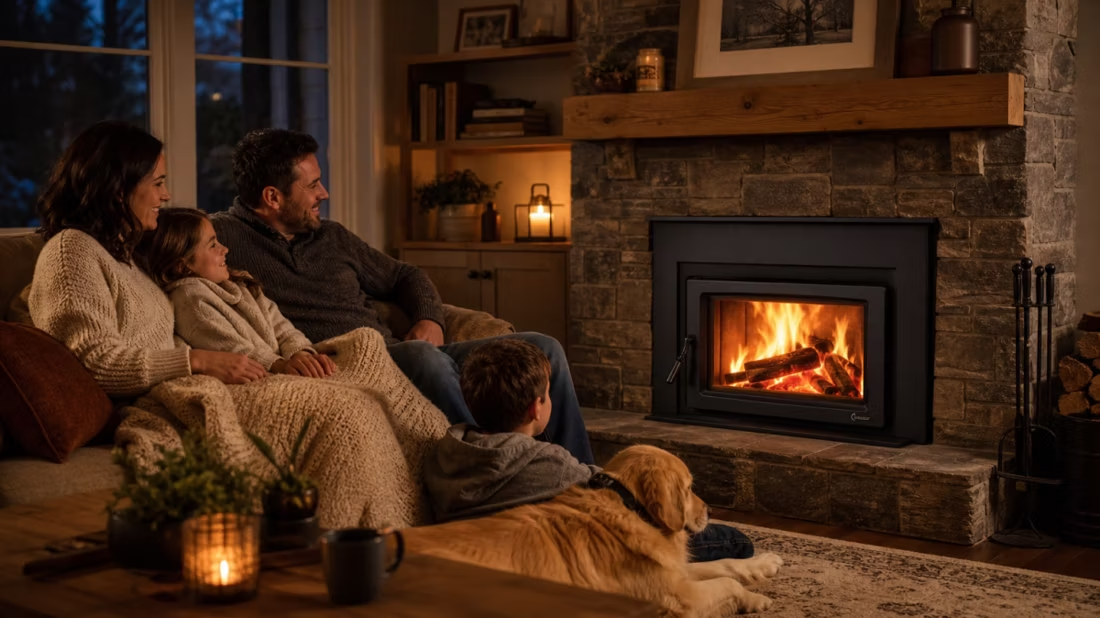
Four fuels. One honest answer for Wyoming County.
Three steps. No salesperson until you're ready.
Tell us about your project
Your zip code, your situation, and the fuel you're leaning toward—or let the answers point you to one.
See what's actually available
The brands dealers within 100 miles genuinely carry—real options, never a catalog mirage.
Get your dealer & Project Guide
A trusted local dealer, plus the free Project Guide & Parts List that names every component of the job.
Frequently Asked Questions
Which fuel works best in Wyoming County?
It depends on your home and how hands-on you want to be. Wood is the heritage fuel here—county woodlots of oak, maple, birch, and ash keep self-cut and delivered firewood cheap and plentiful, and a good catalytic or non-cat stove will carry a farmhouse through a Zone 6A cold snap without leaning on the furnace. Gas, usually propane in the more rural towns, is the convenience choice—instant heat with none of the splitting and stacking. Pellet splits the difference: no woodpile, but you still get a real flame; Energex, Hamer Pellet Fuel, and Greene Team Pellet Fuel are all stocked locally, so supply isn't an issue. Electric works well as a supplemental unit in a bedroom or den, but on its own it won't keep up as primary heat through a long western New York winter. Most households here end up pairing wood or pellet as the main heat source with gas or electric in secondary rooms.
Do I need a permit to install a fireplace in Wyoming County?
In most cases, yes. New York's Uniform Fire Prevention and Building Code requires permits for new wood stoves, wood inserts, gas fireplaces, gas inserts, gas stoves, and pellet stoves. In Wyoming County, that means going through your own town's code enforcement office rather than a single county building department—Warsaw, Attica, and Arcade each issue their own permits. Gas installations also need a licensed propane or natural-gas fitter for the fuel-line connection. New wood stoves need to meet current EPA emissions standards; electric fireplaces usually skip the permit process unless you're hardwiring a built-in unit into a new circuit. Most local hearth retailers handle the permit paperwork as part of the installation, so you're not filing it yourself.
Are there air quality restrictions on wood burning in Wyoming County?
No—Wyoming County isn't a designated non-attainment area, and there's no local burn advisory system like you'd find in a smoke-prone mountain basin out west. The county's low population density and open farmland mean wood smoke doesn't build up the way it does when cold air gets trapped in a valley. That said, EPA emissions standards still apply to new stove installations, and good burning practice—seasoned oak or maple, hot fires, no smoldering overnight loads—keeps chimneys and neighbors happy regardless of the absence of formal rules.
Can one local hearth retailer handle all four fuel types?
Many Wyoming County hearth retailers carry at least three of the four fuel types. Shops like Warsaw Hearth & Home and Attica Stove & Fireplace typically stock wood, gas, pellet, and electric units side by side, which makes them a good stop if you're still weighing options. Smaller dealers closer to Arcade or Silver Springs often lean heavily toward wood and pellet, given the farm and woodlot customer base, and will special-order gas or electric units as needed. If you're cross-shopping fuels, a multi-fuel dealer can put a working stove or insert of each type in front of you and talk through what actually fits your house and chimney.
How does service work in rural areas of Wyoming County?
Most technicians serving the county are based near Warsaw or Attica and drive out to the rest of the towns—Bennington, Sheldon, Pike, Covington, and the smaller communities along the county's edges. Expect a modest travel fee for the farthest stops. Because the heating season here runs long, pre-season appointments (September through October) book up fast; scheduling a chimney sweep or gas inspection before the first hard frost is a lot easier than trying to get a same-week visit during a January cold snap.
What's the typical cost range for fireplace installation across all fuel types in Wyoming County?
Ranges vary by fuel and by how much venting or gas-line work is involved. Wood stove or insert installation: roughly $4,000–$9,000 for a typical retrofit, up to $13,000 for new construction with full chimney work. Gas fireplace, insert, or stove: about $4,000–$10,000 depending on propane line runs and venting; conversions on an existing hearth land toward the lower end. Pellet stove or insert: roughly $3,500–$7,000 installed. Electric fireplace: $200–$3,000 for the unit itself, plus $400–$1,200 in labor for anything beyond a plug-and-play install. See the county + fuel pages above for cost detail tied to specific local retailers.
Does a fireplace add value to my home?
On average, a fireplace adds back to the home about the same amount you spent installing it. Add the monthly savings from heating the rooms you actually use instead of the whole house—often hundreds of dollars a year—and the value case is strong before you even count what a fire does for how your family uses the room.
How much should I budget for a fireplace?
For an average home—covering the fireplace, the vent pipe, and basic installation—a budget between $3,900 and $5,500 gives you a lot of options across wood, gas, and pellet. By the time you add finish work, gas line, and electrical, the average complete installation lands between $5,000 and $12,000 all-in. In a remodel or new build, a good rule is to put about 2.5% of the total project cost toward the fireplace.
Can a fireplace actually lower my heating bill?
Yes—by creating a comfort zone. A furnace heats every square foot of the house just to warm the one room you're in; a gas fireplace on low burns roughly a sixth of the gas a typical furnace does. Set the furnace around 55–60 degrees as a baseline, then heat the rooms your family actually uses. Families who heat this way commonly save $20–$60 a month.
Wood, gas, pellet, or electric—how do I choose?
Match the fuel to your life, not the other way around. Wood: lowest fuel cost and total power-outage independence, but you're hauling and stacking. Gas: press a button, set a thermostat, no maintenance to speak of. Pellet: wood economics with automatic feeding, in exchange for weekly cleaning and a need for electricity. Electric: plugs in anywhere with honest supplemental heat. Nobody regrets the fuel that fits how they actually live.
Stove and Fireplace Dealers in Wyoming County
Listings include WhyFire partner dealers, dealers we have verified as authorized for the brands we recommend, and established local businesses that carry hearth products. Every listing shows which one it is. The ones marked Preferred run on WhyFire's software, so they can show you real pricing and book your appointment right here. No manufacturer pays for placement. How we verify dealers →
King Brothers Fireplace & Stove
Arcade Lumber & Millwork, Inc
Countryside Stove & Chimney/klz Enterprises
Leroy Hearth And Home
Crocker's Hardware Inc.
Find your fireplace in Wyoming County.
Pick your fuel below to see local dealers and typical installation costs, and get matched with a trusted retailer plus a free Project Guide & Parts List for your Wyoming County home.
Find Your Fireplace →