
Automated heat for Warren County's long, cold winters.
With winters as cold as Burlington, Vermont and winter lows averaging 6°F across the Adirondack Park, Warren County homes need heat that runs steady from October through April. Pellet stoves deliver thermostat-controlled warmth without the splitting, stacking, or ash of a cordwood setup. Find the right unit and connect with a trusted local dealer.
Every Project Starts From One of These Five Situations
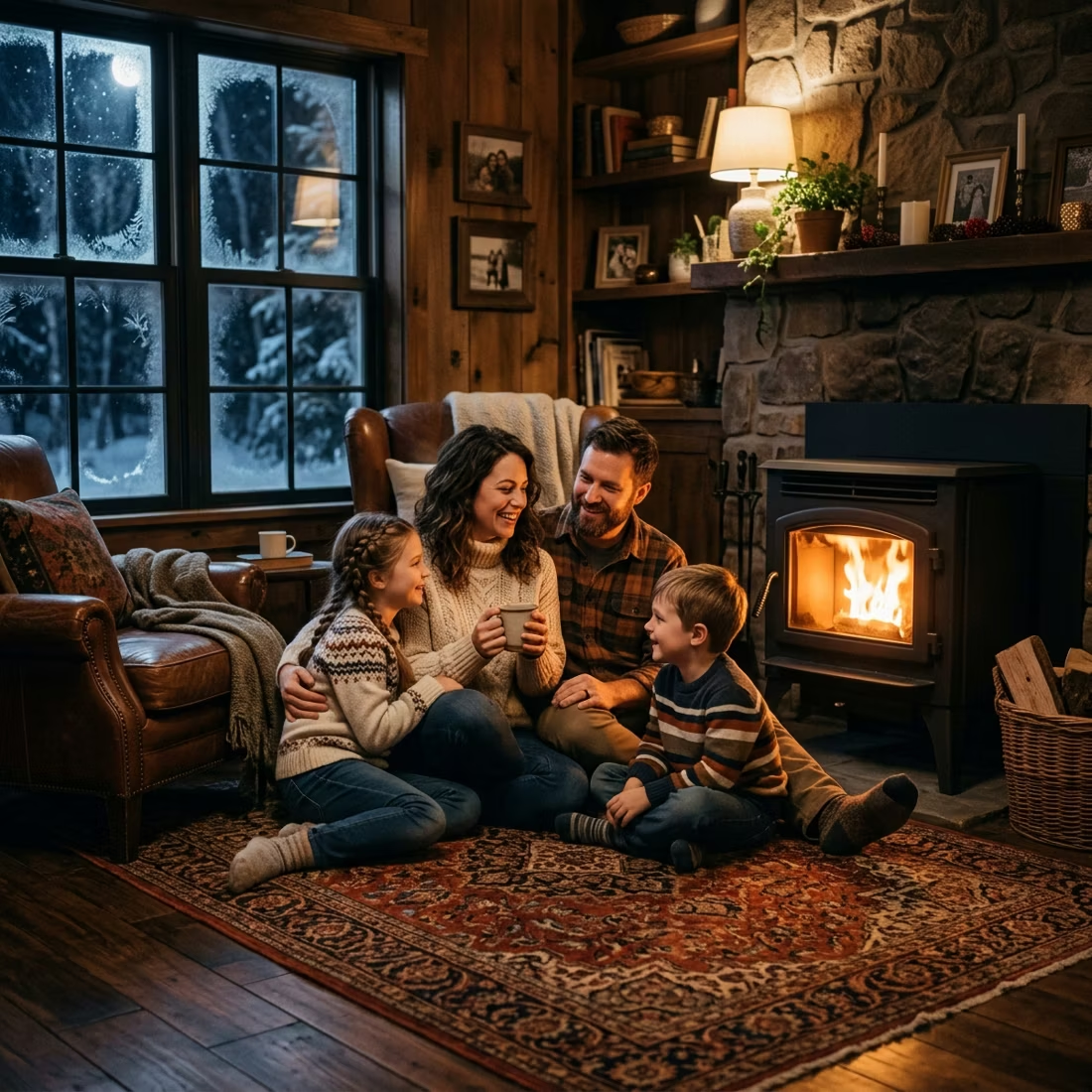
Set it, forget it, and stay warm through the Adirondack winter.
Warren County sits inside the Adirondack Park, stretching from Glens Falls and Queensbury up through Lake George, Bolton Landing, Chestertown, and North Creek near Gore Mountain. Climate zone 6A puts the county's winters in the same range as Burlington, Vermont—a season that runs long and cold, with average lows around 6°F and stretches well below zero at elevation. For year-round residents and the county's many seasonal lakefront and ski homes alike, that's a lot of heating season to cover, and it's a lot to ask of a wood stove that needs constant tending.
Warren County's forests are thick with oak, maple, birch, and ash, and plenty of homeowners still cut their own firewood under Forest Service permits from the Green Mountain & Finger Lakes National Forest—$20 a cord, May through October. But pellet appliances skip that entirely: load a bag of hardwood pellets from regional producers like Energex, Hamer Pellet Fuel, or Greene Team Pellet Fuel, set the thermostat, and the auger and blower handle the rest. Warren County has no air quality non-attainment designations or wood-burning curtailment periods, so pellet stoves run without the seasonal restrictions some western states impose—one more reason they've become a popular fit for both full-time Adirondack homes and lake camps that need reliable heat without a full-time caretaker.
Three steps. No salesperson until you're ready.
Tell us about your project
Your zip code, your situation, and the fuel you're leaning toward—or let the answers point you to one.
See what's actually available
The brands dealers within 100 miles genuinely carry—real options, never a catalog mirage.
Get your dealer & Project Guide
A trusted local dealer, plus the free Project Guide & Parts List that names every component of the job.
Frequently Asked Questions
How much does a pellet stove installation cost in Warren County?
A freestanding pellet stove installation typically runs $3,500 to $6,500 in Warren County, depending on the unit and whether the exhaust venting is a straightforward through-wall run or requires a longer horizontal or vertical vent path. A pellet insert going into an existing masonry fireplace usually costs more once a liner and venting adapter are factored in. Costs can run slightly higher for lakefront or seasonal properties around Lake George and Bolton Landing where access, staging, and closing up a home for winter add a bit of extra time. Local dealers will give you a firm number after seeing the install site.
What size pellet stove do I need for a Warren County home?
With winter lows averaging 6°F and a heating season that runs from roughly October through April, most year-round Warren County homes should size toward the upper end of a stove's rated range rather than the low end. As a rough guide: smaller stoves suit single rooms, camps, or well-insulated additions; mid-size units in the 40,000–60,000 BTU range handle most main living areas in older Adirondack-style homes; larger stoves make sense for open floor plans or homes with limited insulation, which is common in older lake cottages that were originally built as three-season structures. A local dealer can size the unit correctly after walking the space, which matters more with pellet stoves than people expect—an undersized unit will run at maximum output constantly during the coldest stretches and shorten the life of the auger motor and igniter.
Where can I find certified pellet stove installers near me?
Look for installers with NFI (National Fireplace Institute) pellet certification, which covers the specific venting and clearance requirements for pellet appliances—different from wood stove venting. Dealers serving Warren County typically cover the Glens Falls–Queensbury corridor, the Lake George area, and the more rural northern towns like Chestertown, Warrensburg, and Johnsburg, sometimes with a small travel charge for the latter. Because pellet stoves rely on electronic components (the auger motor, igniter, and control board), it's worth choosing an installer who also services what they sell rather than a general contractor doing a one-time install.
What's the difference between a pellet stove and a pellet insert?
A pellet stove is a freestanding unit that sits on a hearth pad and vents through a wall or existing chimney chase—it can go almost anywhere with the right clearances. A pellet insert is built to slide into an existing masonry fireplace opening, using a liner run up the old chimney for venting. For Warren County's older homes with existing wood fireplaces—common in Glens Falls and the older lake cottages around Lake George—an insert is often the cleaner option because it uses the masonry you already have and closes off the heat loss of an open hearth. Homes without an existing fireplace, including many camps and additions, are better suited to a freestanding stove.
Do I need a permit to install a pellet stove in Warren County?
Yes—pellet stove installations require a building permit, but permitting in Warren County runs through each individual town or village rather than a single county office. Queensbury, Glens Falls, the Town of Lake George, Bolton, Chester, and Warrensburg each handle their own code enforcement and permit issuance, so the process can vary slightly depending on where the home sits. Most established local dealers handle the permit application and inspection scheduling as part of the installation, which is worth confirming up front, especially for seasonal properties where the owner isn't always on-site to deal with paperwork.
What's the best pellet stove for a cold Adirondack winter?
For Warren County's long heating season, look for a stove with a large hopper capacity—40 to 80 pounds—so it can run overnight or during a full workday without needing a refill, and a firebox rated for continuous high-output burns rather than just intermittent use. Models with a battery backup or optional UPS connection are worth considering too, since ice storms and heavy lake-effect snow can knock out power in parts of the county, and a pellet stove's auger, igniter, and blower all require electricity to run. Ask a local dealer to walk through hopper size, BTU output, and backup power options against your specific home before deciding.
Where can I buy pellets, and which brands are available locally?
Regional hardwood pellet brands including Energex, Hamer Pellet Fuel, and Greene Team Pellet Fuel are commonly stocked at hearth dealers and hardware stores throughout Warren County, and pricing tends to move seasonally—buying in late summer or early fall before demand picks up is the usual strategy locals use to get ahead of price increases. A local dealer can tell you which brands they stock and burn cleanest in the specific stove model you're considering, since ash content and pellet quality vary noticeably between brands even within the same price range.
How much maintenance does a pellet stove need?
Less than a wood stove, but it's not zero. Plan on emptying the ash pan every few days during heavy use, cleaning the burn pot and glass weekly, and having the exhaust venting and combustion blower professionally cleaned at least once a year—typically before the heating season starts in the fall. Warren County's long burn season means a stove running daily from October through April accumulates more ash and creosote residue than a stove used only occasionally, so heavy users sometimes benefit from a mid-season cleaning as well. Skipping annual service is the most common reason pellet stoves lose efficiency or trip an error code mid-winter.
Pellet stove vs. wood stove—which is right for my home?
Wood stoves burn hardwood species common right in Warren County's forests—oak, maple, birch, ash—and many homeowners cut their own through Forest Service permits from the Green Mountain & Finger Lakes National Forest for around $20 a cord. Wood also keeps working without electricity, which matters when winter storms take down power lines in the more rural parts of the county. Pellet stoves trade that independence for convenience: no splitting or stacking, more consistent heat output, and cleaner glass, but they need electricity to run the auger and blower, so they're not a stand-alone option during an extended outage unless paired with a generator or battery backup. For year-round homes with reliable power, pellet is often the easier day-to-day choice; for camps and rural properties where storm-related outages are a real concern, many owners keep a wood stove as backup even after installing pellet as their primary heat.
Why is my open fireplace making my house colder?
Open fireplaces suck—literally. As the fire burns, it consumes air your furnace already paid to heat and pulls it out through the chimney, so the house is actually colder after the fire goes out than before you lit it. An insert fixes this: it seals the chimney, puts fixed glass across the front, and turns that hole in your house into a real heat source.
Why is a fireplace insert so efficient?
An insert does two things: it seals the chimney completely, so you stop losing air you already paid to heat, and it radiates warmth into the room through the firebox and glass. Most add a heat-exchange fan that pulls cool room air underneath, wraps it around the hot firebox, and pushes it back out warm. Your home is more efficient before you've even lit the first fire.
Does a fireplace add value to my home?
On average, a fireplace adds back to the home about the same amount you spent installing it. Add the monthly savings from heating the rooms you actually use instead of the whole house—often hundreds of dollars a year—and the value case is strong before you even count what a fire does for how your family uses the room.
How much should I budget for a fireplace?
For an average home—covering the fireplace, the vent pipe, and basic installation—a budget between $3,900 and $5,500 gives you a lot of options across wood, gas, and pellet. By the time you add finish work, gas line, and electrical, the average complete installation lands between $5,000 and $12,000 all-in. In a remodel or new build, a good rule is to put about 2.5% of the total project cost toward the fireplace.
Stove and Fireplace Dealers in Warren County
Pellet Brands Stocked Around Warren County
Manufacturers will point you to the nearest stocking dealer.
Find your pellet stove in Warren County.
Tell us about your home and heating goals, and we'll match you with a trusted local dealer and a free Project Guide & Parts List—a plan for your pellet project in Warren County with the exact parts, including the vent kit, and the dealer we recommend.
Find Your Fireplace →