
Pellet Heat: An Uncommon Fit in Glens Falls, NY.
Pellet stoves remain a niche choice in the Adirondack foothills, where oil, propane, and wood have historically done the heavy lifting. For the right home, automated pellet heat still makes sense—here's the honest picture, and how to reach a local dealer who actually carries it.
Every Project Starts From One of These Five Situations
A brutally cold climate that still leans away from pellet.
Glens Falls sits at the gateway to the Adirondack Park along the Hudson River, at 345 feet elevation with a long, demanding winter heating season and winter lows averaging 6°F—a cold season on par with Burlington, Vermont. That kind of climate would seem to make a strong case for pellet heat's steady, thermostat-controlled output. But in Warren County, whole-home heat has traditionally come from oil furnaces, propane, and increasingly electric heat pumps, while supplemental heat has leaned on wood—oak, maple, birch, and ash cut locally or under Forest Service permit through the Green Mountain & Finger Lakes National Forest (about $20 per cord, May through October season). Standalone pellet stoves never became the default the way they have in parts of the Northeast with heavier pellet-industry presence.
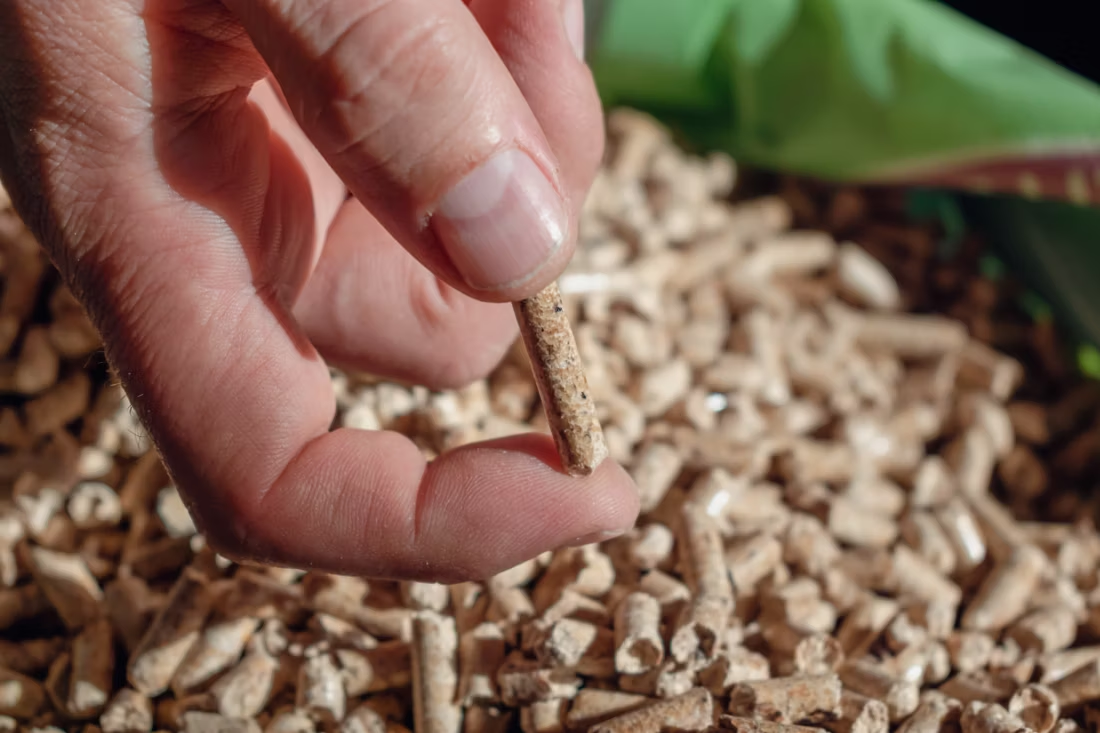
That said, a small number of Glens Falls homeowners do choose pellet stoves—usually people who want the convenience of automated, hopper-fed heat without hauling and stacking cordwood, and without the ash volume of a full-time wood burner. Regional pellet fuel is available through producers like Energex, Hamer Pellet Fuel, and Greene Team Pellet Fuel, though you'll typically need to plan ahead and buy from a specialty hearth dealer or feed store rather than picking up bags at a big-box store on a whim. Electric service here comes from Niagara Mohawk at roughly 16.7 cents per kWh—worth knowing since every pellet stove depends on electricity to run its auger and blower, unlike a wood stove.
Three steps. No salesperson until you're ready.
Tell us about your project
Your zip code, your situation, and the fuel you're leaning toward—or let the answers point you to one.
See what's actually available
The brands dealers within 100 miles genuinely carry—real options, never a catalog mirage.
Get your dealer & Project Guide
A trusted local dealer, plus the free Project Guide & Parts List that names every component of the job.
Frequently Asked Questions
How much does a pellet stove installation cost in Glens Falls?
Because pellet stoves are installed far less often here than gas or electric units, there isn't a deep well of local pricing data the way there is for more common fuel types. Nationally, and consistent with what regional hearth dealers quote, a freestanding pellet stove with direct-vent piping through an exterior wall typically runs $3,500 to $6,500 installed, including the hearth pad and electrical outlet the unit needs to run its auger and blower. A pellet insert into an existing masonry fireplace runs somewhat higher, often $4,500 to $7,500, once a liner and venting adapter are factored in. Ask any dealer quoting a Glens Falls install for a firm, itemized number rather than a ballpark.
Is a pellet stove actually a good fit for Glens Falls winters?
Climate-wise, yes—with a long, demanding winter heating season and winter lows averaging 6°F, this is genuinely cold-climate territory where a pellet stove's steady, programmable heat output can help offset an oil or propane furnace's runtime. The catch isn't performance, it's market presence: most Glens Falls households built their heating plan around whole-home oil or propane systems, sometimes with a wood stove for backup, so pellet units are the exception rather than the rule. If your priority is hands-off, thermostat-controlled supplemental heat and you don't mind sourcing bagged pellets seasonally, the climate itself is no obstacle.
Where can I buy pellet fuel near Glens Falls?
Regional pellet brands you're likely to see through Warren County hearth dealers include Energex, Hamer Pellet Fuel, and Greene Team Pellet Fuel—all producers with distribution into upstate New York and New England. Because pellet stoves are a smaller category here, don't expect every hardware store to stock pallets of bags in October the way they might in areas with heavier pellet-stove adoption. Buying early in the fall, before the first hard cold snap, and asking your installing dealer which brand they recommend for your specific stove is the safer approach than waiting until January.
Do pellet stoves need electricity, and what happens during a power outage?
Yes—every pellet stove relies on electricity to run the auger that feeds fuel into the firebox and the blower that distributes heat, so a power outage shuts the unit down even with a full hopper. This matters in the Glens Falls area, where Niagara Mohawk service can be interrupted during Adirondack winter storms and ice events. If backup heat during outages is a priority, a small battery backup or generator sized for the stove's modest draw is worth budgeting for, or consider a wood stove instead, which needs no electricity to operate. The running cost of the stove's electrical components themselves is minor at the local residential rate of about 16.7 cents per kWh.
Why do more homes in Glens Falls burn wood than pellets?
Access and cost are the main drivers. Oak, maple, birch, and ash are all locally available species, and self-cut firewood permits through the Green Mountain & Finger Lakes National Forest run about $20 per cord for cutting during the May-through-October season—a fraction of the cost per BTU compared to bagged pellets, which must be purchased continuously through the winter. Wood also burns without electricity, which matters for backup heat during storm-related outages. Pellet stoves offer real advantages in convenience and consistent burn rate, but in a region where cordwood is cheap and plentiful, that trade-off hasn't caught on as widely as it has elsewhere.
How much maintenance does a pellet stove need?
Pellet stoves need more frequent attention than a gas unit but less than a wood stove. Plan on emptying the ash pan every few days to weekly depending on use, cleaning the burn pot and glass regularly during the heating season, and scheduling a full professional cleaning and venting inspection once a year—typically late summer before the stove sees heavy use. Because there are fewer pellet-specific technicians in the Glens Falls area than gas or wood specialists, it's worth confirming with your dealer at purchase time that they also handle annual service, rather than assuming you'll find a separate pellet technician later.
What size pellet stove do I need for my home?
Sizing depends on square footage, insulation quality, and whether the stove is meant as primary or supplemental heat. As a general guide for a cold-climate home like those in Glens Falls: smaller units (under 1,000 sq ft rated output) suit a single room or small addition, mid-size units (1,000-1,800 sq ft) cover an open living area, and larger units can supplement a whole small home alongside an existing oil or propane furnace. Given how few pellet installs happen locally each year, an in-home consultation with a dealer matters more here than in markets where sizing is routine—get someone who has actually installed pellet units in similar Warren County homes.
Can I convert my existing fireplace into a pellet insert?
Yes, though it's a less common request in Glens Falls than a wood or gas insert conversion. A pellet insert fits into your existing masonry fireplace opening, uses a smaller-diameter vent than a wood insert, and still requires a nearby electrical outlet for the auger and blower. Because pellet inserts aren't a high-volume item for most local hearth shops, expect a longer lead time for ordering the specific model and venting kit than you might for a gas conversion, and confirm the dealer stocks parts for the brand they're recommending.
Pellet vs. gas—which makes more sense for a Glens Falls home?
Gas is the more established option here, with standard availability across the city and straightforward instant on-off operation with no fuel storage or ash cleanup. Pellet requires buying and storing bags of fuel, running the auger and blower on electricity, and periodic ash removal—real chores that gas skips entirely. Where pellet still wins is fuel cost stability compared to propane in areas without natural gas lines, and a live-flame look some homeowners prefer over a gas unit. For most Glens Falls households already set up with gas or propane service, gas is the simpler upgrade; pellet tends to appeal to a smaller group specifically drawn to biomass heat.
Why is a fireplace insert so efficient?
An insert does two things: it seals the chimney completely, so you stop losing air you already paid to heat, and it radiates warmth into the room through the firebox and glass. Most add a heat-exchange fan that pulls cool room air underneath, wraps it around the hot firebox, and pushes it back out warm. Your home is more efficient before you've even lit the first fire.
Why is my open fireplace making my house colder?
Open fireplaces suck—literally. As the fire burns, it consumes air your furnace already paid to heat and pulls it out through the chimney, so the house is actually colder after the fire goes out than before you lit it. An insert fixes this: it seals the chimney, puts fixed glass across the front, and turns that hole in your house into a real heat source.
How much should I budget for a fireplace?
For an average home—covering the fireplace, the vent pipe, and basic installation—a budget between $3,900 and $5,500 gives you a lot of options across wood, gas, and pellet. By the time you add finish work, gas line, and electrical, the average complete installation lands between $5,000 and $12,000 all-in. In a remodel or new build, a good rule is to put about 2.5% of the total project cost toward the fireplace.
Does a fireplace add value to my home?
On average, a fireplace adds back to the home about the same amount you spent installing it. Add the monthly savings from heating the rooms you actually use instead of the whole house—often hundreds of dollars a year—and the value case is strong before you even count what a fire does for how your family uses the room.
Nearby Dealers
Hearth shops serving Glens Falls and the surrounding area.
Pellet Brands Stocked Around Glens Falls
Manufacturers will point you to the nearest stocking dealer.
Find your pellet stove in Glens Falls.
Tell us about your home and heating goals, and we'll match you with a trusted local dealer who actually carries pellet stoves and fuel in the Glens Falls area—plus a free Project Guide & Parts List spelling out the exact parts, including the vent kit, for your install.
Find Your Fireplace →