
Zone heat and instant ambiance for Adirondack winters.
No chimney, no gas line, no wood to split—just a fireplace that plugs in and works, from Lake George camps to year-round homes in Queensbury and Glens Falls. Find the right unit and connect with a trusted local dealer.
Every Project Starts From One of These Five Situations
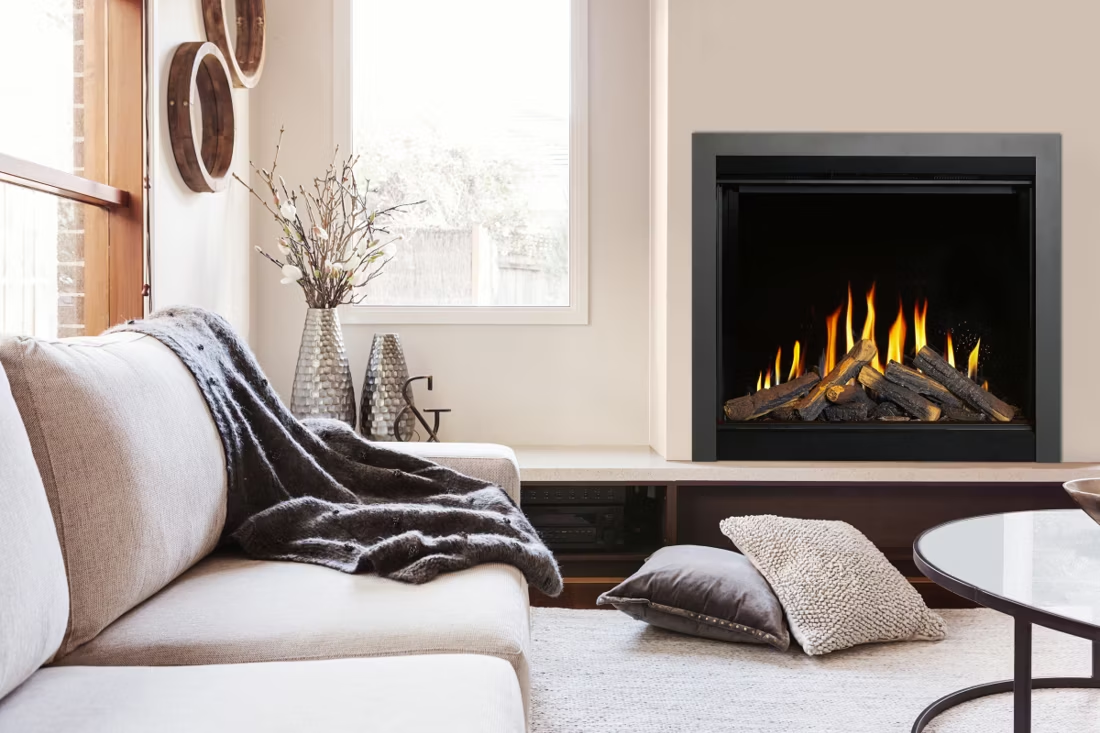
Clean heat you can plug in—no chimney needed.
Warren County sits deep in climate zone 6A, with a long, demanding heating season and average winter lows around 6°F—numbers that put it in the same cold-climate category as Burlington, Vermont, just across the lake basin. That kind of cold means most Warren County homes lean on a furnace, boiler, or heat pump for whole-home heat, and wood and pellet stoves remain common as genuine primary or backup heat sources across the county's rural stretches. Electric fireplaces occupy a different, useful niche here: zone heat for a specific room, instant ambiance without smoke or venting, and a low-friction upgrade for the second homes and lake camps scattered around Lake George, Bolton Landing, and Chestertown.
Because there's no combustion, no flue, and no air quality concern to manage, an electric fireplace can go almost anywhere a standard outlet or a dedicated circuit can reach—a finished basement in Warrensburg, a condo unit in Lake George Village, or a retrofit into an old masonry firebox in a Glens Falls colonial. National Grid supplies electricity across most of the county, and a local dealer can size a unit correctly, confirm whether your panel needs an upgrade for a larger built-in, and make sure the install meets local electrical code—something that matters more than people expect once you're talking about a 240-volt wall unit instead of a plug-in insert.
Three steps. No salesperson until you're ready.
Tell us about your project
Your zip code, your situation, and the fuel you're leaning toward—or let the answers point you to one.
See what's actually available
The brands dealers within 100 miles genuinely carry—real options, never a catalog mirage.
Get your dealer & Project Guide
A trusted local dealer, plus the free Project Guide & Parts List that names every component of the job.
Frequently Asked Questions
How much does an electric fireplace installation cost in Warren County?
A plug-in electric insert or freestanding stove that uses a standard 120-volt outlet typically runs $500 to $1,500 installed, including the unit and any minor surround or mantel work. A built-in wall unit or a larger insert that needs a dedicated 240-volt circuit runs closer to $1,500 to $3,000 once electrician labor is factored in. Retrofitting an electric insert into an existing masonry fireplace in an older Glens Falls or Queensbury home is usually on the lower end since there's no venting or gas line to run—the main cost driver is the unit itself and whatever finish work you want around it.
Will an electric fireplace heat my whole house?
No, and this is worth being direct about given Warren County's climate. With a long, demanding heating season and winter lows regularly near or below 6°F, a standard 1,500-watt electric fireplace tops out around 5,000 BTUs—enough to comfortably warm a single room, but not a whole house through an Adirondack winter. Think of it as zone heat: it can take the edge off a living room or bedroom and let you turn down the thermostat elsewhere, but your furnace, boiler, or heat pump still needs to be doing the primary work. Homeowners who want a unit capable of real whole-home heat in this climate should be looking at wood or gas instead.
Will my electric fireplace work during a power outage?
No—electric fireplaces require electricity to run the heating element and, on most models, the flame-effect display, so they shut off with the power. Warren County's rural stretches, particularly outside Glens Falls and Queensbury, see occasional multi-day outages during ice storms and heavy nor'easters. If backup heat during an outage matters to you, pair the electric fireplace with a wood stove or a battery-backed gas unit elsewhere in the house rather than relying on electric as your only heat source in a storm.
Do I need a permit to install an electric fireplace in Warren County?
A simple plug-in insert or freestanding electric stove generally doesn't require a permit since it uses an existing outlet. If you're installing a built-in wall unit that needs a new dedicated circuit, an electrician will typically pull an electrical permit through your town or village building department—Queensbury, Glens Falls, and Warrensburg each handle this locally. Because most of Warren County sits within the Adirondack Park boundary, larger renovation projects can also trigger Adirondack Park Agency (APA) review, though a straightforward electric fireplace install almost never rises to that level the way a room addition or new dwelling would.
What's the difference between an electric insert, a mantel package, and a built-in wall unit?
An electric insert is sized to slide into an existing fireplace opening, making it the simplest retrofit for older Warren County homes with a masonry firebox that's no longer used for wood. A mantel package pairs a freestanding electric firebox with a surround and mantel shelf, working well in a home with no existing fireplace. A built-in wall unit is recessed into new framing, often flush-mounted for a modern look, and is the option most likely to need a dedicated circuit and electrician involvement. For a Lake George camp being modernized or a Glens Falls home without a chimney, the mantel package or a recessed wall unit are usually the practical choices.
How much does it cost to run an electric fireplace in Warren County?
A typical 1,500-watt electric fireplace running on high draws about 1.5 kWh per hour. At National Grid's residential rates in this part of upstate New York, that works out to roughly 20 to 30 cents an hour of heat—reasonable for supplemental zone heating in one room, but not cost-competitive with wood or gas if you're trying to heat a larger space for hours at a time through a cold Adirondack night. Most owners run the flame effect year-round for ambiance and only switch on the heater when they want to warm a specific room.
What's the best electric fireplace for a cold climate like Warren County?
Look for units with a true 1,500-watt heating element rated for the room size you're heating, rather than models that lead with flame realism but underdeliver on heat output. Brands like Dimplex, Napoleon, and Touchstone all make inserts and wall units with legitimate heating capacity suited to supplemental use in a cold climate. For a drafty older home in Warrensburg or Chestertown, pairing the electric unit with good weatherstripping around the room gets more out of the heat than the fireplace alone. A local dealer can walk through wattage and room size together rather than guessing off a box label.
Electric vs. wood vs. gas—which fireplace is right for my Warren County home?
Wood offers real primary or backup heat that works without power—a meaningful advantage given Warren County's ice-storm outages—and pairs naturally with the oak, maple, birch, and ash common throughout the county's woodlots. Gas delivers instant, substantial heat at the flip of a switch and can be configured to run during outages with the right ignition system, but requires a gas line or propane tank. Electric is the easiest and cheapest to install, produces zero emissions, and needs no venting or fuel storage, but it's supplemental heat only and goes dark in a power outage. Many Warren County households end up with two: wood or gas for real heat and outage resilience, electric for the rooms where a simple plug-in ambiance unit is all that's needed.
Can I install an electric fireplace in a lake camp or seasonal home around Lake George?
Yes—this is one of the most common uses for electric fireplaces in Warren County. Seasonal camps around Lake George and Bolton Landing often don't have a chimney or gas service, and owners don't want the maintenance of a wood stove in a home that sits empty for stretches of the year. A plug-in insert or mantel unit gives the space real ambiance and quick supplemental warmth on shoulder-season weekends without any venting, gas line, or ongoing fuel storage to manage while the camp is closed up.
Does an electric fireplace need a vent or chimney?
No—that's its superpower. An electric fireplace needs a wall and an outlet, period. No vent pipe, no gas line, no clearances to design around, which is why it works in bedrooms, offices, apartments, and walls where venting a gas or wood unit would be impractical or impossible. Installation is typically the simplest and least expensive of any fireplace type.
Can I put a TV above my fireplace?
Yes—with an asterisk. Fireplaces are hot and TVs don't like heat. Either put a mantel between them to deflect rising warmth, or choose a fireplace with heat-management technology that creates a cool zone on the wall above—the wall stays around 125 degrees, barely warm, while the room still gets full heat. If you like clean lines and don't want a mantel, heat management is the answer.
What is an in-home preview and do I need one?
It's a visit where a hearth professional measures your space, confirms the model you picked actually works in your home, and walks the specs—framing, gas line, venting, finish work—before anything is ordered. Some details you just can't know until you see the house. Never make a down payment without one; it's the single most-skipped step that burns buyers.
Does a fireplace add value to my home?
On average, a fireplace adds back to the home about the same amount you spent installing it. Add the monthly savings from heating the rooms you actually use instead of the whole house—often hundreds of dollars a year—and the value case is strong before you even count what a fire does for how your family uses the room.
Stove and Fireplace Dealers in Warren County
Find your electric fireplace in Warren County.
Tell us a bit about your home and we'll match you with the right electric insert, mantel unit, or built-in wall fireplace—and connect you with a trusted local dealer who can size it correctly and handle any electrical work.
Find Your Fireplace →