
Pellet heat that keeps up with Rensselaer County's long winters.
With average winter lows near 17°F and a long, six-month heating season comparable to Burlington, VT, homes from Troy to Hoosick Falls need heat that runs steady for months at a time. Find the right pellet stove or insert and connect with a trusted local dealer.
Every Project Starts From One of These Five Situations
Consistent heat, minus the wood-splitting labor.
Rensselaer County sits on the east side of the Hudson River in New York's Capital Region, taking in Troy, East Greenbush, Rensselaer, and rural stretches out toward Hoosick Falls and the Vermont border. At climate zone 5A with a heating season comparable to Burlington, VT, the heating season here runs comparable to Burlington, VT—roughly six months of steady demand, with regular overnight lows in the teens. That's a real test for any heating appliance, and it's part of why pellet stoves have caught on in older colonials and farmhouses that weren't built with modern insulation in mind.
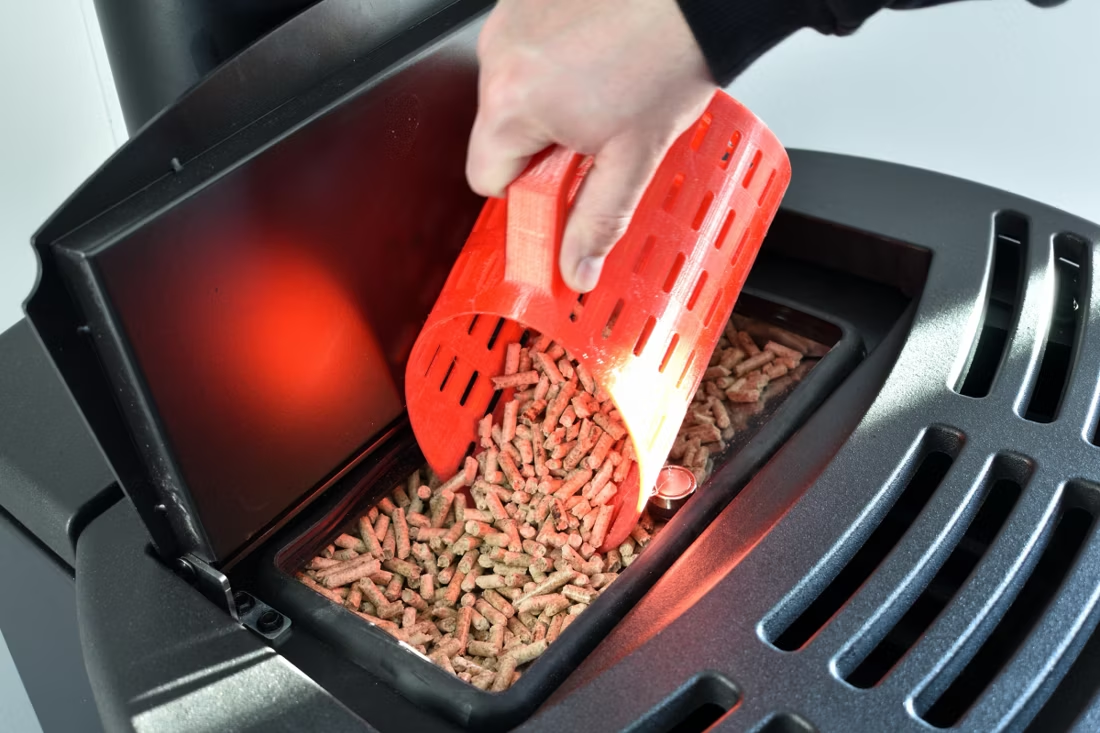
A pellet stove gives you thermostat-controlled, EPA-certified heat without the chainsaw, splitting maul, or seasoning time that cordwood requires. Regional pellet brands like Energex, Hamer Pellet Fuel, and Greene Team Pellet Fuel are produced within a reasonable drive of the county, which keeps supply steady and local. Rensselaer County has no air quality non-attainment designation, so there are no winter burning curtailments to work around—you're free to run a pellet appliance daily through the coldest months without checking an advisory first. For homeowners who still want the option of cordwood—oak, maple, birch, and ash are all common locally—a pellet stove pairs well as a low-maintenance primary heat source while wood stays in reserve.
Three steps. No salesperson until you're ready.
Tell us about your project
Your zip code, your situation, and the fuel you're leaning toward—or let the answers point you to one.
See what's actually available
The brands dealers within 100 miles genuinely carry—real options, never a catalog mirage.
Get your dealer & Project Guide
A trusted local dealer, plus the free Project Guide & Parts List that names every component of the job.
Frequently Asked Questions
How much does a pellet stove installation cost in Rensselaer County?
Most pellet stove and insert installations in the county run $3,000 to $7,000, depending on the unit, whether you're venting through an existing masonry chimney or a fresh wall penetration, and whether a dedicated electrical outlet needs to be added near the hearth. Pellet venting uses smaller-diameter PL (pellet-listed) pipe rather than full Class A chimney pipe, which keeps material costs lower than a comparable wood stove install. Homes in older Troy or East Greenbush neighborhoods with existing fireplaces often see costs on the lower end since the chimney chase is already in place; new construction or additions without an existing flue run higher.
What size pellet stove do I need for my home?
Sizing depends on square footage, ceiling height, and insulation quality—and with a heating season comparable to Burlington, VT, Rensselaer County homes generally need to size on the larger end of a manufacturer's range rather than the small end. A stove rated for 1,500 to 2,000 square feet is a common fit for the mid-size colonials and capes typical of towns like East Greenbush and Rensselaer, while drafty older farmhouses out toward Hoosick Falls may need the next size up even at similar square footage. A local dealer will size the unit against your actual home rather than a generic chart, which matters for both comfort and pellet consumption.
Where can I buy pellets locally, and what do they cost?
Regional pellet brands including Energex, Hamer Pellet Fuel, and Greene Team Pellet Fuel are widely stocked at hardware stores, farm supply outlets, and hearth dealers throughout the Capital Region. Buying by the ton (usually 50 forty-pound bags) is standard, and stocking up in late summer or early fall—before the first cold snap drives up demand—is the most reliable way to lock in supply for the season. Premium hardwood pellets burn cleaner and leave less ash than softwood blends, which matters if you're running the stove daily through a six-month heating season.
Will my pellet stove work during a power outage?
Not without backup power. Pellet stoves rely on an electric auger to feed fuel and a blower to distribute heat, so a standard unit shuts down the moment the power goes out. Given the length of Rensselaer County's heating season and the possibility of ice storms taking down lines for a day or more, many homeowners pair a pellet stove with a small battery backup unit or a portable generator sized to run the stove's low electrical draw. If backup heat during outages is a priority, ask your local dealer about battery-backup kits available for most current pellet stove models.
Do I need a permit to install a pellet stove in Rensselaer County?
Yes—pellet stove installations require a building permit, and because Rensselaer County includes multiple municipalities, permits are issued locally rather than through a single county office. Troy, East Greenbush, Hoosick Falls, and the other towns each handle their own permitting and inspections under the New York State fire and building codes. Most established hearth dealers pull the permit and schedule the inspection as part of the installation, so it's worth confirming that's included in your quote before work begins.
Pellet stove vs. wood stove—which makes more sense here?
Wood stoves burn cordwood—oak, maple, birch, and ash are all common species locally—and keep running with no electricity, which matters if you want heat during a prolonged outage. For homeowners willing to cut their own, permits through the Green Mountain & Finger Lakes National Forest run about $20 per cord during the May-through-October cutting season. Pellet stoves trade that off-grid independence for convenience: load the hopper, set the thermostat, and let it run for a day or more without tending. For a six-month heating season like Rensselaer County's, pellet is often the lower-effort choice for a primary living space, while a wood stove in a secondary room or basement can serve as outage backup.
How much maintenance does a pellet stove actually need?
Day to day, plan on emptying the ash pan every few days during heavy winter use and giving the burn pot a quick scrape weekly to keep combustion efficient. Beyond that, most manufacturers recommend a full professional cleaning and inspection once a year—including the hopper, auger, exhaust fan, and venting—typically scheduled at the end of burning season or before the next one starts. Given how many hours a pellet stove runs through a Rensselaer County winter, skipping the annual service is the most common cause of reduced efficiency and unexpected shutdowns mid-season.
What venting does a pellet stove installation require?
Pellet stoves vent through smaller PL (pellet-listed) pipe rather than the Class A chimney pipe a wood stove needs, and most installs route straight out a rear or side wall rather than up through the roof. That makes pellet stoves a practical option in homes without an existing masonry chimney—a common situation in newer construction around East Greenbush and other growing parts of the county. Clearance-to-combustible requirements still apply and are checked during the building permit inspection, so exact placement should be confirmed with your installer before any wall is cut.
Are there any rebates available for pellet stoves in New York?
New York has periodically offered incentives for high-efficiency wood and pellet heating equipment through state energy programs, and availability shifts from year to year, so it's worth checking current NYSERDA offerings before you buy. Some pellet stove models also qualify for the federal biomass stove tax credit when they meet a minimum efficiency threshold—ask your local dealer which models in their lineup currently qualify, since documentation needs to be provided at the time of purchase to claim it.
Why is a fireplace insert so efficient?
An insert does two things: it seals the chimney completely, so you stop losing air you already paid to heat, and it radiates warmth into the room through the firebox and glass. Most add a heat-exchange fan that pulls cool room air underneath, wraps it around the hot firebox, and pushes it back out warm. Your home is more efficient before you've even lit the first fire.
Why is my open fireplace making my house colder?
Open fireplaces suck—literally. As the fire burns, it consumes air your furnace already paid to heat and pulls it out through the chimney, so the house is actually colder after the fire goes out than before you lit it. An insert fixes this: it seals the chimney, puts fixed glass across the front, and turns that hole in your house into a real heat source.
How much should I budget for a fireplace?
For an average home—covering the fireplace, the vent pipe, and basic installation—a budget between $3,900 and $5,500 gives you a lot of options across wood, gas, and pellet. By the time you add finish work, gas line, and electrical, the average complete installation lands between $5,000 and $12,000 all-in. In a remodel or new build, a good rule is to put about 2.5% of the total project cost toward the fireplace.
What is an in-home preview and do I need one?
It's a visit where a hearth professional measures your space, confirms the model you picked actually works in your home, and walks the specs—framing, gas line, venting, finish work—before anything is ordered. Some details you just can't know until you see the house. Never make a down payment without one; it's the single most-skipped step that burns buyers.
Stove and Fireplace Dealers in Rensselaer County
Pellet Brands Stocked Around Rensselaer County
Manufacturers will point you to the nearest stocking dealer.
Find your pellet stove in Rensselaer County.
Tell us a bit about your home and we'll match you with a trusted local dealer and put together a free Project Guide & Parts List—the exact equipment, venting, and next steps for your pellet project in Rensselaer County.
Find Your Fireplace →