
Find the right heat source for a Rensselaer County winter.
Wood, gas, pellet, and electric fireplace resources for every city and hamlet in Rensselaer County—from Troy to Berlin. Find the right unit and get matched with a trusted local hearth retailer.
Every Project Starts From One of These Five Situations
Heating a mix of river cities and Taconic hill towns in Rensselaer County, New York.
Rensselaer County stretches from the dense Hudson River grid of Troy and the city of Rensselaer eastward into the Taconic foothills toward the Vermont and Massachusetts borders. That range means real variation in how homes here get built and heated—tight urban lots with older masonry chimneys in Troy, versus farmhouses and cabins in Berlin, Stephentown, and Petersburgh where woodlots of oak, maple, birch, and ash have supplied firewood for generations. With roughly 6,000 heating degree days and average winter lows around 17°F—comparable to a mild stretch in Burlington, VT—this is a genuine four-fuel county: wood, gas, pellet, and electric all see real, sustained demand rather than niche use.
What you'll find on this hub: hearth retailers, service technicians, and fuel suppliers serving every community in the county—from the Troy-Rensselaer urban core along the river to the hill towns bordering the Green Mountain & Finger Lakes National Forest to the east. Pick your fuel below to drill into specifics—local dealers, installation costs, recommended units, and the resources that match your project. Whether you're heating a brick rowhouse in Troy or a woodstove-dependent farmhouse in Berlin, this is the starting point.
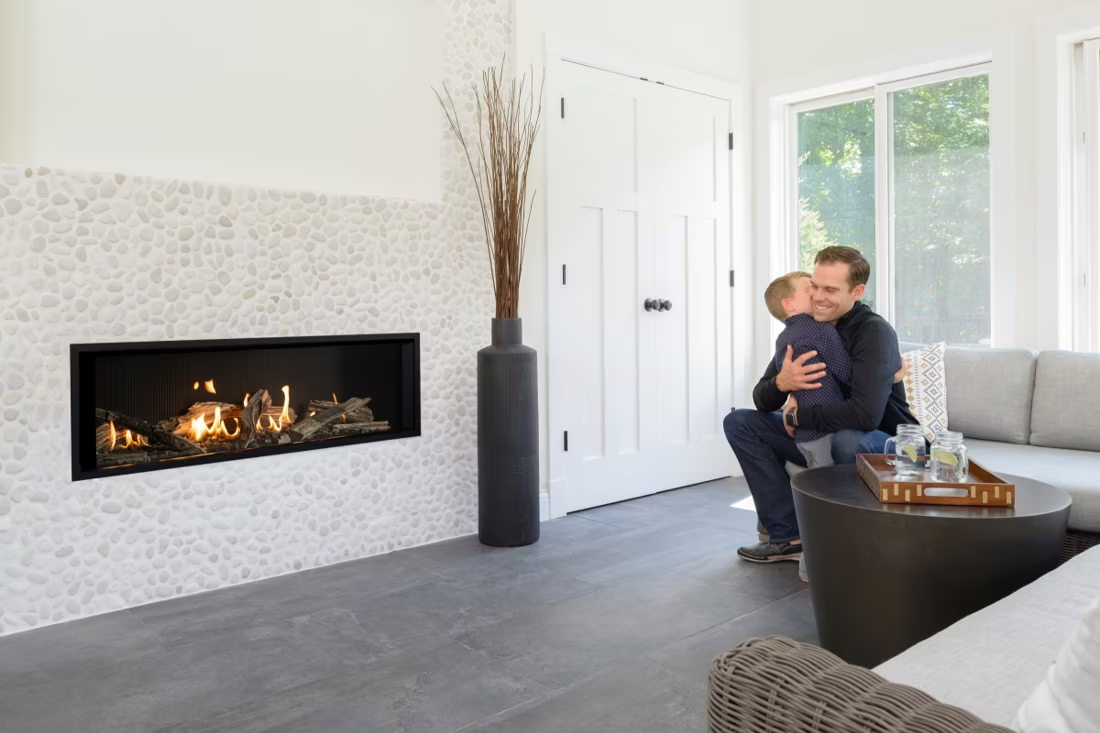
Four fuels. One honest answer for Rensselaer County.
Three steps. No salesperson until you're ready.
Tell us about your project
Your zip code, your situation, and the fuel you're leaning toward—or let the answers point you to one.
See what's actually available
The brands dealers within 100 miles genuinely carry—real options, never a catalog mirage.
Get your dealer & Project Guide
A trusted local dealer, plus the free Project Guide & Parts List that names every component of the job.
Frequently Asked Questions
Which fuel works best in Rensselaer County?
It depends on where in the county you are and what your home allows. In the hill towns—Berlin, Stephentown, Petersburgh, Grafton—wood remains a serious primary heat source; local oak, maple, birch, and ash woodlots keep fuel costs manageable, and a well-run catalytic or hybrid stove can carry a farmhouse through a stretch of single-digit nights. In Troy, East Greenbush, and the more built-up parts of the county, natural gas fireplaces and inserts are common where service lines already run to the house—no wood handling, consistent heat, easy to zone room-by-room. Pellet stoves are a strong middle option countywide, especially with regional pellet brands like Energex and Greene Team Pellet Fuel readily available—less labor than cordwood, similar comfort. Electric fireplaces are mostly supplemental here—good for a converted rowhouse fireplace insert or a bedroom, but not a primary heat source through a Rensselaer County winter. Many households run two fuels: wood or pellet as the workhorse, gas or electric for convenience rooms.
Do I need a permit to install a fireplace or stove in Rensselaer County?
In nearly all cases, yes. Whether you're in the city of Troy, the town of East Greenbush, or one of the rural hill towns, wood stoves, wood inserts, gas fireplaces, gas inserts, gas stoves, and pellet stoves typically require a local building permit, and gas work also needs a licensed gas-fitter and a separate gas permit for the line connection. Permits are issued at the municipal level—the city of Troy has its own building department, while towns like Berlin, Stephentown, and Grafton route permits through their town building inspector's office. Electric fireplaces generally skip the permit process unless the installation involves hardwiring a built-in unit into a new circuit. Most local hearth retailers file the paperwork for you as part of the installation quote, so it's worth asking upfront whether that's included.
How does installation differ between Troy's older homes and the hill-town farmhouses?
Troy has a lot of housing stock from the 1800s and early 1900s, which means masonry chimneys that often need a liner inspection or relining before a wood or gas insert goes in—flue sizing on a century-old chimney rarely matches what a modern EPA-certified stove needs. Out in Berlin, Stephentown, and Petersburgh, you're more likely dealing with a freestanding wood stove on a hearth pad with a factory-built chimney system, which is usually a more straightforward install but may face a longer travel distance for the installer and inspector. Either way, a local retailer who's done both types of jobs will flag the chimney or venting issue during the initial site visit rather than after the unit's already been ordered.
What does a chimney sweep or gas technician charge in Rensselaer County, and how often is service needed?
A standard chimney sweep and inspection for a wood-burning system typically runs $150–$350 depending on creosote buildup and chimney access—annual service is the standard recommendation, and it matters more here than in milder climates given how many burn days a typical winter includes with lows averaging around 17°F. Gas fireplace and insert service (burner cleaning, thermocouple/igniter check, venting inspection) usually runs $150–$300 and is recommended annually, ideally before the first cold snap in October or November. Pellet stove cleaning—hopper, auger, and exhaust—is often a homeowner DIY task between professional visits, but an annual professional service call ($100–$250) catches wear on the auger motor and igniter before it fails mid-winter. Technicians based in Troy and East Greenbush generally cover the whole county, sometimes with a modest travel fee for the eastern hill towns.
What's the typical cost range for fireplace installation across all fuel types in Rensselaer County?
Costs vary by fuel and by how much existing infrastructure—chimney, gas line, electrical—is already in place. Wood stove or insert installation: roughly $4,000–$8,500 for a typical install, higher if an older Troy chimney needs relining or rebuilding. Gas fireplace, insert, or stove: roughly $4,000–$10,000, with the low end applying where a gas line already reaches the room and the high end covering new line runs and venting. Pellet stove or insert: roughly $4,000–$7,000 for most installs. Electric fireplace: $200–$3,000 for the unit itself, plus $300–$1,000 in labor for anything beyond a simple plug-in placement, such as a built-in wall unit. For fuel-specific detail tied to local retailer pricing, see the county + fuel pages above.
Are there any local rules or considerations around wood burning in Rensselaer County?
Rensselaer County doesn't have the kind of air-quality non-attainment designation or winter burn curtailments you'd see in some western basin counties—there are no county-wide burn bans tied to inversion events here. That said, new wood stove installations still need to meet current EPA emissions standards, and if you're near the Green Mountain & Finger Lakes National Forest boundary and plan to cut your own firewood on public land, you'll need a cutting permit from that forest office rather than assuming you can harvest freely. Within town and city limits, ordinary nuisance ordinances around excessive smoke can apply, so a properly seasoned load of oak or maple and a stove that's drafting correctly will keep you well within any local expectations.
What is an in-home preview and do I need one?
It's a visit where a hearth professional measures your space, confirms the model you picked actually works in your home, and walks the specs—framing, gas line, venting, finish work—before anything is ordered. Some details you just can't know until you see the house. Never make a down payment without one; it's the single most-skipped step that burns buyers.
How much should I budget for a fireplace?
For an average home—covering the fireplace, the vent pipe, and basic installation—a budget between $3,900 and $5,500 gives you a lot of options across wood, gas, and pellet. By the time you add finish work, gas line, and electrical, the average complete installation lands between $5,000 and $12,000 all-in. In a remodel or new build, a good rule is to put about 2.5% of the total project cost toward the fireplace.
I know I want a fireplace—where do I actually start?
Do two things today: snap a photo of the wall or fireplace you want to transform, and take a tape measure to the space—width, height, depth. Those two artifacts answer most of a hearth professional's first questions. Then settle fuel (wood, gas, pellet, or electric) and set a realistic budget: $3,900–$5,500 covers fireplace, vent, and basic install for most homes.
Can a fireplace actually lower my heating bill?
Yes—by creating a comfort zone. A furnace heats every square foot of the house just to warm the one room you're in; a gas fireplace on low burns roughly a sixth of the gas a typical furnace does. Set the furnace around 55–60 degrees as a baseline, then heat the rooms your family actually uses. Families who heat this way commonly save $20–$60 a month.
Stove and Fireplace Dealers in Rensselaer County
Listings include WhyFire partner dealers, dealers we have verified as authorized for the brands we recommend, and established local businesses that carry hearth products. Every listing shows which one it is. The ones marked Preferred run on WhyFire's software, so they can show you real pricing and book your appointment right here. No manufacturer pays for placement. How we verify dealers →
Mjm Services Inc
Upstate Backyard Kitchens
Razzano Kitchen & Bath
Troy's Landscape Supply
The Reynolds Group
Adirondack Stoves
Countryside Stove & Chimney
Dr. Soot 'n Cinder
Find your fireplace in Rensselaer County.
Pick your fuel below, and I'll match you with a trusted local dealer and send over a free Project Guide & Parts List—the exact parts, including the vent kit, and the installer I'd recommend for your home.
Find Your Fireplace →