
Pellet stoves are rare in New York County—here's why, and where they still work.
Manhattan's co-ops, condos, and mid-rise apartment stock leave little room for a hopper-fed stove and exterior venting. For the handful of townhouses and brownstones where it's actually feasible, we'll match you with a trusted local dealer and a straight answer on what it takes.
Every Project Starts From One of These Five Situations
Why pellet stoves mostly don't fit New York County's housing stock.
New York County—Manhattan—sits in climate zone 4A with about 4,553 heating degree days and an average winter low near 28°F. That's a real heating season, though nowhere near what a place like Buffalo, NY sees at roughly 6,500 HDD. The climate alone wouldn't rule out pellet heat. What rules it out for the vast majority of the borough's 1.69 million residents is the housing itself: co-ops, condos, and rental towers with no exterior wall access for direct venting, no basement or utility room for a pellet hopper and fuel bags, and building boards that simply don't allow solid-fuel combustion appliances in shared structures.
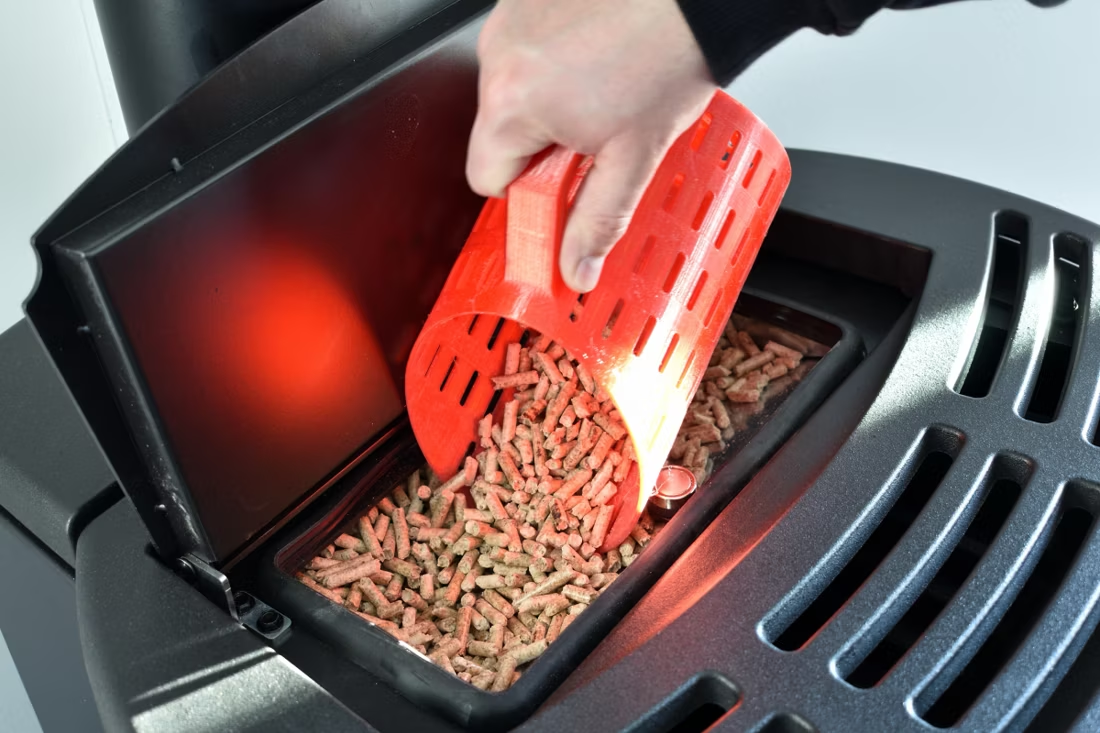
New York County is also a non-attainment area for air quality, which adds another layer of scrutiny to any new combustion appliance, pellet included. Add in DOB permitting and FDNY sign-off requirements for anything that vents through a shared wall or roof, and you can see why pellet stoves show up almost exclusively in the borough's remaining single-family townhouses and brownstones—properties with their own exterior walls, an existing masonry chimney, and an owner (not a board) making the call. Regional suppliers like Energex, Hamer Pellet Fuel, and Greene Team Pellet Fuel do serve the greater metro area, so fuel isn't the constraint—the building is.
Three steps. No salesperson until you're ready.
Tell us about your project
Your zip code, your situation, and the fuel you're leaning toward—or let the answers point you to one.
See what's actually available
The brands dealers within 100 miles genuinely carry—real options, never a catalog mirage.
Get your dealer & Project Guide
A trusted local dealer, plus the free Project Guide & Parts List that names every component of the job.
Frequently Asked Questions
Are pellet stoves even allowed in Manhattan apartment buildings?
In almost all cases, no. Co-op and condo boards in New York County typically prohibit solid-fuel combustion appliances outright, and buildings with central HVAC or shared vertical chases rarely have a legal path for direct venting through an exterior wall. FDNY and the NYC Department of Buildings both require sign-off on any new venting penetration in a multi-family structure, and most boards won't approve the alteration application in the first place. If you live in a co-op or condo, a pellet stove is very unlikely to be a realistic option—a gas or electric fireplace is almost always the more workable path given the same building constraints.
Where do pellet stoves actually work in New York County?
The realistic candidates are single-family townhouses and brownstones—properties in neighborhoods like the West Village, Chelsea, or parts of Harlem—where the owner controls the exterior wall and there's an existing masonry chimney or room to run new venting. Even then, DOB permits and a structural review of the chimney or wall penetration are required before installation. This is a small slice of the borough's housing stock, which is why pellet stoves remain a niche request here rather than a common one.
What does a pellet stove installation cost in New York County?
There isn't a standard local cost range the way there is for a gas insert conversion, simply because so few installations happen here. When they do occur—almost always in a private townhouse—the bigger cost drivers are DOB permit filings, structural review of the chimney or wall, and coordinating the dedicated electrical circuit the auger and blower require through Con Edison-served wiring. Expect the process itself, not just the appliance, to be the larger line item compared to a similar install in a single-family home outside the city.
Why don't more buildings in Manhattan have pellet stoves if the climate calls for heat?
The climate—4,553 heating degree days and winter lows around 28°F—supports supplemental heat, but the building typology doesn't support pellet appliances specifically. Pellet stoves need an exterior vent termination and a dedicated electrical circuit for the auger and combustion blower; most Manhattan units have neither available to them, and shared structures add board approval and fire code review on top of that. Gas and electric fireplaces solve the same comfort need without requiring exterior wall access, which is why they're far more common in the borough.
What permits are required if I do qualify for a pellet stove installation?
You'll need a Department of Buildings permit for the appliance installation and any new venting penetration, plus FDNY review if the work affects fire separation between units or floors. If the building is a townhouse or brownstone in a historic district, expect an additional layer of review for any visible exterior venting. A contractor experienced with DOB filings in New York County will typically manage this process, but it adds real time to the project compared to a stand-alone home in most other counties.
Is there room to store pellet fuel in a typical New York County home?
For most apartments, no—a pellet stove burns through 40-pound bags at a steady clip during the season, and there's usually nowhere to stage a season's supply in a unit without a basement, garage, or dedicated storage room. This is one of the quieter reasons pellet stoves don't scale in dense housing: even if venting and permitting were solved, most residents have no place to keep the fuel. Townhouses with a garden level or cellar are the exception.
What's a better fit than pellet for most New York County homes?
For the large majority of co-op, condo, and rental units in the borough, a direct-vent gas fireplace or a plug-in electric fireplace is the more realistic choice. Gas service is standard throughout New York County, and a direct-vent unit can often be routed through an existing chase without the fuel storage or exterior venting requirements a pellet stove demands. Electric units require no venting at all and can go into units where even gas work isn't feasible. If you're set on pellet specifically, we'll tell you honestly whether your property qualifies before matching you with a dealer.
If I do have a qualifying townhouse, where do I find pellet fuel and a dealer?
Regional pellet brands including Energex, Hamer Pellet Fuel, and Greene Team Pellet Fuel supply dealers across the greater New York metro area, and several of those dealers do service Manhattan when a project genuinely qualifies—typically a private townhouse with its own exterior wall. Because these jobs are uncommon, not every hearth retailer in the region handles them regularly; we match you with one that has actually installed in the borough's building conditions before.
Pellet vs. wood—does either make sense in New York County?
Both are unusual choices here for the same underlying reason: dense multi-family housing with limited exterior wall access, fuel storage, and board approval standing in the way. Wood adds the further complication of needing a full masonry or Class A chimney and regular fuel deliveries in a borough with no curbside cordwood culture the way an upstate county with abundant oak, maple, birch, and ash might have. Between the two, pellet is marginally simpler to vent in a qualifying townhouse, but for nearly everyone in New York County, gas or electric will get you real heat without fighting the building.
Why is a fireplace insert so efficient?
An insert does two things: it seals the chimney completely, so you stop losing air you already paid to heat, and it radiates warmth into the room through the firebox and glass. Most add a heat-exchange fan that pulls cool room air underneath, wraps it around the hot firebox, and pushes it back out warm. Your home is more efficient before you've even lit the first fire.
What's the difference between an insert and a zero-clearance fireplace?
An insert is a fireplace that slides into a pre-existing wood-burning fireplace—if you don't have one, there's nothing to insert it into. A zero-clearance fireplace is built into a framed wall, which makes it the answer for remodels and new construction. Simple test: existing masonry fireplace means insert; blank or framed wall means zero-clearance.
Can a fireplace actually lower my heating bill?
Yes—by creating a comfort zone. A furnace heats every square foot of the house just to warm the one room you're in; a gas fireplace on low burns roughly a sixth of the gas a typical furnace does. Set the furnace around 55–60 degrees as a baseline, then heat the rooms your family actually uses. Families who heat this way commonly save $20–$60 a month.
What is an in-home preview and do I need one?
It's a visit where a hearth professional measures your space, confirms the model you picked actually works in your home, and walks the specs—framing, gas line, venting, finish work—before anything is ordered. Some details you just can't know until you see the house. Never make a down payment without one; it's the single most-skipped step that burns buyers.
Pellet Brands Stocked Around New York County
Manufacturers will point you to the nearest stocking dealer.
Get a straight answer on pellet heat in New York County.
Tell us about your building and unit type and we'll give you an honest read on whether pellet is realistic—and if it is, match you with a trusted local dealer and send over a free Project Guide & Parts List with the exact venting and parts your install needs.
Find Your Fireplace →