
Real flame ambiance, zero venting, built for barrier-island living.
No chimney, no gas line, no flood-zone venting headaches—just plug-in or hardwired warmth for Long Beach co-ops, condos, and boardwalk homes. Find the right unit and connect with a trusted local dealer.
Every Project Starts From One of These Five Situations
Built for a barrier island, not a farmhouse.
Long Beach sits at 7 feet of elevation on a narrow barrier island in Nassau County, where most housing stock is co-ops, condos, and closely spaced single-family homes built to FEMA flood-zone standards. Winters here are mild by national standards—average lows around 26°F and a winter heating season comparable to Philadelphia or coastal New Jersey rather than anything approaching a Duluth, MN or Burlington, VT winter. That combination—dense multi-family housing plus a moderate climate—is exactly why electric fireplaces have become the practical choice for a large share of Long Beach homeowners.
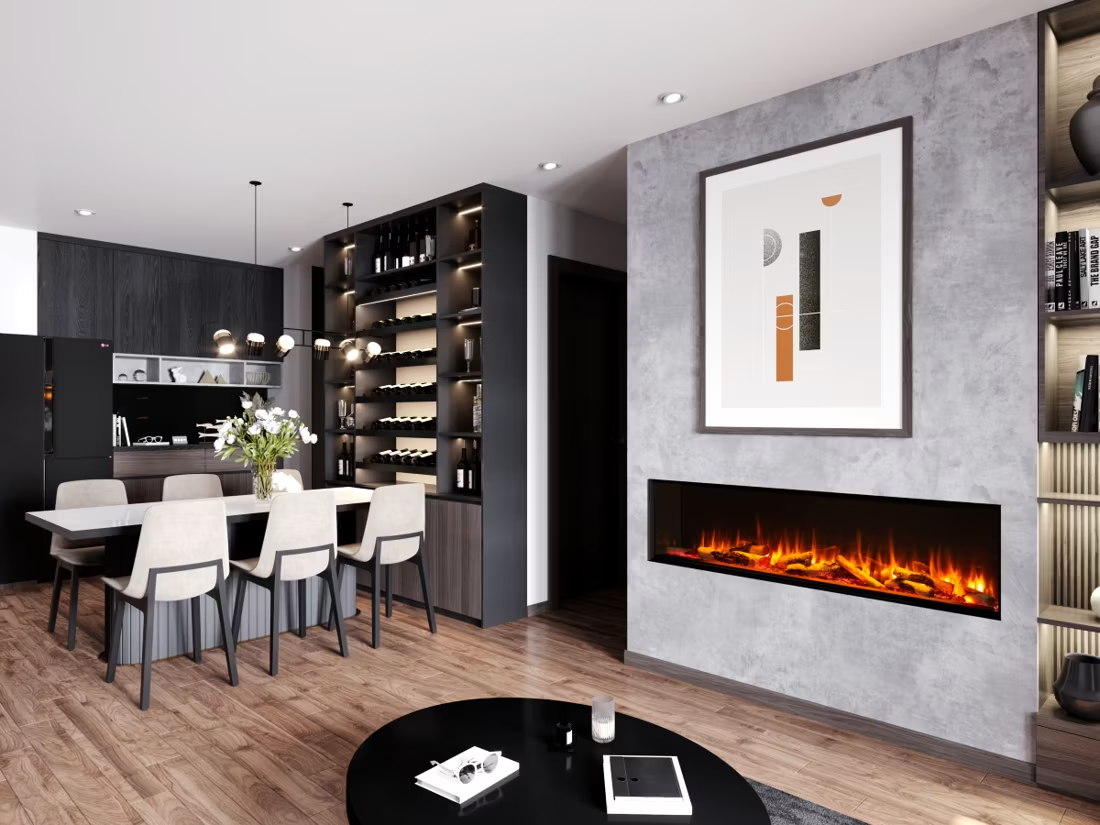
An electric fireplace or insert doesn't need a chimney, a gas line, or an exterior vent penetration, which matters in a city where flood-zone construction rules already complicate any wall or foundation work. Long Island Power Authority (LIPA) serves the city's electric grid, and at roughly 24.57 cents per kWh—well above the national average—most Long Beach homeowners use electric units for supplemental zone heat and ambiance in a living room or bedroom rather than as a whole-home heat source. For co-op boards and condo associations that restrict combustion appliances, electric is often the only fireplace option allowed at all.
Three steps. No salesperson until you're ready.
Tell us about your project
Your zip code, your situation, and the fuel you're leaning toward—or let the answers point you to one.
See what's actually available
The brands dealers within 100 miles genuinely carry—real options, never a catalog mirage.
Get your dealer & Project Guide
A trusted local dealer, plus the free Project Guide & Parts List that names every component of the job.
Frequently Asked Questions
How much does an electric fireplace installation cost in Long Beach?
Most electric fireplace projects in Long Beach run $300 to $2,500 depending on the unit. A plug-in wall-mount or freestanding electric stove is the least expensive option and requires no wiring beyond a standard outlet. A built-in or recessed electric insert set into an existing fireplace opening or a new wall cavity typically needs a licensed electrician to run a dedicated 120V or 240V circuit, which pushes cost toward the higher end. Because there's no venting, gas line, or chimney work involved, electric installs are consistently the fastest and least invasive fireplace project available in a co-op or condo building.
Will an electric fireplace actually heat my Long Beach home?
Most electric fireplaces put out around 4,600 to 5,000 BTU—enough to comfortably warm a single room, but not a whole house. Given Long Beach's relatively mild winters (average lows near 26°F, with a heating season on par with Philadelphia) and LIPA's residential rate of roughly 24.57 cents per kWh, running an electric unit as a home's sole heat source gets expensive fast compared to the gas or oil systems most local buildings already use for central heat. The typical setup here is electric heat layered on top of an existing furnace or boiler—used to take the chill off a den or bedroom without running the whole system, and for the visual warmth of a real-looking flame.
Why don't more homes in Long Beach have wood stoves?
Wood heat is essentially a non-factor in Long Beach, and for good reason. The city is a densely built barrier island of co-ops, condos, and attached homes constructed to flood-zone code, where masonry chimneys and solid-fuel appliances are rare and often restricted outright by building associations. There's also no nearby public land or Forest Service permit office for cutting firewood—unlike inland or upstate New York communities, Long Beach residents have no local source of self-cut cordwood even if they wanted a stove. A small number of standalone single-family homes on the island could technically support a wood-burning unit, but nearly everyone in that situation chooses a vented gas fireplace instead for the convenience and lower fire-code hurdles.
Are pellet stoves an option for Long Beach homes?
Not really. Pellet stoves need bulk bag storage, a hopper, and an exterior vent—all difficult to accommodate in Long Beach's co-op and condo-heavy housing stock, and largely unnecessary given the mild coastal climate. Regional pellet brands like Energex and Greene Team Pellet Fuel are sold elsewhere on Long Island and upstate, but there's little retail or delivery infrastructure built around barrier-island demand. If you're drawn to the idea of a stove-style unit with a hopper and glowing firebox look, an electric stove replicates the aesthetic without the pellets, ash, or storage problem.
Do I need a permit for an electric fireplace in Long Beach?
A simple plug-in electric fireplace or stove generally doesn't require a permit since it's just an appliance plugged into an existing outlet. A built-in or wall-recessed unit that needs new electrical wiring typically does require an electrical permit through the City of Long Beach Building Department, and if you live in a co-op or condo, your building's board or management company will usually have its own approval process on top of that—especially for any work touching exterior walls, which carry extra scrutiny under the city's flood-zone construction rules.
What's the best type of electric fireplace for a Long Beach co-op or condo?
Wall-mounted and recessed electric units are the most popular choice here, since Long Beach's co-op and condo units tend to run smaller and boards are often protective of common walls. Brands like Dimplex and Napoleon make slim, flush-mount inserts designed to sit inside a wall cavity or replace an existing non-functional fireplace opening without adding depth to the room. For renters or residents who can't modify walls at all, a freestanding electric stove or mantel unit offers the same flame effect with zero permanent installation—you plug it in and move it if you relocate.
How much does it cost to run an electric fireplace in Long Beach?
At LIPA's residential rate of about 24.57 cents per kWh, a typical 1,500-watt electric fireplace running on its heat setting costs roughly 37 cents per hour to operate—noticeably more than the national average, where electric rates often run closer to 15 to 16 cents per kWh. Running the unit on flame-only mode without the heater draws only a few watts and costs pennies a day. Most Long Beach homeowners use the heat setting occasionally for supplemental warmth rather than for extended daily heating, which keeps the added cost to their LIPA bill modest.
Electric vs. gas fireplace—which makes more sense in Long Beach?
Gas is the standard choice for homeowners who want a fireplace as genuine supplemental heat, since it produces more BTU per dollar than electric at LIPA's rates and many Long Beach homes already have gas service for cooking or water heating. But gas requires venting and a gas line, which can be a nonstarter in a co-op or condo where board approval, exterior penetrations, and flood-zone wall work all come into play. Electric skips all of that—no gas line, no vent, no combustion byproducts—at the cost of lower heat output and a higher per-hour running cost. For ambiance-focused or supplemental use in an apartment-style building, electric usually wins; for a standalone home wanting real zone heat, gas is worth the extra installation complexity.
Will my electric fireplace work if the power goes out?
No—an electric fireplace is entirely dependent on grid power, and Long Beach's exposure to nor'easters and hurricane-season storms means LIPA outages do happen on the island, sometimes for extended stretches. If backup heat during an outage matters to you, a battery-backed portable heater or a vented gas fireplace with a standing pilot are the more resilient options. Most homeowners here treat their electric fireplace as a daily-use ambiance and supplemental-heat appliance rather than an emergency heat source, and keep a separate plan for storm-related outages.
Can I put a TV above my fireplace?
Yes—with an asterisk. Fireplaces are hot and TVs don't like heat. Either put a mantel between them to deflect rising warmth, or choose a fireplace with heat-management technology that creates a cool zone on the wall above—the wall stays around 125 degrees, barely warm, while the room still gets full heat. If you like clean lines and don't want a mantel, heat management is the answer.
Do electric fireplaces actually produce heat?
Yes—most put out around 4,800–5,000 BTUs from a standard outlet, which comfortably warms a bedroom, office, or den as a comfort-zone heater. What they won't do is carry a whole house the way wood, gas, or pellet can. Think of electric as ambiance-first with honest supplemental heat: flames on with no heat in July, flames plus warmth in January.
How much should I budget for a fireplace?
For an average home—covering the fireplace, the vent pipe, and basic installation—a budget between $3,900 and $5,500 gives you a lot of options across wood, gas, and pellet. By the time you add finish work, gas line, and electrical, the average complete installation lands between $5,000 and $12,000 all-in. In a remodel or new build, a good rule is to put about 2.5% of the total project cost toward the fireplace.
What is an in-home preview and do I need one?
It's a visit where a hearth professional measures your space, confirms the model you picked actually works in your home, and walks the specs—framing, gas line, venting, finish work—before anything is ordered. Some details you just can't know until you see the house. Never make a down payment without one; it's the single most-skipped step that burns buyers.
Nearby Dealers
Hearth shops serving Long Beach and the surrounding area.
Costello's Hearth & Spa - Garden City Park
Electric Service in Long Beach
An electric fireplace's heater draws about 1,500 watts—pennies per hour at local rates.
Long Island Power Authority
Find your electric fireplace in Long Beach.
Tell us about your home, co-op, or condo and we'll match you with the right electric fireplace or insert—plus a free Project Guide & Parts List and a trusted local dealer to install it.
Find Your Fireplace →