
Steady heat for Finger Lakes winters, without the daily wood hauling.
With roughly 7,200 heating degree days a year and lake-effect snow rolling off Cayuga Lake, Ithaca homes need a heat source that keeps up night after night. Find the right pellet stove or insert, and connect with a trusted local dealer.
Every Project Starts From One of These Five Situations
Consistent, thermostat-controlled heat for a long, hilly-terrain heating season.
Ithaca sits at just 392 feet in the Finger Lakes basin, but its 7,207 heating degree days put it in the same heating-load territory as Burlington, Vermont, not the milder Hudson Valley towns to the south. Winter lows average 15°F, and Cayuga Lake's moisture feeds long stretches of gray, damp cold from late October through April. In a hilly college town full of drafty Victorians near downtown and Craftsman-era houses on Cornell's East Hill, a lot of homeowners want heat they can dial in and walk away from—not a firebox that needs tending every few hours.
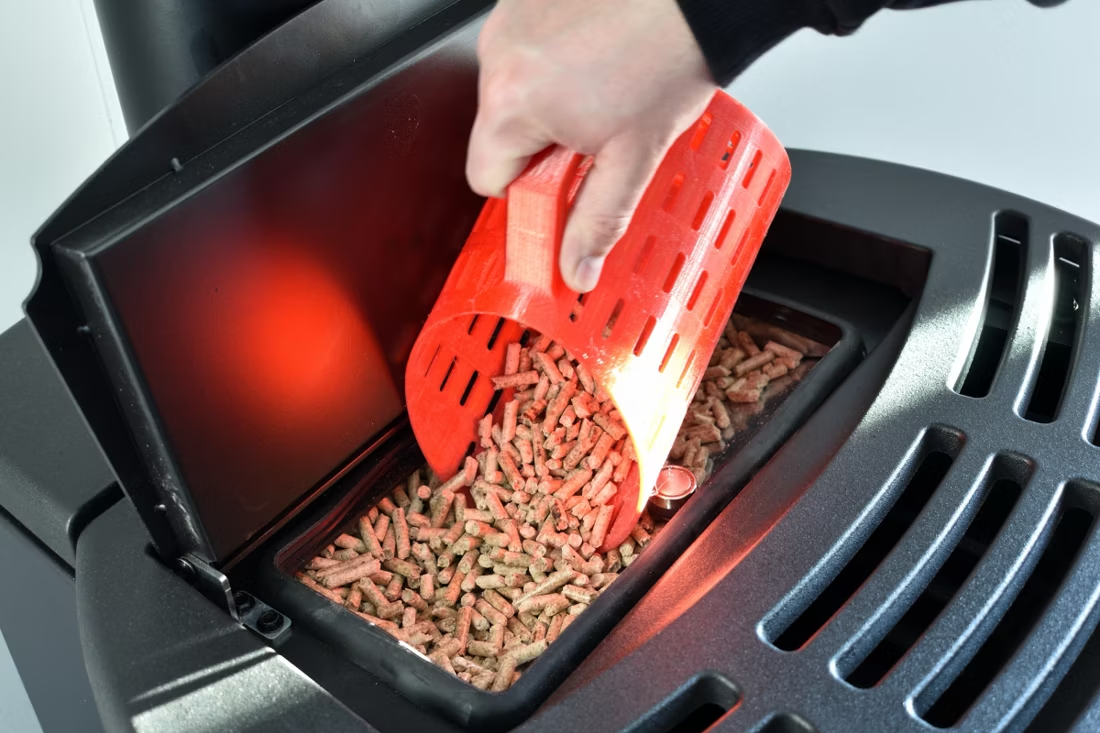
That's the pitch for pellet: load the hopper, set the thermostat, and the auger feeds it automatically for 24 hours or more depending on the unit and burn rate. Regional pellet brands like Energex, Hamer Pellet Fuel, and Greene Team Pellet Fuel are sold through hearth and farm-supply dealers across upstate New York, so supply isn't a concern. Ithaca's hardwood forests—oak, maple, birch, ash—are actually more relevant to the wood-stove side of the market than pellets, since most bagged pellets are softwood, but they tell you something useful: this is a region with woodlot culture and a real appetite for wood heat in any form. Electric rates here, through New York State Electric & Gas, run about 17.75 cents per kWh—noticeably above the national average—so a pellet stove's modest electrical draw for the auger and blower is a minor line item next to what it saves in propane or fuel-oil use during a long Ithaca winter.
Three steps. No salesperson until you're ready.
Tell us about your project
Your zip code, your situation, and the fuel you're leaning toward—or let the answers point you to one.
See what's actually available
The brands dealers within 100 miles genuinely carry—real options, never a catalog mirage.
Get your dealer & Project Guide
A trusted local dealer, plus the free Project Guide & Parts List that names every component of the job.
Frequently Asked Questions
How much does a pellet stove installation cost in Ithaca?
Most pellet stove installations in Ithaca run $3,000 to $6,500 installed, depending on the unit, whether you need a new hearth pad, and how much venting work is involved. Pellet stoves vent through a smaller-diameter pipe than wood stoves and can often exit through a side wall rather than requiring a full chimney, which keeps costs down compared to a masonry wood-burning setup. Converting an existing fireplace to a pellet insert typically lands in the same range, since it uses the existing chimney chase with a liner. A local dealer will give you a firm number after seeing your space.
Do I need a permit to install a pellet stove in Ithaca?
Yes—a building permit is required through the City of Ithaca Building Division, or through your town or Tompkins County building department if you're outside city limits. Pellet stove permitting is generally more straightforward than wood-stove permitting since there's no masonry chimney inspection involved, but the inspector will still check clearances, venting termination points, and that the unit is listed for the space. Most local hearth dealers handle the permit paperwork as part of the installation.
What size pellet stove do I need for an older Ithaca home?
A lot of Ithaca's housing stock—the Victorians around downtown, the older two-stories on Cornell's East Hill and in Fall Creek—was built well before modern insulation standards, so heat loss runs higher than a comparably sized new-construction home. As a starting point, small pellet stoves (up to around 1,000 sq ft) suit an add-on room or a well-sealed newer home; medium units (1,000–2,000 sq ft) cover most main living areas in an older single-family house; larger units can handle open-concept or whole-home heating in better-insulated homes. Because older homes vary so much in draftiness, an in-home consultation from a local dealer is worth more than any square-footage chart.
Pellet stove vs. wood stove—which makes more sense here?
Tompkins County has real woodlot culture, and plenty of homeowners with oak, maple, birch, or ash on their property lean toward wood stoves for that reason—free or cheap fuel, and heat that works during a power outage. Pellet stoves trade that self-sufficiency for convenience: no splitting or stacking, more even heat output, and easier day-to-day operation, but the auger and blower need electricity, so a pellet stove goes dark in an outage unless you add a battery backup or small generator. Given how often Finger Lakes ice storms take down power for a day or more, that's worth planning for if a pellet stove is your primary heat source.
Where can I buy pellets in the Ithaca area?
Regional brands including Energex, Hamer Pellet Fuel, and Greene Team Pellet Fuel are carried by hearth shops and farm-and-home retailers throughout the region, and most sell by the ton (fifty 40-pound bags) with seasonal pricing typically in the $250 to $320 per ton range. Buying early—late summer before the fall rush—usually gets better pricing and guarantees stock before winter demand picks up. Plan on covered, dry storage for a full season's supply, generally three to six tons for a home using pellets as primary heat through an Ithaca winter.
How much does it cost to run a pellet stove with NYSEG electric rates?
Pellet stoves draw relatively little electricity—typically 100 to 400 watts depending on the auger and blower settings—so even at New York State Electric & Gas's residential rate of about 17.75 cents per kWh, the electrical cost of running one adds up to only a few dollars a month. The bigger cost driver is pellet consumption itself, which scales with how hard you're running the stove during Ithaca's coldest stretches. Compared to heating with electric resistance or propane, a pellet stove is usually the cheaper way to offset a chunk of your winter heating bill.
What pellet stove brands do local dealers carry?
Hearth dealers serving the Ithaca area typically carry established pellet stove manufacturers such as Harman, Enviro, and Lopi, along with pellet insert options for homes with existing masonry fireplaces. Availability shifts by dealer and season, which is part of why we match homeowners with a specific local dealer rather than pointing you at a national catalog—you want to know what's actually in stock and installable near you, not what's merely listed online.
How much maintenance does a pellet stove need?
Pellet stoves need more frequent light maintenance than wood stoves but less heavy annual work. Plan on emptying the ash pan every few days to weekly depending on use, wiping the glass as needed, and vacuuming the burn pot and heat exchanger tubes every couple of weeks during heavy-use months. A full professional cleaning and inspection once a year—ideally before the season starts in early fall—keeps the auger, exhaust fan, and venting system running properly and catches wear on gaskets or igniters before they fail mid-winter.
Can I install a pellet insert into my existing fireplace?
Yes, and it's a common project in Ithaca's older neighborhoods where many homes still have a working masonry fireplace. A pellet insert slides into the existing firebox opening and vents through the chimney using a smaller liner, converting an inefficient open fireplace into a controlled, thermostat-driven heat source. It's typically less invasive than a wood-insert conversion since the venting requirements are less demanding, and it preserves the look of the original fireplace surround while dramatically improving actual heat output.
Why is a fireplace insert so efficient?
An insert does two things: it seals the chimney completely, so you stop losing air you already paid to heat, and it radiates warmth into the room through the firebox and glass. Most add a heat-exchange fan that pulls cool room air underneath, wraps it around the hot firebox, and pushes it back out warm. Your home is more efficient before you've even lit the first fire.
How often does a pellet stove need cleaning?
A clean pellet stove is a happy pellet stove. Plan on cleaning the burn pot about once a week when you're burning regularly—ash and clinkers gum up the air holes just like a pellet barbecue. Most pellet stove problems trace back to skipped cleaning that nobody explained up front. Some designs make it easy with a trapdoor burn pot: pull a lever and the gunk drops into the ash pan.
What is an in-home preview and do I need one?
It's a visit where a hearth professional measures your space, confirms the model you picked actually works in your home, and walks the specs—framing, gas line, venting, finish work—before anything is ordered. Some details you just can't know until you see the house. Never make a down payment without one; it's the single most-skipped step that burns buyers.
Can I install a fireplace myself?
If you're putting a fire in your house on purpose, it's best to work with an expert. Unless you're genuinely experienced in framing, gas line, vent pipe, and the national code on clearances to combustibles, have a professional do it—and ideally the same company that sells you the fireplace, so warranty, service, and liability all live under one roof.
Nearby Dealers
Hearth shops serving Ithaca and the surrounding area.
Pellet Brands Stocked Around Ithaca
Manufacturers will point you to the nearest stocking dealer.
Find your pellet stove in Ithaca.
Tell us a bit about your home and heating goals, and we'll match you with a trusted local dealer and send over a free Project Guide & Parts List—the exact equipment, venting, and next steps for a pellet stove or insert project in Ithaca.
Find Your Fireplace →