
Zone heat that fits Ithaca's old houses and long winters.
With 7,207 heating degree days and winter lows averaging 15°F, Ithaca's Fall Creek doubles and Cornell-area rentals need supplemental warmth that doesn't require tearing into a chimney. I'll match you with a trusted local dealer who can spec the right unit and circuit for your house.
Every Project Starts From One of These Five Situations
Where a chimney retrofit isn't in the cards.
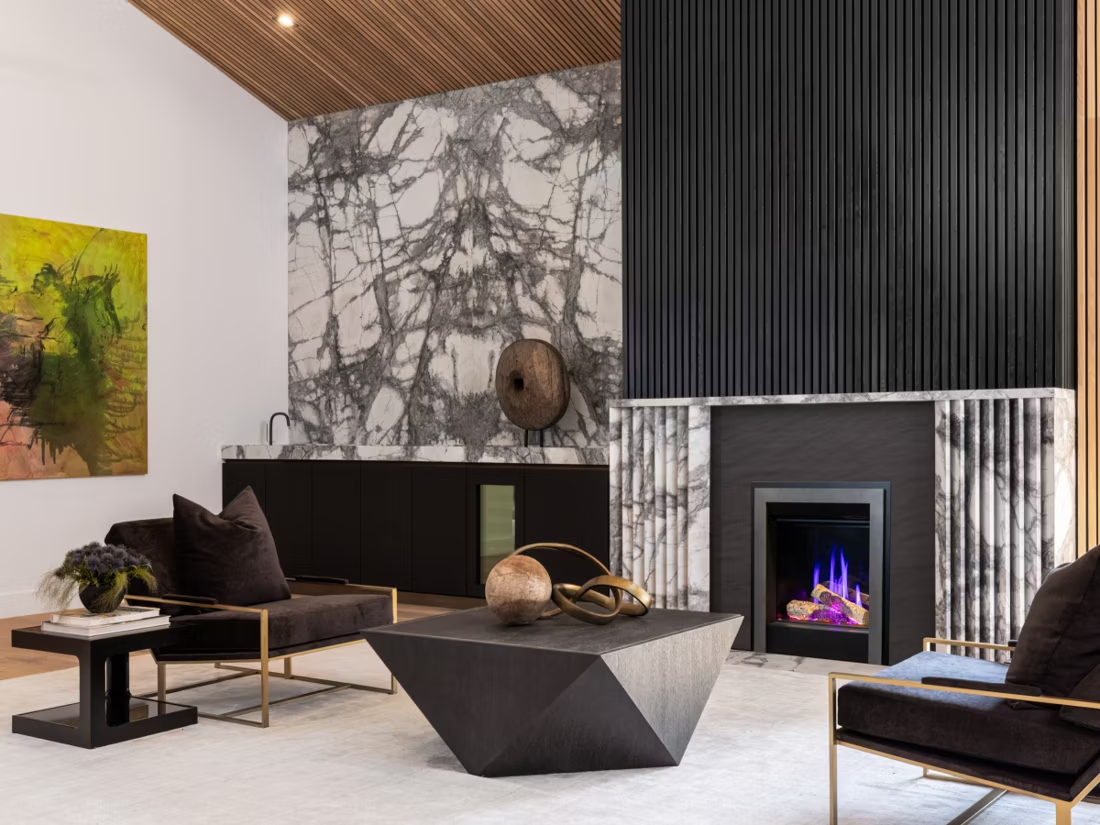
Ithaca sits in a glacial valley off Cayuga Lake at just 392 feet, but the climate zone 6A designation and 7,207 heating degree day count tell the real story—this is a long, hard heating season, closer in feel to Burlington, Vermont than to most of the Northeast's lower Hudson Valley. A lot of the city's housing stock predates central heating retrofits entirely: the wood-frame doubles in Fall Creek, the older homes on East Hill near Cornell, and the student rentals scattered through Collegetown often have no working flue at all, or a masonry chimney nobody wants to open back up. That's exactly the gap an electric fireplace fills—real supplemental warmth in a bedroom, sunroom, or converted attic apartment, installed in an afternoon with no venting, no gas line, and no combustion byproducts to worry about.
What an electric fireplace won't do in Ithaca is replace your furnace. New York State Electric & Gas Corp bills residential customers around $0.1775 per kWh, which makes straight electric-resistance heat one of the pricier ways to warm a whole house through a Tompkins County winter. Local dealers here tend to position electric units the way most of the market actually uses them—a zone heater for the room you're in, an ambiance piece for a rental where a wood stove or gas line isn't an option, or a clean backup that produces zero emissions, which fits well with the county's environmental priorities. Paired with a gas furnace, oil system, or a wood stove burning the oak, maple, and birch common to the surrounding hills, an electric unit rounds out the setup without adding another thing to maintain.
Three steps. No salesperson until you're ready.
Tell us about your project
Your zip code, your situation, and the fuel you're leaning toward—or let the answers point you to one.
See what's actually available
The brands dealers within 100 miles genuinely carry—real options, never a catalog mirage.
Get your dealer & Project Guide
A trusted local dealer, plus the free Project Guide & Parts List that names every component of the job.
Frequently Asked Questions
How much does it cost to install an electric fireplace in Ithaca?
A basic plug-in electric insert or freestanding unit runs $200 to $800 and needs nothing more than a standard outlet, which is why it's popular in Collegetown rentals and student apartments where the landlord won't allow structural changes. A built-in, wall-mounted linear electric fireplace with a custom surround typically lands between $1,200 and $3,500 once you add an electrician for a dedicated 20-amp circuit—common in the older Fall Creek and East Hill homes where the existing wiring wasn't sized for a 1,500-watt heater running for hours at a time.
Do I need a permit for an electric fireplace in Ithaca?
A plug-in unit that uses an existing outlet generally doesn't trigger a permit. Once you're adding a new dedicated circuit or doing any wall framing for a built-in unit, that's electrical work that falls under the City of Ithaca Building Division or the Town of Ithaca/Tompkins County code office depending on your address, and it needs a licensed electrician and inspection. Most local hearth dealers coordinate this as part of the install rather than leaving you to schedule the electrician separately.
Will an electric fireplace actually heat my whole house through an Ithaca winter?
No, and any dealer being straight with you will say so. With 7,207 heating degree days and winter lows averaging 15°F, whole-house heating here needs a real furnace or boiler system. At NYSEG's residential rate of $0.1775 per kWh, running electric-resistance heat as your primary source through a Tompkins County winter would be expensive compared to gas or oil. Where electric fireplaces earn their keep is zone heating—taking the chill off a home office, a converted attic bedroom, or a sunroom addition—while your main system handles the rest of the house.
What's the best electric fireplace option for an older Ithaca home?
In the pre-war doubles and worker cottages common around Fall Creek and Northside, wiring often wasn't built for a modern heater pulling 1,500 watts continuously, so a wall-mounted linear unit usually means adding a dedicated circuit rather than relying on an existing outlet. A recessed or built-in insert that sits flush in a wall opening tends to look more intentional in these older floor plans than a boxy freestanding unit. If the home already has an unused masonry firebox, an electric insert sized to that opening is often the cleanest retrofit—no chimney work, no liner, just a plug and, if needed, new wiring run behind the surround.
Electric vs. wood stove—which makes more sense for an Ithaca home?
Wood still wins on raw heating capacity and outage resilience—a lot of Tompkins County households split oak, maple, birch, or ash from their own land or a neighbor's woodlot, and a good stove can carry a main living space through the coldest stretch of a 7,207-HDD winter for the cost of a chainsaw and some sweat equity. Electric wins on convenience and zero emissions, which matters in a town where air quality is already good and a lot of residents would rather not add particulate smoke to it. Most homeowners here end up choosing based on the room: wood for the main living area where daily heat load matters, electric for a secondary space where installing venting isn't practical.
Are electric fireplaces a good fit for Cornell-area rentals?
Yes—it's one of the most common uses for them in Ithaca. Landlords in Collegetown and near East Hill are generally receptive to a plug-in electric unit since it requires no permit, no venting, and does no damage to the unit that a security deposit would need to cover. It also solves a real problem for tenants: many of these older rental conversions have no working fireplace or flue at all, so a freestanding or wall-mounted electric unit is often the only realistic way to get supplemental heat and ambiance in a bedroom or living room without landlord approval for structural work.
How much does it cost to actually run an electric fireplace in Ithaca?
Most electric fireplaces draw around 1,500 watts on their highest heat setting. At NYSEG's residential rate of $0.1775 per kWh, that works out to roughly $0.27 an hour, or about $1.30 for a five-hour evening of use. Run it that way daily through a typical Ithaca heating season and you're looking at roughly $40 a month—reasonable for supplemental warmth in one room, but a clear reason not to lean on it as your only heat source through a full winter here.
What maintenance does an electric fireplace need in Ithaca?
Very little compared to wood or gas. There's no chimney to sweep and no annual gas-line inspection required. Dust the heating element and vents occasionally, check that the fan runs quietly, and replace the LED ember bed light eventually—most units are rated for 20,000-plus hours. It's a genuine advantage for Ithaca's rental market, where tenants and landlords alike want a heat source that doesn't need a service call before every winter.
Electric vs. gas fireplace—which should I choose in Ithaca?
Gas gives you more actual heat output and can run during a power outage with the right ignition system, which matters through an Ithaca winter with lake-effect snow squalls off Cayuga Lake that occasionally take down lines. Electric wins on installation simplicity—no gas line, no venting, no combustion permit—and on upfront cost, which is why it's the default choice for renters, upper-floor apartments, and homeowners who just want a clean, controllable secondary heat source without touching the gas meter. If you already have gas service to the house, it's worth comparing both with a local dealer before deciding.
Can I put a TV above my fireplace?
Yes—with an asterisk. Fireplaces are hot and TVs don't like heat. Either put a mantel between them to deflect rising warmth, or choose a fireplace with heat-management technology that creates a cool zone on the wall above—the wall stays around 125 degrees, barely warm, while the room still gets full heat. If you like clean lines and don't want a mantel, heat management is the answer.
How much does an electric fireplace cost to run?
With the heater on, a typical unit draws about 1,500 watts—at average electric rates that's roughly 20 cents an hour. Run the flame effect alone and it costs pennies; the flames are LED-driven and use about as much power as a light bulb. There's no pilot light, no fuel delivery, and essentially no maintenance.
Can a fireplace actually lower my heating bill?
Yes—by creating a comfort zone. A furnace heats every square foot of the house just to warm the one room you're in; a gas fireplace on low burns roughly a sixth of the gas a typical furnace does. Set the furnace around 55–60 degrees as a baseline, then heat the rooms your family actually uses. Families who heat this way commonly save $20–$60 a month.
What is an in-home preview and do I need one?
It's a visit where a hearth professional measures your space, confirms the model you picked actually works in your home, and walks the specs—framing, gas line, venting, finish work—before anything is ordered. Some details you just can't know until you see the house. Never make a down payment without one; it's the single most-skipped step that burns buyers.
Nearby Dealers
Hearth shops serving Ithaca and the surrounding area.
Electric Service in Ithaca
An electric fireplace's heater draws about 1,500 watts—pennies per hour at local rates.
New York State Elec & Gas Corp
Get your free Project Guide & Parts List for an electric fireplace in Ithaca.
Tell me about your home—old Fall Creek double, Collegetown rental, or new build—and I'll match you with a trusted local dealer and send a free Project Guide & Parts List sized to your space, with the wiring and mounting details worked out ahead of time.
Find Your Fireplace →