
Steady Heat for Ithaca's Long Finger Lakes Winters.
With a heating season that runs well past seven months and lows that settle into the teens for months, Ithaca homes need heat they can flip on and trust. Find the right gas fireplace or insert, and connect with a vetted local dealer.
Every Project Starts From One of These Five Situations
Consistent heat, no cordwood required.
Ithaca sits at just 392 feet in the Finger Lakes basin, but the region's long, demanding winter heating season—stretching well past seven months a year—puts it in the same territory as Burlington, Vermont. Winters here bring average lows around 15°F, lake-effect snow squalls off Cayuga Lake, and the kind of damp, penetrating cold that a lot of the older housing stock near Cornell and downtown wasn't originally built to handle efficiently.
Natural gas mains reach much of the City of Ithaca, but out in the townships—Enfield, Newfield, Dryden, and other rural corners of Tompkins County—propane is the standard fuel for hearth appliances. Either way, a gas fireplace or insert delivers instant, thermostat-controlled heat without splitting, stacking, or hauling wood, and it pairs well with the electric baseboard or heat pump setups common in NYSEG territory, where residential electric rates run about $0.1775/kWh and zone heating a single living room with gas can meaningfully offset winter bills.
Three steps. No salesperson until you're ready.
Tell us about your project
Your zip code, your situation, and the fuel you're leaning toward—or let the answers point you to one.
See what's actually available
The brands dealers within 100 miles genuinely carry—real options, never a catalog mirage.
Get your dealer & Project Guide
A trusted local dealer, plus the free Project Guide & Parts List that names every component of the job.
Frequently Asked Questions
How much does a gas fireplace installation cost in Ithaca?
Most Ithaca gas fireplace and insert projects run $4,500 to $11,000, with the spread driven mostly by venting and gas line work. A direct-vent insert going into an existing masonry fireplace with a gas line already nearby lands on the lower end. New construction or a fireplace going into a wall that currently has no gas service—common in the older two-story homes around Fall Creek and Belle Sherman—costs more once you add a new gas line run and framing. If you're on propane rather than municipal gas, factor in tank rental or purchase as a separate line item.
Can I convert my existing wood fireplace to gas?
Yes, and it's a common project in Ithaca's older housing stock, where many homes near Cornell and downtown still have their original masonry fireboxes. A gas insert typically slides into that existing opening with a stainless liner run up the current chimney, so you're not opening walls or adding new venting paths. Costs generally run $4,500 to $9,000 depending on whether the home is already on natural gas or needs a propane setup, and whether the chimney needs relining work before the liner goes in.
Do I need natural gas, or should I plan on propane?
It depends on where in Tompkins County you are. Inside the City of Ithaca and closer-in areas, natural gas service reaches many streets, and if your home already has a gas water heater or range, adding a fireplace is usually a short line extension. Once you're out in Enfield, Newfield, Danby, or other rural parts of the county, propane is the norm—you'll either tie into an existing tank or a supplier will need to set a new one. Most gas fireplace models are available in either configuration; your installer sets the orifice and regulator to match.
Will my gas fireplace still work if the power goes out?
Most will, with the right ignition system. Units with intermittent pilot ignition (IPI) run on a small battery backup that kicks in automatically during an outage, so the fireplace lights on demand just like normal—just remember to keep fresh batteries on hand. Valor fireplaces take a different approach: the pilot's thermocouple generates its own electricity, so there's no battery to fail, ever. That distinction matters in Ithaca, where ice storms and lake-effect squalls off Cayuga Lake can knock out power for a day or more in the outlying townships. Ask your local dealer about the ignition system on any model you're considering.
What's the difference between a gas fireplace, gas insert, and gas stove?
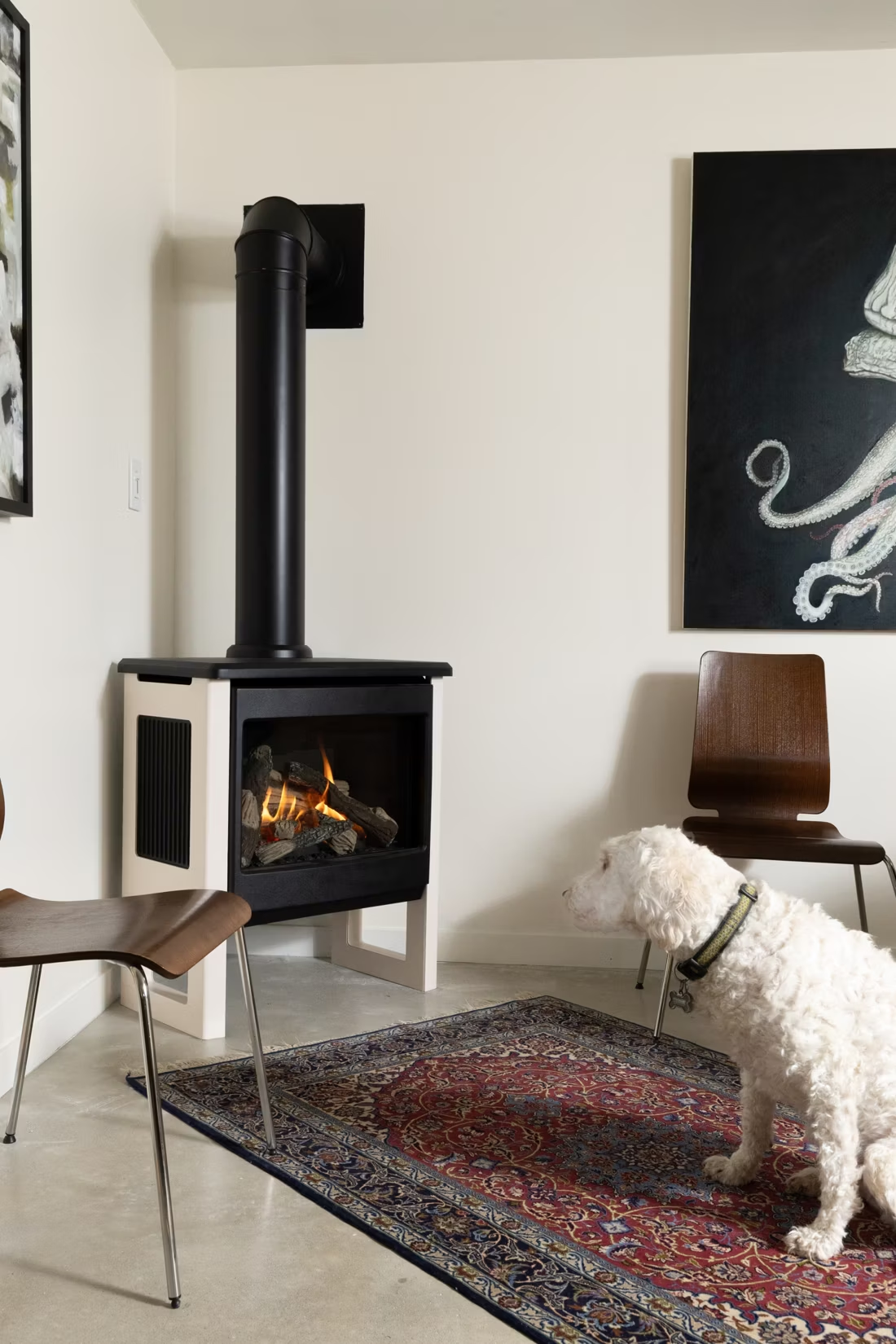
A gas fireplace is a fully built-in unit framed into a wall—the right call for new construction or a remodel without an existing hearth. A gas insert is built to drop into an existing masonry fireplace opening, using your current chimney as the vent path with a liner. A gas stove is freestanding, sitting on a hearth pad much like a wood stove but running on gas or propane. For the older homes clustered around Fall Creek, Cornell Heights, and downtown Ithaca that already have a fireplace opening, an insert is usually the most straightforward and least invasive option.
Do I need a permit to install a gas fireplace in Ithaca?
Yes. Work inside city limits goes through the City of Ithaca Building Division, and installations elsewhere in the county go through the applicable town or the Tompkins County Codes Division. Because the job involves running or tapping a gas line, it also requires a licensed gas-fitter or plumber, separate from the general building permit. Most established hearth dealers coordinate the gas work, venting, and inspection as one package rather than leaving you to manage multiple trades and two separate permit applications.
Should I get a vented or vent-free gas fireplace?
For Ithaca homes, direct-vent is the practical answer almost across the board. Vent-free units burn fuel directly into the room and are restricted or require special conditions in New York, plus they're a harder sell in the tightly sealed, well-insulated houses common in this climate zone—indoor air quality concerns are amplified when a home doesn't leak much air to begin with. A direct-vent unit pulls combustion air from outside and exhausts it back outside through a sealed system, which is both safer and the standard most local installers will recommend without hesitation.
How often does a gas fireplace need to be serviced?
Plan on an annual inspection, ideally in early fall before the heating season starts in earnest. A technician checks the burner, pilot assembly, venting, and gas connections, and cleans the glass and interior—a much lighter job than a wood chimney sweep, but still important for safety and efficiency. Local gas appliance service providers in the Ithaca area typically charge in the $150 to $250 range for a standard annual visit.
Gas vs. wood—which makes more sense for an Ithaca home?
Wood has deep roots in this part of the Finger Lakes—oak, maple, birch, and ash are all common regional species, and firewood is easy to source locally. Wood also keeps working during a power outage, which matters given how often ice and lake-effect storms interrupt service in the outlying townships. Gas wins on convenience: instant on-off heat, no ash or creosote, and a cleaner look for a primary living space. With a heating season that runs well past seven months here, a lot of Ithaca households end up running both—gas in the main room for daily use, wood or a backup heat source elsewhere for when the power drops during a February storm.
What do I measure to size a fireplace insert?
Four numbers tell you what fits: the front width, the front height, the back width, and the overall depth of your existing fireplace opening. Grab a tape measure, jot those down, and snap a photo of the wall—those two things do more to move your project forward than anything else you can do today.
Why is my open fireplace making my house colder?
Open fireplaces suck—literally. As the fire burns, it consumes air your furnace already paid to heat and pulls it out through the chimney, so the house is actually colder after the fire goes out than before you lit it. An insert fixes this: it seals the chimney, puts fixed glass across the front, and turns that hole in your house into a real heat source.
Does a fireplace add value to my home?
On average, a fireplace adds back to the home about the same amount you spent installing it. Add the monthly savings from heating the rooms you actually use instead of the whole house—often hundreds of dollars a year—and the value case is strong before you even count what a fire does for how your family uses the room.
Can a fireplace actually lower my heating bill?
Yes—by creating a comfort zone. A furnace heats every square foot of the house just to warm the one room you're in; a gas fireplace on low burns roughly a sixth of the gas a typical furnace does. Set the furnace around 55–60 degrees as a baseline, then heat the rooms your family actually uses. Families who heat this way commonly save $20–$60 a month.
Nearby Dealers
Hearth shops serving Ithaca and the surrounding area.
Find your gas fireplace in Ithaca.
Tell us about your home and heating goals, and we'll match you with a trusted local Ithaca dealer plus a free Project Guide & Parts List—the exact gas fireplace or insert, vent kit, and installer recommendation for your project.
Find Your Fireplace →