
Keep Your Family Warm and Safe—No Matter What
With just 388 year-round residents scattered across a million-plus acres of the Adirondack Park, Hamilton County runs on wood heat—from Long Lake camps to Speculator homesteads. Find the right stove or insert and connect with a trusted local dealer.
Every Project Starts From One of These Five Situations
Wood heat is a way of life in the Park's quiet corner.
Hamilton County sits almost entirely inside the Adirondack Park, and with roughly 388 year-round residents it's the least populated county in New York—a place of scattered hamlets like Long Lake, Indian Lake, Speculator, Lake Pleasant, and Wells rather than a single population center. The county falls in climate zone 6A, with a snow season that can start in October and hang on into April, and overnight lows that drop well below zero—closer to what Burlington, VT sees across Lake Champlain than to the rest of upstate New York. Many homes here are seasonal camps or older year-round houses built well before modern insulation standards, and wood has always been the practical answer to keeping them livable through the cold months.
Oak, maple, birch, and ash grow throughout the county's hardwood forests and split into some of the longest-burning, highest-BTU firewood available anywhere in the Northeast—sugar maple in particular is a local staple, tied to the same woodlots many families also tap for syrup. Hamilton County has no air quality non-attainment designations and no winter inversion concerns, so there's none of the burn-ban complexity you'll find in tighter valley air-sheds out west. For camps without reliable grid power and for year-round homes where an ice storm can knock out electricity for days, a wood stove isn't a lifestyle choice so much as a backup plan that actually works.
Three steps. No salesperson until you're ready.
Tell us about your project
Your zip code, your situation, and the fuel you're leaning toward—or let the answers point you to one.
See what's actually available
The brands dealers within 100 miles genuinely carry—real options, never a catalog mirage.
Get your dealer & Project Guide
A trusted local dealer, plus the free Project Guide & Parts List that names every component of the job.
Frequently Asked Questions
How much does a wood stove installation cost in Hamilton County?
Most wood stove installations in this part of the Adirondacks fall in the $4,000 to $9,000 range, depending on the stove, whether new Class A chimney pipe is needed, and how much hearth pad or clearance work the room requires. Because Hamilton County has so few year-round businesses, most certified installers are based out of Glens Falls, Saratoga Springs, or Old Forge and travel in for the job—expect a modest travel charge built into quotes for camps around Long Lake, Indian Lake, or Wells. New construction or camps without an existing chimney typically land at the higher end once full venting is factored in.
What size wood stove do I need for a camp versus a year-round home?
A seasonal camp used mainly on weekends and holidays can often get by with a small to mid-size stove sized for the main living space, since you're heating intermittently rather than holding a steady temperature for months. A year-round home in Hamilton County—especially an older farmhouse or camp-turned-residence with limited insulation—usually needs a stove sized to the full square footage plus a margin for the 6A climate's long, hard winters. Elevation matters too: homes up toward Blue Mountain Lake or in the higher terrain around Indian Lake run colder than valley-floor hamlets at the same square footage. A local dealer will size your specific structure rather than guess from square footage alone.
Where can I find certified wood stove installers near me?
Look for NFI (National Fireplace Institute) or CSIA (Chimney Safety Institute of America) certification—these credentials cover proper clearances, venting, and code compliance for wood-burning appliances. Given how sparsely populated Hamilton County is, most certified installers cover the whole county from a base in Glens Falls, Saratoga Springs, or the Old Forge/Inlet corridor, rather than having a storefront in every hamlet. Expect installers to ask about your specific location—travel time to remote camps around Wells or Piseco can affect scheduling and pricing. Avoid handyman installs on wood stoves; improper clearance and venting work is the leading cause of chimney fires in older camp structures.
What's the difference between a wood stove and a wood insert for an older camp?
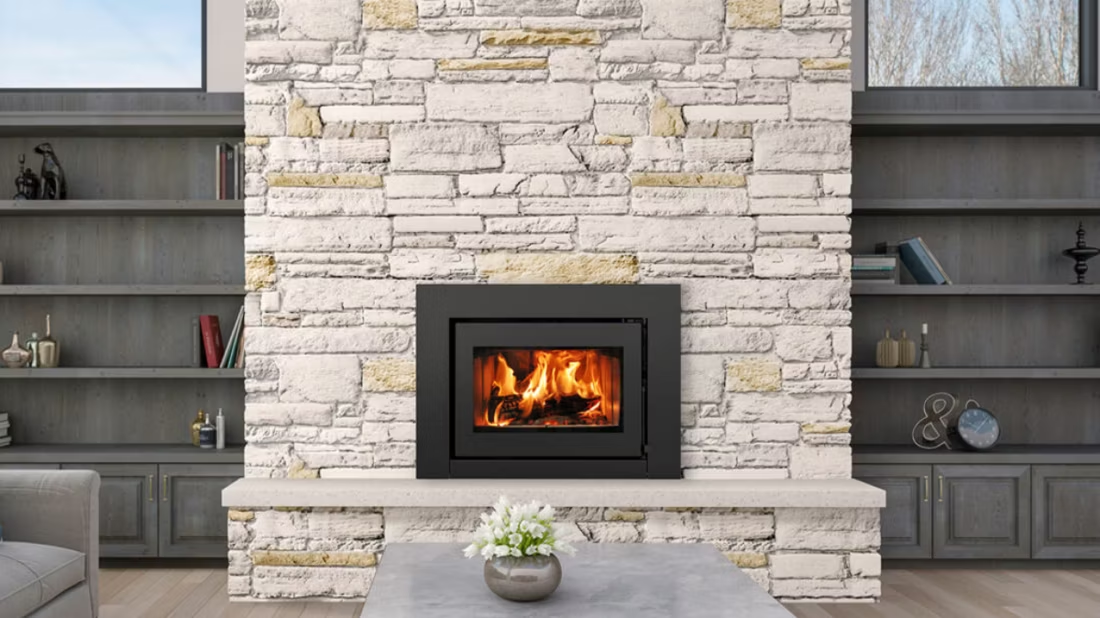
A wood stove is a freestanding unit on its own hearth pad, which works well in camps with no existing masonry fireplace—common in older Adirondack construction. A wood insert fits into an existing masonry fireplace and uses the chimney that's already there, which is the better route if your camp or farmhouse already has an open fireplace you want to convert into real, efficient heat instead of a heat-losing hole in the wall. Many older Hamilton County camps built mid-century have a stone or brick fireplace that was never much for heating—an insert is usually the fix.
Do I need a permit to install a wood stove in Hamilton County?
Yes—building permits for wood stove installations in Hamilton County are handled at the town level rather than through a single county office, since most of Hamilton County is made up of small towns (Long Lake, Indian Lake, Lake Pleasant, Wells, Arietta, Morehouse, Inlet) each with their own code enforcement officer. The stove itself needs to meet current EPA emissions standards. Because most of the county sits inside the Adirondack Park, some larger projects can also touch Adirondack Park Agency jurisdiction, though a straightforward stove or insert swap in an existing home typically only requires the local town permit. Your installer can confirm which town office to file with.
What's the best wood stove for Hamilton County's climate?
For year-round homes facing single-digit and below-zero overnight lows, a catalytic stove from a brand like Blaze King is worth a look—these hold a fire 20+ hours on a load, which matters when you're not able to reload every few hours through an Adirondack winter night. The county's hardwood mix of oak, maple, birch, and ash burns hot and long, which pairs well with catalytic technology. For camps used seasonally or for supplemental heat, a smaller non-catalytic stove from Pacific Energy or Lopi is often plenty. A local dealer can match the stove to your structure's insulation and how often it's occupied.
How often should my chimney be inspected in Hamilton County?
An annual inspection before burning season is the standard recommendation from CSIA, and it matters just as much for seasonal camps as full-time homes—a chimney that sat idle all summer with a bird's nest or ice damage from the previous winter is a real risk once you fire it up again in the fall. Camps that get heavy use over a long weekend stretch, or year-round homes burning several cords a winter, should treat the fall sweep as non-negotiable given how far emergency response can be from some of the more remote parts of the county.
Where can I get firewood in Hamilton County?
Unlike counties out west with national forest cutting permits, most of Hamilton County's land is New York State Forest Preserve—protected as "forever wild" under the state constitution, so personal firewood cutting on state land generally isn't an option. Firewood instead comes from private woodlots, local sawmills, and seasonal suppliers who sell oak, maple, birch, and ash by the cord, typically delivered to hamlets like Long Lake, Indian Lake, and Speculator. If you own wooded land yourself, cutting your own is common practice and the most economical route for year-round burners.
Wood stove vs. pellet stove—which makes more sense for a Hamilton County camp?
Wood stoves run without electricity, which matters in a county where ice storms and downed lines can mean extended outages far from the nearest utility crew—for many camps, that reliability is the whole point. Pellet stoves, fed by regional brands like Energex, Hamer Pellet Fuel, or Greene Team Pellet Fuel, are more convenient day-to-day and burn cleaner, but they need power for the auger and blower, so they go dark in the same outage a wood stove would ride through. For a primary heat source in a remote camp, wood remains the more practical choice; for a year-round home with steady grid power that wants easier daily operation, pellet is worth considering as a second unit.
Why is my open fireplace making my house colder?
Open fireplaces suck—literally. As the fire burns, it consumes air your furnace already paid to heat and pulls it out through the chimney, so the house is actually colder after the fire goes out than before you lit it. An insert fixes this: it seals the chimney, puts fixed glass across the front, and turns that hole in your house into a real heat source.
Why is a fireplace insert so efficient?
An insert does two things: it seals the chimney completely, so you stop losing air you already paid to heat, and it radiates warmth into the room through the firebox and glass. Most add a heat-exchange fan that pulls cool room air underneath, wraps it around the hot firebox, and pushes it back out warm. Your home is more efficient before you've even lit the first fire.
What is an in-home preview and do I need one?
It's a visit where a hearth professional measures your space, confirms the model you picked actually works in your home, and walks the specs—framing, gas line, venting, finish work—before anything is ordered. Some details you just can't know until you see the house. Never make a down payment without one; it's the single most-skipped step that burns buyers.
Can a fireplace actually lower my heating bill?
Yes—by creating a comfort zone. A furnace heats every square foot of the house just to warm the one room you're in; a gas fireplace on low burns roughly a sixth of the gas a typical furnace does. Set the furnace around 55–60 degrees as a baseline, then heat the rooms your family actually uses. Families who heat this way commonly save $20–$60 a month.
Find your wood stove in Hamilton County.
Tell us about your camp or home and we'll put together a free Project Guide & Parts List—the right stove, the vent kit it needs, and a trusted local dealer who can install it.,
Find Your Fireplace →