
Heating a home deep in the Adirondack Park.
Wood, gas, pellet, and electric fireplace resources for every hamlet in Hamilton County—from Long Lake to Speculator to Indian Lake. Find the right unit and connect with a trusted local hearth retailer.
Every Project Starts From One of These Five Situations
Hardwood forests and long winters in New York's most sparsely populated county.
Hamilton County sits entirely within the Adirondack Park, with a year-round population of just 388 spread across towns like Long Lake, Indian Lake, Lake Pleasant, Speculator, Wells, and Inlet—there isn't a single incorporated city in the county. The climate is Zone 6A, with long, hard winters comparable to what homeowners in Burlington, VT deal with each year. What the county lacks in population it makes up for in hardwood: oak, maple, birch, and ash cover the hillsides, and cordwood cut from these species has heated Adirondack camps and year-round homes for generations.
With no air quality nonattainment designations or winter curtailment days on the books here, wood burning in Hamilton County isn't subject to the smoke-advisory restrictions you'd see in a basin community out West—burn days are open. Because piped natural gas mains don't reach most of this county, propane fills the gas role for the majority of homes and camps. And because the customer base is so thin, most hearth retailers and service techs are based in neighboring hubs—Old Forge, Warrensburg, Saranac Lake—and travel in for installs and service calls. Pick your fuel below to see local dealers, typical costs, and what actually fits a Hamilton County home or seasonal camp.
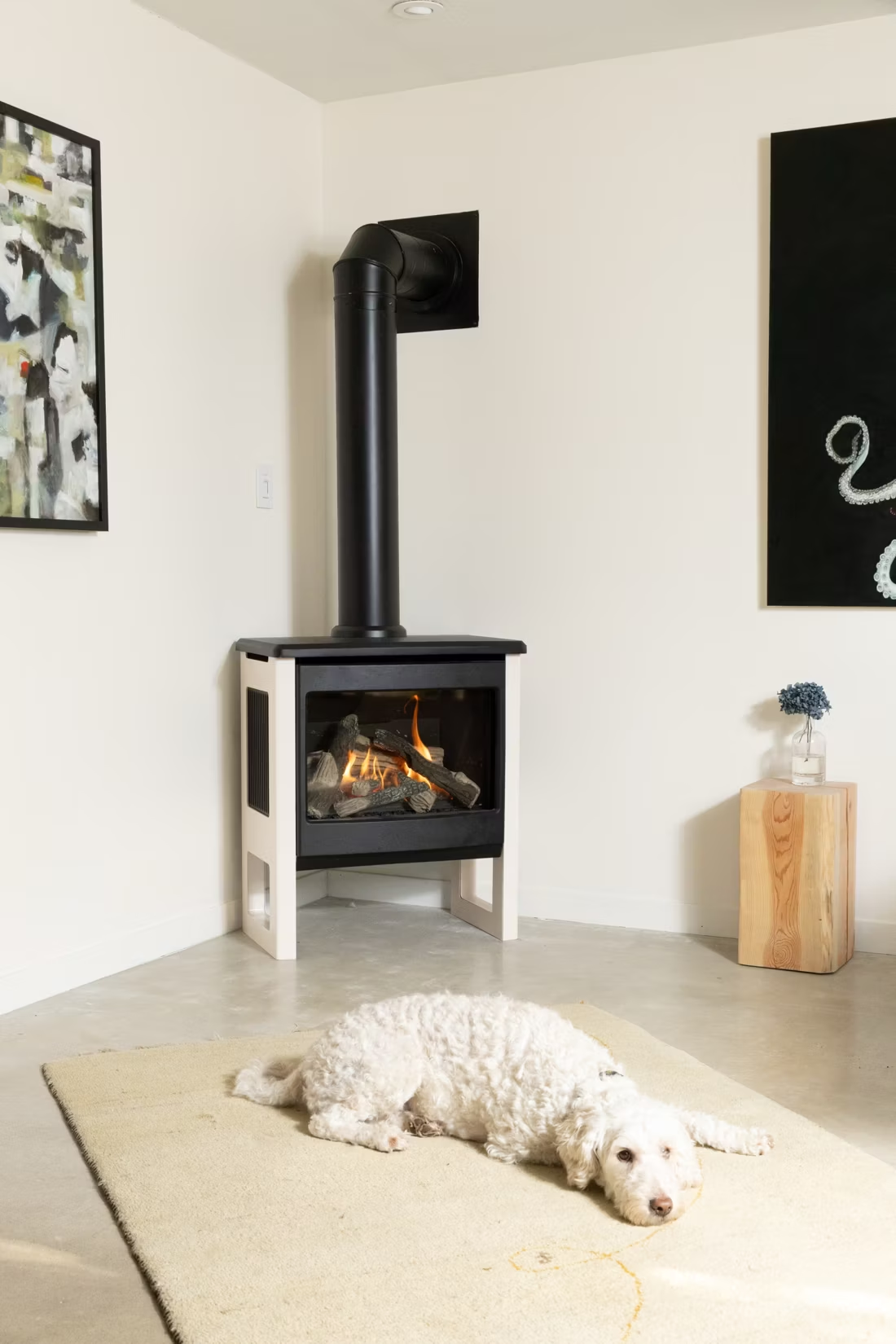
Four fuels. One honest answer for Hamilton County.
Three steps. No salesperson until you're ready.
Tell us about your project
Your zip code, your situation, and the fuel you're leaning toward—or let the answers point you to one.
See what's actually available
The brands dealers within 100 miles genuinely carry—real options, never a catalog mirage.
Get your dealer & Project Guide
A trusted local dealer, plus the free Project Guide & Parts List that names every component of the job.
Frequently Asked Questions
Which fuel works best in Hamilton County?
Wood remains the backbone fuel here—the county's oak, maple, birch, and ash forests supply dense, long-burning cordwood, and a catalytic or non-cat wood stove will carry a camp or full-time home through a Zone 6A winter without depending on delivery trucks reaching a remote road. Gas in Hamilton County almost always means propane rather than natural gas, since there are no gas mains serving these towns—propane fireplaces and inserts give instant heat with no wood-splitting labor, which matters for seasonal camp owners who aren't around to tend a fire. Pellet stoves are a solid middle option, and regional brands like Energex and Hamer Pellet Fuel are distributed through dealers in the surrounding Adirondack towns. Electric fireplaces work well as supplemental heat in camps with limited amperage or in bedrooms, but they're not a primary heat source once temperatures drop hard in January and February.
Do I need a permit to install a fireplace in Hamilton County?
Yes, in most cases. Because Hamilton County has no cities—only towns like Long Lake, Indian Lake, Lake Pleasant, and Wells—permits for wood stoves, wood inserts, propane fireplaces, and pellet stoves are typically issued through each town's own building department rather than a single county office, so the process can vary slightly depending on which town your property sits in. Propane installations also require a licensed gas-fitter for the tank and line connection. Electric fireplace installs generally skip the permit unless you're hardwiring a built-in unit. If you're working with a local hearth retailer, they'll usually know exactly which town office to file with and handle the paperwork as part of the install.
Are there air quality restrictions on wood burning in Hamilton County?
No—Hamilton County has no recorded nonattainment designations or winter smoke-advisory curtailment days, unlike some western basin communities that deal with temperature inversions trapping wood smoke. That said, it's still worth choosing an EPA-certified stove: with hardwood species like oak and maple burning at high BTU output, a certified unit gets more heat out of each cord and produces far less visible smoke than an old uncertified stove, which matters when camps sit close together around lakes like Long Lake or Indian Lake.
Can one local hearth retailer handle all four fuel types?
Given how few year-round households there are in Hamilton County, most retailers serving this area—typically based out of Old Forge, Warrensburg, or Saranac Lake—carry wood, propane/gas, and pellet units under one roof, since specializing in just one fuel wouldn't support a business in a county this small. Electric fireplace selection tends to be lighter, often limited to a few display models, since electric is more of an add-on than a primary sale here. If you're deciding between fuels for a camp versus a full-time home, a multi-fuel dealer can walk you through what actually holds up through an Adirondack winter versus what's better suited to occasional weekend use.
How does service work for remote camps and homes in Hamilton County?
Most chimney sweeps and propane technicians serving Hamilton County are based well outside the county and drive in—often 50 miles or more—to reach camps around Raquette Lake, Blue Mountain Lake, and the more remote stretches near Wells and Arietta. Because many properties here are seasonal camps rather than full-time residences, service scheduling often lines up with opening and closing the camp for the season—spring startup inspections and fall pre-season sweeps before ice sets in. If your road isn't plowed or maintained through winter, it's worth confirming access with your technician before booking, and scheduling well ahead of the first hard freeze rather than waiting for a mid-winter emergency call.
What's the typical cost range for fireplace installation across all fuel types in Hamilton County?
Wood stove or insert installation: roughly $4,500–$9,000 for a typical camp or home install, more if a full masonry chimney needs building or relining. Propane fireplace, insert, or stove: $4,500–$10,000 depending on whether a new tank and line need to be run to the property—a real factor here given how many camps are set back from the road. Pellet stove or insert: $4,000–$7,500 for a standard install. Electric fireplace: $200–$3,000 for the unit itself, plus $400–$1,200 in labor for anything beyond a simple plug-in unit. Because travel distance adds to labor costs across this county, it's worth getting a firm quote from a local dealer before assuming a number from a bigger town nearby.
Can I install a fireplace myself?
If you're putting a fire in your house on purpose, it's best to work with an expert. Unless you're genuinely experienced in framing, gas line, vent pipe, and the national code on clearances to combustibles, have a professional do it—and ideally the same company that sells you the fireplace, so warranty, service, and liability all live under one roof.
How much should I budget for a fireplace?
For an average home—covering the fireplace, the vent pipe, and basic installation—a budget between $3,900 and $5,500 gives you a lot of options across wood, gas, and pellet. By the time you add finish work, gas line, and electrical, the average complete installation lands between $5,000 and $12,000 all-in. In a remodel or new build, a good rule is to put about 2.5% of the total project cost toward the fireplace.
What is an in-home preview and do I need one?
It's a visit where a hearth professional measures your space, confirms the model you picked actually works in your home, and walks the specs—framing, gas line, venting, finish work—before anything is ordered. Some details you just can't know until you see the house. Never make a down payment without one; it's the single most-skipped step that burns buyers.
Does a fireplace add value to my home?
On average, a fireplace adds back to the home about the same amount you spent installing it. Add the monthly savings from heating the rooms you actually use instead of the whole house—often hundreds of dollars a year—and the value case is strong before you even count what a fire does for how your family uses the room.
Stove and Fireplace Dealers in Hamilton County
Listings include WhyFire partner dealers, dealers we have verified as authorized for the brands we recommend, and established local businesses that carry hearth products. Every listing shows which one it is. The ones marked Preferred run on WhyFire's software, so they can show you real pricing and book your appointment right here. No manufacturer pays for placement. How we verify dealers →
Pine Lake Stoves
Herkimer Home & Leisure
Moose River Hearth & Home
Country Suburban
Countryside Stove Of Marcy
Cny Custom Concrete & Masonry
Adirondack Hearth, Home & More
Find your fireplace in Hamilton County.
Pick your fuel below and we'll match you with a trusted local dealer serving your part of the Adirondacks, plus a free Project Guide & Parts List—the exact parts, including the vent kit, for your specific home or camp.
Find Your Fireplace →