
Reliable pellet heat for New York's most remote county.
Thermostatically controlled warmth for camps and year-round homes scattered across Long Lake, Indian Lake, Speculator, and the rest of the Adirondack Park. Find the right pellet stove and connect with a trusted local dealer.
Every Project Starts From One of These Five Situations
Consistent warmth for a county with more lakes than people.
Hamilton County is the least populous county in New York State—a place where year-round residents number in the hundreds, not thousands, spread across hamlets like Long Lake, Indian Lake, Speculator, Lake Pleasant, Wells, and Inlet. Nearly all of it sits inside the Adirondack Park's Blue Line, meaning most of the county is forested public or protected land, and homes and camps are often widely spaced along lakeshores and back roads. Climate zone 6A here means long, cold winters similar to what you'd find in Burlington, VT—heavy snow loads, extended cold snaps, and roads that can be slow to plow at elevation.
For a county built around seasonal camps and second homes as much as full-time residences, pellet stoves solve a real problem: they deliver steady, thermostat-controlled heat without the daily tending a wood stove demands, which matters when an owner is only up from downstate every few weekends. Local hardwood species like oak, maple, birch, and ash support a regional pellet supply chain, and brands like Energex, Hamer Pellet Fuel, and Greene Team Pellet Fuel are produced and distributed within reach of the county. With no air quality non-attainment concerns here, pellet appliances burn without the curtailment restrictions that some more populous New York counties impose during winter inversions.
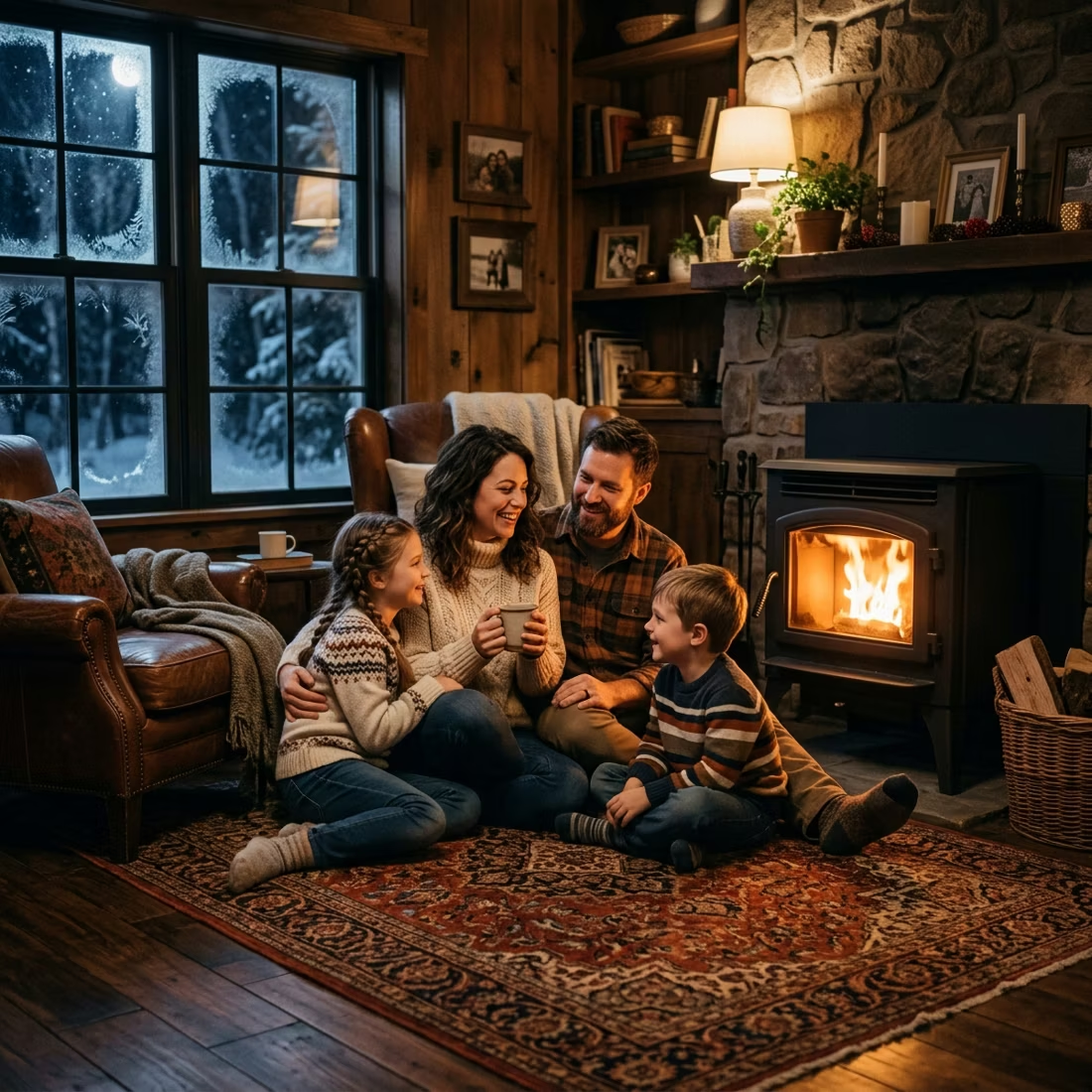
Three steps. No salesperson until you're ready.
Tell us about your project
Your zip code, your situation, and the fuel you're leaning toward—or let the answers point you to one.
See what's actually available
The brands dealers within 100 miles genuinely carry—real options, never a catalog mirage.
Get your dealer & Project Guide
A trusted local dealer, plus the free Project Guide & Parts List that names every component of the job.
Frequently Asked Questions
How much does a pellet stove installation cost in Hamilton County?
Pellet stove installations typically run $3,000 to $6,000 depending on the unit, whether an existing chimney or masonry fireplace is being converted, and the electrical work needed to run the hopper and auger. Because Hamilton County has very few hearth retailers of its own, many installers travel in from Glens Falls, Utica, or the Tri-Lakes area (Saranac Lake, Lake Placid), and that travel can add to the quote for camps far off the main routes around Long Lake or Piseco. Ask any dealer whether their estimate already includes the drive.
Do I need a permit to install a pellet stove in Hamilton County?
Yes—a building permit is required through your local town building department (Long Lake, Indian Lake, Lake Pleasant, Arietta, Wells, Inlet, and the others each handle their own permitting). Because almost the entire county sits inside the Adirondack Park, any exterior work tied to the installation—a new vent penetration, a chimney chase, or an addition to house the stove—may also fall under Adirondack Park Agency (APA) jurisdiction. Most local installers are familiar with both processes and can tell you upfront whether your project triggers APA review or just the standard town permit.
What size pellet stove do I need for a camp versus a year-round home?
Seasonal camps used mainly on weekends often do fine with a smaller unit sized to heat the main living area quickly when you arrive, since the goal is comfort during occupied stretches rather than constant whole-house heat. Year-round homes, especially at higher elevation near the High Peaks side of the county, need a stove sized to keep up with sustained sub-zero nights, which usually means moving up a size class from what square footage alone would suggest. A local dealer familiar with Hamilton County's mix of older camps and newer year-round builds can size this correctly during an in-home visit rather than relying on a generic square-footage chart.
Where do I get pellets, and how much should I store for winter?
Regional brands like Energex, Hamer Pellet Fuel, and Greene Team Pellet Fuel are the most commonly stocked options at dealers serving this part of the Adirondacks. Because Hamilton County has no big-box retailers and winter roads around Blue Mountain Lake and Speculator can be slow to clear after a nor'easter, most experienced owners buy their full season's supply—often a ton or more for a primary heat source—before the first heavy snow rather than restocking mid-winter. Pellets should be stored dry, off a concrete floor, and away from any moisture source, since a damp bag can jam an auger fast.
What happens to my pellet stove during a power outage?
Pellet stoves need electricity to run the auger, igniter, and combustion blower, so a power outage shuts the stove down—a real consideration in a county where nor'easters and lake-effect snow events regularly knock out power along rural feeder lines. Many Hamilton County owners pair a pellet stove with a small battery backup or portable generator sized to run just the stove's low-wattage components, which keeps heat going through a multi-day outage. If backup heat during outages is your top priority, ask your dealer about a wood stove as a companion unit rather than relying on pellet heat alone.
Pellet stove vs. wood stove—which makes more sense for an Adirondack camp?
Wood is abundant here—oak, maple, birch, and ash are all common on Hamilton County properties—and a wood stove needs no electricity, which matters for backup heat during winter outages. But wood also means splitting, stacking, and tending a fire, which is a lot to ask of an owner who's only at the camp intermittently. Pellet stoves trade that flexibility for convenience: load the hopper, set the thermostat, and the stove maintains a steady temperature on its own, which is a better fit for a property that sits empty during the week. Many owners in the county end up with both—pellet for daily convenience, wood as a backup that doesn't depend on the grid.
What are the venting requirements for a pellet stove?
Pellet stoves vent through a smaller-diameter pipe than wood stoves—typically 3 or 4 inches—and can often run straight out through an exterior wall rather than requiring a full chimney, which makes them a practical retrofit option for older camps that were never built with masonry fireplaces. The vent still needs to meet manufacturer clearance and termination requirements, particularly around snow load and roof lines given how much snow accumulates seasonally in this part of the Adirondacks. A local installer will confirm the vent run meets code before finalizing the install.
How often does a pellet stove need maintenance?
Plan on a full cleaning and inspection at least once a year, ideally before the season starts, along with routine ash removal and a wipe-down of the burn pot every few days during heavy use. The auger, hopper, and combustion blower should be checked annually for wear. Because service technicians are thin on the ground in a county this remote, many owners learn to handle routine cleaning themselves and save a technician visit for anything mechanical—your dealer can walk you through what's safe to do on your own versus what needs a professional.
Are pellet stove brands and parts easy to find in Hamilton County?
Not from a shelf in the county itself—there's no big-box hearth retailer here, and the nearest full-service dealers are typically in Glens Falls, Utica, or the Saranac Lake area. That's exactly the gap Find My Fireplace is built to close: we match you with a trusted dealer who actually services this part of the Adirondacks, knows which Energex, Hamer, or Greene Team products are locally stocked, and can get parts and pellets to a camp near Long Lake or Piseco without guesswork.
How often does a pellet stove need cleaning?
A clean pellet stove is a happy pellet stove. Plan on cleaning the burn pot about once a week when you're burning regularly—ash and clinkers gum up the air holes just like a pellet barbecue. Most pellet stove problems trace back to skipped cleaning that nobody explained up front. Some designs make it easy with a trapdoor burn pot: pull a lever and the gunk drops into the ash pan.
What's the difference between an insert and a zero-clearance fireplace?
An insert is a fireplace that slides into a pre-existing wood-burning fireplace—if you don't have one, there's nothing to insert it into. A zero-clearance fireplace is built into a framed wall, which makes it the answer for remodels and new construction. Simple test: existing masonry fireplace means insert; blank or framed wall means zero-clearance.
What is an in-home preview and do I need one?
It's a visit where a hearth professional measures your space, confirms the model you picked actually works in your home, and walks the specs—framing, gas line, venting, finish work—before anything is ordered. Some details you just can't know until you see the house. Never make a down payment without one; it's the single most-skipped step that burns buyers.
Does a fireplace add value to my home?
On average, a fireplace adds back to the home about the same amount you spent installing it. Add the monthly savings from heating the rooms you actually use instead of the whole house—often hundreds of dollars a year—and the value case is strong before you even count what a fire does for how your family uses the room.
Pellet Brands Stocked Around Hamilton County
Manufacturers will point you to the nearest stocking dealer.
Find your pellet stove in Hamilton County.
Tell us about your camp or home and we'll match you with a trusted local dealer serving Hamilton County, plus a free Project Guide & Parts List with the exact vent kit and parts your installation needs.
Find Your Fireplace →