
Find a pellet stove built for Genesee County's long, lake-effect winters.
With a long, demanding heating season and winter lows that average 16°F across the Genesee Valley, a thermostat-controlled pellet stove can carry a home through months of steady cold. I'll match you with a vetted local dealer who knows the venting, the electrical needs, and the fuel supply here.
Every Project Starts From One of These Five Situations
Consistent heat without the wood-splitting.
Genesee County sits in the flat farm country between Buffalo and Rochester, with Batavia as the county seat and smaller communities—Le Roy, Pavilion, Bergen, Byron, Oakfield, Corfu—spread across the Genesee Valley. The county's position between Lake Erie and Lake Ontario means winter isn't just cold, it's persistent: climate zone 5A, a long, demanding heating season that runs roughly from October through April, and average lows around 16°F, with lake-effect snow bands adding to the burden on heating systems from December through March.
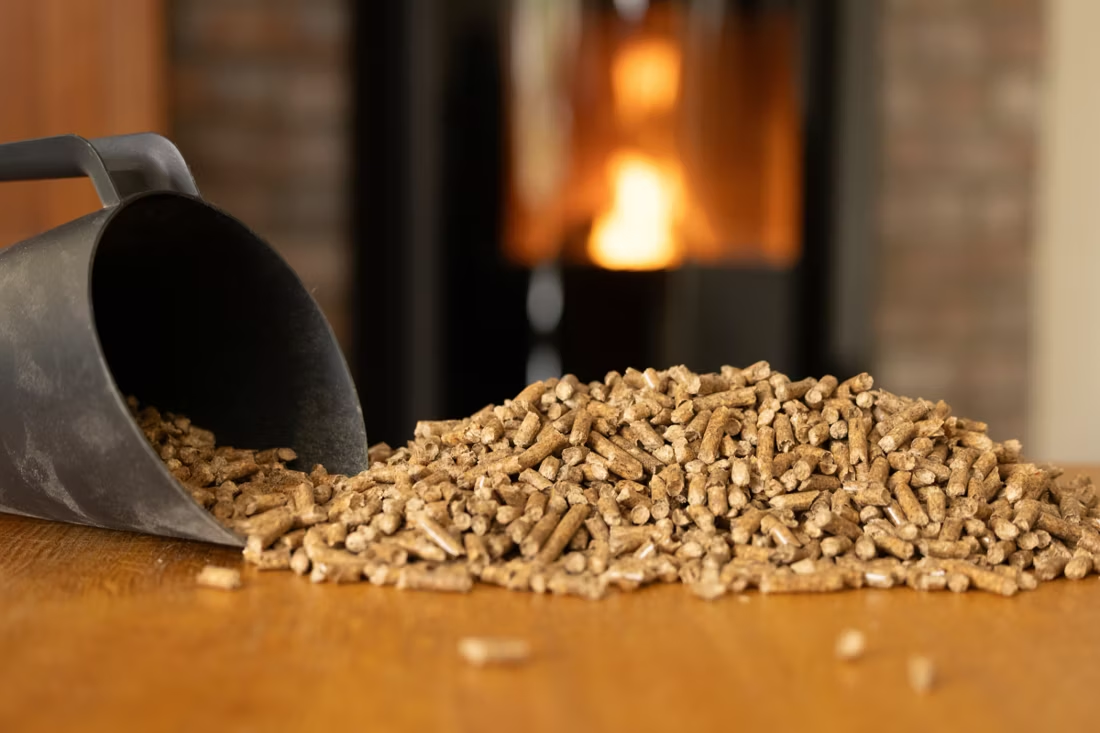
For homeowners who like the idea of real fire heat but don't want to split, stack, and haul cordwood every week, a pellet stove or insert fills that gap well. Bagged hardwood pellets from regional brands like Energex, Hamer Pellet Fuel, and Greene Team Pellet Fuel are sold through farm and feed stores across the county—a natural fit in a region where sawmills already process a steady supply of oak, maple, birch, and ash. With no local air quality restrictions or burn curtailment periods on the books here, pellet appliances run without the winter-inversion concerns that limit wood burning in some parts of the country.
Three steps. No salesperson until you're ready.
Tell us about your project
Your zip code, your situation, and the fuel you're leaning toward—or let the answers point you to one.
See what's actually available
The brands dealers within 100 miles genuinely carry—real options, never a catalog mirage.
Get your dealer & Project Guide
A trusted local dealer, plus the free Project Guide & Parts List that names every component of the job.
Frequently Asked Questions
How much does a pellet stove installation cost in Genesee County?
Most pellet stove installations run in the $3,000 to $6,500 range depending on the unit, the venting path, and whether a dedicated electrical circuit needs to be added. A freestanding pellet stove vented through an exterior wall with PL vent pipe is usually the least expensive route. A pellet insert going into an existing masonry fireplace—using a stainless liner run up the old chimney—typically costs more because of the liner and hearth work involved. Older farmhouses around Le Roy, Pavilion, and Bergen with existing masonry fireplaces often lean toward the insert route; newer construction in and around Batavia more often goes with a freestanding stove. A local dealer will give you a firm number after seeing the space.
What size pellet stove do I need for a Genesee County home?
With a long, demanding heating season and winter lows averaging 16°F, most Genesee County homes need a mid-to-large pellet stove if they're relying on it for real heat rather than just ambiance. Smaller units (under 40,000 BTU) work for a single room or a well-insulated addition; larger units (50,000 BTU and up) are more appropriate for whole-home heating in the older, less-insulated farmhouses common throughout the county's rural townships. Hopper size matters too—a larger hopper means fewer refills during the stretches of sustained cold that come with lake-effect weather. A local dealer will size the stove to your square footage and insulation rather than square footage alone.
Where can I buy pellet fuel in Genesee County?
Bagged hardwood pellets from Energex, Hamer Pellet Fuel, and Greene Team Pellet Fuel are available through farm supply and feed stores across the county, and most dealers who sell pellet stoves also stock fuel or can point you to a nearby supplier. A home heating with pellets as a primary source through a Genesee County winter typically burns somewhere in the neighborhood of 2 to 3 tons of pellets per season, more in an older or larger farmhouse. Buying by the ton (usually delivered on a pallet of 50-pound bags) ahead of the season is common practice here, since local supply can tighten once cold weather sets in.
What's the difference between a pellet stove and a pellet insert?
A pellet stove is a freestanding unit that sits on a hearth pad and vents through a wall or existing chimney chase—it can go almost anywhere with the right clearances and a nearby electrical outlet. A pellet insert is built to slide into an existing masonry fireplace opening, using a liner run up the old chimney for venting. For the older homes around Le Roy, Pavilion, and Stafford that still have working masonry fireplaces, an insert is often the cleaner solution because it reuses the chimney you already have. Homes without an existing fireplace, or newer construction around Batavia, typically go with a freestanding stove instead.
Do I need a permit to install a pellet stove in Genesee County?
Yes—pellet stove installations require a building permit, issued through the City of Batavia's building department if you're within city limits, or through your town's building department if you're in Le Roy, Pavilion, Bergen, Byron, Alabama, or one of the county's other townships. The permit process confirms proper clearances, venting, and that the unit is listed to current safety standards. Most local dealers handle the permit filing as part of the installation, so it's rarely something you have to manage yourself. One thing that's easy to overlook: pellet stoves need a standard electrical outlet nearby to run the auger and blower, which is worth flagging to your installer if you're putting the stove somewhere without existing power.
What's the best pellet stove for Genesee County's climate?
For the sustained cold that comes with a long, demanding heating season and lake-effect snow, look for a stove with a large hopper capacity and a reliable auto-ignition system—brands like Harman, Lopi, and Enviro are common choices among Northeast dealers and hold up well to daily winter use. If the stove will be your primary heat source rather than a supplement, prioritize BTU output and hopper size over aesthetics; a 40-pound hopper that only needs filling once a day matters a lot more in January than it does in October. A local dealer familiar with Genesee Valley homes can walk you through which models pair well with the fuel brands—Energex, Hamer, Greene Team—actually stocked nearby.
Will my pellet stove work during a power outage?
Not without a backup power source. Unlike a wood stove, a pellet stove depends on electricity to run the auger that feeds fuel and the blower that distributes heat, so a standard unit goes dark the moment the power does. In a county where winter storms and lake-effect snow regularly cause outages, that's worth planning around. Some homeowners pair a pellet stove with a small backup generator sized to run just the stove's motor and igniter; others keep a wood stove or fireplace elsewhere in the house as a true off-grid backup. Ask your local dealer about battery backup options for the specific model you're considering—a few units on the market now offer several hours of run time on a battery pack.
How often does a pellet stove need to be serviced?
Plan on an annual professional service—typically before the season starts in early fall—to clean the burn pot, exhaust fan, and venting, and to check the auger motor and gaskets. Beyond that, most pellet stoves need the ash pan emptied every few days during regular winter use and the burn pot scraped out roughly once a week, since ash buildup is the main thing that affects burn quality. It's less involved than sweeping a wood chimney, but skipping it does shorten the life of the igniter and can lead to poor combustion. Local dealers who sell pellet stoves in the county typically offer this service or can point you to a technician who handles it.
Pellet stove vs. wood stove—which is right for a Genesee County home?
Wood stoves work without electricity, which matters during the winter storms that periodically knock out power across the county, and pair naturally with the oak, maple, birch, and ash that's locally abundant and often available split and seasoned from area sellers. Pellet stoves trade that off-grid resilience for convenience—load the hopper, set the thermostat, and the stove regulates itself with far less daily attention than tending a wood fire, and it burns cleaner with less ash. For a primary residence where daily convenience matters most, pellet is usually the better fit. For a home where winter power outages are a real concern, or where free or low-cost firewood is readily available, wood often makes more sense as at least a backup. Quite a few homes in the county end up with both.
Why is a fireplace insert so efficient?
An insert does two things: it seals the chimney completely, so you stop losing air you already paid to heat, and it radiates warmth into the room through the firebox and glass. Most add a heat-exchange fan that pulls cool room air underneath, wraps it around the hot firebox, and pushes it back out warm. Your home is more efficient before you've even lit the first fire.
Why is my open fireplace making my house colder?
Open fireplaces suck—literally. As the fire burns, it consumes air your furnace already paid to heat and pulls it out through the chimney, so the house is actually colder after the fire goes out than before you lit it. An insert fixes this: it seals the chimney, puts fixed glass across the front, and turns that hole in your house into a real heat source.
Can I install a fireplace myself?
If you're putting a fire in your house on purpose, it's best to work with an expert. Unless you're genuinely experienced in framing, gas line, vent pipe, and the national code on clearances to combustibles, have a professional do it—and ideally the same company that sells you the fireplace, so warranty, service, and liability all live under one roof.
How much should I budget for a fireplace?
For an average home—covering the fireplace, the vent pipe, and basic installation—a budget between $3,900 and $5,500 gives you a lot of options across wood, gas, and pellet. By the time you add finish work, gas line, and electrical, the average complete installation lands between $5,000 and $12,000 all-in. In a remodel or new build, a good rule is to put about 2.5% of the total project cost toward the fireplace.
Stove and Fireplace Dealers in Genesee County
Pellet Brands Stocked Around Genesee County
Manufacturers will point you to the nearest stocking dealer.
Find your pellet stove in Genesee County.
Tell me a bit about your home and I'll match you with a trusted local dealer and send over a free Project Guide & Parts List—a plan for your pellet project in Genesee County with the exact parts, including the vent kit, and the dealer I'd recommend.
Find Your Fireplace →