
Gas heat that keeps up with Genesee County winters.
With 6,808 heating degree days and average winter lows around 16°F, Genesee County homes need heat that doesn't quit. Natural gas service from National Grid covers Batavia and the surrounding villages; propane fills in across the farmland beyond. Find the right unit and get matched with a trusted local dealer.
Every Project Starts From One of These Five Situations
Instant heat for long farmhouse winters.
Genesee County sits in Climate Zone 5A, with winters that run cold and long—over 6,800 heating degree days a year, and average lows near 16°F from December through February. The county is largely flat farmland dotted with small villages: Batavia, Le Roy, Bergen, Oakfield, Corfu, Pavilion. Plenty of homes here have an old wood fireplace or a woodlot of oak, maple, birch, or ash out back, but a growing number of homeowners are turning to gas for the rooms where convenience matters most—living rooms, additions, and finished basements where tending a fire daily isn't practical.
Natural gas service through National Grid covers Batavia and much of the incorporated villages, making a direct-vent gas fireplace or insert a straightforward retrofit for homes already on the gas line. Out in the townships—Alabama, Bethany, Byron, Darien, Pembroke, Stafford—propane is the standard fuel, delivered and stored in a tank on the property. Either way, a properly sized gas fireplace gives you heat at the flip of a switch, no ash or creosote to manage, and in the right model, a unit that keeps running when a winter storm knocks the power out.
Three steps. No salesperson until you're ready.
Tell us about your project
Your zip code, your situation, and the fuel you're leaning toward—or let the answers point you to one.
See what's actually available
The brands dealers within 100 miles genuinely carry—real options, never a catalog mirage.
Get your dealer & Project Guide
A trusted local dealer, plus the free Project Guide & Parts List that names every component of the job.
Frequently Asked Questions
How much does a gas fireplace installation cost in Genesee County?
A typical gas fireplace or insert installation in Genesee County runs $4,000 to $10,000, depending on the unit, the venting path, and whether new gas line work is required. A direct-vent insert going into an existing masonry fireplace that already has gas service nearby sits at the lower end. A new built-in fireplace for a remodel or addition—with framing, direct-vent piping through an exterior wall, and a fresh gas line run—lands in the middle to upper range. Homes on propane that need a new tank set will see additional cost on top of the fireplace install itself. A local dealer can give you a firm number after seeing your home.
Can I convert my existing wood fireplace to gas?
Yes, and it's a common project in Genesee County's older farmhouses and village homes, many of which have a masonry fireplace built for oak or maple firewood that rarely gets used. A gas insert slides into that existing opening, runs a stainless liner up the current chimney for venting, and connects to either the National Grid line (if you're in Batavia or one of the villages) or a propane line if you're further out. Most conversions run $4,000 to $8,500 depending on the insert and whether new gas piping is needed. You keep the look of the original fireplace and gain heat you'll actually use on a cold January night.
Do I need natural gas, or does propane work for a gas fireplace?
Either fuel works, and most gas fireplace models can be set up for one or the other. If you're in Batavia or one of the villages with National Grid natural gas already running to your water heater or furnace, adding a fireplace on that line is the simpler and usually cheaper path. If you're out in the townships—Alabama, Byron, Darien, Bethany, Pembroke—propane is the standard, either from an existing tank or a new one set by a local supplier. Your installer sets the correct orifice and regulator for whichever fuel you're running; the fireplace itself looks and performs the same either way.
Will my gas fireplace still work if the power goes out?
Most direct-vent gas fireplaces with intermittent pilot ignition (IPI) run on battery backup—typically a few AA batteries inside the unit—so they light and operate normally even with the power out. Given how often winter storms take down power lines in Genesee County's rural stretches, that's a real consideration when picking a unit. Some manufacturers, including Valor, go a step further: their pilot assembly generates its own electricity through the thermocouple, so there are no batteries to remember or replace. Ask your local dealer which ignition system a given model uses before you commit.
What's the difference between a gas fireplace, gas insert, and gas stove?
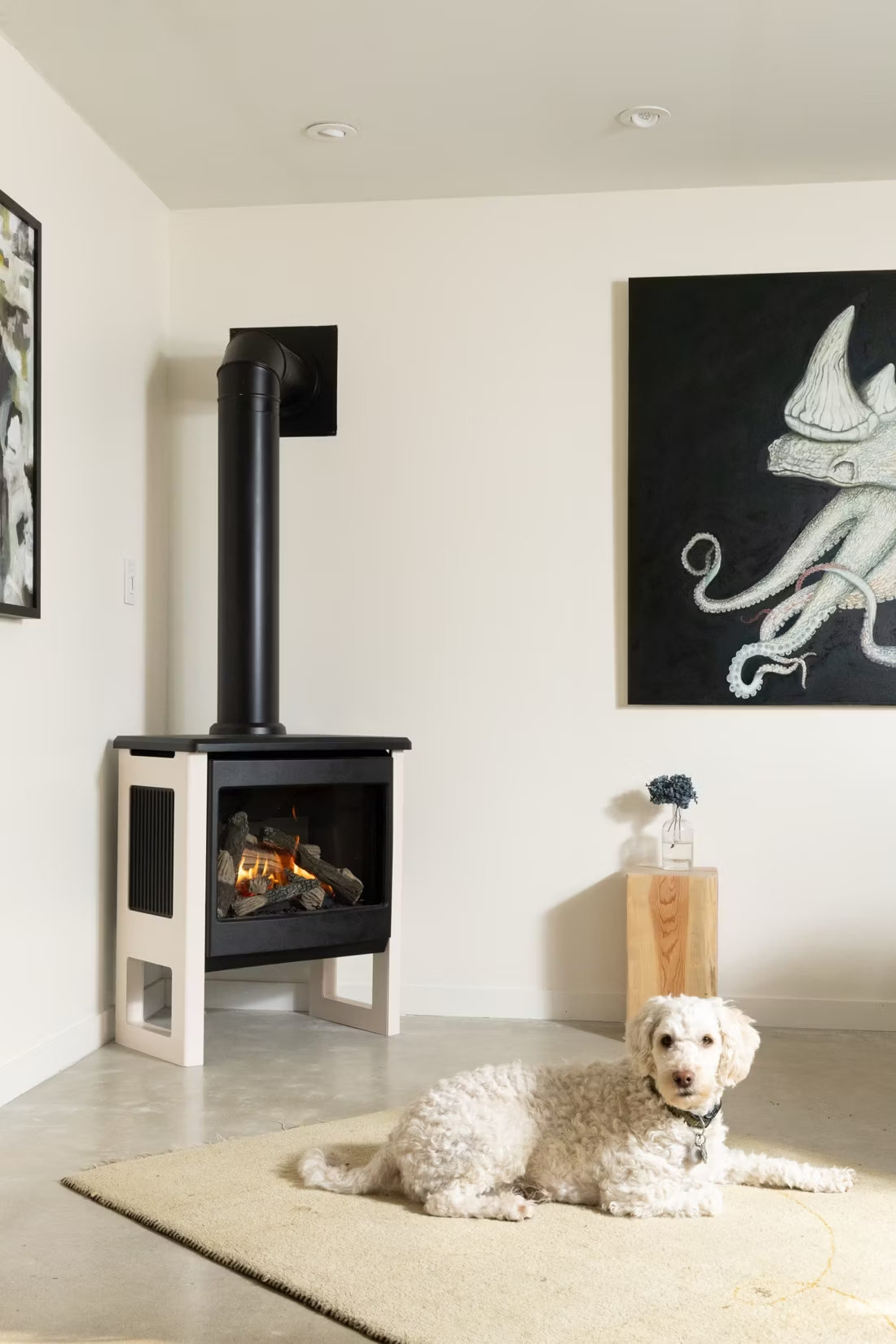
A gas fireplace is a fully built-in unit framed into a wall—the right choice for new construction or a remodel without an existing fireplace. A gas insert fits into an existing masonry opening, which is common in Genesee County's older homes, and uses the existing chimney as its vent chase with a liner. A gas stove is a freestanding cast-iron or steel unit that sits on the floor on its own hearth pad, similar in footprint to a wood stove but running on gas. For most homeowners here with an old wood fireplace sitting unused, an insert is the natural fit.
Do I need a permit to install a gas fireplace in Genesee County?
Yes. Genesee County's towns and villages each handle their own code enforcement rather than a single county office, so permits are pulled locally in Batavia, Le Roy, Bergen, or whichever municipality you're in—but all follow the New York State Uniform Fire Prevention and Building Code, which requires both a building permit and sign-off on the gas line work. Most hearth dealers coordinate this directly with your local code enforcement officer as part of the install, so you're not chasing down multiple inspections yourself.
What's the difference between vented and vent-free gas fireplaces?
Vented (direct-vent) gas fireplaces draw combustion air from outside and exhaust the byproducts back outside through a sealed pipe—they're the standard for real, sustained heat output and are code-legal everywhere, including throughout New York. Vent-free units burn fuel directly into the room air with no external venting; they're technically legal in New York under strict room-size and ventilation rules, but they release some water vapor and combustion byproducts indoors. For Genesee County's tightly sealed, well-insulated winter homes, most local dealers steer customers toward direct-vent units—they deliver more usable heat and don't require any compromise on indoor air quality.
How often should a gas fireplace be serviced?
Plan on an annual inspection, ideally before the heating season starts in the fall. A technician checks the burner, pilot assembly, venting, and gas connections, and cleans the glass and interior—a much quicker job than sweeping a wood chimney, but just as important for safe operation. Local gas appliance service providers typically charge $150 to $250 for this visit, and it's worth doing every year even if the unit seems to be running fine.
Gas vs. wood—which makes more sense for a Genesee County home?
Wood remains a strong option here—Genesee County's oak, maple, birch, and ash woodlots supply plenty of firewood, and a wood stove keeps burning through a power outage without any backup system. Gas trades that self-sufficiency for convenience: instant on-off heat, no ash or creosote, and a consistent flame with none of the daily tending. For a primary living space in Batavia or one of the villages where National Grid gas is already run to the house, gas is usually the easier upgrade. For a workshop, cabin, or a home where storm-driven outages are a real concern, wood still has an edge. Plenty of local homes run both—gas for daily convenience, wood as backup.
What's the difference between an insert and a zero-clearance fireplace?
An insert is a fireplace that slides into a pre-existing wood-burning fireplace—if you don't have one, there's nothing to insert it into. A zero-clearance fireplace is built into a framed wall, which makes it the answer for remodels and new construction. Simple test: existing masonry fireplace means insert; blank or framed wall means zero-clearance.
Is my gas fireplace wasting gas?
If it was installed more than 15 years ago, probably. Older gas fireplaces keep a standing pilot light burning all the time, and that little flame can cost a couple hundred dollars a year. Newer models use pilot-on-demand ignition—the pilot lights only when you use the fireplace and goes out when you turn it off.
What is an in-home preview and do I need one?
It's a visit where a hearth professional measures your space, confirms the model you picked actually works in your home, and walks the specs—framing, gas line, venting, finish work—before anything is ordered. Some details you just can't know until you see the house. Never make a down payment without one; it's the single most-skipped step that burns buyers.
Can a fireplace actually lower my heating bill?
Yes—by creating a comfort zone. A furnace heats every square foot of the house just to warm the one room you're in; a gas fireplace on low burns roughly a sixth of the gas a typical furnace does. Set the furnace around 55–60 degrees as a baseline, then heat the rooms your family actually uses. Families who heat this way commonly save $20–$60 a month.
Stove and Fireplace Dealers in Genesee County
Find your gas fireplace in Genesee County.
Tell us a bit about your home and we'll match you with a trusted local dealer and send over your free Project Guide & Parts List—the exact parts, including the vent kit, for your gas fireplace project in Genesee County.
Find Your Fireplace →