
Warmth on demand for Genesee County's long winters.
Zone heat for drafty farmhouse rooms and everyday living spaces from Batavia to Le Roy to Oakfield—no chimney, no gas line, no venting. Find the right unit and connect with a trusted local dealer.
Every Project Starts From One of These Five Situations
Instant, no-mess heat for the Genesee Valley's cold season.
Genesee County sits in the flat farm country between Buffalo and Rochester, in climate zone 5A with average winter lows around 16°F and winters comparable to Burlington, Vermont or Madison, Wisconsin. A lot of the housing stock in Batavia, Le Roy, Oakfield, and the smaller hamlets scattered through the county dates back generations, and many of those older farmhouses still have a masonry fireplace opening that's more decorative than functional—drafty, rarely lit, and not doing much for the heating bill.
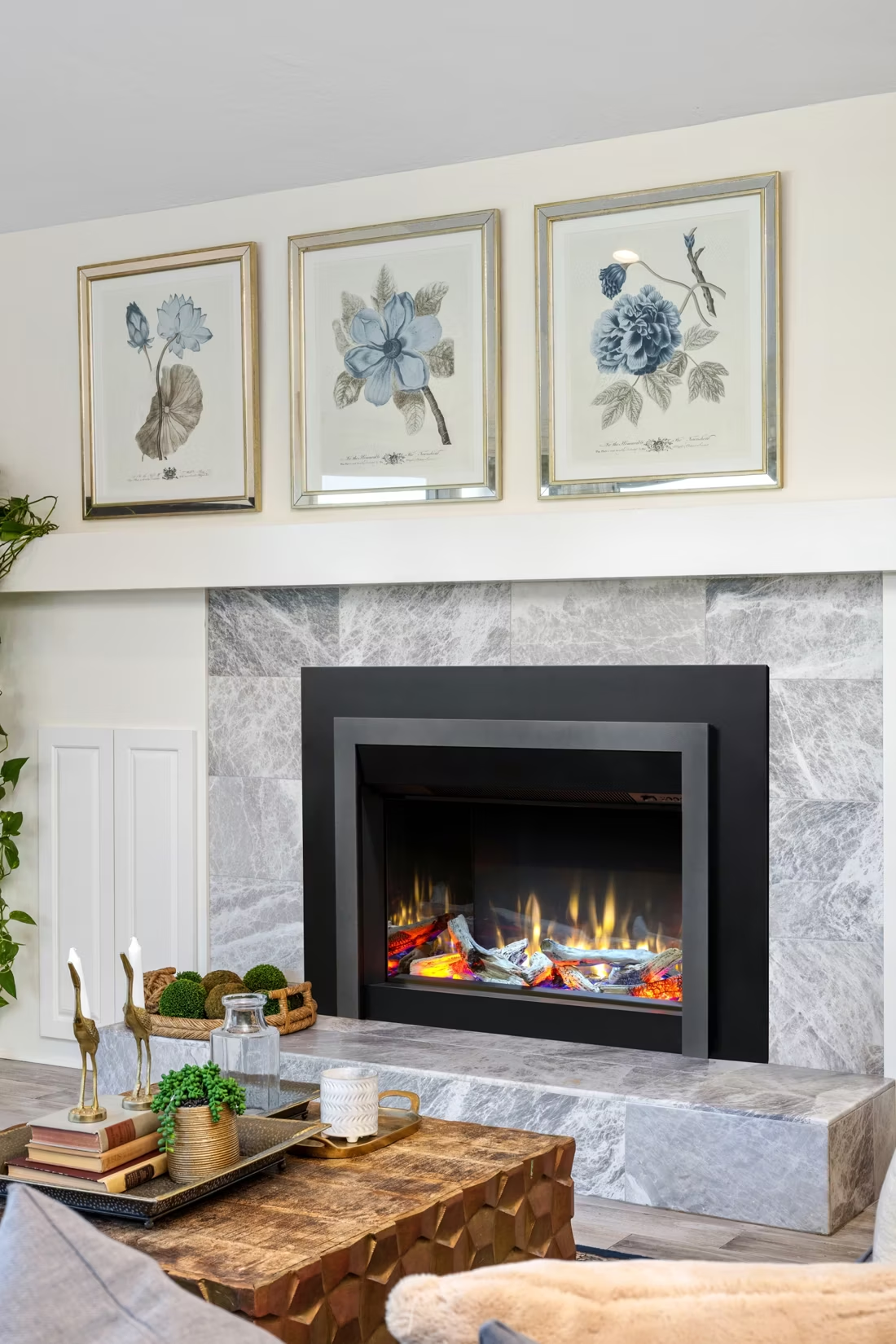
That's exactly where electric fireplaces do their best work. An electric insert drops into an existing mantel opening with no venting, no chimney liner, and no gas line—just an outlet or, for larger built-in units, a dedicated circuit. National Grid serves electric accounts across most of Genesee County, and homeowners increasingly use electric units for zone heating one room (a den, a bedroom, a converted sunporch) while a furnace, wood stove, or pellet stove—burning local oak, maple, birch, or ash, or pellets from brands like Energex, Hamer, or Greene Team—carries the rest of the house through the coldest months.
Three steps. No salesperson until you're ready.
Tell us about your project
Your zip code, your situation, and the fuel you're leaning toward—or let the answers point you to one.
See what's actually available
The brands dealers within 100 miles genuinely carry—real options, never a catalog mirage.
Get your dealer & Project Guide
A trusted local dealer, plus the free Project Guide & Parts List that names every component of the job.
Frequently Asked Questions
How much does an electric fireplace installation cost in Genesee County?
Most electric fireplace projects in Genesee County run somewhere between $300 and $2,500. A plug-in insert or freestanding stove that runs on a standard 120-volt outlet sits at the low end—no electrician needed, just placement and a nearby receptacle. A built-in wall unit or larger insert that requires a dedicated 240-volt circuit runs higher once you factor in an electrician to run the line, and possibly some trim carpentry if it's going into an existing fireplace opening in an older Batavia or Le Roy farmhouse. There's no chimney, venting, or gas line cost to add on top, which is a big part of why electric tends to be the least expensive fireplace category to install.
Do I need a permit to install an electric fireplace in Genesee County?
A small plug-in electric insert or freestanding stove generally doesn't require any permit—it's treated like any other plug-in appliance. If you're installing a larger built-in unit that needs a dedicated circuit, an electrical permit is typically required through your local town or village building department (Batavia, Le Roy, Oakfield, Pavilion, and Bergen each handle their own permitting in Genesee County). A licensed electrician pulling the circuit will usually handle that paperwork as part of the job, so it's rarely something you have to manage yourself.
Can I put an electric insert into my old farmhouse fireplace?
Yes, and it's one of the more common projects local dealers see in Genesee County. A lot of the older housing stock in towns like Le Roy and Oakfield has a masonry fireplace that hasn't been used in years—sometimes because the flue was never great to begin with, sometimes just because nobody wants to deal with firewood. An electric insert fits into that existing opening, uses no venting, and turns a cold, unused fireplace into a working heat source and a focal point again, without touching the chimney at all.
Electric vs. wood or pellet—which makes sense for my home?
With winters comparable to Burlington, Vermont or Madison, Wisconsin, Genesee County winters ask a lot of a heating system, and electric fireplaces are built for supplemental zone heat, not carrying a whole house through January. Wood stoves burning local oak, maple, birch, or ash, and pellet stoves running on regional brands like Energex or Greene Team, put out real BTUs and can meaningfully offset a furnace. Electric units win on convenience—no ash, no hopper, no cutting or hauling—and they're the simplest way to add ambiance and warmth to one specific room. Many homeowners here run electric in a bedroom or sunroom and rely on wood or pellet for the bulk of the heating load elsewhere in the house.
Will my electric fireplace still work during a power outage?
No—electric fireplaces need power to run, so they shut off along with everything else in an outage. That matters in Genesee County, where lake-effect snow events and winter storms can knock out National Grid service for hours or occasionally longer. If backup heat during outages is a real concern for your household, an electric unit shouldn't be your only heat source—pairing it with a wood or pellet stove elsewhere in the house gives you a heat option that doesn't depend on the grid.
What size electric fireplace do I need for my room?
Most electric fireplace and insert models are rated to supplement heat in a room up to 400–1,000 square feet, depending on the unit's wattage and your home's insulation. Older farmhouses around Genesee County tend to run drafty, so a unit on the higher end of that range, or a larger built-in model on a dedicated circuit, will perform better than a compact plug-in unit in a large, leaky room. If you're heating a small den or bedroom, a standard 120-volt insert is usually plenty—a local dealer can size it based on your actual room and insulation.
How much heat does an electric fireplace actually put out?
Most electric fireplaces top out around 5,000 BTU (roughly 1,500 watts), which is enough to noticeably warm a single room but won't replace a furnace during a Genesee County cold spell. Think of it as zone heating: it takes the edge off a chilly room, lets you turn the thermostat down elsewhere in the house, and adds visual warmth with a flame effect—but it's not sized to be the primary heat source for a whole home given the county's winters comparable to Burlington, Vermont or Madison, Wisconsin.
What features should I look for in an electric fireplace?
Look at flame realism first—units from brands like Dimplex and Napoleon use LED and mirror-based effects that read as far more convincing than older electric fireplaces from a decade ago. Beyond that, check for a built-in thermostat (so it cycles on and off rather than running full blast constantly), adjustable flame brightness independent of heat output (useful if you want ambiance without warming an already-warm room), and, for built-ins, confirm the unit's amperage draw matches what your electrician plans to run on the dedicated circuit.
Is an electric fireplace better than a space heater?
For most Genesee County living rooms and bedrooms, yes. A portable space heater does the same basic job of heating one room, but an electric fireplace insert or built-in unit is designed for continuous use with thermostat control, doesn't tip over or pose the same fire risk when left running, and gives you a real focal point in the room rather than a utilitarian box in the corner. For anyone converting an unused farmhouse fireplace opening, the insert route also solves the
Can I put a TV above my fireplace?
Yes—with an asterisk. Fireplaces are hot and TVs don't like heat. Either put a mantel between them to deflect rising warmth, or choose a fireplace with heat-management technology that creates a cool zone on the wall above—the wall stays around 125 degrees, barely warm, while the room still gets full heat. If you like clean lines and don't want a mantel, heat management is the answer.
Do electric fireplaces actually produce heat?
Yes—most put out around 4,800–5,000 BTUs from a standard outlet, which comfortably warms a bedroom, office, or den as a comfort-zone heater. What they won't do is carry a whole house the way wood, gas, or pellet can. Think of electric as ambiance-first with honest supplemental heat: flames on with no heat in July, flames plus warmth in January.
How much should I budget for a fireplace?
For an average home—covering the fireplace, the vent pipe, and basic installation—a budget between $3,900 and $5,500 gives you a lot of options across wood, gas, and pellet. By the time you add finish work, gas line, and electrical, the average complete installation lands between $5,000 and $12,000 all-in. In a remodel or new build, a good rule is to put about 2.5% of the total project cost toward the fireplace.
Can a fireplace actually lower my heating bill?
Yes—by creating a comfort zone. A furnace heats every square foot of the house just to warm the one room you're in; a gas fireplace on low burns roughly a sixth of the gas a typical furnace does. Set the furnace around 55–60 degrees as a baseline, then heat the rooms your family actually uses. Families who heat this way commonly save $20–$60 a month.
Stove and Fireplace Dealers in Genesee County
Find your electric fireplace in Genesee County.
Tell us a bit about your home and we'll match you with the right electric fireplace or insert, plus a free Project Guide & Parts List—the exact parts for your Genesee County project and our recommended local dealer to install it.
Find Your Fireplace →