
Keep Your Family Warm and Safe—No Matter What
At 6,820 feet with a long, cold winter season and winter lows averaging 19°F, Thunder Mountain sees a real heating season—closer to Helena, Montana than to most of the Southwest. I'll match you with a trusted local dealer who can size and permit a stove correctly for this elevation.
Every Project Starts From One of These Five Situations
Wood still does the real work here.
Thunder Mountain sits at 6,820 feet in the pinyon-juniper woodland east of the Sandias, and the climate numbers reflect it: a 19°F average winter low and a long, cold heating season put this small Santa Fe County community's heating load closer to Helena, Montana than to Albuquerque thirty miles away. For a lot of households out here, wood isn't a weekend luxury—it's the primary or backup heat source that gets the house through January and February.
Pinyon, juniper, and ponderosa pine are the woods most locals split and burn, and all three grow on the surrounding national forest land—Santa Fe, Cibola, and Carson National Forests each issue cutting permits for $5 to $20 a cord, with harvest seasons running May through October. Pinyon and juniper burn hot and resinous, which locals like for quick heat but which also means more frequent chimney attention. The tradeoff to manage is air quality: this stretch of the Rio Grande corridor gets winter temperature inversions that trap smoke close to the ground, and wildfire smoke is a summer-into-fall reality, so a lot of households here have moved toward EPA-certified stoves that burn cleaner and produce less visible smoke on cold, still nights.
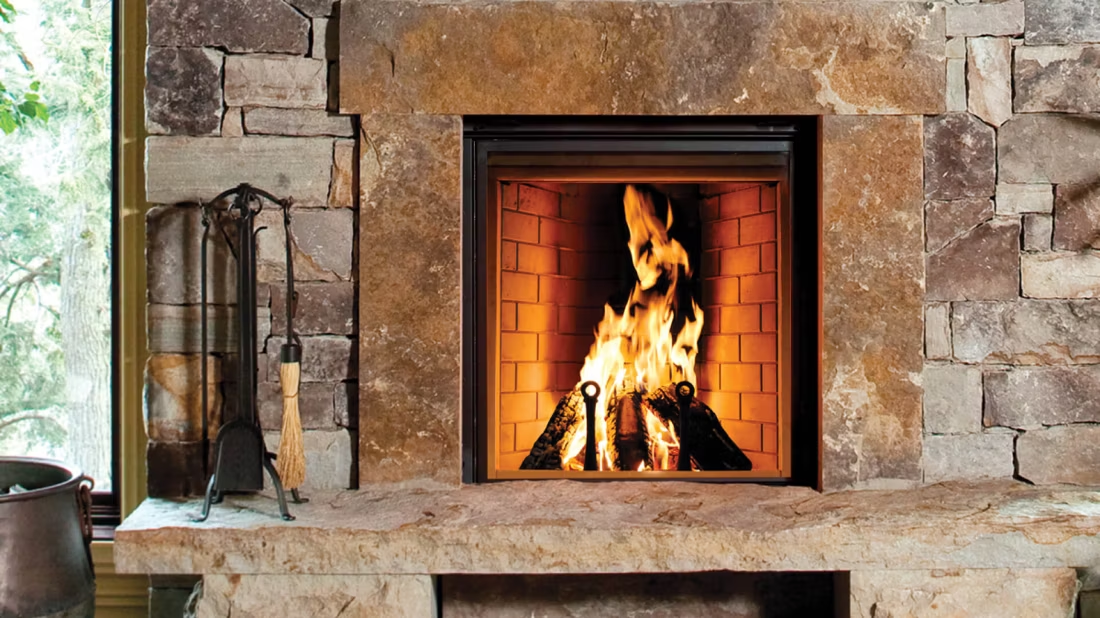
Firewood Cutting Permits Near Thunder Mountain
Three steps. No salesperson until you're ready.
Tell us about your project
Your zip code, your situation, and the fuel you're leaning toward—or let the answers point you to one.
See what's actually available
The brands dealers within 100 miles genuinely carry—real options, never a catalog mirage.
Get your dealer & Project Guide
A trusted local dealer, plus the free Project Guide & Parts List that names every component of the job.
Frequently Asked Questions
How much does a wood stove installation cost in Thunder Mountain?
In this part of Santa Fe County, a wood stove or insert installation typically runs $3,500 to $8,500. A stove going into a home that already has a traditional kiva-style fireplace or masonry chimney—common in older adobe and territorial-style homes in this area—sits toward the lower end. A newer home without existing masonry, which needs a full Class A chimney run through the roof, lands toward the top. Because Thunder Mountain is unincorporated, permitting runs through Santa Fe County rather than a city building department, and most local installers include that paperwork in their quote.
What size wood stove do I need at 6,820 feet in Thunder Mountain?
With winter lows averaging 19°F and a long, demanding heating season most winters, most Thunder Mountain homes do best with a medium to large stove—roughly the 1,500 to 2,500 square foot rating class—so it can hold a fire through a long, cold night without constant reloading. Elevation matters too: at 6,820 feet the air is noticeably thinner than at sea level, which affects draft and combustion air supply, so a local dealer will factor altitude into flue sizing and stove selection rather than going off square footage alone.
Do I need a permit to install a wood stove in Thunder Mountain?
Yes. Since Thunder Mountain is unincorporated, new wood stove and insert installations are permitted through Santa Fe County rather than a city office, and the unit itself needs to meet EPA 2020 NSPS emissions standards to be sold and installed new. Given how often this area sees winter inversions that trap smoke near the ground, a certified, cleaner-burning stove isn't just a code requirement—it also cuts down on the smoke that lingers over the valley on still, cold mornings.
Should I get a freestanding wood stove or a wood insert?
A lot of homes in and around Thunder Mountain were built with a traditional kiva or corner fireplace, and if yours has one, a wood insert that slides into that existing masonry opening is usually the simpler, less expensive path since the chimney structure is already there. Homes without an existing fireplace—including many newer builds on larger rural lots out here—typically go with a freestanding stove on a hearth pad vented through new Class A pipe, which gives more flexibility on placement but adds to the install cost.
Where can I get a firewood cutting permit near Thunder Mountain?
Santa Fe National Forest is the closest source for most Thunder Mountain households, with Cibola National Forest and Carson National Forest also within reasonable driving distance. All three run permits at $5 to $20 per cord with a cutting season of May through October, so the smart move is stocking your woodpile in late summer or early fall before the season closes and before the wood needs a full season to season properly. Pinyon and juniper are the most commonly cut species locally, with ponderosa pine also available at higher elevations within the forest boundaries.
What's the best wood stove for a high-elevation home like this?
At 6,820 feet, thinner air means less oxygen feeding the fire, so stove selection and flue sizing matter more here than they would at lower elevations—a dealer familiar with high-altitude installs will often size the flue slightly larger or recommend a stove tested to perform well with reduced draft. Catalytic stoves that hold a long, steady burn are popular for the area's cold, extended heating season, since a lot of households are burning wood as their primary or main backup heat rather than for occasional ambiance. Whatever model you choose, EPA 2020 NSPS certification is required for new installs.
How often should my chimney be swept in Thunder Mountain?
An annual inspection before the season starts, ideally in September or early October, is the standard recommendation—and it matters more here than in a lot of places because pinyon and juniper, the two most commonly burned local species, are resinous woods that build creosote faster than a wood like well-seasoned ponderosa pine. Households burning wood as a primary heat source through the long Thunder Mountain winter, rather than just occasionally, often benefit from a mid-season check as well.
Are there any rebates or incentives for a new wood stove here?
New Mexico doesn't have a wood stove rebate program as established as some neighboring states, so most Thunder Mountain buyers are working off the base install cost without an offsetting credit. That said, programs shift year to year, and a local dealer who regularly handles installs in Santa Fe County is generally the best source for what's currently available—including whether there's any incentive tied to replacing an old, uncertified stove with a new EPA 2020 NSPS-compliant unit.
Wood vs. electric heat—which makes more sense in Thunder Mountain?
Electric service here comes through Central New Mexico Electric Cooperative at a residential rate around 17.16 cents per kWh, and like a lot of rural electric co-op territory, outages during winter storms aren't unusual. Wood heat doesn't depend on the grid at all, which is a real advantage when a storm knocks out power for a day or more at 19°F average lows. Electric heaters make sense as a low-cost, no-permit supplement in a single room, but most Thunder Mountain households rely on wood—often pinyon and juniper cut under a Forest Service permit—as their primary defense against a long, cold winter.
What's the difference between an insert and a zero-clearance fireplace?
An insert is a fireplace that slides into a pre-existing wood-burning fireplace—if you don't have one, there's nothing to insert it into. A zero-clearance fireplace is built into a framed wall, which makes it the answer for remodels and new construction. Simple test: existing masonry fireplace means insert; blank or framed wall means zero-clearance.
Why won't my new wood stove get going like my old one?
New wood stoves are 70%+ efficient, so far less heat goes up the flue—which also means less draft to get a fire established. The rule: build a genuinely hot fire for about 45 minutes before you choke it down. Skip that and you get smoke in the room, creosote in the chimney, and a fire that never takes off. Most performance complaints trace straight back to this.
What is an in-home preview and do I need one?
It's a visit where a hearth professional measures your space, confirms the model you picked actually works in your home, and walks the specs—framing, gas line, venting, finish work—before anything is ordered. Some details you just can't know until you see the house. Never make a down payment without one; it's the single most-skipped step that burns buyers.
How much should I budget for a fireplace?
For an average home—covering the fireplace, the vent pipe, and basic installation—a budget between $3,900 and $5,500 gives you a lot of options across wood, gas, and pellet. By the time you add finish work, gas line, and electrical, the average complete installation lands between $5,000 and $12,000 all-in. In a remodel or new build, a good rule is to put about 2.5% of the total project cost toward the fireplace.
Nearby Dealers
Hearth shops serving Thunder Mountain and the surrounding area. Every listing shows whether it is a WhyFire partner, a dealer we have verified as authorized for the brands we recommend, or a local business carrying hearth products. No manufacturer pays for placement. How we verify dealers →
HeatSource
Western Building Supply
Mountain West Sales, Inc.
Banker Insulation
Builders Materials Inc.
Rocky Mountain Chimney Sweep
Tierra Woodstoves
Get your free Project Guide & Parts List for a wood heat project in Thunder Mountain.
Tell me about your home and elevation, and I'll match you with a trusted local dealer and send a free Project Guide & Parts List—sized for 6,820 feet and Thunder Mountain's long winters, with the vent kit and parts specified.
Find Your Fireplace →