
Clean-burning heat for Thunder Mountain's high-desert winters.
At 6,820 feet in eastern Santa Fe County, winter lows routinely drop into the high teens. Find the right pellet stove or insert for your home, and get matched with a local dealer who can install it correctly.
Every Project Starts From One of These Five Situations
Clean heat that works with your inversion days, not against them.
Thunder Mountain sits at nearly 6,800 feet in the piñon-juniper country east of the Sandias, a small unincorporated community where propane delivery and electric co-op service are the norm rather than piped natural gas. Winters bring an average low near 19°F and a heating season that stretches from early fall all the way into late spring—enough sustained cold that a supplemental or primary heat source matters, especially when a winter storm knocks out power lines run by Central New Mexico Electric Cooperative.
This stretch of Santa Fe County also deals with winter temperature inversions and, in dry years, wildfire smoke drifting in from surrounding forest land. Pellet stoves burn noticeably cleaner than open wood fires or older uncertified wood stoves, which matters on the inversion days when smoke settles into these high-desert valleys instead of dispersing. A properly sized pellet insert or freestanding stove gives Thunder Mountain homeowners steady, thermostat-controlled heat without adding to local particulate load.
Three steps. No salesperson until you're ready.
Tell us about your project
Your zip code, your situation, and the fuel you're leaning toward—or let the answers point you to one.
See what's actually available
The brands dealers within 100 miles genuinely carry—real options, never a catalog mirage.
Get your dealer & Project Guide
A trusted local dealer, plus the free Project Guide & Parts List that names every component of the job.
Frequently Asked Questions
How much does a pellet stove installation cost near Thunder Mountain?
Most pellet stove and insert installations in this part of Santa Fe County run roughly $3,000 to $6,500, depending on whether you're installing a freestanding stove with new venting, or a pellet insert going into an existing masonry fireplace using a liner. Because Thunder Mountain is unincorporated and rural, expect your installer to factor in a service trip from Edgewood, Moriarty, or the greater Santa Fe/Albuquerque area—there isn't a hearth shop on Thunder Mountain itself, so travel time is part of most quotes. A local dealer will give you a firm number after seeing your chimney or wall setup in person.
What size pellet stove do I need for a home at 6,800 feet?
Elevation and insulation both matter here more than in lower, milder parts of New Mexico. A small pellet stove (under 1,000 sq ft) suits a manufactured home or single living area; medium units (1,000–1,800 sq ft) cover most Thunder Mountain floor plans; larger stoves handle bigger or less-insulated homes pushing back against 19°F overnight lows. Older stick-built or manufactured homes in this area often leak more heat than their square footage suggests, so a local dealer will usually want to walk the home before recommending hopper size and BTU output rather than sizing off square footage alone.
Where do I find a certified pellet stove installer near Thunder Mountain?
Look for NFI-certified technicians, which is the standard credential for hearth appliance installation in New Mexico. Because Thunder Mountain is a small community without its own hearth retailer, most installers serving this zip code are based out of the Santa Fe or East Mountains/Albuquerque metro area and travel out for both sales consultations and install day. Ask specifically whether the technician has experience venting through manufactured-home walls, since a fair number of homes in this part of Santa Fe County are manufactured or modular, which changes the venting approach compared to a stick-built house.
What's the difference between a pellet stove and a pellet insert?
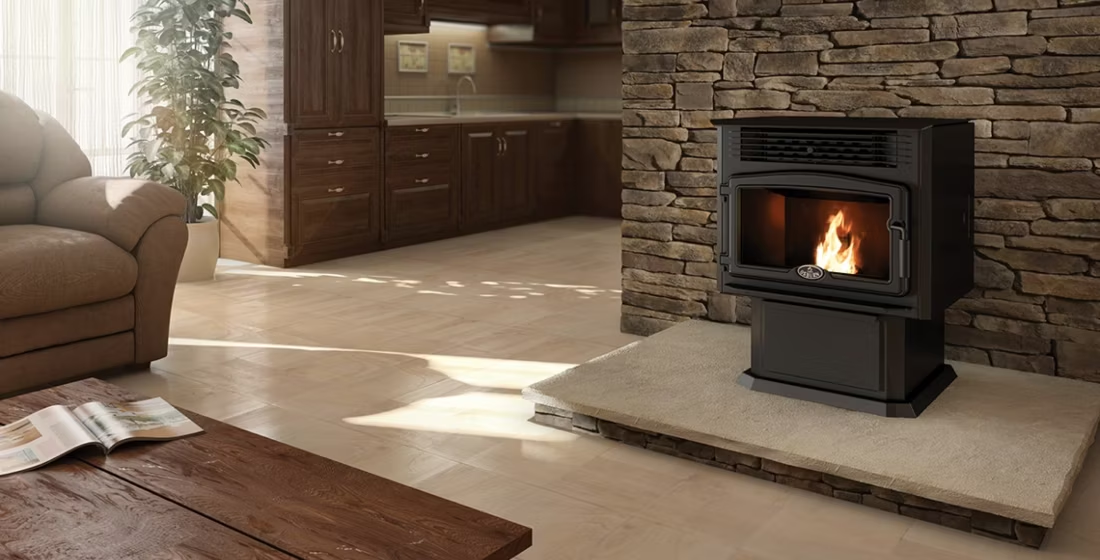
A pellet stove is a freestanding unit that sits on its own hearth pad and vents through a wall or roof—it doesn't need an existing fireplace, which makes it a common choice for manufactured homes and newer construction around Thunder Mountain. A pellet insert is built to slide into an existing masonry fireplace opening, using a vent liner run up through the old chimney. If your home already has a wood-burning fireplace you rarely use, an insert is usually the more cost-effective route; if you're starting from a blank wall, a freestanding stove gives you more placement flexibility.
Do I need a permit to install a pellet stove in Thunder Mountain?
Because Thunder Mountain is unincorporated, permitting runs through the Santa Fe County Building & Land Development Department rather than a city office. A building permit is typically required for the venting penetration and hearth clearances, and an electrical permit may apply since pellet stoves need a dedicated outlet for the auger and blower. Most established installers coordinate this paperwork as part of the install rather than leaving it to the homeowner—worth confirming up front with whichever dealer you choose.
Will my pellet stove still work if the power goes out?
Not on its own—pellet stoves rely on an electric auger and combustion blower, so a standard unit will shut down in a power outage. That's a real consideration in Thunder Mountain, since Central New Mexico Electric Cooperative's rural lines can go down during winter storms and take longer to restore than lines closer to Santa Fe. Some pellet stove models offer a battery backup option or can run off a small inverter/generator for a limited time—ask your local dealer about backup power compatibility when you're selecting a unit, especially if you're relying on the stove as more than supplemental heat.
Where can I buy pellets locally, and what do they cost?
Forest Energy and Lignetics are the two regional brands most commonly stocked at feed stores and hardware suppliers serving the Edgewood, Moriarty, and Santa Fe corridor. Pellets are typically sold by the 40-pound bag or by the ton, and pricing fluctuates with wildfire season demand and transport distance out to rural Santa Fe County—it's worth calling ahead in fall to confirm a supplier is stocked before cold weather hits, since rural retailers can sell through their pellet inventory faster than in-town stores.
How does wildfire smoke and winter inversion affect burning here?
Thunder Mountain sits in a part of Santa Fe County that experiences both winter temperature inversions, which trap smoke close to the ground on still cold nights, and periodic wildfire smoke drifting in during dry summers and falls. Pellet appliances burn far more completely than open wood fires or older uncertified wood stoves, producing a fraction of the visible smoke—which matters on inversion days when air quality advisories are more common. If your household includes anyone sensitive to smoke, a pellet stove is generally the cleaner-burning choice among solid-fuel options for this area.
Pellet stove vs. wood stove—which makes more sense for Thunder Mountain?
Wood is genuinely inexpensive here—cutting permits through the Santa Fe National Forest, Cibola National Forest, or Carson National Forest run just $5 to $20 per cord, and piñon, juniper, and ponderosa pine are all locally abundant. Wood also keeps working with zero electricity, which matters given the co-op's rural lines. Pellet stoves trade that off-grid resilience for convenience—no splitting or stacking, a cleaner burn on inversion days, and thermostat-controlled output—but they need power to run the auger and blower. If you want the lowest-effort, cleanest-burning option and have reliable power (or a backup plan), pellet is a strong fit; if self-sufficiency during outages matters more, wood is worth a serious look too.
What's the difference between an insert and a zero-clearance fireplace?
An insert is a fireplace that slides into a pre-existing wood-burning fireplace—if you don't have one, there's nothing to insert it into. A zero-clearance fireplace is built into a framed wall, which makes it the answer for remodels and new construction. Simple test: existing masonry fireplace means insert; blank or framed wall means zero-clearance.
Why is my open fireplace making my house colder?
Open fireplaces suck—literally. As the fire burns, it consumes air your furnace already paid to heat and pulls it out through the chimney, so the house is actually colder after the fire goes out than before you lit it. An insert fixes this: it seals the chimney, puts fixed glass across the front, and turns that hole in your house into a real heat source.
How much should I budget for a fireplace?
For an average home—covering the fireplace, the vent pipe, and basic installation—a budget between $3,900 and $5,500 gives you a lot of options across wood, gas, and pellet. By the time you add finish work, gas line, and electrical, the average complete installation lands between $5,000 and $12,000 all-in. In a remodel or new build, a good rule is to put about 2.5% of the total project cost toward the fireplace.
Can I install a fireplace myself?
If you're putting a fire in your house on purpose, it's best to work with an expert. Unless you're genuinely experienced in framing, gas line, vent pipe, and the national code on clearances to combustibles, have a professional do it—and ideally the same company that sells you the fireplace, so warranty, service, and liability all live under one roof.
Nearby Dealers
Hearth shops serving Thunder Mountain and the surrounding area. Every listing shows whether it is a WhyFire partner, a dealer we have verified as authorized for the brands we recommend, or a local business carrying hearth products. No manufacturer pays for placement. How we verify dealers →
HeatSource
Western Building Supply
Mountain West Sales, Inc.
Banker Insulation
Builders Materials Inc.
Rocky Mountain Chimney Sweep
Tierra Woodstoves
Pellet Brands Stocked Around Thunder Mountain
Manufacturers will point you to the nearest stocking dealer.
Find your pellet stove in Thunder Mountain.
Tell us about your home and we'll put together a free Project Guide & Parts List—the right pellet stove or insert, the vent kit it needs, and a trusted local dealer who can install it.
Find Your Fireplace →