
Clean Heat for Thunder Mountain's Thin Mountain Air.
At 6,820 feet with winter lows averaging 19°F, Thunder Mountain homes need real heat, not just ambiance. Find an electric fireplace or insert sized to actually work, and get matched with a trusted local dealer.
Every Project Starts From One of These Five Situations
The cleanest heat option in a smoke-prone valley.
Thunder Mountain is a small unincorporated community in Santa Fe County, tucked against the edge of the Santa Fe National Forest at nearly 6,900 feet. With a winter heating load about as demanding as Bozeman, MT and average winter lows around 19°F, winters here rival places like Bozeman, MT—a fact that surprises people who think of New Mexico as uniformly warm. Power comes through Central New Mexico Electric Cooperative rather than an investor-owned utility, and most homes here still burn pinyon, juniper, or ponderosa pine cut from nearby national forest land as their primary heat.
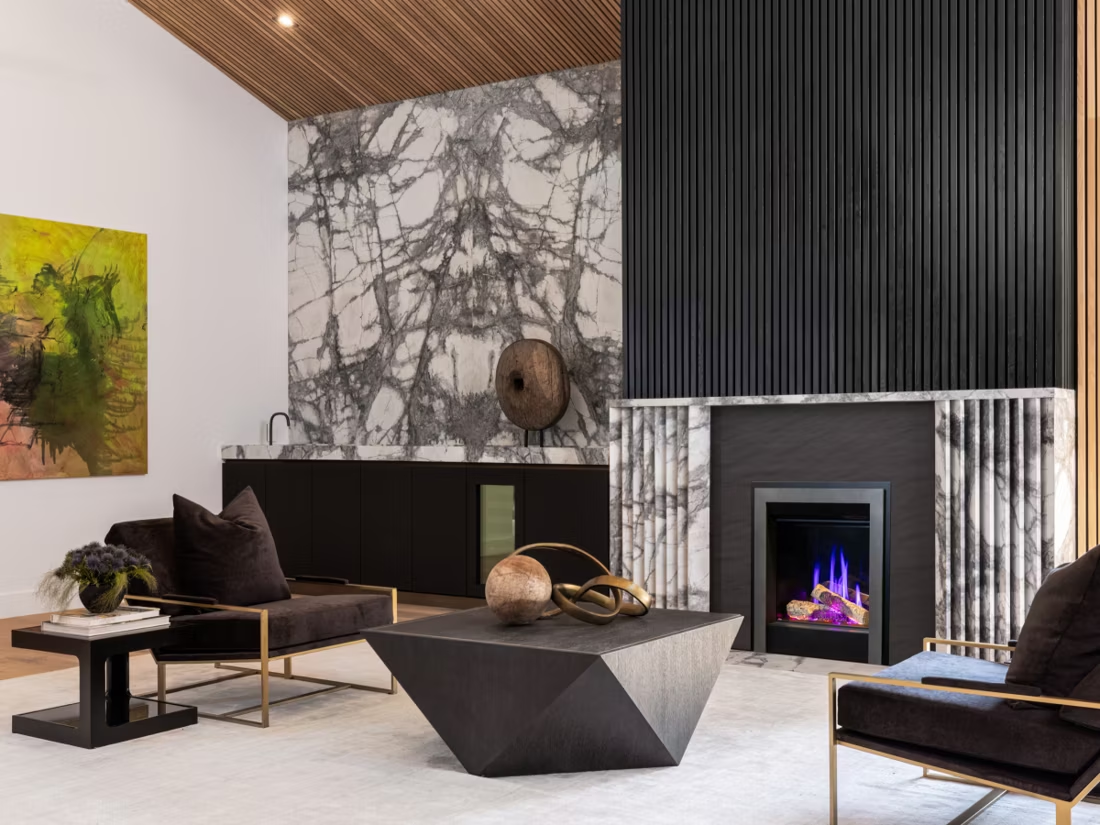
Electric fireplaces have earned a real place alongside that wood-burning tradition for a specific reason: winter inversions settle into this part of Santa Fe County and trap smoke close to the ground, and wildfire smoke adds to the burden later in the year. An electric fireplace or insert produces no indoor or outdoor emissions at all, which makes it a practical zone-heat option for a home office, casita, or addition when you want reliable warmth without adding another chimney to the airshed. At the co-op's residential rate of $0.1716 per kWh, a typical 1,500-watt unit costs roughly 25 to 30 cents an hour to run—inexpensive enough to use daily, though it won't replace a wood stove as your primary defense against a hard freeze.
Three steps. No salesperson until you're ready.
Tell us about your project
Your zip code, your situation, and the fuel you're leaning toward—or let the answers point you to one.
See what's actually available
The brands dealers within 100 miles genuinely carry—real options, never a catalog mirage.
Get your dealer & Project Guide
A trusted local dealer, plus the free Project Guide & Parts List that names every component of the job.
Frequently Asked Questions
How much does it cost to install an electric fireplace in Thunder Mountain?
Most electric fireplace and insert installs in Thunder Mountain run $400 to $2,500. A plug-in unit that drops into an existing masonry fireplace opening is on the low end—no chimney work, no gas line, no venting required. Built-in wall units or larger inserts that need a dedicated 20-amp circuit run to the panel push toward the higher end, since that's electrician labor rather than parts cost. Because there's no combustion involved, you skip the chimney sweep and gas-fitter fees that come with wood or gas projects out here.
What will an electric fireplace actually do to my power bill?
A standard 1,500-watt electric fireplace running on high costs roughly 26 cents an hour at Central New Mexico Electric Cooperative's residential rate of $0.1716/kWh. Run it 5 hours a night through a Thunder Mountain winter and you're looking at about $40 a month in added electric cost—cheaper than propane delivery to a rural property and far simpler to budget than firewood, which still requires cutting, hauling, and stacking even at the co-op's low $5 to $20 per cord permit fees.
Will my electric fireplace still work if the power goes out?
No—and this is worth being honest about before you buy. Electric fireplaces run entirely on grid power, and rural cooperative lines like Central New Mexico's can take longer to restore after a high-elevation snowstorm than lines closer to town. If you want heat that survives an outage, most Thunder Mountain households pair an electric unit for daily convenience with a wood stove for backup—pinyon, juniper, and ponderosa are all available through cutting permits at Santa Fe, Cibola, or Carson National Forest for $5 to $20 a cord.
Should I get an electric insert or a freestanding electric stove?
If you have an existing masonry fireplace that's rarely used, an electric insert is the straightforward choice—it slides into the opening, plugs into a nearby outlet or dedicated circuit, and gives you real heat output without touching the chimney. A freestanding electric stove makes more sense in a room with no fireplace at all, like a converted garage, casita, or home office addition, since it just needs floor space and an outlet. Both options are common in Thunder Mountain's older adobe and frame homes, where adding real combustion venting to a new room isn't practical.
Do I need a permit to install an electric fireplace in Thunder Mountain?
For a plug-in unit, no—there's no combustion, no venting, and no gas line, so it falls outside the building permit requirements that apply to wood and gas installs in Santa Fe County. If your installer needs to run a new dedicated circuit from your panel to power a larger built-in unit, that electrical work typically does require a permit through the Santa Fe County Building Safety Division, which a licensed electrician will pull as part of the job.
What's the best electric fireplace for Thunder Mountain's cold nights?
With a winter heating load about as demanding as Bozeman, MT, this isn't a climate where you want a decorative unit that's all flicker and no heat. Look for models with a genuine 1,500-watt heater and thermostat control—brands like Dimplex and Napoleon build inserts that heat a real room, not just a fireplace opening. For a small addition or single room, that's often enough supplemental heat to notably cut down on how much wood you're burning during shoulder-season cold snaps.
Electric vs. wood—which makes more sense for my Thunder Mountain home?
Wood remains the backbone of heat for a lot of Thunder Mountain households, and it's cheap here—pinyon, juniper, and ponderosa permits through Santa Fe, Cibola, or Carson National Forest run $5 to $20 a cord, and wood keeps working when the power doesn't. Electric wins on convenience and air quality: no smoke during winter inversion events, no ash, no chimney maintenance, and instant on-off heat for a single room. Many homes here run both—wood as the primary or backup heat source, electric for daily zone heating in a bedroom, office, or addition where running a flue isn't worth the trouble.
Why does air quality matter for the fuel choice here?
Thunder Mountain sits in a valley that traps smoke during winter temperature inversions, and wildfire smoke adds to the load in late spring and summer. Both are recognized regional concerns in this part of Santa Fe County. An electric fireplace produces zero particulate emissions, which makes it a genuinely useful option on days when smoke is already thick in the air and you'd rather not add a wood stove's exhaust to it—without giving up heat in the room you're using.
Electric vs. pellet stove—what's the real difference for a home like mine?
Pellet stoves burn bagged fuel from regional brands like Forest Energy or Lignetics and can heat a whole home, but they still need electricity to run the auger and blower—so during an outage, a pellet stove is no more reliable than an electric fireplace. Where they differ is heat output and maintenance: pellet stoves put out far more BTUs for whole-home heating but require hopper loading, ash removal, and an annual service. An electric fireplace has none of that upkeep but is realistically a single-room solution. For supplemental zone heat in one part of a Thunder Mountain home, electric is simpler; for replacing a furnace, pellet is the better match.
Can I put a TV above my fireplace?
Yes—with an asterisk. Fireplaces are hot and TVs don't like heat. Either put a mantel between them to deflect rising warmth, or choose a fireplace with heat-management technology that creates a cool zone on the wall above—the wall stays around 125 degrees, barely warm, while the room still gets full heat. If you like clean lines and don't want a mantel, heat management is the answer.
Do electric fireplaces actually produce heat?
Yes—most put out around 4,800–5,000 BTUs from a standard outlet, which comfortably warms a bedroom, office, or den as a comfort-zone heater. What they won't do is carry a whole house the way wood, gas, or pellet can. Think of electric as ambiance-first with honest supplemental heat: flames on with no heat in July, flames plus warmth in January.
How much should I budget for a fireplace?
For an average home—covering the fireplace, the vent pipe, and basic installation—a budget between $3,900 and $5,500 gives you a lot of options across wood, gas, and pellet. By the time you add finish work, gas line, and electrical, the average complete installation lands between $5,000 and $12,000 all-in. In a remodel or new build, a good rule is to put about 2.5% of the total project cost toward the fireplace.
Does a fireplace add value to my home?
On average, a fireplace adds back to the home about the same amount you spent installing it. Add the monthly savings from heating the rooms you actually use instead of the whole house—often hundreds of dollars a year—and the value case is strong before you even count what a fire does for how your family uses the room.
Nearby Dealers
Hearth shops serving Thunder Mountain and the surrounding area. Every listing shows whether it is a WhyFire partner, a dealer we have verified as authorized for the brands we recommend, or a local business carrying hearth products. No manufacturer pays for placement. How we verify dealers →
HeatSource
Western Building Supply
Mountain West Sales, Inc.
Banker Insulation
Builders Materials Inc.
Rocky Mountain Chimney Sweep
Tierra Woodstoves
Electric Service in Thunder Mountain
An electric fireplace's heater draws about 1,500 watts—pennies per hour at local rates.
Central New Mexico El Coop, Inc
Find your electric fireplace in Thunder Mountain.
Tell us about your home and we'll put together a free Project Guide & Parts List—sized for Thunder Mountain's elevation and winters—and match you with a trusted local dealer who can install it right.
Find Your Fireplace →