
Warmth for the high desert, without the smoke or the chimney.
From the adobe neighborhoods of downtown Santa Fe to Eldorado, Edgewood, Glorieta, and Cerrillos, electric fireplaces bring zone heat and real ambiance without touching a historic facade or an air quality advisory. Find the right unit and connect with a trusted local dealer.
Every Project Starts From One of These Five Situations
Clean heat for a county built on adobe, altitude, and airshed limits.
Santa Fe County sits at real elevation—the city itself around 7,000 feet, climbing into the Sangre de Cristo foothills near Glorieta and Pecos, and stepping down slightly toward Eldorado and Cerrillos. Winters average 18°F lows with a heating season as demanding overall as Bismarck, ND, even though the daytime desert sun often fools people into underestimating it. Much of the historic core is built from thick-walled adobe with traditional kiva fireplaces, and the Rio Grande valley regularly traps wood smoke during winter inversions. Add wildfire smoke drifting in from the Santa Fe, Carson, and Cibola National Forest boundaries during dry stretches, and it's easy to see why a growing number of the county's 143,922 residents are looking at electric as a serious option, not just a backup.
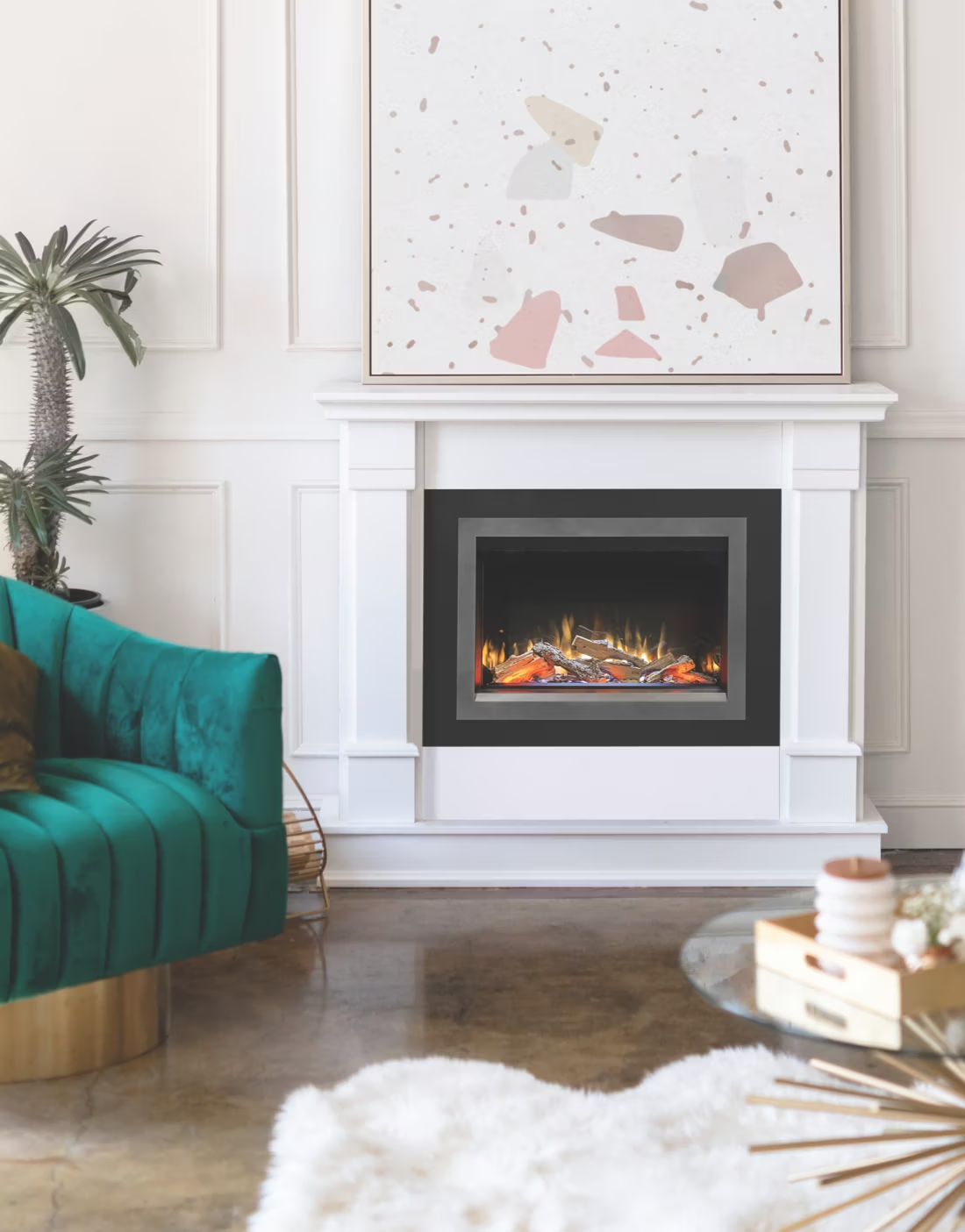
Electric fireplaces solve a problem specific to this county: no combustion means no new flue penetration through a historic adobe wall, no permit fight with the Santa Fe Historic Design Review Board, and no contribution to smoke on an inversion day when the county issues an air quality advisory. PNM serves electric power throughout the city and most of the county, and a growing number of homeowners are dropping electric inserts into existing (or newly built) kiva-style openings to get the look of a traditional fireplace with none of the ash, creosote, or wood supply chain. It's not a whole-house heating solution for a county with winters this long and demanding, but as zone heat for a casita, a condo in Eldorado, or a supplemental unit alongside a wood stove up near Pecos, it's a real and increasingly common choice.
Three steps. No salesperson until you're ready.
Tell us about your project
Your zip code, your situation, and the fuel you're leaning toward—or let the answers point you to one.
See what's actually available
The brands dealers within 100 miles genuinely carry—real options, never a catalog mirage.
Get your dealer & Project Guide
A trusted local dealer, plus the free Project Guide & Parts List that names every component of the job.
Frequently Asked Questions
How much does an electric fireplace installation cost in Santa Fe County?
A simple plug-in wall-mount or freestanding electric fireplace runs $200 to $800 installed, since most units just need a standard outlet and a mounting bracket. A built-in electric insert set into an existing kiva-style fireplace opening—a common Santa Fe project—typically runs $800 to $3,500 depending on the trim kit and whether an electrician needs to run a dedicated circuit. Larger custom built-ins with new framing, mantel work, or hardwired 240V units for higher heat output can reach $4,000 to $4,500. Local dealers will quote a firm number after seeing your existing opening or wall.
Why would I choose electric over wood in a county known for wood heat?
Wood heat has deep roots here—pinyon, juniper, and ponderosa pine are the traditional local species, and cutting permits through the Santa Fe, Carson, and Cibola National Forests keep that tradition affordable. But Santa Fe County also deals with winter inversions that trap wood smoke over the city, plus wildfire smoke advisories in dry years, and a historic district downtown where cutting a new chimney through an adobe wall can mean a lengthy Historic Design Review Board process. Electric sidesteps all of that: no smoke, no flue, no burn-ban restrictions during high fire danger. It's the practical choice for condos, casitas, rentals, and any historic-district home where a new chimney isn't realistic.
Do I need a permit or an electrician to install an electric fireplace?
A plug-in unit that runs off a standard 120V outlet generally doesn't require a permit—it's treated like any other appliance. A hardwired built-in insert, especially a higher-output 240V model, needs a licensed electrician and typically a permit through Santa Fe County or the City of Santa Fe Land Use Department, depending on where the property sits. If the installation is in a designated historic district and involves any exterior wall work, expect an added review step. Most local dealers coordinate the electrical trade and permitting as part of the install so you're not managing separate contractors.
What are my options—insert, wall-mount, or freestanding?
An electric insert is built to slide into an existing fireplace opening, which makes it the natural fit for Santa Fe's traditional kiva fireplaces and older masonry openings—you keep the look, lose the smoke. A wall-mount unit hangs flat against a wall like a piece of art and needs no existing opening, popular in newer construction and condos around Eldorado. A freestanding or mantel-style unit is the most flexible and portable option, good for renters or homes where you're not ready to modify a wall. All three run off standard household current in most sizes.
Can an electric fireplace actually heat a room, or is it just for looks?
A quality electric insert or wall unit puts out real, useful zone heat—typically 4,000 to 5,000 BTU, enough to comfortably warm a single room or open living area. Given Santa Fe County's long, demanding winter heating season—on par with Bismarck, ND—and average winter lows around 18°F, electric isn't going to carry whole-home heating on its own the way it might in a milder climate. Think of it as supplemental heat for a casita, a home office, or a main living space that gets used often, paired with a furnace or wood stove for the coldest stretches.
Can I put an electric insert into my home's existing kiva fireplace?
Yes, and it's one of the more common projects local dealers handle in Santa Fe County. Traditional adobe kiva fireplaces were built as open wood-burning hearths, and many homeowners—particularly in the historic districts where modifying the exterior for a new flue is difficult—are converting them to electric inserts. The conversion preserves the rounded adobe form and plastered finish while eliminating smoke, ash, and the need for a working chimney. Sizing matters here since kiva openings vary widely in shape; a dealer will measure your specific opening before recommending a unit.
How much does it cost to run an electric fireplace with PNM rates?
Running costs depend on the unit's wattage and how often the heater function is used versus flame-only mode. Most electric fireplaces draw around 1,500 watts on high heat, which at typical PNM residential rates costs roughly 20 to 30 cents per hour of heating use—noticeably cheaper per hour than running central electric resistance heat, but higher per BTU than gas or wood in this area. Most owners run the heater selectively during the coldest evenings and use flame-only mode for ambiance the rest of the time, which keeps monthly costs modest.
Does electric make sense during wildfire smoke advisories or burn restrictions?
It's one of the strongest arguments for electric in this county. When the Santa Fe National Forest or county issues fire danger restrictions, or when a winter inversion traps smoke over the city, electric fireplaces keep running with zero combustion and zero contribution to the airshed. Homeowners who rely on wood as a primary heat source sometimes add an electric unit specifically as a smoke-free backup for those high-alert stretches, without giving up the fireplace experience in the room.
Electric vs. pellet vs. wood—which fits my Santa Fe County home?
Wood, using local pinyon, juniper, or ponderosa pine, offers the highest heat output and works during power outages, with cutting permits available through the Santa Fe, Carson, and Cibola National Forests for $5 to $20 per cord. Pellet stoves, running on regional brands like Forest Energy or Lignetics, burn cleaner than wood but still need combustion venting and electricity for the auger. Electric needs no venting, no fuel storage, and no combustion at all, but costs more per BTU to run and isn't built to carry a whole home through a long, cold Santa Fe winter on its own. Many Santa Fe County homes end up with a hybrid: wood or pellet for primary winter heat, electric for smoke-free supplemental warmth in a casita, condo, or historic room where venting isn't an option.
Can I put a TV above my fireplace?
Yes—with an asterisk. Fireplaces are hot and TVs don't like heat. Either put a mantel between them to deflect rising warmth, or choose a fireplace with heat-management technology that creates a cool zone on the wall above—the wall stays around 125 degrees, barely warm, while the room still gets full heat. If you like clean lines and don't want a mantel, heat management is the answer.
Does an electric fireplace need a vent or chimney?
No—that's its superpower. An electric fireplace needs a wall and an outlet, period. No vent pipe, no gas line, no clearances to design around, which is why it works in bedrooms, offices, apartments, and walls where venting a gas or wood unit would be impractical or impossible. Installation is typically the simplest and least expensive of any fireplace type.
Can a fireplace actually lower my heating bill?
Yes—by creating a comfort zone. A furnace heats every square foot of the house just to warm the one room you're in; a gas fireplace on low burns roughly a sixth of the gas a typical furnace does. Set the furnace around 55–60 degrees as a baseline, then heat the rooms your family actually uses. Families who heat this way commonly save $20–$60 a month.
What is an in-home preview and do I need one?
It's a visit where a hearth professional measures your space, confirms the model you picked actually works in your home, and walks the specs—framing, gas line, venting, finish work—before anything is ordered. Some details you just can't know until you see the house. Never make a down payment without one; it's the single most-skipped step that burns buyers.
Stove and Fireplace Dealers in Santa Fe County
Listings include WhyFire partner dealers, dealers we have verified as authorized for the brands we recommend, and established local businesses that carry hearth products. Every listing shows which one it is. The ones marked Preferred run on WhyFire's software, so they can show you real pricing and book your appointment right here. No manufacturer pays for placement. How we verify dealers →
Rocky Mountain Chimney Sweep
Tierra Woodstoves
Find your electric fireplace in Santa Fe County.
Tell us a bit about your home—including whether you're converting an existing kiva opening or starting fresh—and we'll match you with the right electric fireplace or insert, plus a free Project Guide & Parts List from a trusted local dealer.wI kemake it be careful
Find Your Fireplace →