
Heat Your Home in South Valley—Even on No-Burn Days.
Pellet stoves burn clean enough to keep running through Bernalillo County's winter inversion advisories, and they heat efficiently through South Valley's high-desert cold snaps. Find the right stove and connect with a trusted local dealer.
Every Project Starts From One of These Five Situations
Reliable heat that clears every inversion-day advisory.
South Valley sits along the Rio Grande in unincorporated Bernalillo County, at just under 5,000 feet elevation. Winters here are milder than places like Fargo, ND—the average low hovers around 22°F and the area sees a moderate winter heating season—but cold nights are real, and the same temperature inversions that trap wildfire smoke in the valley also settle wood smoke close to the ground. When that happens, the Albuquerque-Bernalillo County Air Quality Control Board issues wood-burning advisories that restrict conventional fireplaces and older wood stoves on exactly the days people need heat the most.
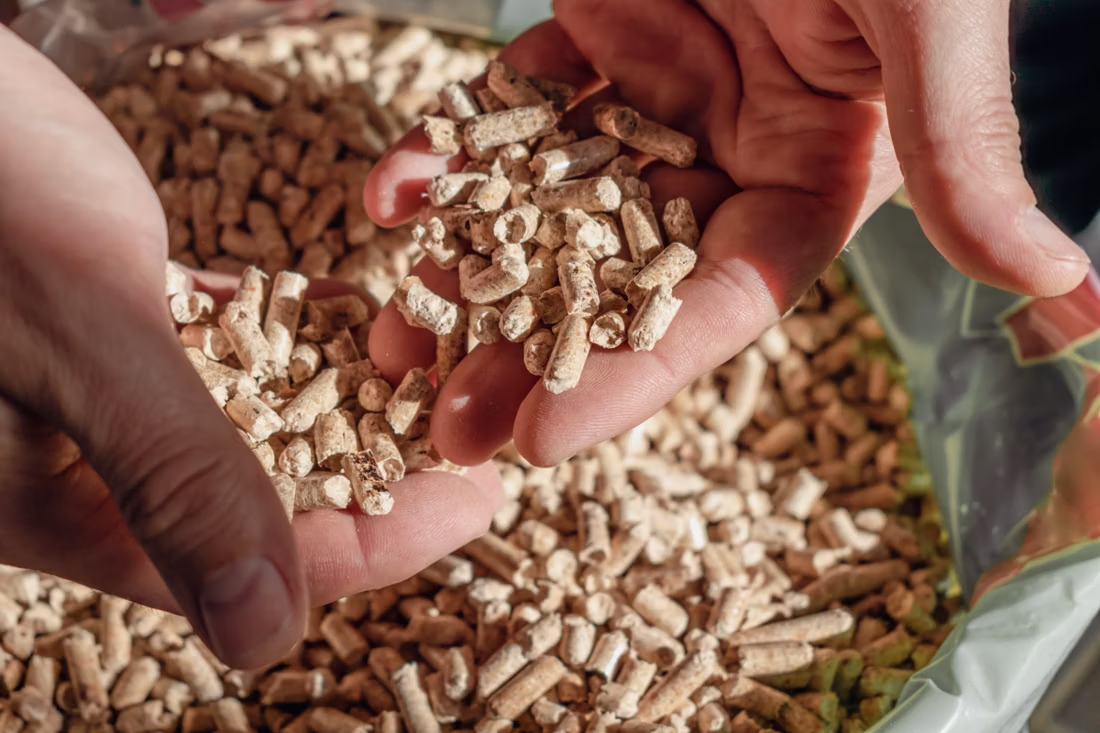
Pellet stoves sidestep that problem. EPA-certified pellet appliances burn dramatically cleaner than open wood fires and are typically allowed to operate even when a no-burn advisory is in effect for uncertified wood-burning devices. Regional pellet brands like Forest Energy and Lignetics are stocked at hearth retailers throughout the Albuquerque metro, so fuel supply isn't a concern. The tradeoff is that pellet stoves need electricity from Public Service Company of New Mexico (PNM) to run the auger and blower—a small, predictable draw on a bill, but worth planning around if outages are a concern in your part of the valley.
Three steps. No salesperson until you're ready.
Tell us about your project
Your zip code, your situation, and the fuel you're leaning toward—or let the answers point you to one.
See what's actually available
The brands dealers within 100 miles genuinely carry—real options, never a catalog mirage.
Get your dealer & Project Guide
A trusted local dealer, plus the free Project Guide & Parts List that names every component of the job.
Frequently Asked Questions
How much does a pellet stove installation cost in South Valley?
A freestanding pellet stove installation in South Valley typically runs $3,000 to $6,000, depending on the stove size and whether new through-wall venting is required. A pellet insert going into an existing masonry fireplace usually costs $3,500 to $6,500, since it reuses the existing hearth and chimney chase for venting. Homes with an existing fireplace opening tend to land on the lower end; new installations in a room without any existing hearth or venting run higher because of the wall penetration and venting work involved.
Are pellet stoves exempt from air quality burn restrictions in Bernalillo County?
Generally, yes. The Albuquerque-Bernalillo County Air Quality Control Board issues wood-burning advisories during winter temperature inversions, when smoke gets trapped close to the ground in the Rio Grande valley. These advisories primarily target uncertified, older wood-burning fireplaces and stoves. EPA-certified pellet stoves burn far cleaner and are typically allowed to keep operating during these restricted periods, which is one of the main reasons South Valley homeowners choose pellet over an older open wood fireplace as a reliable secondary heat source.
What size pellet stove do I need for my South Valley home?
Sizing depends on square footage, insulation, and whether the stove is your primary or supplemental heat source. As a general guide for South Valley's climate: small pellet stoves (rated for up to about 1,200 sq ft) suit a single room or a smaller adobe or manufactured home common in the area; medium stoves (1,200–2,000 sq ft) cover most main living spaces; larger units (2,000+ sq ft) can handle a whole home if it's reasonably well insulated. At just under 5,000 feet elevation, some pellet stoves need altitude-adjusted combustion settings—a local dealer will handle that calibration during install.
Pellet stove vs. wood stove—which is right for my South Valley home?
Wood is deeply rooted here—pinyon, juniper, and ponderosa pine are all cut locally under Forest Service permits from the Cibola and Santa Fe National Forests, typically $5 to $20 per cord during the May-to-October season. Wood stoves also work without electricity, which matters during outages. But traditional wood-burning units are the ones affected by Bernalillo County's winter no-burn advisories. Pellet stoves cost more per BTU in fuel but burn clean enough to stay in operation during those advisories, load more easily (hopper and thermostat instead of splitting and stacking), and produce far less ash. Many South Valley households end up with wood for backup and ambiance and pellet for daily, dependable heat.
Do I need a permit to install a pellet stove in South Valley?
Yes. Because South Valley is unincorporated Bernalillo County rather than the City of Albuquerque, permitting for a new pellet stove installation—including any new through-wall venting—goes through the Bernalillo County Building Safety Division rather than a city building department. Most local hearth dealers handle this paperwork as part of the installation, so you generally won't need to file anything yourself, but it's worth confirming with your installer before work begins.
Where can I buy pellets in South Valley, and what do they cost?
Forest Energy and Lignetics are the two regional pellet brands most commonly stocked at hearth shops and farm-and-feed retailers around the Albuquerque metro, including outlets serving the 87105 and 87195 zip codes. Bagged pellets typically run $6 to $7 for a 40-pound bag, which works out to roughly $260 to $320 per ton if you buy in bulk for the season. A typical South Valley home using a pellet stove as a primary or heavy supplemental heat source burns through 2 to 3 tons over a winter.
Will my pellet stove work during a power outage?
Not without a backup power source. Pellet stoves rely on an electric auger to feed fuel and a blower to distribute heat, drawing roughly 100 to 400 watts depending on the model and settings—so a standard unit goes dark in an outage. Some homeowners pair a pellet stove with a small battery backup or portable generator sized to the stove's draw; others keep a wood-burning option on hand specifically for outages. If outage resilience matters most to you, ask your local dealer about generator-compatible models before you buy.
How much electricity does a pellet stove use, and what will it add to my PNM bill?
Most pellet stoves draw between 100 and 400 watts during normal operation, with higher draw during ignition. At Public Service Company of New Mexico's residential rate of about $0.1557 per kWh, running a pellet stove several hours a day through a South Valley winter typically adds somewhere in the range of $3 to $10 a month to an electric bill—a modest cost compared to the fuel savings pellet heat offers over resistance electric heat.
How often does a pellet stove need cleaning and maintenance?
Plan to empty the ash pot and check the burn pot every few days to weekly during heavy winter use, since ash buildup affects combustion efficiency. A deeper cleaning of the hopper, auger, and venting is recommended monthly during the burn season, and a full professional inspection and cleaning once a year—typically before the cold season starts—keeps the auger motor, igniter, and venting in good working order. Local dealers who sell pellet stoves in the South Valley area generally offer this annual service.
What's the difference between an insert and a zero-clearance fireplace?
An insert is a fireplace that slides into a pre-existing wood-burning fireplace—if you don't have one, there's nothing to insert it into. A zero-clearance fireplace is built into a framed wall, which makes it the answer for remodels and new construction. Simple test: existing masonry fireplace means insert; blank or framed wall means zero-clearance.
Why is my open fireplace making my house colder?
Open fireplaces suck—literally. As the fire burns, it consumes air your furnace already paid to heat and pulls it out through the chimney, so the house is actually colder after the fire goes out than before you lit it. An insert fixes this: it seals the chimney, puts fixed glass across the front, and turns that hole in your house into a real heat source.
Can a fireplace actually lower my heating bill?
Yes—by creating a comfort zone. A furnace heats every square foot of the house just to warm the one room you're in; a gas fireplace on low burns roughly a sixth of the gas a typical furnace does. Set the furnace around 55–60 degrees as a baseline, then heat the rooms your family actually uses. Families who heat this way commonly save $20–$60 a month.
How much should I budget for a fireplace?
For an average home—covering the fireplace, the vent pipe, and basic installation—a budget between $3,900 and $5,500 gives you a lot of options across wood, gas, and pellet. By the time you add finish work, gas line, and electrical, the average complete installation lands between $5,000 and $12,000 all-in. In a remodel or new build, a good rule is to put about 2.5% of the total project cost toward the fireplace.
Nearby Dealers
Hearth shops serving South Valley and the surrounding area.
Pellet Brands Stocked Around South Valley
Manufacturers will point you to the nearest stocking dealer.
Find your pellet stove in South Valley.
Tell us about your home and heating goals, and we'll match you with a trusted local dealer plus a free Project Guide & Parts List—sized correctly for South Valley's winters and Bernalillo County's air quality rules.
Find Your Fireplace →