
Add Warmth to Your South Valley Home—Without the Smoke.
Clean, plug-in heat for South Valley's mild-but-real winters. Find the right electric insert or built-in unit and connect with a trusted local dealer—no chimney, no gas line, no permit hassle.
Every Project Starts From One of These Five Situations
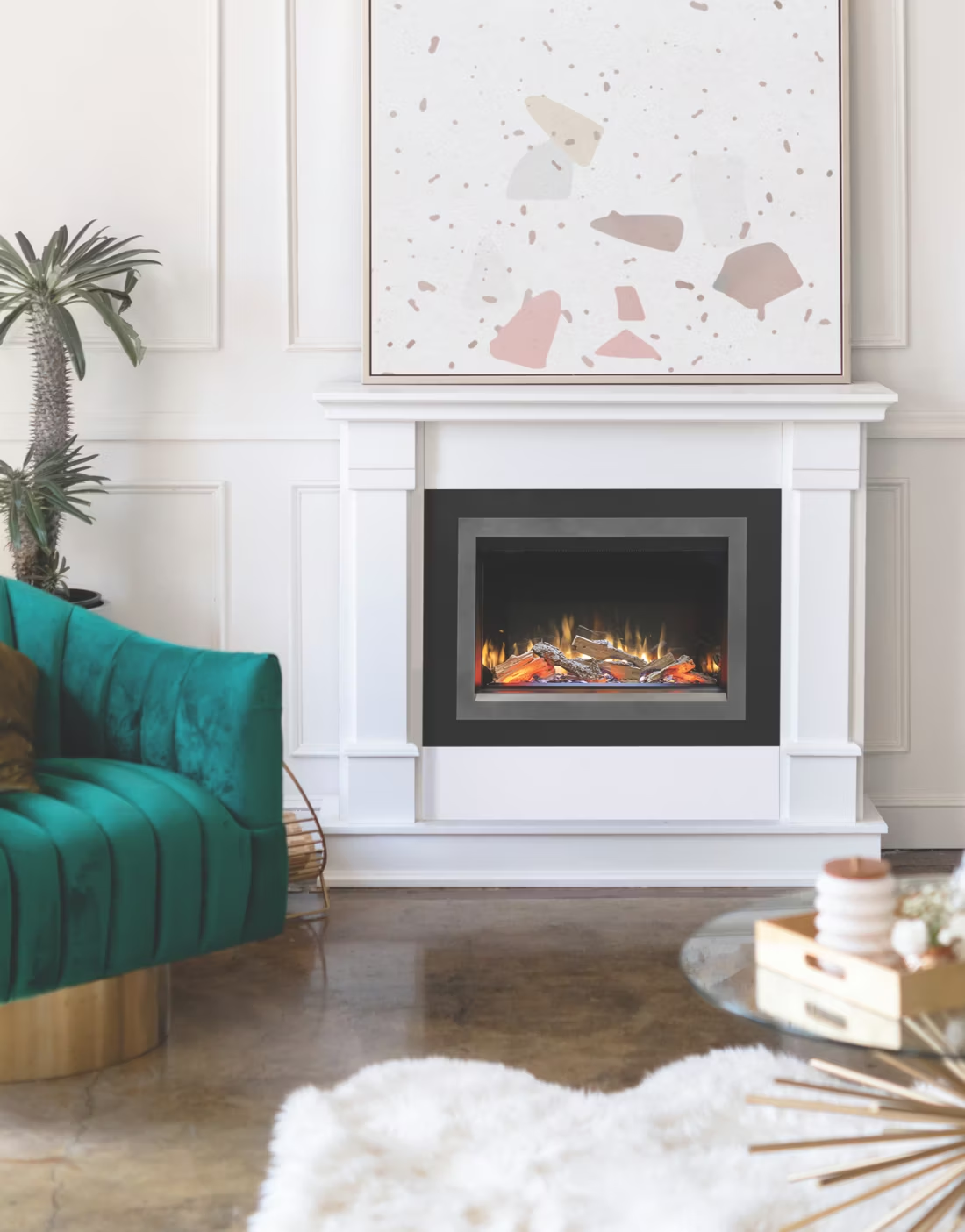
Instant heat, zero smoke, and a simple install.
South Valley sits along the Rio Grande just south of Albuquerque, at roughly 4,925 feet in Bernalillo County. Winters here average lows around 22°F, and the area's winter heating load is moderate for a season—real cold, but nothing close to the sustained deep-freeze of Fargo, ND or Bismarck, ND. That milder profile is a big part of why electric fireplaces make sense here: most South Valley homes don't need a whole-house wood or gas system running around the clock, just supplemental zone heat and the look of a fire in the rooms that matter most.
The valley is also prone to winter temperature inversions that trap smoke low over the Rio Grande corridor—a real air-quality concern on cold, still nights when wood smoke and wildfire haze both linger. Electric fireplaces produce zero combustion byproducts, making them a clean option for households near the river or anywhere burn advisories come into play. On the utility side, Public Service Company of New Mexico serves South Valley at a residential rate around $0.1557 per kWh, so a typical 1,500-watt insert costs roughly 23 cents an hour to run—inexpensive supplemental heat, with no chimney, no gas line, and in many cases no permit required at all.
Three steps. No salesperson until you're ready.
Tell us about your project
Your zip code, your situation, and the fuel you're leaning toward—or let the answers point you to one.
See what's actually available
The brands dealers within 100 miles genuinely carry—real options, never a catalog mirage.
Get your dealer & Project Guide
A trusted local dealer, plus the free Project Guide & Parts List that names every component of the job.
Frequently Asked Questions
How much does an electric fireplace installation cost in South Valley?
Costs vary widely because electric fireplaces span such a range of products. A plug-in freestanding unit or a basic insert that drops into an existing masonry opening can run $300 to $800 installed, since most just need a standard 120-volt outlet. A built-in wall unit or a linear electric fireplace set into new framing—common in South Valley remodels and newer builds—typically runs $1,200 to $2,500 once an electrician runs a dedicated circuit and a carpenter frames the surround. Local dealers can give you a firm number after seeing your wall and outlet situation.
Can an electric fireplace actually heat my house?
It depends on what you're asking it to do. Most electric fireplaces put out around 4,700-5,000 BTU (roughly 1,500 watts), enough to noticeably warm a single room of 400 to 1,000 square feet—plenty for South Valley's milder winters, where lows average 22°F and the heating season runs far shorter than places like Bozeman, MT. As a whole-home primary heat source, electric isn't the right tool; it works best as zone heat for a living room, bedroom, or converted garage while your furnace or heat pump handles the rest of the house.
Do I need a permit to install an electric fireplace in South Valley?
Usually not for a plug-in unit—it's treated like any other household appliance. If you're having a built-in electric fireplace wired on its own dedicated circuit, Bernalillo County generally requires an electrical permit for that circuit work, which most licensed electricians and hearth dealers pull as part of the install. There's no combustion, no venting, and no chimney involved, so electric skips the building and mechanical permit process that wood and gas installations require in this county.
What's the difference between an electric insert and a built-in electric fireplace?
An electric insert is sized to slide into an existing fireplace opening—a common retrofit for South Valley homes with an old masonry or wood-burning fireplace that homeowners want to convert to something cleaner and lower-maintenance. A built-in, or linear, electric fireplace is designed to be framed into a wall from scratch, which is more common in new construction or major remodels. Both plug into standard household power in most cases, though some larger linear units need a dedicated 20-amp circuit.
Electric vs. gas—which fits my South Valley home better?
Gas fireplaces put out real, sustained heat and a live flame, but they require venting and either a natural gas line or a propane tank—meaningful extra cost if your home isn't already plumbed for gas. Electric fireplaces skip all of that: no venting, no gas line, no combustion byproducts, and a straightforward install that a lot of South Valley homeowners in older adobe or manufactured homes prefer specifically because there's no chimney to add. The tradeoff is heat output—electric won't replace a furnace on the coldest nights the way a properly sized gas insert can. For ambiance plus modest supplemental heat, electric is usually the simpler and cheaper path.
Will an electric fireplace help on bad air quality days?
Yes—that's one of the more practical reasons South Valley households choose electric. The Rio Grande valley gets winter inversions that trap wood smoke, and in fire season, wildfire haze settles close to the ground; electric fireplaces don't add anything to that mix. If you already burn wood but want a smoke-free backup for advisory days, or you live near the river where inversion smoke sits thickest, an electric insert gives you the fireplace experience without contributing to the problem.
What size electric fireplace do I need?
Most residential electric fireplaces are rated around 1,500 watts (about 4,700-5,000 BTU), which covers a single room in the 400-1,000 square foot range—typical for a South Valley living room or primary bedroom. Running that unit at PNM's residential rate of roughly $0.1557 per kWh costs about 23 cents an hour on the heat setting. If you're trying to warm a larger open floor plan, talk to a local dealer about a wider linear unit or multiple zone units rather than assuming one fireplace will cover the whole space.
Wood vs. electric—which should I choose?
Wood offers real heat output and works during power outages—a genuine consideration in South Valley, where storms occasionally knock out PNM service. Local pinyon, juniper, and ponderosa pine are the common species, and Forest Service cutting permits through Cibola National Forest or Santa Fe National Forest run $5 to $20 per cord during the May-through-October season. But wood means chimney maintenance, smoke during inversion days, and more hands-on tending. Electric requires none of that—no permit, no cutting, no chimney sweep—but it won't keep your house warm if the power's out. Many South Valley homes lean electric for everyday ambiance and convenience, keeping wood or another backup heat source on hand for outages.
What brands or features should I look for in an electric fireplace?
Look for models with a separate flame-only setting, so you can run the visual effect without the heater in warmer months, and a thermostat rather than a simple high/low switch—it makes a real difference in comfort and electricity cost over a New Mexico winter. Local hearth dealers serving the South Valley and greater Albuquerque area typically carry linear and insert lines from manufacturers like Dimplex, Napoleon, and Touchstone. A dealer walk-through will also confirm whether your planned spot has an adequate outlet or needs a dedicated circuit before you buy.
Can I put a TV above my fireplace?
Yes—with an asterisk. Fireplaces are hot and TVs don't like heat. Either put a mantel between them to deflect rising warmth, or choose a fireplace with heat-management technology that creates a cool zone on the wall above—the wall stays around 125 degrees, barely warm, while the room still gets full heat. If you like clean lines and don't want a mantel, heat management is the answer.
How much does an electric fireplace cost to run?
With the heater on, a typical unit draws about 1,500 watts—at average electric rates that's roughly 20 cents an hour. Run the flame effect alone and it costs pennies; the flames are LED-driven and use about as much power as a light bulb. There's no pilot light, no fuel delivery, and essentially no maintenance.
Can I install a fireplace myself?
If you're putting a fire in your house on purpose, it's best to work with an expert. Unless you're genuinely experienced in framing, gas line, vent pipe, and the national code on clearances to combustibles, have a professional do it—and ideally the same company that sells you the fireplace, so warranty, service, and liability all live under one roof.
Can a fireplace actually lower my heating bill?
Yes—by creating a comfort zone. A furnace heats every square foot of the house just to warm the one room you're in; a gas fireplace on low burns roughly a sixth of the gas a typical furnace does. Set the furnace around 55–60 degrees as a baseline, then heat the rooms your family actually uses. Families who heat this way commonly save $20–$60 a month.
Nearby Dealers
Hearth shops serving South Valley and the surrounding area.
Electric Service in South Valley
An electric fireplace's heater draws about 1,500 watts—pennies per hour at local rates.
Public Service Co Of Nm
Find your electric fireplace in South Valley.
Tell us about your South Valley home and we'll match you with a trusted local dealer and send over a free Project Guide & Parts List—the exact electric fireplace or insert parts, wiring needs, and a dealer who can get it installed correctly.
Find Your Fireplace →