
Warm your home the high-desert way in Bernalillo County.
Wood, gas, pellet, and electric fireplace resources for Albuquerque, the East Mountains, and every valley community in between. Find the right unit for your elevation and climate, and connect with a trusted local hearth retailer.
Every Project Starts From One of These Five Situations
Mild high-desert winters, big elevation swings, across Bernalillo County, New Mexico.
Bernalillo County is New Mexico's most populous county, stretching from the Rio Grande valley floor at roughly 5,000 feet up into the Sandia Mountains above 10,600 feet at Sandia Crest. Winters here are moderate compared to true cold-climate country—average lows sit around 21°F and the county logs about 4,216 heating degree days a year, less than half of what a city like Bismarck, ND sees. But nights still get sharp, especially in the East Mountains, and wood heat has deep roots here regardless of the mild averages. Pinyon and juniper are the signature local firewoods—pinyon smoke is practically the smell of an Albuquerque winter evening—with ponderosa pine common in the higher country near Tijeras and Sandia Park.
What you'll find on this hub: hearth retailers, service technicians, and fuel suppliers covering Albuquerque proper along with Los Ranchos de Albuquerque, Tijeras, and the unincorporated East Mountains, South Valley, and North Valley communities. Pick your fuel below to drill into specifics—local dealers, installation costs, recommended units, and the resources that match your project, whether you're in a North Valley adobe or a cabin-style home up near Cedar Crest.
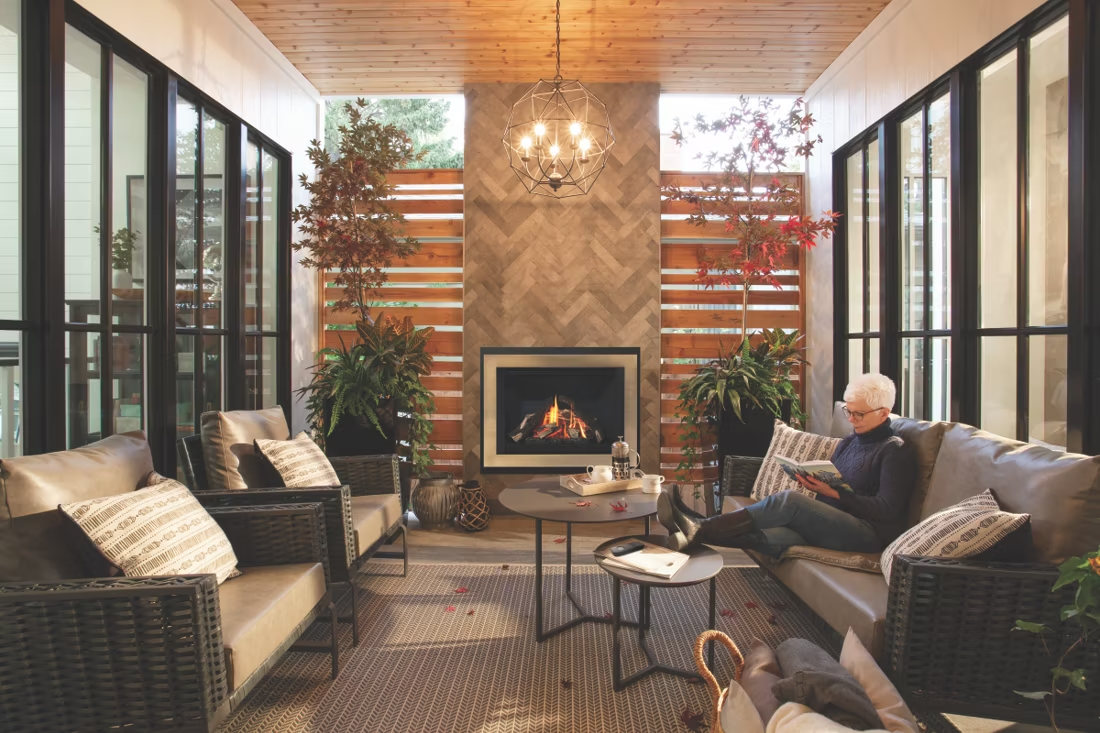
Four fuels. One honest answer for Bernalillo County.
Three steps. No salesperson until you're ready.
Tell us about your project
Your zip code, your situation, and the fuel you're leaning toward—or let the answers point you to one.
See what's actually available
The brands dealers within 100 miles genuinely carry—real options, never a catalog mirage.
Get your dealer & Project Guide
A trusted local dealer, plus the free Project Guide & Parts List that names every component of the job.
Frequently Asked Questions
Which fuel works best in Bernalillo County?
It depends on where you are in the county and how you live. Wood remains culturally central here—pinyon and juniper are the signature local firewoods, with permits available through Cibola National Forest and Santa Fe National Forest for self-cut fuel, and a good catalytic or high-efficiency stove handles the sharper cold nights up in the East Mountains. Gas is the convenience choice across the Albuquerque metro, where New Mexico Gas Company service is widely available—instant heat with none of the woodpile labor. Pellet is a solid middle ground, with Forest Energy and Lignetics pellets stocked regionally, and it's a good fit for homes without easy wood access in the valley. Electric, powered through PNM, works well as supplemental heat in apartments, casitas, and secondary rooms, though with only about 4,216 heating degree days a year, Bernalillo County's mild average winter means electric can cover more of the season here than it would in a harsher climate. Most homes end up mixing fuels—wood or gas as primary, electric for ambiance in a bedroom or den.
Do I need a permit to install a fireplace in Bernalillo County?
In most cases, yes. New wood stoves, wood inserts, gas fireplaces, gas inserts, gas stoves, and pellet stoves generally require a building permit, and wood appliances need to meet current EPA 2020 NSPS emissions standards. Gas installations also require a separate gas line permit and a licensed gas-fitter for the connection work. Electric fireplaces usually don't need a permit unless it's a built-in unit requiring new wiring or a dedicated circuit. Inside Albuquerque city limits, permits go through the City of Albuquerque's Planning Department (Building Safety Division); in the unincorporated East Mountains, South Valley, and North Valley, permits are handled by Bernalillo County's Building Safety Division instead. Most local hearth retailers manage this process as part of the installation, so you typically don't have to file it yourself.
Are there air quality restrictions on wood burning in Bernalillo County?
Occasionally, yes. The Rio Grande valley is prone to winter temperature inversions that trap cold air—and wood smoke—close to the surface, and the City of Albuquerque's Air Quality Program issues advisories on days when conditions are poor, particularly during the December through February inversion season. These advisories ask residents to voluntarily hold off on wood burning rather than imposing a hard ban. Separately, summer and fall wildfire smoke drifting in from fire activity near Cibola National Forest and Santa Fe National Forest can trigger its own air-quality alerts, unrelated to home heating. New wood stove installations must meet EPA 2020 NSPS emissions standards regardless of the season. Gas and pellet appliances are not subject to the winter burning advisories, which is one reason some East Mountains homeowners pair a pellet stove with wood as a backup.
Can one local hearth retailer handle all four fuel types?
Several Bernalillo County retailers do carry all four. Sandia Peak Hearth & Patio and Rio Grande Fireplace & Stove both stock wood, gas, pellet, and electric units, which makes them a good starting point if you're comparing fuels before deciding. Duke City Fireplace Co. leans heavily into wood and gas with a smaller pellet selection. A handful of East Mountains-area suppliers focus mainly on firewood and pellet fuel rather than full retail showrooms—useful for fuel sourcing but not for buying or installing an appliance. If you're not sure which fuel fits your home, a multi-fuel dealer can walk you through working displays and talk through trade-offs specific to your elevation and setup.
How does service work in the East Mountains and outlying parts of the county?
Most service technicians are based in Albuquerque and travel out to the East Mountains (Tijeras, Sandia Park, Cedar Crest), the South Valley, and the North Valley for annual maintenance and repairs. Expect a modest travel fee for calls outside the immediate metro, often in the $40–$90 range depending on distance and elevation gain. Scheduling ahead of the winter heating season—ideally September or October—is easier than trying to book a mid-January emergency visit, especially after a hard cold snap when call volume spikes. If you're in a more remote East Mountains property, it's worth keeping backup fuel on hand (seasoned pinyon or juniper works well) in case of a winter power outage that takes out gas ignition or pellet auger systems.
What's the typical cost range for fireplace installation across all fuel types in Bernalillo County?
Costs vary by fuel and by how much existing infrastructure is already in place. Wood stove or insert installation: roughly $4,000–$8,500 for a typical retrofit, more for new chimney construction in a home without an existing flue. Gas fireplace, insert, or stove: about $4,000–$10,000, with the lower end typical for homes already served by New Mexico Gas Company and the higher end for propane conversions or longer gas line runs. Pellet stove or insert: generally $4,000–$7,000 installed. Electric fireplace: $200–$3,000 for the unit itself, plus $300–$1,000 in labor for anything beyond a plug-and-play wall unit, such as a built-in with new wiring. The county + fuel pages above break these numbers down further with local retailer-specific detail.
Can I install a fireplace myself?
If you're putting a fire in your house on purpose, it's best to work with an expert. Unless you're genuinely experienced in framing, gas line, vent pipe, and the national code on clearances to combustibles, have a professional do it—and ideally the same company that sells you the fireplace, so warranty, service, and liability all live under one roof.
Does a fireplace add value to my home?
On average, a fireplace adds back to the home about the same amount you spent installing it. Add the monthly savings from heating the rooms you actually use instead of the whole house—often hundreds of dollars a year—and the value case is strong before you even count what a fire does for how your family uses the room.
Wood, gas, pellet, or electric—how do I choose?
Match the fuel to your life, not the other way around. Wood: lowest fuel cost and total power-outage independence, but you're hauling and stacking. Gas: press a button, set a thermostat, no maintenance to speak of. Pellet: wood economics with automatic feeding, in exchange for weekly cleaning and a need for electricity. Electric: plugs in anywhere with honest supplemental heat. Nobody regrets the fuel that fits how they actually live.
How much should I budget for a fireplace?
For an average home—covering the fireplace, the vent pipe, and basic installation—a budget between $3,900 and $5,500 gives you a lot of options across wood, gas, and pellet. By the time you add finish work, gas line, and electrical, the average complete installation lands between $5,000 and $12,000 all-in. In a remodel or new build, a good rule is to put about 2.5% of the total project cost toward the fireplace.
Stove and Fireplace Dealers in Bernalillo County
Listings include WhyFire partner dealers, dealers we have verified as authorized for the brands we recommend, and established local businesses that carry hearth products. Every listing shows which one it is. The ones marked Preferred run on WhyFire's software, so they can show you real pricing and book your appointment right here. No manufacturer pays for placement. How we verify dealers →
HeatSource
Mountain West Sales, Inc.
Banker Insulation
Western Building Supply
Builders Materials Inc.
Kinney Brick
Raks Building Supply
Find your fireplace across Bernalillo County.
Pick your fuel below to get matched with a trusted local dealer and receive our free Project Guide & Parts List—a clear plan for your fireplace project, including the exact venting and parts your home needs and the dealer we recommend to install it.
Find Your Fireplace →