
Clean heat for high desert winters—no venting required.
From the Sandia foothills to the South Valley, Bernalillo County homeowners are adding electric fireplaces and inserts for zone warmth without a chimney, a gas line, or a burn-ban headache. Find the right unit and connect with a trusted local dealer.
Every Project Starts From One of These Five Situations
A fireplace that fits without a flue.
Bernalillo County runs from the ridgeline of the Sandia Mountains down through Albuquerque's dense urban core and out into the Rio Grande valley's North Valley and South Valley—older adobe, territorial, and mid-century neighborhoods where a lot of homes were never built with a chimney or a gas stub. Winters here are milder than much of the Mountain West (average lows around 21°F, with a moderate heating season overall), so most homeowners aren't chasing 20-hour burn times—they want reliable zone heat in one room, real flame-look ambiance, and a project that doesn't involve tearing into an adobe wall or running new gas piping across the property.
That's where electric earns its place. It matters even more during winter inversion season, when the Rio Grande valley traps cold air and smoke close to the ground and the City of Albuquerque–Bernalillo County Air Quality Control Board issues advisories urging residents to skip wood fires. An electric fireplace runs on PNM's grid regardless of a red or yellow burn-advisory day, and it's the only combustion-free option available to condo owners, renters, and HOA-restricted properties in neighborhoods like Nob Hill and Downtown where flues and gas lines simply aren't an option. Plug in an insert, or have an electrician wire a built-in unit into an existing fireplace opening, and you get real heat and a real-looking flame without touching your roofline.
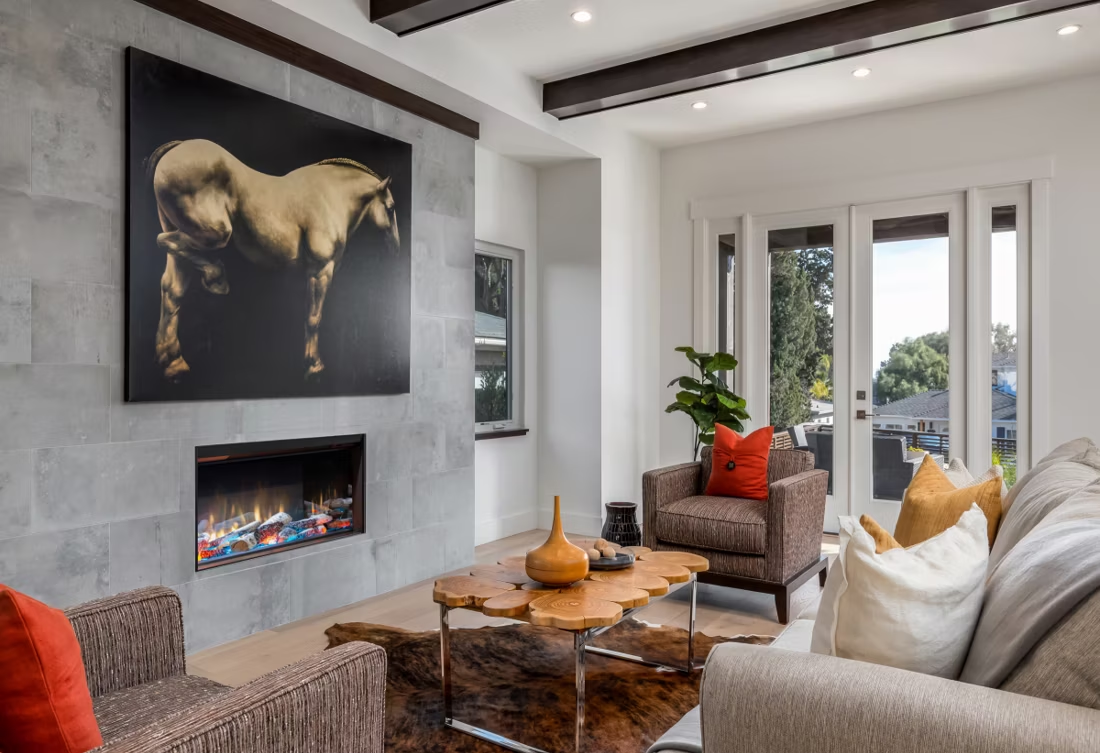
Three steps. No salesperson until you're ready.
Tell us about your project
Your zip code, your situation, and the fuel you're leaning toward—or let the answers point you to one.
See what's actually available
The brands dealers within 100 miles genuinely carry—real options, never a catalog mirage.
Get your dealer & Project Guide
A trusted local dealer, plus the free Project Guide & Parts List that names every component of the job.
Frequently Asked Questions
How much does an electric fireplace installation cost in Bernalillo County?
Most electric fireplace projects in Bernalillo County run $500 to $2,500. A plug-in insert that drops into an existing masonry fireplace opening sits at the low end—no wiring, no permit, just a standard outlet. A built-in electric fireplace wired to its own dedicated circuit costs more, since it requires a licensed electrician and, in most cases, an electrical permit through the City of Albuquerque Planning Department (for city addresses) or Bernalillo County Building & Safety Division (for unincorporated areas like the far East Mountains or parts of the South Valley). Custom surrounds, mantels, or built-in cabinetry in remodels push costs toward the top of that range.
What size electric fireplace do I need for my home?
Electric fireplaces are rated by room heating area rather than whole-house heat load, since most Bernalillo County homes are already served by refrigerated air or a heat pump and are using the fireplace as supplemental or zone heat. A compact insert (750–1,000 sq ft coverage) works well for a den or bedroom in a North Valley bungalow; a larger built-in unit (1,000–1,500 sq ft) suits an open living/dining space in a newer Rio Rancho or Northeast Heights home. In older adobe homes with thick walls and high ceilings, sizing for the room you're actually heating—not the whole floor plan—gives the most realistic result. Local retailers will walk through your room dimensions and window exposure before recommending a model.
Who installs electric fireplaces in Bernalillo County?
For a plug-in insert, installation is often DIY—no licensed trade required. For a built-in electric fireplace that needs a dedicated 120V or 240V circuit, you'll want a licensed electrician, and many local hearth retailers either employ one directly or coordinate with a trusted electrical contractor as part of the install. This matters most in older Bernalillo County housing stock—homes in Barelas, Martineztown, or the South Valley often have older electrical panels that need a load calculation before adding a new circuit. Skipping that step is how homeowners end up with tripped breakers instead of a working fireplace.
Do I need a permit to install an electric fireplace in Bernalillo County?
A plug-in electric insert that uses an existing outlet typically doesn't require a permit—there's no gas line, no venting, and no structural work involved. A built-in unit wired to a new dedicated circuit does require an electrical permit, inspected either through the City of Albuquerque Planning Department or Bernalillo County Building & Safety Division depending on whether the property sits inside city limits or in unincorporated county territory. Most licensed electricians and hearth retailers handle the permit filing as part of the installation, so it's rarely something you have to manage yourself.
What's the difference between an electric insert, a built-in electric fireplace, and an electric stove?
An electric insert is sized to slide into an existing masonry fireplace opening—the most common retrofit for Bernalillo County's older adobe and territorial homes that already have a fireplace box but no working chimney venting. A built-in electric fireplace is designed to be framed into a wall during a remodel or new construction, giving a flush, linear look. An electric stove is a freestanding cabinet-style unit that mimics a wood stove's footprint and can go almost anywhere there's an outlet—popular in South Valley homes and manufactured housing where a masonry fireplace was never part of the original build.
What's the best electric fireplace for Bernalillo County's climate?
Because winter lows here average around 21°F rather than deep sub-zero cold, most Bernalillo County homeowners are looking for a unit that pairs strong flame realism with genuine supplemental heat output—models with a 4,600–5,200 BTU heater and adjustable thermostat cover most rooms without overheating a well-sealed home served by refrigerated air. In homes that also lean on the fireplace during winter inversion advisories when wood burning is discouraged, a model with a remote-controlled thermostat and multi-speed fan gives you the flexibility to run it as primary supplemental heat on cold, still nights and as ambiance-only the rest of the season. Local retailers can match wattage to your specific room and insulation level.
Does an electric fireplace get affected by Bernalillo County's air quality advisories?
No—and that's one of the clearest advantages of going electric here. The City of Albuquerque–Bernalillo County Air Quality Control Board issues winter inversion advisories, including yellow and red burn-day alerts, when cold air traps smoke low over the Rio Grande valley. Those advisories apply to wood-burning appliances; an electric fireplace has zero combustion and zero emissions, so it runs exactly the same on a red-advisory day as it does on a clear one. For households near the valley floor where inversions and occasional wildfire smoke are most noticeable, that's a real point in electric's favor.
How much does it cost to run an electric fireplace with PNM?
At typical PNM residential rates, running a standard 1,500-watt electric fireplace heater on high for a few hours an evening costs roughly 20 to 40 cents per hour of heater use—flame-only mode with the heater off costs a small fraction of that, since the LED light engine draws very little power. For most Bernalillo County households using the fireplace as evening supplemental heat rather than an all-day primary source, monthly operating cost typically lands in the $15–$40 range during the coldest months, well below running a whole-house system harder to compensate.
Electric vs. gas—which is right for my Bernalillo County home?
Gas fireplaces deliver higher heat output and a more authentic flame, and they're a good fit for homes already on a natural gas line or willing to run a propane tank—common in newer Northeast Heights and Rio Rancho construction. Electric skips the gas line and venting entirely, installs in an afternoon, runs during winter inversion burn advisories without restriction, and is the only realistic option for condos, apartments, and HOA properties in denser parts of Albuquerque. For older adobe homes in the North or South Valley with a fireplace opening but no working flue, electric is usually the faster, lower-cost path to a working fireplace again.
Can I put a TV above my fireplace?
Yes—with an asterisk. Fireplaces are hot and TVs don't like heat. Either put a mantel between them to deflect rising warmth, or choose a fireplace with heat-management technology that creates a cool zone on the wall above—the wall stays around 125 degrees, barely warm, while the room still gets full heat. If you like clean lines and don't want a mantel, heat management is the answer.
What fireplace styles should I know before shopping?
Four cover most of the market: screen-front traditional (mesh front, open feel, fits craftsman homes), traditional door set (the classic look you grew up with), modern linear (wide, low, the statement piece for entertaining), and clean face contemporary (no trim—your tile or stone runs right to the fire's edge). Walk in knowing those four terms and you're ahead of most buyers.
How much should I budget for a fireplace?
For an average home—covering the fireplace, the vent pipe, and basic installation—a budget between $3,900 and $5,500 gives you a lot of options across wood, gas, and pellet. By the time you add finish work, gas line, and electrical, the average complete installation lands between $5,000 and $12,000 all-in. In a remodel or new build, a good rule is to put about 2.5% of the total project cost toward the fireplace.
Does a fireplace add value to my home?
On average, a fireplace adds back to the home about the same amount you spent installing it. Add the monthly savings from heating the rooms you actually use instead of the whole house—often hundreds of dollars a year—and the value case is strong before you even count what a fire does for how your family uses the room.
Stove and Fireplace Dealers in Bernalillo County
Find your electric fireplace in Bernalillo County.
Tell us a bit about your home and we'll put together a free Project Guide & Parts List—the right electric fireplace or insert for your space, the exact parts and circuit requirements, and a trusted local Bernalillo County dealer to install it.
Find Your Fireplace →