
Warm up your casita without adding to the woodsmoke.
Smoke-free zone heat for casitas, additions, and bedrooms in a village built on pinyon and juniper—find the right unit and a trusted local installer.
Every Project Starts From One of These Five Situations
Zero-emission warmth for a wood-heavy village.
El Valle de Arroyo Seco sits at 5,838 feet in the Sangre de Cristo foothills, a village of about 1,744 people where winter lows average 16°F and winters run long and cold, placing heavy demand on home heating systems each year. For generations, pinyon, juniper, and ponderosa pine cut under Forest Service permits from the Carson, Santa Fe, and Cibola National Forests—typically $5 to $20 per cord during the May-to-October cutting season—have supplied the bulk of home heat here. But winter temperature inversions and periodic wildfire smoke, both real concerns in this stretch of the Rio Grande valley, have pushed some households toward electric fireplaces for rooms, additions, and casitas where an open wood fire isn't practical, insurable, or desired.
Electric service comes from Jemez Mountains Electric Cooperative, a member-owned rural utility billing around $0.1536 per kWh. That means a typical 1,500-watt electric fireplace costs roughly $1.84 to run for eight hours, or about $55 across a full month of nightly use—a predictable number with no ash, no chimney, and no smoke to add to an already smoke-sensitive valley. The tradeoff: on a rural cooperative grid where winter storms can take down lines for hours, most homes here still keep a wood stove or fireplace as backup rather than depending on electric heat alone.
Three steps. No salesperson until you're ready.
Tell us about your project
Your zip code, your situation, and the fuel you're leaning toward—or let the answers point you to one.
See what's actually available
The brands dealers within 100 miles genuinely carry—real options, never a catalog mirage.
Get your dealer & Project Guide
A trusted local dealer, plus the free Project Guide & Parts List that names every component of the job.
Frequently Asked Questions
How much does it cost to install an electric fireplace in El Valle de Arroyo Seco?
Plug-in electric fireplace inserts and stoves that run on a standard 120-volt outlet typically cost $150 to $600 for the unit itself, with no professional installation required. Built-in or wall-mounted units that need a dedicated 20-amp circuit add roughly $150 to $400 for a licensed electrician, and because this is a small unincorporated village, electricians based out of Taos or Santa Fe may tack on a trip charge for the drive. Either way, electric installs run well below the cost of the venting, chimney, or gas line work a wood or gas fireplace project requires.
What will an electric fireplace add to my Jemez Mountains Electric Coop bill?
At the co-op's residential rate of about $0.1536 per kWh, a typical 1,500-watt electric fireplace costs roughly 23 cents an hour to run. Used for eight hours on a cold evening, that's about $1.84 a night—call it $55 a month if you run it nightly through the winter. Most owners here use their electric fireplace for a few evening hours in a bedroom, casita, or home office rather than all day, which keeps the added cost modest.
Do I need a permit to install an electric fireplace here?
In most cases, no. Electric fireplaces don't require venting, a chimney, or a gas line, so plug-in units generally don't trigger a building permit at all. If you're adding a built-in unit that needs a new dedicated circuit, your electrician will typically pull an electrical permit through Santa Fe County, which is a much simpler process than the building permits required for wood stove or gas fireplace installations.
Is electric heat a realistic replacement for wood heat here?
For most homes in El Valle de Arroyo Seco, no—not as a sole heat source. Pinyon, juniper, and ponderosa pine cut under Forest Service permits from the Carson, Santa Fe, and Cibola National Forests remain the backbone of heating in this area, and an electric fireplace can't match the BTU output of a wood stove on a 16-degree night. Where electric fireplaces earn their keep is as zone heat—warming a single bedroom, a converted casita, or a home office—without adding smoke or ash to a space that doesn't have its own flue.
Are electric fireplaces a good option given local air quality concerns?
Yes—this is one of the stronger arguments for electric heat here. El Valle de Arroyo Seco deals with winter temperature inversions that trap wood smoke in the valley, plus periodic wildfire smoke in summer and fall. An electric fireplace produces zero emissions and no particulate matter, so it doesn't add to either problem—a real consideration for households with kids, older residents, or anyone with respiratory sensitivity, and for evenings when smoke has already settled into the valley.
What happens to my electric fireplace during a power outage?
It stops working—electric fireplaces have no function without grid power, and Jemez Mountains Electric Cooperative's rural lines through this part of the Sangre de Cristo foothills can go down for hours during heavy winter storms or high wind events. This is the main reason most local homes don't rely on electric as their only heat source. If you're installing one for a casita or addition, it's worth keeping a wood stove, fireplace, or portable propane heater elsewhere in the home for backup during outages.
What types of electric fireplaces work best in an adobe home or casita?
Wall-mount and built-in electric fireplaces fit well into the thick adobe walls common in this area, often set into an existing nicho-style niche without structural changes. Freestanding electric stoves suit casitas or additions where you want a portable, no-installation unit, and mantel packages work for living rooms where you want a fireplace's visual anchor without a chimney. Because none of these require venting, they're often the simplest hearth upgrade for a historic adobe home where adding a new chimney isn't practical or desired.
Electric vs. pellet stove—which makes more sense as a supplemental heat source?
Pellet stoves burn compressed wood pellets—Forest Energy and Lignetics are the regional brands available in northern New Mexico—and put out considerably more heat than an electric fireplace, making them the better choice for real supplemental warmth in a larger room. But pellet stoves need venting, a hopper to load, periodic ash cleanup, and like electric units they require power to run the auger and blower. Electric fireplaces are simpler—no venting, no fuel to store, nothing to maintain—but they produce less heat and work best for smaller spaces or ambiance rather than serious supplemental warmth.
Do electric fireplaces provide real heat or just the visual effect?
Both, depending on the model. Most electric fireplaces include a built-in fan heater rated around 1,500 watts, which can meaningfully warm a single room or small casita, especially one already partly heated by a wood stove or by sun through south-facing adobe walls. You can also run most units in flame-only mode without the heater, which is popular for ambiance during shoulder seasons when a room doesn't need extra warmth. If you want genuine heat output for a room here, where winter lows average around 16°F, look for a unit with a stated heating capacity rather than a decorative-only model.
Can I put a TV above my fireplace?
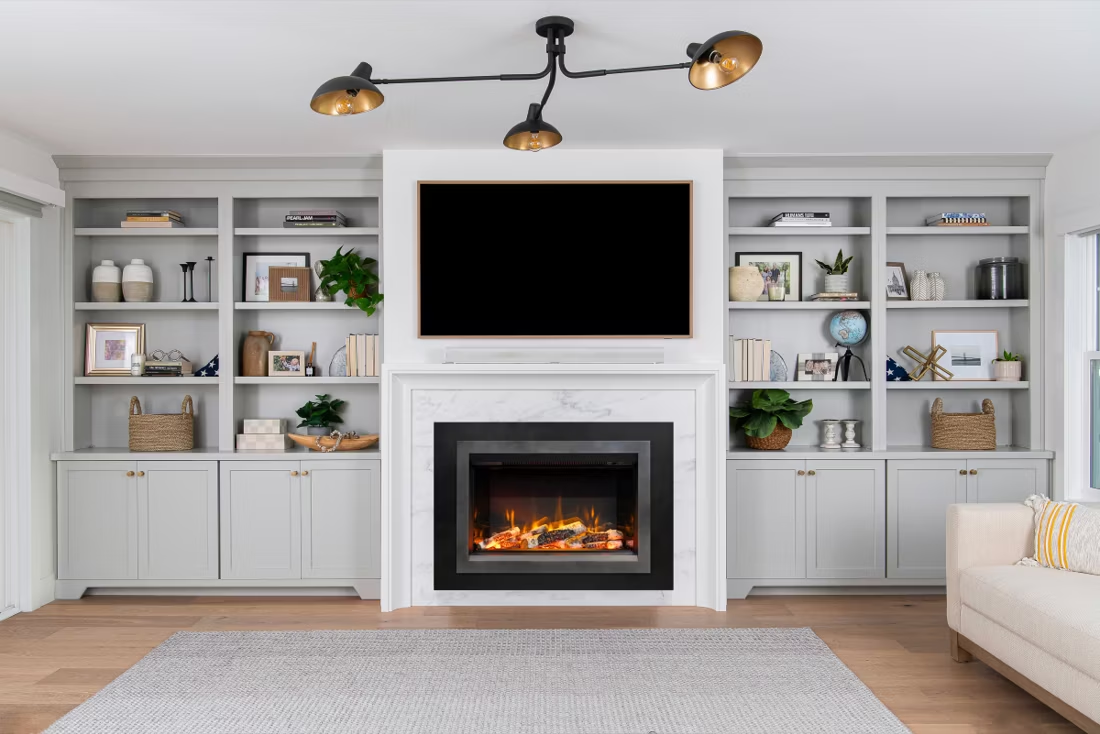
Yes—with an asterisk. Fireplaces are hot and TVs don't like heat. Either put a mantel between them to deflect rising warmth, or choose a fireplace with heat-management technology that creates a cool zone on the wall above—the wall stays around 125 degrees, barely warm, while the room still gets full heat. If you like clean lines and don't want a mantel, heat management is the answer.
Do electric fireplaces actually produce heat?
Yes—most put out around 4,800–5,000 BTUs from a standard outlet, which comfortably warms a bedroom, office, or den as a comfort-zone heater. What they won't do is carry a whole house the way wood, gas, or pellet can. Think of electric as ambiance-first with honest supplemental heat: flames on with no heat in July, flames plus warmth in January.
Can I install a fireplace myself?
If you're putting a fire in your house on purpose, it's best to work with an expert. Unless you're genuinely experienced in framing, gas line, vent pipe, and the national code on clearances to combustibles, have a professional do it—and ideally the same company that sells you the fireplace, so warranty, service, and liability all live under one roof.
Does a fireplace add value to my home?
On average, a fireplace adds back to the home about the same amount you spent installing it. Add the monthly savings from heating the rooms you actually use instead of the whole house—often hundreds of dollars a year—and the value case is strong before you even count what a fire does for how your family uses the room.
Nearby Dealers
Hearth shops serving El Valle de Arroyo Seco and the surrounding area. Every listing shows whether it is a WhyFire partner, a dealer we have verified as authorized for the brands we recommend, or a local business carrying hearth products. No manufacturer pays for placement. How we verify dealers →
High Desert Hearth Products
Tierra Woodstoves
Rocky Mountain Chimney Sweep
Electric Service in El Valle de Arroyo Seco
An electric fireplace's heater draws about 1,500 watts—pennies per hour at local rates.
Jemez Mountains Elec Coop, Inc
Find your electric fireplace in El Valle de Arroyo Seco.
Tell us about your casita, room, or home, and we'll match you with a trusted local dealer and send a free Project Guide & Parts List—the exact parts and recommended installer for your electric fireplace project.
Find Your Fireplace →