
Find a pellet stove built for Rio Arriba County's high desert winters.
From the Espanola Valley at 5,600 feet to Chama's snowy 7,860-foot elevation near the Colorado line, Rio Arriba County covers a lot of climate. A pellet stove gives you thermostatic, low-maintenance heat without a wood pile—matched to a local dealer who knows the terrain.
Every Project Starts From One of These Five Situations
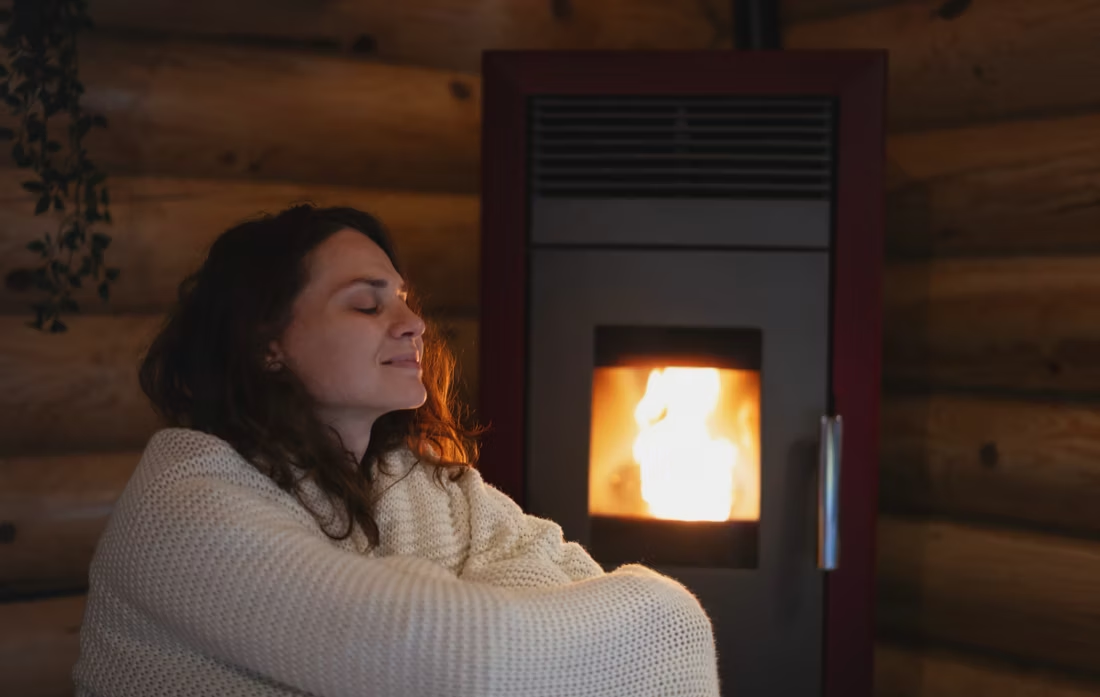
Consistent heat, without the wood pile out back.
Rio Arriba County runs from the irrigated valley towns along the Rio Chama and Rio Grande up into the high country around Chama and Tierra Amarilla, where winters run colder and longer. At a climate zone of 5B with roughly 5,286 heating degree days and average winter lows near 16°F, homes here need real sustained heat for months at a time—not just ambiance. Pinyon, juniper, and ponderosa pine cover much of the surrounding Santa Fe, Carson, and Cibola National Forest land, and wood heat has deep roots in the county, but a pellet stove offers something wood can't: a hopper you load once a day and a thermostat that holds a steady temperature overnight without you tending a fire at 2 a.m.
Northern New Mexico's dry summers and fall fire season bring recurring wildfire smoke advisories, and pellet appliances burn cleaner and more completely than open wood fires—an advantage during smoke-heavy stretches when air quality matters. Regional pellet brands like Forest Energy and Lignetics supply hardware and farm stores throughout the county, so fuel is generally easy to stock up on before winter. The one real tradeoff: pellet stoves need electricity to run the auger and combustion blower, which matters in rural stretches of the county—Tierra Amarilla, Dulce, the Cumbres Pass corridor—where winter storms can knock out power for a stretch. A local dealer can talk through battery backup or a small generator if that's a concern for your property.
Three steps. No salesperson until you're ready.
Tell us about your project
Your zip code, your situation, and the fuel you're leaning toward—or let the answers point you to one.
See what's actually available
The brands dealers within 100 miles genuinely carry—real options, never a catalog mirage.
Get your dealer & Project Guide
A trusted local dealer, plus the free Project Guide & Parts List that names every component of the job.
Frequently Asked Questions
How much does a pellet stove installation cost in Rio Arriba County?
Most pellet stove and insert installations in Rio Arriba County run somewhere in the $3,500 to $6,000 range, depending on the unit, whether you're converting an existing masonry fireplace to a pellet insert, and how much wall-vent or PL-vent piping the installation requires. A pellet insert going into an existing fireplace with a straightforward through-wall vent run is usually on the lower end. New construction or installs that need a dedicated 120V electrical outlet run to the appliance location can push toward the higher end. Homes farther out toward Tierra Amarilla or the Chama area may see a modest travel charge added to the estimate. A local dealer will give you a firm number after seeing the space.
What size pellet stove do I need for my home?
Sizing depends on square footage, ceiling height, insulation, and elevation. As a general guide for Rio Arriba County's cold-climate housing stock, small units (up to 1,000 sq ft) suit a single room or casita, medium units (1,000-1,800 sq ft) cover most main living areas, and larger units can handle a well-insulated whole home in the valley towns. Homes at Chama's elevation or in the higher country toward Cumbres Pass generally need to size up compared to a similar-square-footage home down in Espanola or Ohkay Owingeh, since colder overnight lows and more heating degree days push harder on the appliance. A local dealer will size the unit to your actual home rather than a rule of thumb.
Where can I find certified pellet stove installers near me?
Look for installers with NFI (National Fireplace Institute) certification, which covers pellet-specific training on venting, clearances, and electrical requirements. Dealers covering Rio Arriba County typically serve the Espanola-to-Chama corridor and can advise whether a travel charge applies for more remote addresses toward Dulce or Tierra Amarilla. Because pellet appliances involve both a vent run and an electrical connection, it's worth avoiding a general handyman install—a certified installer will make sure the vent termination clearances and the outlet placement both meet code the first time.
What's the difference between a pellet stove and a pellet insert?
A pellet stove is a freestanding appliance that sits on its own hearth pad and vents through a wall or existing chase—it can go almost anywhere with the right clearances and a nearby outlet. A pellet insert is built to slide into an existing masonry fireplace opening, converting an old wood-burning fireplace into a thermostatically controlled heat source while reusing the existing chimney chase for venting. For Rio Arriba County homes with an existing adobe or masonry fireplace—common in the older Espanola Valley and Abiquiu-area homes—an insert is often the simpler retrofit. Homes without an existing fireplace opening are better suited to a freestanding stove.
Do I need a permit to install a pellet stove in Rio Arriba County?
Yes—a building permit is generally required for a new pellet stove or insert installation through the county building department, and most local dealers handle that paperwork as part of the install. Because pellet appliances are EPA-certified and don't produce visible smoke the way an open wood fire does, they're typically not affected by wildfire-smoke burn advisories the way wood stoves can be—worth asking your installer to confirm current county guidance if you're installing during fire season.
What's the best pellet stove for Rio Arriba County's climate?
For the colder stretches of the county—Chama, Tierra Amarilla, and the higher elevations near Cumbres Pass—look at higher-BTU pellet stoves from manufacturers like Harman, Quadra-Fire, or Lopi, which are built to run for long stretches at high output without cycling excessively. For the milder valley towns along the Rio Chama and Rio Grande, a mid-size unit is usually plenty, even as supplemental heat alongside a wood stove or propane furnace. Talk to a local dealer about your home's elevation and insulation level before landing on a model—the difference between a valley-floor home and a Chama-area cabin is real.
How much maintenance does a pellet stove need?
Pellet stoves need less chimney maintenance than wood stoves but more routine attention to the appliance itself. Plan on emptying the ash pan every few days during regular use, cleaning the burn pot weekly, and running the hopper down before a deeper cleaning of the exhaust fan and venting a couple times a season. A full professional service—checking the auger motor, gaskets, and venting—is worth doing annually, ideally before the heating season ramps up in the fall. Heavy users running the stove as primary heat through a full Rio Arriba County winter may want a mid-season check as well.
Where can I buy pellet fuel in Rio Arriba County?
Regional brands like Forest Energy and Lignetics supply hardware stores and farm supply outlets across northern New Mexico, and dealers serving Rio Arriba County can usually point you to the closest stocking location. Pellets typically run in the $6-$7 range per 40-pound bag, or roughly $250-$350 per ton if you're buying by the pallet—buying a season's worth in the fall before demand picks up is the common local strategy. If you're in a more remote part of the county, ask your dealer about pallet delivery rather than making repeated trips for bags.
Pellet stove vs. wood stove—which is right for my home?
Wood stoves burn pinyon, juniper, or ponderosa pine cut under a Forest Service permit from the Santa Fe, Carson, or Cibola National Forest, and they work with no electricity at all—a real advantage during winter storm outages in outlying parts of the county like Tierra Amarilla or the Chama backcountry. Pellet stoves are easier to run day to day—load the hopper, set the thermostat, less ash and no splitting or stacking—and they burn cleaner, which matters during wildfire-smoke season. The tradeoff is that a pellet stove needs electricity for the auger and blower, so it isn't a stand-alone option during a prolonged power outage unless you pair it with a battery backup or small generator. Many Rio Arriba County homes end up with both: a wood stove for backup and ambiance, a pellet stove or insert for day-to-day convenience.
Why is my open fireplace making my house colder?
Open fireplaces suck—literally. As the fire burns, it consumes air your furnace already paid to heat and pulls it out through the chimney, so the house is actually colder after the fire goes out than before you lit it. An insert fixes this: it seals the chimney, puts fixed glass across the front, and turns that hole in your house into a real heat source.
What's the difference between an insert and a zero-clearance fireplace?
An insert is a fireplace that slides into a pre-existing wood-burning fireplace—if you don't have one, there's nothing to insert it into. A zero-clearance fireplace is built into a framed wall, which makes it the answer for remodels and new construction. Simple test: existing masonry fireplace means insert; blank or framed wall means zero-clearance.
How much should I budget for a fireplace?
For an average home—covering the fireplace, the vent pipe, and basic installation—a budget between $3,900 and $5,500 gives you a lot of options across wood, gas, and pellet. By the time you add finish work, gas line, and electrical, the average complete installation lands between $5,000 and $12,000 all-in. In a remodel or new build, a good rule is to put about 2.5% of the total project cost toward the fireplace.
What is an in-home preview and do I need one?
It's a visit where a hearth professional measures your space, confirms the model you picked actually works in your home, and walks the specs—framing, gas line, venting, finish work—before anything is ordered. Some details you just can't know until you see the house. Never make a down payment without one; it's the single most-skipped step that burns buyers.
Stove and Fireplace Dealers in Rio Arriba County
Pellet Brands Stocked Around Rio Arriba County
Manufacturers will point you to the nearest stocking dealer.
Find your pellet stove in Rio Arriba County.
Tell us about your home and we'll match you with a trusted local dealer and send over a free Project Guide & Parts List—the exact pellet stove or insert, vent kit, and installation plan for your Rio Arriba County home.
Find Your Fireplace →