
Instant heat for Rio Arriba's high-desert winters.
From Española's river valley to the higher, colder ground around Chama and Tierra Amarilla, gas fireplaces give Rio Arriba County homes clean, on-demand heat. We'll match you with a trusted local dealer who knows the terrain and the permitting.
Every Project Starts From One of These Five Situations
Reliable warmth without the woodpile.
Rio Arriba County stretches from the Rio Grande valley near Española up through the high country around Chama and Tierra Amarilla, where elevation pushes winter lows well below the county's 16-degree average and heating season runs long—a cold, deep winter with a heating load comparable to a cold Rocky Mountain winter. Piñon and juniper have fueled wood stoves here for generations, but a growing number of households, especially in newer construction and second homes around Abiquiu and the Chama valley, are choosing gas for the convenience of flipping a switch instead of splitting a load of pine.
Natural gas infrastructure is limited outside the more populated pockets of the county, so most gas fireplace installations here run on propane, delivered and stored in a tank on the property. That's not a drawback—modern direct-vent propane units perform identically to natural gas models and many carry battery-backup ignition, which matters when winter storms knock out power along rural stretches of US 84 or NM 96. A trusted local dealer will size the unit, plan the vent run, and handle the propane coordination so you're not guessing at a big-box store.
Three steps. No salesperson until you're ready.
Tell us about your project
Your zip code, your situation, and the fuel you're leaning toward—or let the answers point you to one.
See what's actually available
The brands dealers within 100 miles genuinely carry—real options, never a catalog mirage.
Get your dealer & Project Guide
A trusted local dealer, plus the free Project Guide & Parts List that names every component of the job.
Frequently Asked Questions
How much does a gas fireplace installation cost in Rio Arriba County?
Costs vary based on whether you're installing a direct-vent insert into an existing masonry fireplace or a new built-in unit with fresh venting and a propane line run. A straightforward insert conversion with propane already on-site tends to sit on the lower end of typical regional pricing; new construction or remodels needing tank placement, a new gas line, and full venting run higher. Homes in more remote parts of the county—around Tierra Amarilla, Cebolla, or the Chama valley—may see a modest travel charge added by installers coming from Española or Santa Fe. A local dealer will give you a firm number after an in-home visit.
Can I convert my existing wood fireplace to gas in Rio Arriba County?
Yes, and it's a common project for homes around Española and Abiquiu that have an older masonry fireplace built for piñon and juniper cordwood. A gas insert slides into the existing firebox and uses a stainless liner run through your current chimney, so you keep the look of the original hearth while gaining instant, thermostatically controlled heat. Because natural gas lines are scarce outside town centers, most of these conversions run on propane, which means factoring in tank placement or an existing tank's proximity to the house when your installer plans the gas line.
Is natural gas available in Rio Arriba County, or is it all propane?
Natural gas service exists in parts of Española and a few other more built-up areas, but coverage is patchy across the county's rural expanse. For homes in Chama, Tierra Amarilla, Abiquiu, or anywhere off the main utility corridors, propane is the standard fuel—either from an existing tank or one installed alongside the fireplace project. Nearly every gas fireplace on the market today can be configured for propane with the correct orifice kit, so fuel availability shouldn't limit your options; it just determines whether your installer coordinates with a utility or a propane supplier.
Will my gas fireplace work during a power outage?
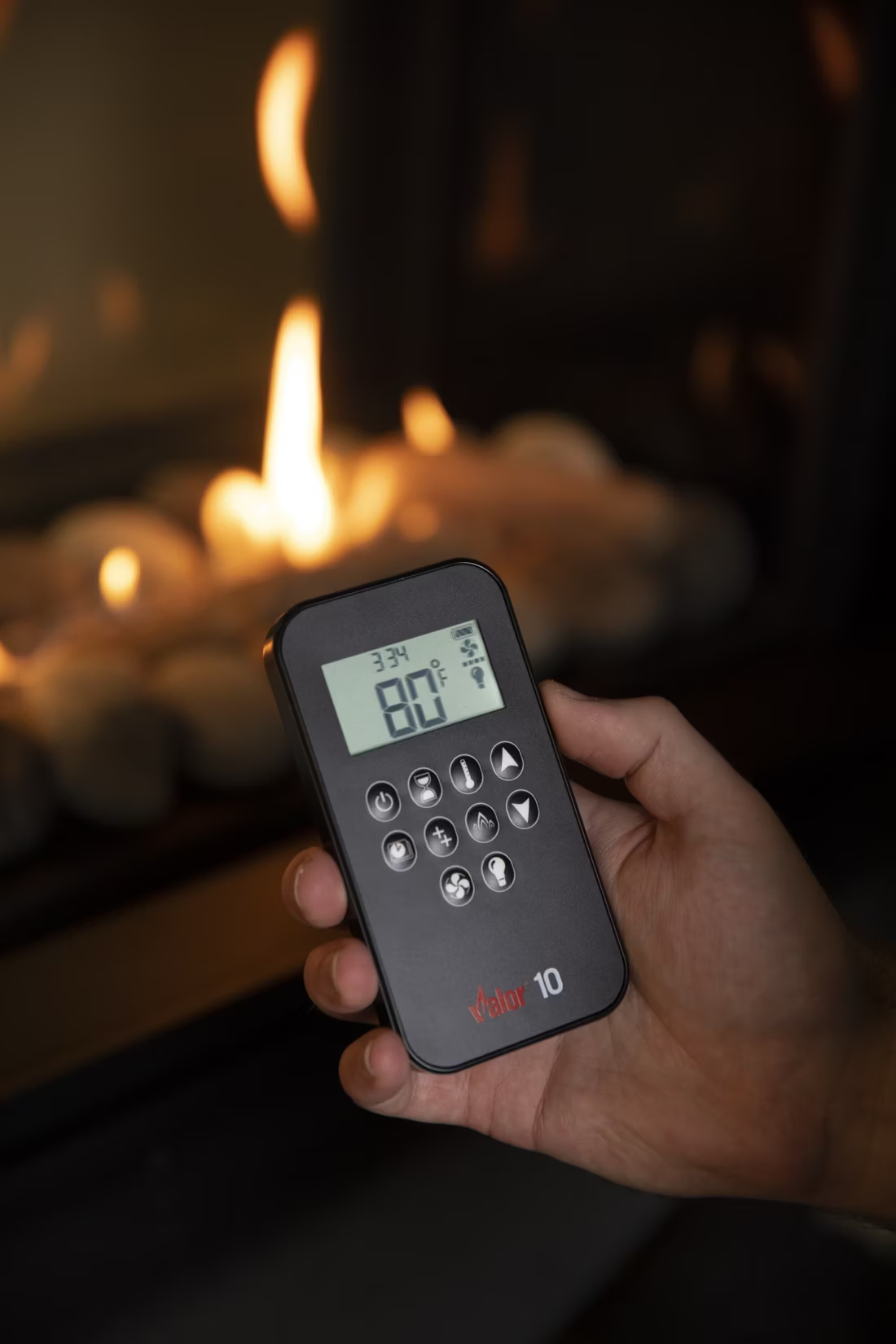
Most direct-vent gas fireplaces with intermittent pilot ignition run on battery backup, so they'll still light and operate when the power goes out—a real consideration in Rio Arriba County, where winter storms and high winds can take down rural power lines for extended stretches around Tierra Amarilla or along the Chama corridor. Some brands, including Valor, generate their own electricity through the pilot assembly and need no batteries at all. Ask your local dealer about the ignition system on any unit you're considering if outage resilience matters to you.
What's the difference between a gas fireplace, gas insert, and gas stove?
A gas fireplace is a built-in unit installed during new construction or a remodel, framed into a wall. A gas insert is sized to slide into an existing masonry firebox, converting an old wood-burning fireplace into a sealed, efficient gas unit using the existing chimney as a vent path. A gas stove is a freestanding cabinet-style unit that sits on the floor like a wood stove but burns gas. For the many older adobe and territorial-style homes around Española and Abiquiu with an existing fireplace, an insert is usually the simplest upgrade; new builds in the Chama valley are often better suited to a built-in unit.
Do I need a permit to install a gas fireplace in Rio Arriba County?
Yes—a building permit is required for new gas fireplace installations, and any new propane line work needs to be handled by a licensed gas-fitter. Most established hearth dealers coordinate the permitting, the propane tank placement or hookup, and the final inspection as part of the installation, so you're not left managing separate trades. If you're outside incorporated Española and building in unincorporated county land, confirm with your installer which jurisdiction's permit process applies to your property.
What's the difference between vented and vent-free gas fireplaces?
Vented (direct-vent) units draw combustion air from outside and exhaust gases back outside through a sealed pipe—they're the cleanest and most universally code-compliant option, and what most local dealers recommend for full-time heating use. Vent-free units burn without external venting, releasing some moisture and combustion byproducts into the room, and they come with strict room-sizing and ventilation requirements. Vent-free is legal in New Mexico but less common in Rio Arriba County installations, since direct-vent units handle the elevation and cold-soak temperatures around places like Chama more reliably without any indoor air quality tradeoffs.
How often should my gas fireplace be serviced?
Plan on an annual inspection, ideally before the heating season ramps up in the fall. A technician checks the burner, pilot assembly, gas connections, and venting, and cleans the glass and interior—a much lighter job than a wood chimney sweep, but still important for safe operation, especially at the elevations found in the northern part of the county where units cycle harder through a long, cold season. Local hearth dealers and gas appliance service companies handle this routinely.
Gas vs. wood—which is right for my Rio Arriba County home?
Wood, especially piñon and juniper cut under a Santa Fe or Carson National Forest permit, remains the lower-cost and power-outage-proof option many rural households rely on, particularly at higher elevations near Tierra Amarilla and Chama where winters run long. Gas offers instant, thermostat-controlled heat with none of the splitting, stacking, or ash cleanup, and it's often the preferred choice for primary living areas in newer homes or for households without easy access to a woodlot. Many properties in the county end up with both: gas for daily convenience, wood or a wood stove as backup when a propane delivery is delayed or an outage stretches on.
Why is my open fireplace making my house colder?
Open fireplaces suck—literally. As the fire burns, it consumes air your furnace already paid to heat and pulls it out through the chimney, so the house is actually colder after the fire goes out than before you lit it. An insert fixes this: it seals the chimney, puts fixed glass across the front, and turns that hole in your house into a real heat source.
Can I put a TV above my fireplace?
Yes—with an asterisk. Fireplaces are hot and TVs don't like heat. Either put a mantel between them to deflect rising warmth, or choose a fireplace with heat-management technology that creates a cool zone on the wall above—the wall stays around 125 degrees, barely warm, while the room still gets full heat. If you like clean lines and don't want a mantel, heat management is the answer.
What is an in-home preview and do I need one?
It's a visit where a hearth professional measures your space, confirms the model you picked actually works in your home, and walks the specs—framing, gas line, venting, finish work—before anything is ordered. Some details you just can't know until you see the house. Never make a down payment without one; it's the single most-skipped step that burns buyers.
Should the dealer who sells my fireplace also install it?
Ideally, yes. A fireplace project involves vent pipe, gas line, electrical, and often tile or stone. Hire three or four separate trades and you own the liability and the game of telephone between them. One company selling and installing means one accountable party, start to finish—ask about factory training, on-time completion records, and what happens if an inspection fails.
Stove and Fireplace Dealers in Rio Arriba County
Get your gas fireplace project mapped out for Rio Arriba County.
Tell us about your home and we'll match you with a trusted local dealer and send over a free Project Guide & Parts List—the exact parts, including the vent kit, for your gas fireplace or insert project.
Find Your Fireplace →