
Keep Your Family Warm and Safe—No Matter What
Twin Rivers was built around piped gas heat and attached housing, so wood stoves are the exception here, not the rule. For the homes where it does make sense, we'll connect you with a local dealer who knows the difference.
Every Project Starts From One of These Five Situations
Twin Rivers was built for gas heat, not wood.
Twin Rivers is a planned community within East Windsor Township, developed in the 1970s around a mix of townhomes, condos, and single-family homes served by piped natural gas and central electric systems from the start. With a fairly long, cold winter season and a 21°F average winter low, the climate here (zone 5A) is genuinely cold but far milder than the wood-heat-dependent towns of interior New England or the upper Midwest—think Burlington, VT or Duluth, MN, where wood is often a primary heat source out of necessity. In Twin Rivers, it never had to be.
That history matters for installation. Many attached units in Twin Rivers's townhome and condo sections don't have masonry chimneys or the roof/wall penetrations a wood stove needs, and the Twin Rivers Homeowners Association covenants that govern exterior alterations can restrict flue and venting changes on shared structures. Detached single-family homes on the community's larger lots have more flexibility, and a handful of owners do install wood stoves or inserts—usually for backup heat during Jersey Central Power & Light outages or for the ambiance of a real fire. If that's you, local firewood suppliers in Mercer County regularly carry seasoned oak, hickory, and maple, all strong, dense-burning species common to central New Jersey woodlots.
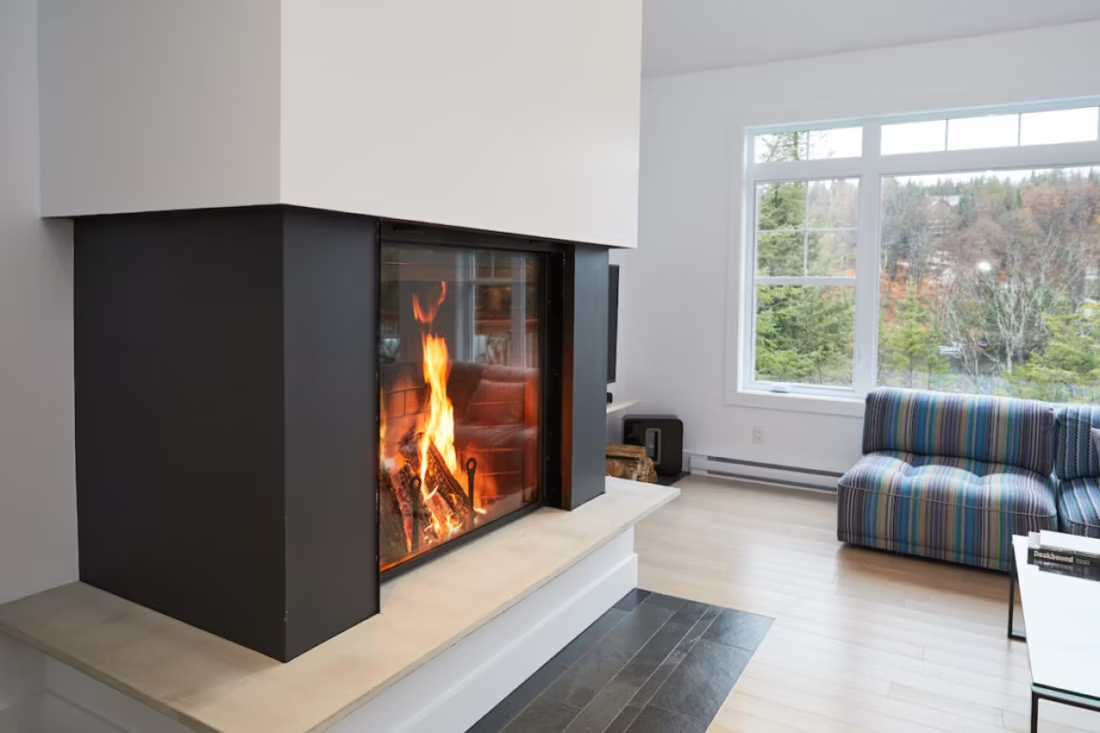
Three steps. No salesperson until you're ready.
Tell us about your project
Your zip code, your situation, and the fuel you're leaning toward—or let the answers point you to one.
See what's actually available
The brands dealers within 100 miles genuinely carry—real options, never a catalog mirage.
Get your dealer & Project Guide
A trusted local dealer, plus the free Project Guide & Parts List that names every component of the job.
Frequently Asked Questions
Can I even install a wood stove in Twin Rivers?
It depends on which part of the community you're in. Attached townhomes and condos governed by the Twin Rivers Homeowners Association typically need HOA approval for any exterior venting or roof penetration, and many of those units were never built with a chimney or hearth in mind. Detached single-family homes have more room to work with, provided you meet East Windsor Township's building and fire code requirements for clearances and venting. Before you shop for a stove, it's worth a quick call to the township building department and, if applicable, your HOA board—a local dealer who's done work in Twin Rivers before can usually tell you in five minutes whether your unit type is a realistic candidate.
Why aren't wood stoves more common in Twin Rivers?
Two things work against it: housing type and infrastructure. Twin Rivers was designed as a planned community with piped natural gas and central heat built into nearly every unit from day one, so there was never the same reliance on wood that you see in older rural New Jersey homes or colder, more remote parts of the country. On top of that, a large share of the housing stock is attached townhomes and condos without existing chimneys, which makes retrofitting a wood-burning appliance a bigger structural project than it would be in a standalone house. It's not that wood heat doesn't work in a 21°F winter—it's that the housing here wasn't built around it.
What does a wood stove installation typically cost for the homes where it's an option?
For a detached single-family home in the Twin Rivers area with an existing masonry fireplace, a wood insert conversion is generally the more straightforward and affordable path since it reuses the existing chimney. A freestanding stove requiring new Class A chimney pipe and roof penetration runs higher, since you're building venting from scratch. Because so few installs happen in this specific community, pricing varies more than it would in a wood-heat-standard market—a local dealer can give you a firm number after seeing your home's existing chimney (or lack of one) in person.
What firewood species are available locally if I do install a stove?
Oak, hickory, and maple are the dominant species available from firewood suppliers and tree services throughout Mercer County, and all three are excellent stove wood—oak and hickory in particular burn hot and long, which matters if you're using the stove for backup heat during a JCP&L outage rather than daily use. There's no national forest or BLM land near Twin Rivers with self-cutting permits, so unlike wood-heat-standard regions out West, firewood here is a purchased commodity—expect to buy by the cord from a local dealer rather than cut your own.
Do I need a permit, and who issues it?
Yes. New wood stove or insert installations in Twin Rivers fall under East Windsor Township's building and construction permitting process, which will check clearances, venting, and hearth pad requirements against current fire code. If you're in an HOA-governed section of the community, you'll also need separate approval from the Twin Rivers Homeowners Association for any exterior work, since flue penetrations affect shared building elements. Most reputable installers will pull the township permit as part of the job, but the HOA sign-off is usually on you to secure first.
Are there air quality restrictions on wood burning in Twin Rivers?
No—Mercer County isn't a non-attainment area and doesn't have the winter inversion problems you'd see in a valley or high-desert location, so there's no local curtailment program restricting when you can burn. That said, choosing an EPA-certified stove is still worth doing for efficiency and lower particulate output, and it's the standard nearly every manufacturer builds to today regardless of local air quality rules.
Since wood is uncommon here, what do most Twin Rivers homeowners use instead?
Natural gas and electric are the standard choices in Twin Rivers, and for good reason—the community's infrastructure was built around them, and most homes already have gas or electric service run to the unit. A direct-vent gas insert or fireplace is usually the easier retrofit for both townhomes and single-family homes, since it doesn't require the same chimney and structural work a wood stove does. Pellet stoves face similar constraints to wood here and aren't common either. Wood remains a legitimate option primarily for detached homes with an existing masonry fireplace or homeowners specifically after off-grid backup heat.
How do I find an installer who actually knows Twin Rivers's housing?
This is the one place a generic search falls short. Because so few wood installs happen in this specific community, you want a dealer who has actually navigated an HOA approval or worked around an East Windsor Township attached-home layout before—not just someone who installs stoves in rural Mercer County farmhouses. When we match you with a local dealer, we specifically look for one with relevant experience in planned communities like Twin Rivers, so you're not the first HOA case they've ever handled.
Is a wood stove a good backup heat option here?
For a detached home with the right chimney setup, yes—a wood stove needs no electricity to produce heat, which makes it a genuine backup during a Jersey Central Power & Light outage, unlike most gas fireplaces with electronic ignition or electric units that stop cold when the power does. But this only applies where the structural fit already exists or can reasonably be added. For attached townhomes and condos, a battery-backed gas insert or a portable electric heater is usually the more realistic backup plan given the venting and HOA constraints involved.
Why won't my new wood stove get going like my old one?
New wood stoves are 70%+ efficient, so far less heat goes up the flue—which also means less draft to get a fire established. The rule: build a genuinely hot fire for about 45 minutes before you choke it down. Skip that and you get smoke in the room, creosote in the chimney, and a fire that never takes off. Most performance complaints trace straight back to this.
Why is a fireplace insert so efficient?
An insert does two things: it seals the chimney completely, so you stop losing air you already paid to heat, and it radiates warmth into the room through the firebox and glass. Most add a heat-exchange fan that pulls cool room air underneath, wraps it around the hot firebox, and pushes it back out warm. Your home is more efficient before you've even lit the first fire.
Can a fireplace actually lower my heating bill?
Yes—by creating a comfort zone. A furnace heats every square foot of the house just to warm the one room you're in; a gas fireplace on low burns roughly a sixth of the gas a typical furnace does. Set the furnace around 55–60 degrees as a baseline, then heat the rooms your family actually uses. Families who heat this way commonly save $20–$60 a month.
What is an in-home preview and do I need one?
It's a visit where a hearth professional measures your space, confirms the model you picked actually works in your home, and walks the specs—framing, gas line, venting, finish work—before anything is ordered. Some details you just can't know until you see the house. Never make a down payment without one; it's the single most-skipped step that burns buyers.
Nearby Dealers
Hearth shops serving Twin Rivers and the surrounding area. Every listing shows whether it is a WhyFire partner, a dealer we have verified as authorized for the brands we recommend, or a local business carrying hearth products. No manufacturer pays for placement. How we verify dealers →
Appliance Brokers, Ltd.
Island Renovations
Fireside Pros/Awning Design
Central Jersey Masonry & Chimney Sweep
Better Homes Hearth & Patio
E & E Stoves & Fireplaces
Builders Architectural Millwork
H2 LLC
Rattan Patio & Fireplace Shoppe
Alternate Energy Products
Flemington Supply Co. Inc
Find your wood fireplace in Twin Rivers.
Tell us about your home—townhome, condo, or detached—and whether you're in an HOA-governed section. We'll match you with a local dealer who's handled Twin Rivers's housing before and send you a free Project Guide & Parts List with the exact parts, including the vent kit, for your specific setup.
Find Your Fireplace →