
Warm, Clean Heat Built for Twin Rivers Townhomes.
Direct-vent gas heat that fits the tight lot lines and shared walls of this Mercer County planned community. Find the right unit and get matched with a trusted local dealer.
Every Project Starts From One of These Five Situations
Built for compact lots, not open hearths.
Twin Rivers is a planned residential community within East Windsor Township, built out in the early 1970s as a mix of townhouses, garden condos, and single-family clusters on tight, shared-wall lots. At 103 feet of elevation and climate zone 5A, winters here are real but moderate—average lows around 21°F and a heating season on par with a moderately cold winter climate, well short of the punishing cold of a place like Buffalo, NY, but enough to make consistent, reliable heat matter for four or five months of the year.
Because most of Twin Rivers was built as an all-gas community from the start, natural gas lines already run to the majority of homes, which makes adding or upgrading a gas fireplace far simpler than starting from scratch. Direct-vent gas units are the natural fit for this housing stock—they vent straight through an exterior wall without a full masonry chimney, which matters when your unit shares walls with a neighbor or your HOA has opinions about exterior modifications. The result is instant, even heat in the main living space without wood storage, ash, or a chimney to maintain.
Three steps. No salesperson until you're ready.
Tell us about your project
Your zip code, your situation, and the fuel you're leaning toward—or let the answers point you to one.
See what's actually available
The brands dealers within 100 miles genuinely carry—real options, never a catalog mirage.
Get your dealer & Project Guide
A trusted local dealer, plus the free Project Guide & Parts List that names every component of the job.
Frequently Asked Questions
How much does a gas fireplace installation cost in Twin Rivers?
Most gas fireplace or insert installations in Twin Rivers run $5,000 to $12,000, with the spread driven mainly by venting path and whether new gas line work is needed. A direct-vent insert going into an existing wood-burning fireplace opening—common in the original Twin Rivers townhouse floor plans—tends to land on the lower end. A new built-in unit in a room without an existing fireplace, especially if it requires running gas line through a finished wall or crawlspace, sits higher. Because many units here share walls or sit close to a neighboring structure, your installer will also need to confirm exterior vent termination clearances before pulling a permit.
Can I convert my existing wood-burning fireplace to gas?
Yes, and it's a common project in this community—many of the original 1970s Twin Rivers townhomes were built with a wood-burning fireplace as a focal point in the main living room. A direct-vent gas insert typically drops into that existing opening, using a new liner run through the chimney chase, for roughly $4,500 to $9,500 depending on the insert and whether the existing chimney needs relining or repair. This keeps the original fireplace footprint intact while eliminating ash, wood storage, and chimney sweeping.
Do I need natural gas, or is propane more common here?
Natural gas is the standard fuel throughout Twin Rivers—the community was built with gas service already run to most units for cooking and heat, so adding a fireplace usually just means tapping into an existing line rather than installing new fuel infrastructure. Propane is uncommon here and generally only comes up for detached structures or homes on the edge of the development without an existing gas connection. If you're unsure whether your unit is on natural gas, a local installer can confirm this quickly during a home visit.
Will my gas fireplace still work if the power goes out?
Most modern gas fireplaces will, with the right ignition system. Units with intermittent pilot ignition (IPI) run on a battery backup that kicks in automatically when JCP&L power drops—which happens periodically in Mercer County during nor'easters and summer storms. Valor fireplaces take a different approach: their pilot assembly generates its own electricity through the thermocouple, so there's no battery to remember at all. For a townhouse where central heat and lighting may both be out, a gas fireplace with a battery or self-powered pilot is one of the few heat sources that keeps working.
What's the difference between a gas fireplace, gas insert, and gas stove?
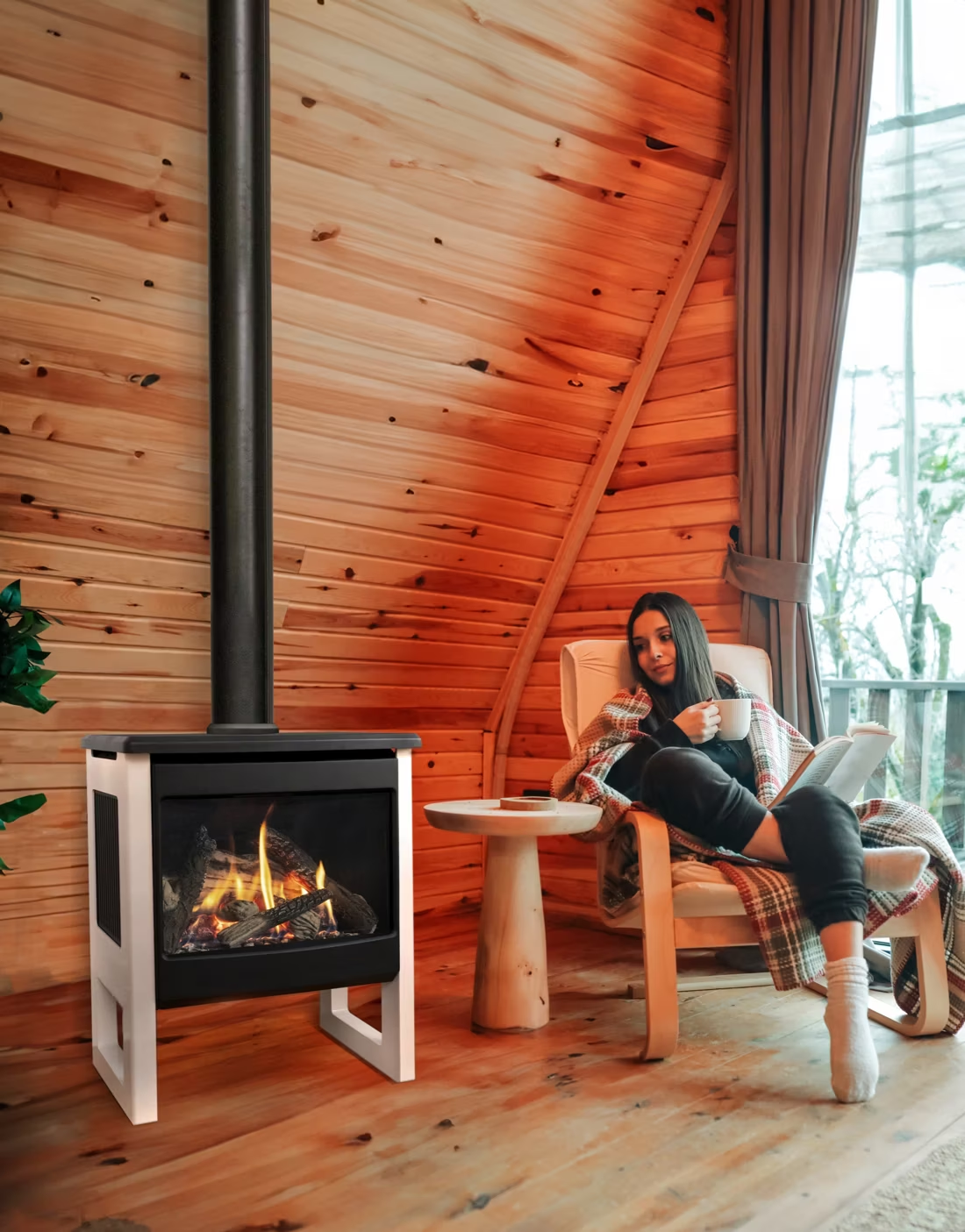
A gas fireplace is a fully framed, built-in unit—the right call for a home addition or a room without an existing hearth. A gas insert is sized to slide into an existing masonry fireplace opening, which describes most of the original wood-burning fireplaces in Twin Rivers townhomes. A gas stove is a freestanding cabinet unit that vents through a nearby wall, useful in a condo or unit without any existing fireplace opening at all. For the majority of homes in this community, an insert into the existing opening is the simplest and least invasive option.
Do I need a permit to install a gas fireplace in Twin Rivers?
Yes—East Windsor Township requires a construction permit for new gas fireplace installations under the New Jersey Uniform Construction Code, covering both the appliance installation and the gas line work, which must be performed by a licensed plumber or gas fitter. If your unit is part of an attached townhouse or condo association, check your HOA's exterior modification rules as well, since direct-vent terminations exit through the exterior wall and some associations require sign-off before work begins. Most established local dealers handle both the township permit and the paperwork for HOA review as part of the install.
Are vent-free gas fireplaces allowed in New Jersey?
They're restricted, not banned. New Jersey's Uniform Construction Code permits unvented gas fireplaces only as supplemental heat, not as a room's primary heat source, and they're prohibited in bedrooms and bathrooms. They also must include an oxygen depletion sensor and can't exceed certain BTU limits relative to room size. Given those restrictions and the tight square footage of many Twin Rivers units, direct-vent sealed units are by far the more common and more flexible choice—they don't carry the same room-size and placement limits and don't release combustion byproducts into the living space.
How often does a gas fireplace need servicing?
Plan on an annual inspection, ideally in early fall before the heating season starts. A technician checks the burner, pilot or ignition system, venting, and gas connections, and cleans the glass and interior—a much lighter job than a wood chimney sweep, but still important, since a cracked or misaligned burner can affect both safety and efficiency. Local gas appliance service providers in the Mercer County area typically charge $150 to $250 for this visit.
Is wood heat an option in Twin Rivers, or should I stick with gas?
Wood-burning appliances are uncommon in Twin Rivers today, and it's largely a function of how the community was built—shared walls, small lot setbacks, and HOA rules that generally don't accommodate exterior wood storage or new masonry chimneys. A handful of the original townhomes still have their factory wood-burning fireplaces, but most owners who upgrade convert them to gas rather than continue burning wood, since a direct-vent gas insert uses the same opening without the ash, smoke, or firewood logistics that don't fit this housing type well. If you specifically want a wood-burning experience, it's worth a conversation with a local installer about what your unit's chimney and HOA rules will actually allow before you commit.
Why is my open fireplace making my house colder?
Open fireplaces suck—literally. As the fire burns, it consumes air your furnace already paid to heat and pulls it out through the chimney, so the house is actually colder after the fire goes out than before you lit it. An insert fixes this: it seals the chimney, puts fixed glass across the front, and turns that hole in your house into a real heat source.
Is my gas fireplace wasting gas?
If it was installed more than 15 years ago, probably. Older gas fireplaces keep a standing pilot light burning all the time, and that little flame can cost a couple hundred dollars a year. Newer models use pilot-on-demand ignition—the pilot lights only when you use the fireplace and goes out when you turn it off.
Can a fireplace actually lower my heating bill?
Yes—by creating a comfort zone. A furnace heats every square foot of the house just to warm the one room you're in; a gas fireplace on low burns roughly a sixth of the gas a typical furnace does. Set the furnace around 55–60 degrees as a baseline, then heat the rooms your family actually uses. Families who heat this way commonly save $20–$60 a month.
Can I install a fireplace myself?
If you're putting a fire in your house on purpose, it's best to work with an expert. Unless you're genuinely experienced in framing, gas line, vent pipe, and the national code on clearances to combustibles, have a professional do it—and ideally the same company that sells you the fireplace, so warranty, service, and liability all live under one roof.
Nearby Dealers
Hearth shops serving Twin Rivers and the surrounding area. Every listing shows whether it is a WhyFire partner, a dealer we have verified as authorized for the brands we recommend, or a local business carrying hearth products. No manufacturer pays for placement. How we verify dealers →
Appliance Brokers, Ltd.
Island Renovations
Fireside Pros/Awning Design
Central Jersey Masonry & Chimney Sweep
Better Homes Hearth & Patio
E & E Stoves & Fireplaces
Builders Architectural Millwork
H2 LLC
Rattan Patio & Fireplace Shoppe
Alternate Energy Products
Flemington Supply Co. Inc
Find your gas fireplace in Twin Rivers.
Tell us about your home in Twin Rivers and we'll put together a free Project Guide & Parts List—the exact parts, including the vent kit, and a recommended local dealer who can install it right.
Find Your Fireplace →