
Gas Heat That Fits Ridgewood's Older Homes.
Clean, instant heat for Bergen County winters—whether you're converting a Tudor-era masonry fireplace or adding warmth to a finished basement. Find the right gas unit and connect with a trusted local dealer.
Every Project Starts From One of These Five Situations
The village's older homes are built for gas convenience.
Ridgewood sits at just 89 feet of elevation about 25 miles from Manhattan, but Bergen County winters still bring real cold—average lows around 22°F and a winter heating load comparable to Hartford, CT, putting the village solidly in climate zone 5A. Much of Ridgewood's housing stock dates to the early-to-mid 20th century: Tudors, Dutch Colonials, and center-hall Colonials with existing masonry fireplaces that were built for ambiance more than heat.
Public Service Electric & Gas (PSE&G) serves both the electric and natural gas needs of nearly every home in the village, which means most Ridgewood houses already have a gas line running to the furnace or water heater. That makes converting an existing wood-burning fireplace to gas straightforward, and it's why gas has become the default choice for family rooms, finished basements, and primary living spaces where instant, thermostat-controlled heat matters more than the ritual of tending a fire.
Three steps. No salesperson until you're ready.
Tell us about your project
Your zip code, your situation, and the fuel you're leaning toward—or let the answers point you to one.
See what's actually available
The brands dealers within 100 miles genuinely carry—real options, never a catalog mirage.
Get your dealer & Project Guide
A trusted local dealer, plus the free Project Guide & Parts List that names every component of the job.
Frequently Asked Questions
How much does a gas fireplace installation cost in Ridgewood?
A typical gas fireplace installation in Ridgewood runs between $4,500 and $10,000, depending on the unit and whether you're converting an existing masonry fireplace or building new venting from scratch. A direct-vent gas insert dropped into an existing chimney with a gas line already nearby sits toward the lower end. New construction in a finished basement or an addition—where a fresh gas line and venting path both need to be run—lands higher. The Village of Ridgewood Construction Department requires a permit for the work, and most local hearth dealers handle that filing as part of the install.
Can I convert my existing wood-burning fireplace to gas?
Yes—it's one of the most common projects in Ridgewood's older Tudor and Colonial homes, where the original masonry fireplace was rarely used for real heat to begin with. A gas insert typically slides into the existing firebox and vents through a stainless liner run up the existing chimney, which keeps the exterior look of the house untouched. Because PSE&G gas service already reaches nearly every home in the village, the main cost driver is usually how far the new gas line has to run from the meter to the fireplace, not whether gas is available at all.
Do I need natural gas, or can I use propane?
Almost every home in Ridgewood already has PSE&G natural gas service, so propane is rarely necessary for a primary living space fireplace. Propane does still show up for detached structures—pool houses, garages, or outbuildings—that sit too far from the gas meter to make a line extension practical. In those cases a small propane tank and a standard gas fireplace configured for propane works the same way as natural gas; your installer just swaps the orifice and regulator.
Will my gas fireplace work during a power outage?
Most modern gas fireplaces will, which matters in Ridgewood given how often Nor'easters and summer thunderstorms knock out PSE&G service for a day or more. Units with IPI (intermittent pilot ignition) run on a small battery backup that kicks in automatically when power drops, so the fireplace still lights on demand. Valor's gas fireplaces take a different approach—they generate their own electricity through the pilot's thermocouple and never need batteries at all. Either way, ask your local dealer about the ignition system before you buy if outage backup is a priority.
What's the difference between a gas fireplace, gas insert, and gas stove?
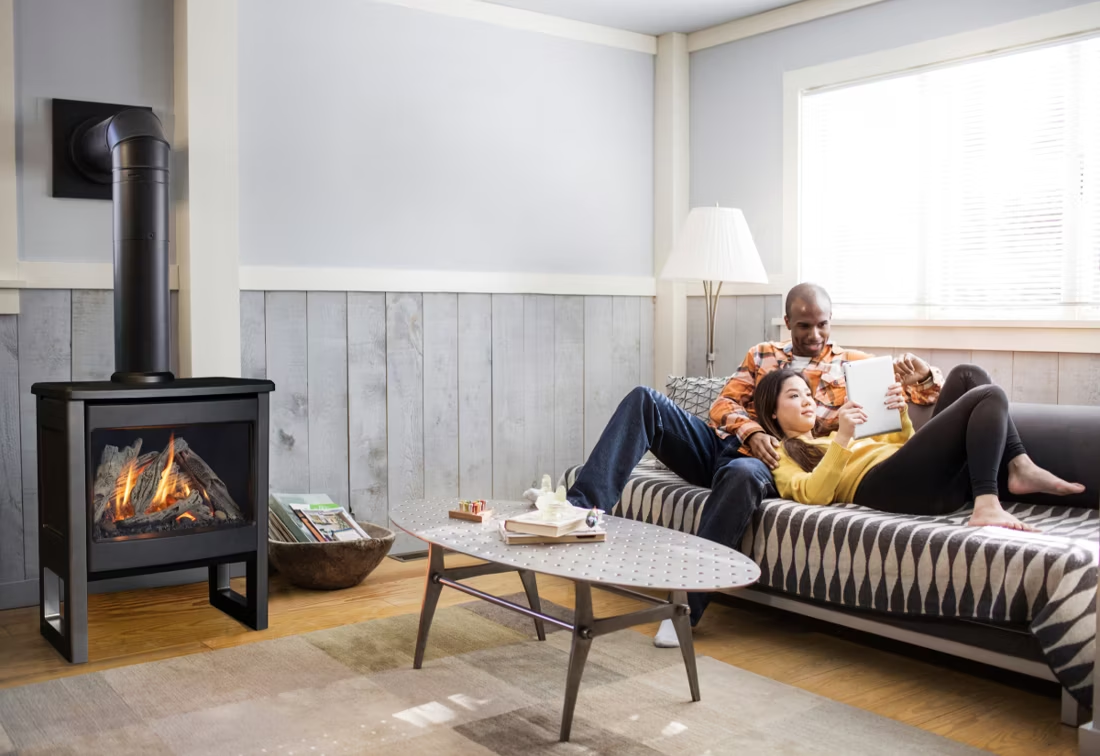
A gas fireplace is a fully built-in unit framed into a wall—the right call for a basement remodel or an addition without an existing chimney. A gas insert is sized to slide into an existing masonry firebox, which is the more common path in Ridgewood's older housing stock since it reuses the chimney that's already there. A gas stove is a freestanding cast-iron or steel unit that sits out in the room on its own hearth pad, useful when there's no fireplace opening to work with at all, such as a finished attic or converted garage space.
Do I need a permit to install a gas fireplace in Ridgewood?
Yes—the Village of Ridgewood Construction Department requires both a construction permit and sign-off on the gas line work for any new gas fireplace or insert installation, and Bergen County follows the New Jersey Uniform Construction Code for venting and clearance requirements. A licensed gas-fitter has to handle the line itself. Most established local hearth dealers coordinate the permit, the gas line, and the final inspection together, so you're not left juggling separate trades and separate appointments.
What's the difference between vented and vent-free gas fireplaces?
Vented (direct-vent) units draw combustion air from outside and exhaust the byproducts back outside through sealed venting—they're the standard, code-friendly choice everywhere. Vent-free units burn directly into the room without external venting, and New Jersey's Uniform Construction Code places real restrictions on where they can go, including minimum room size and combustion air requirements. In practice, the Village of Ridgewood Construction Department's permitting process steers most homeowners toward direct-vent installations, and that's what nearly every local dealer will recommend for a primary living space anyway.
How often should my gas fireplace be serviced?
Plan on an annual inspection, ideally in early fall before the heating season starts. A technician checks the burner, pilot assembly, venting, and gas connections, and cleans the glass and interior—a lighter job than wood-stove chimney sweeping but just as important for a home with an older gas line. Local service providers in Bergen County typically charge $150 to $250 for this visit, and it's worth doing even in mild winters since the unit still needs a functioning safety check.
Gas vs. wood vs. electric—which is right for my Ridgewood home?
Wood-burning stoves are genuinely uncommon in Ridgewood—local ordinances, tight suburban lot lines, and the ready availability of PSE&G gas service mean most homeowners who still have an open masonry fireplace burning oak or hickory use it occasionally for ambiance rather than as a heat source. Gas is the practical default here: instant on-off operation, no ash or creosote, and it uses the gas line most homes already have. Electric fireplaces, run through PSE&G at roughly 19.8 cents per kWh, are worth a look for condos, townhomes, or upper-floor rooms with no chimney access at all, since they need no venting whatsoever—just an outlet. For most single-family Ridgewood homes with an existing fireplace opening, though, gas delivers the best mix of real heat output and low-maintenance convenience.
What's the difference between an insert and a zero-clearance fireplace?
An insert is a fireplace that slides into a pre-existing wood-burning fireplace—if you don't have one, there's nothing to insert it into. A zero-clearance fireplace is built into a framed wall, which makes it the answer for remodels and new construction. Simple test: existing masonry fireplace means insert; blank or framed wall means zero-clearance.
Why is my open fireplace making my house colder?
Open fireplaces suck—literally. As the fire burns, it consumes air your furnace already paid to heat and pulls it out through the chimney, so the house is actually colder after the fire goes out than before you lit it. An insert fixes this: it seals the chimney, puts fixed glass across the front, and turns that hole in your house into a real heat source.
Does a fireplace add value to my home?
On average, a fireplace adds back to the home about the same amount you spent installing it. Add the monthly savings from heating the rooms you actually use instead of the whole house—often hundreds of dollars a year—and the value case is strong before you even count what a fire does for how your family uses the room.
Can I install a fireplace myself?
If you're putting a fire in your house on purpose, it's best to work with an expert. Unless you're genuinely experienced in framing, gas line, vent pipe, and the national code on clearances to combustibles, have a professional do it—and ideally the same company that sells you the fireplace, so warranty, service, and liability all live under one roof.
Nearby Dealers
Hearth shops serving Ridgewood and the surrounding area. Every listing shows whether it is a WhyFire partner, a dealer we have verified as authorized for the brands we recommend, or a local business carrying hearth products. No manufacturer pays for placement. How we verify dealers →
Kjb Fireplaces
Mcnamara Fireplace And Stove
Flue Tech
Light N Grid
County Woodstoves Inc
Fireplaces By Design
Westchester Fireplace
Chimney Sweep Energy Barn
Big Apple Fireplaces
Fire Design
Agi Supply Inc
N & N Services
Fireplace And Outdoor Living
Harris Hearth And Home
All Shore Appliance
Find your gas fireplace in Ridgewood.
Tell us about your home and your existing fireplace, and we'll match you with a trusted local dealer and send over a free Project Guide & Parts List—the exact parts, vent kit, and installer recommendation for your Ridgewood gas project.
Find Your Fireplace →