
Clean Gas Heat for Princeton's Historic Homes.
Instant, reliable warmth for Nassau Street colonials and newer builds alike—find the right gas fireplace or insert and connect with a trusted local dealer.
Every Project Starts From One of These Five Situations
Consistent heat without the woodpile or the chimney upkeep.
Princeton sits in central New Jersey at just 138 feet in elevation, a mild-by-comparison climate zone 5A with a solid but moderate winter heating need and average winter lows near 21°F—cold enough for months of heating season, but nowhere near the extremes of Duluth, MN or Burlington, VT. The town's housing stock skews old: colonial-era homes near Nassau Street, Victorian-era construction in the Western Section, and mid-century additions throughout Mercer County, many of which came with masonry fireplaces built for wood but rarely used that way today.
Wood heat never really took hold here—there's no national forest nearby for cutting permits, lot sizes are tight, and much of Princeton's historic district restricts the kind of exterior chimney or flue changes that heavy wood use requires. Gas filled that gap instead. Public Service Electric & Gas (PSE&G) serves natural gas throughout most of Princeton, and a direct-vent gas insert dropped into an existing masonry firebox is one of the most common upgrades local installers see—it keeps the original mantel and opening intact while replacing an open, drafty hearth with real, efficient heat.
Three steps. No salesperson until you're ready.
Tell us about your project
Your zip code, your situation, and the fuel you're leaning toward—or let the answers point you to one.
See what's actually available
The brands dealers within 100 miles genuinely carry—real options, never a catalog mirage.
Get your dealer & Project Guide
A trusted local dealer, plus the free Project Guide & Parts List that names every component of the job.
Frequently Asked Questions
How much does a gas fireplace installation cost in Princeton?
A gas fireplace installation in Princeton typically runs $5,000 to $12,000, depending on whether you're converting an existing masonry fireplace or starting from scratch. A direct-vent insert into an existing chimney with a gas line already nearby tends to land on the lower end. New construction, additions, or homes needing a gas line extended from the street—common in some of Princeton's older neighborhoods where service predates modern gas appliances—push toward the higher end. PSE&G gas availability makes hookups straightforward for most in-town addresses; homes on the edges of Mercer County sometimes rely on propane instead.
Can I convert my existing wood fireplace to gas?
Yes, and it's one of the most requested projects among Princeton homeowners with older masonry fireplaces. A gas insert typically installs into the existing firebox with a stainless liner run up the original chimney, so the exterior of a Nassau Street colonial or Western Section Victorian doesn't need to change. Costs generally run $5,000 to $9,500 depending on the insert and whether new gas piping is needed. If your home sits within Princeton's historic district, check with the Princeton Historic Preservation Commission before any exterior venting changes—interior insert conversions using the existing flue rarely require review, but it's worth confirming.
Do I need natural gas service, or is propane more common in Princeton?
Most of Princeton proper has natural gas service through PSE&G, so if your home already has a gas range, water heater, or furnace, adding a fireplace is usually a simple tie-in. Propane becomes more common toward the edges of Mercer County—parts of Hopewell Township and West Windsor where gas mains don't reach every street. Either fuel works in nearly every gas fireplace model on the market; your installer just configures the orifice and regulator for whichever you have.
Will my gas fireplace still work if the power goes out?
Most will, with the right ignition system. Units with intermittent pilot ignition (IPI) run on battery backup, so they'll still light and operate when PSE&G service drops during an ice storm or nor'easter—a real consideration in central New Jersey winters. Just remember to swap the batteries annually. Valor fireplaces skip batteries entirely, generating their own current off the pilot's thermocouple, so it's one less thing to check before a storm. Ask your local dealer which ignition system is on any model you're considering.
What's the difference between a gas fireplace, insert, and stove?
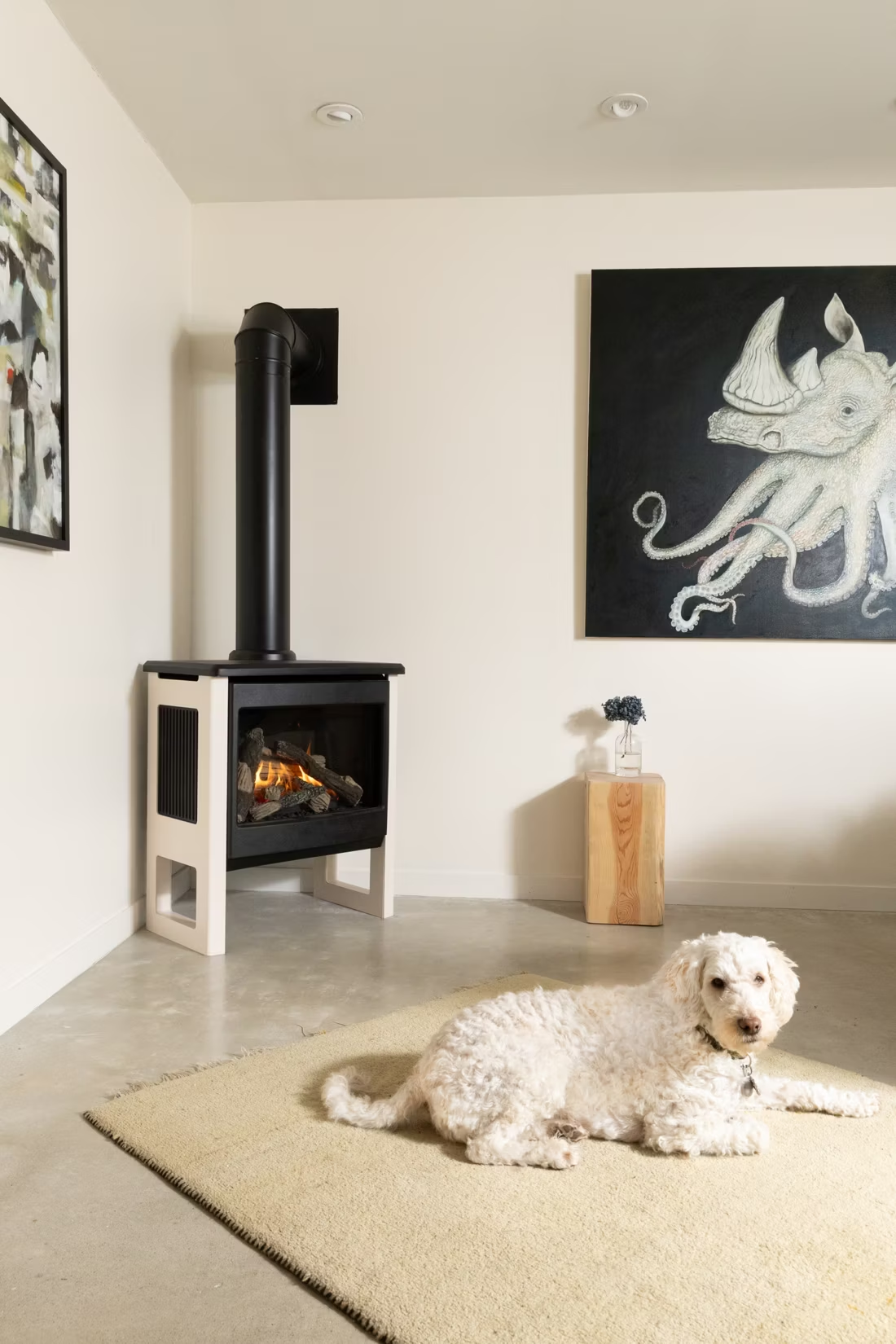
A gas fireplace is a fully built-in unit framed into a wall—the usual choice for additions or new construction. A gas insert drops into an existing masonry firebox, which describes the majority of older homes around Princeton's core neighborhoods and historic district. A gas stove is freestanding, sitting on the floor like a wood stove but running on gas—a good option for a room without any existing fireplace opening. For most Princeton homeowners working with a fireplace their house was built with, an insert is the straightforward answer.
Do I need a permit to install a gas fireplace in Princeton?
Yes. Princeton's Construction Office (the town merged its former borough and township permitting departments in 2013) requires both a construction permit and sign-off from a licensed gas fitter for new fireplace installs and conversions. If your property is in the historic district and the project touches anything visible from the street—a new vent termination on an exterior wall, for example—the Princeton Historic Preservation Commission may also weigh in. Most local hearth dealers coordinate all of this as part of the installation.
Should I get a vented or vent-free gas fireplace?
Vented (direct-vent) units draw combustion air from outside and exhaust it back outside through sealed venting—they're the standard, code-friendly choice and what most Princeton installers recommend by default. Vent-free units burn gas directly into the room and are legal in New Jersey under the Uniform Construction Code, but they come with strict room-sizing and ventilation rules, and they're a harder sell in older, tighter-sealed historic homes where indoor air quality is already a bigger concern. For Princeton's housing stock, direct-vent is the more common and generally more recommended path.
How often does a gas fireplace need to be serviced?
Plan on an annual inspection, ideally in early fall before the heating season starts. A technician checks the burner, pilot assembly, venting, and gas connections, and cleans the glass. It's a lighter lift than chimney sweeping for a wood-burning unit, but it matters just as much for safety and efficiency—most local service providers charge in the $150 to $250 range for a standard visit.
Why is gas so much more common than wood in Princeton?
Wood heat never established the foothold here that it has in more rural, forested parts of the Northeast—there's no national forest for cutting permits nearby, lot sizes in town are small, and Princeton's air quality has never been a driver toward wood as an emergency or supplemental fuel. A handful of homeowners on larger properties toward Hopewell or Cranbury still run a wood insert for ambiance or backup heat, but it's the exception. Gas, backed by widespread PSE&G service, is the default for nearly every fireplace project we see in town.
What's the difference between radiant and convective fireplace heat?
Most fireplaces are a thin metal box—they heat fine, but you rely on the fan to move the warmth into the room. Radiant models use a thick cast-ceramic firebox, about an inch and a quarter thick, that soaks up the fire's heat and radiates roughly 25–30% more warmth into the room with no fan running. If you watch TV in the same room or want heat in a power outage, radiant is worth asking about.
Can I put a TV above my fireplace?
Yes—with an asterisk. Fireplaces are hot and TVs don't like heat. Either put a mantel between them to deflect rising warmth, or choose a fireplace with heat-management technology that creates a cool zone on the wall above—the wall stays around 125 degrees, barely warm, while the room still gets full heat. If you like clean lines and don't want a mantel, heat management is the answer.
Can I install a fireplace myself?
If you're putting a fire in your house on purpose, it's best to work with an expert. Unless you're genuinely experienced in framing, gas line, vent pipe, and the national code on clearances to combustibles, have a professional do it—and ideally the same company that sells you the fireplace, so warranty, service, and liability all live under one roof.
How much should I budget for a fireplace?
For an average home—covering the fireplace, the vent pipe, and basic installation—a budget between $3,900 and $5,500 gives you a lot of options across wood, gas, and pellet. By the time you add finish work, gas line, and electrical, the average complete installation lands between $5,000 and $12,000 all-in. In a remodel or new build, a good rule is to put about 2.5% of the total project cost toward the fireplace.
Nearby Dealers
Hearth shops serving Princeton and the surrounding area. Every listing shows whether it is a WhyFire partner, a dealer we have verified as authorized for the brands we recommend, or a local business carrying hearth products. No manufacturer pays for placement. How we verify dealers →
Flemington Supply Co. Inc
My Deck, Llc
Better Homes Hearth & Patio
E & E Stoves & Fireplaces
Appliance Brokers, Ltd.
Tri County Hearth & Awning
Island Renovations
Hearth & Stove LLC
Estates Chimney & Fireplace
Fireside Pros/Awning Design
Plumbarama Co. Inc.
Rattan Patio & Fireplace Shoppe
Fireplaces R Us
Central Jersey Masonry & Chimney Sweep
Tor Chimney & Fireplace
Find your gas fireplace in Princeton.
Tell us about your home and we'll put together a free Project Guide & Parts List—the right gas fireplace or insert, the vent kit it needs, and a trusted local Princeton-area dealer to install it.
Find Your Fireplace →