
Keep Your Family Warm and Safe—No Matter What
On the small, tightly built lots of this Edison Township neighborhood, wood stoves are the rare project rather than the default. Here's an honest look at what fits—and how to get matched with a local dealer if you want one anyway.
Every Project Starts From One of These Five Situations
A dense Edison Township pocket, not wood-heat country.
Menlo Park Terrace is a small residential neighborhood within Edison Township, Middlesex County—named for the same Menlo Park a few miles away where Thomas Edison ran his invention lab. Homes here sit on the compact, close-set lots typical of central Jersey's mid-century suburban development, with Public Service Electric & Gas running natural gas service to nearly every block. With a solidly cold winter season and average winter lows around 24°F, the climate is moderately cold—colder than the Mid-Atlantic coast but nowhere near what you'd see in a place like Duluth, MN—and it doesn't push households toward wood as a primary heat source the way a harsher, more rural climate might.
There's also no meaningful public land nearby for cutting permits, and lot sizes leave little room for stacked cordwood or the clearances a masonry chimney project often needs. That's why wood fuel relevance for this area is effectively not-applicable in a practical sense: a handful of homeowners with an existing masonry fireplace may still want to keep it functional or add an insert, and delivered firewood—oak, hickory, and maple are the common regional species—is available from local suppliers. But for most Menlo Park Terrace households, natural gas is the realistic, code-friendly, and readily available heating fuel, with electric options filling in for ambiance or supplemental warmth.
Three steps. No salesperson until you're ready.
Tell us about your project
Your zip code, your situation, and the fuel you're leaning toward—or let the answers point you to one.
See what's actually available
The brands dealers within 100 miles genuinely carry—real options, never a catalog mirage.
Get your dealer & Project Guide
A trusted local dealer, plus the free Project Guide & Parts List that names every component of the job.
Frequently Asked Questions
Can I even install a wood stove in Menlo Park Terrace?
In most cases, yes, if your lot and structure meet clearance and venting requirements—but it's an uncommon enough request that you'll want to start with the Edison Township Construction Office rather than assume it's a routine permit like it would be in a rural county. Menlo Park Terrace's small, close-set lots often make it hard to meet the clearance-to-combustibles rules for a freestanding stove without significant hearth or wall modifications. A wood insert into an existing masonry fireplace is usually the more realistic path here than a new freestanding stove installation, since it reuses venting you already have.
Why don't more homes in Menlo Park Terrace have wood stoves?
It comes down to geography and density more than climate. There's no national forest or large public land tract nearby for cutting permits, lot sizes leave little room for wood storage or chimney clearances, and Public Service Electric & Gas has natural gas running through nearly the entire neighborhood already. When a fuel that requires zero infrastructure work is sitting at the curb, most homeowners here choose it over the logistics of firewood, storage, and chimney maintenance that wood heat requires.
What heating fuel do most Menlo Park Terrace homes use instead?
Natural gas is standard throughout the neighborhood, supplied by Public Service Electric & Gas, and it's the default choice for both furnaces and gas fireplaces or inserts. Electric heat is also common as a supplemental or ambiance option—PSE&G's residential rate runs about 19.8 cents per kWh, which is on the higher side nationally, so most homeowners treat electric fireplaces as a secondary or accent heat source rather than a whole-room primary.
I already have a wood-burning fireplace—should I keep it or convert it?
If your existing masonry fireplace is in good structural condition, you have two realistic options: keep it as-is for occasional wood fires, or convert it with a gas insert that uses the same chimney with a liner. Given how widely natural gas service reaches Menlo Park Terrace, a gas insert conversion is by far the more common project among homeowners who want convenient, on-demand heat without sourcing and storing firewood on a small lot.
Where would I get firewood in Menlo Park Terrace if I wanted a wood stove?
Since there's no nearby public forest land offering cutting permits, firewood here comes almost entirely from delivered cords through local tree services and firewood suppliers in Middlesex County. Oak, hickory, and maple are the common regional species and tend to season well over a summer if you have somewhere dry to stack them—which, on Menlo Park Terrace's smaller lots, is often the bigger constraint than sourcing the wood itself.
Are there air quality restrictions on wood burning in Menlo Park Terrace?
No—this area isn't a designated non-attainment zone and doesn't deal with the winter inversion issues you'd see in a basin or valley community. That said, given how close together homes sit here, an EPA-certified stove or insert is still worth insisting on if you do install one, simply out of consideration for neighbors and to keep smoke output low on days with limited air movement.
What does a wood stove installation cost if I still want one?
Because so few local dealers install wood stoves in this specific market, pricing tends to be quoted case-by-case rather than off a standard local rate sheet. Regionally in central New Jersey, a straightforward wood insert into an existing masonry fireplace typically runs in the $4,000–$7,000 range, while a new freestanding stove requiring fresh Class A chimney work can run higher once framing and roof penetration are factored in. Get a firm number from a local hearth dealer after an in-home look at your chimney and clearances.
Is gas or electric a better fit than wood for my Menlo Park Terrace home?
For most homes here, gas wins on practicality—Public Service Electric & Gas service already reaches the neighborhood, so a gas fireplace or insert installs quickly without the storage and clearance issues wood involves. Electric fireplaces are a reasonable choice for a bedroom, den, or a room where running a gas line isn't practical, though at PSE&G's residential rate of roughly $0.198/kWh, they're better suited to supplemental warmth and ambiance than as your main heat source.
Should I consider a pellet stove instead of wood?
Pellet stoves face the same lot-size and venting constraints as wood stoves in Menlo Park Terrace, so they're similarly uncommon here despite regional pellet brands like Energex, Hamer Pellet Fuel, and Greene Team Pellet Fuel being available in New Jersey. If you specifically want the lower-maintenance burn and thermostat control a pellet stove offers, it's a workable option—but you'll be sourcing bagged pellets rather than relying on any local infrastructure built around it, since this isn't pellet-stove country any more than it's wood-stove country.
Why won't my new wood stove get going like my old one?
New wood stoves are 70%+ efficient, so far less heat goes up the flue—which also means less draft to get a fire established. The rule: build a genuinely hot fire for about 45 minutes before you choke it down. Skip that and you get smoke in the room, creosote in the chimney, and a fire that never takes off. Most performance complaints trace straight back to this.
Why is a fireplace insert so efficient?
An insert does two things: it seals the chimney completely, so you stop losing air you already paid to heat, and it radiates warmth into the room through the firebox and glass. Most add a heat-exchange fan that pulls cool room air underneath, wraps it around the hot firebox, and pushes it back out warm. Your home is more efficient before you've even lit the first fire.
Can I install a fireplace myself?
If you're putting a fire in your house on purpose, it's best to work with an expert. Unless you're genuinely experienced in framing, gas line, vent pipe, and the national code on clearances to combustibles, have a professional do it—and ideally the same company that sells you the fireplace, so warranty, service, and liability all live under one roof.
What is an in-home preview and do I need one?
It's a visit where a hearth professional measures your space, confirms the model you picked actually works in your home, and walks the specs—framing, gas line, venting, finish work—before anything is ordered. Some details you just can't know until you see the house. Never make a down payment without one; it's the single most-skipped step that burns buyers.
Nearby Dealers
Hearth shops serving Menlo Park Terrace and the surrounding area. Every listing shows whether it is a WhyFire partner, a dealer we have verified as authorized for the brands we recommend, or a local business carrying hearth products. No manufacturer pays for placement. How we verify dealers →
Fireplaces R Us
Hot Concepts Fireplaces
Harris Hearth And Home
Costello's Hearth & Spa - Bernardsville
Appliance Brokers, Ltd.
Island Renovations
D & D Design Center
Builders Architectural Millwork
Fireside Pros/Awning Design
East Coast Energy Products Inc.
Central Jersey Masonry & Chimney Sweep
Fire Design
Get matched with a wood-heat specialist in Menlo Park Terrace.
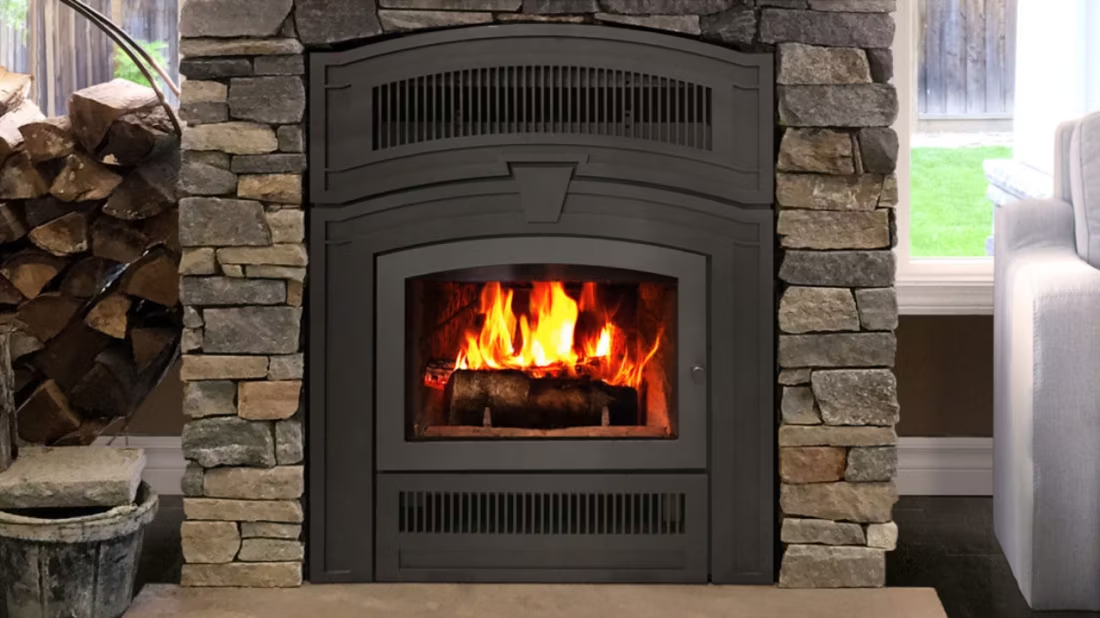
Wood heat is uncommon here, but if it's still the right project for your home, tell us a bit about it and we'll connect you with a trusted local dealer and a free Project Guide & Parts List—the exact parts, including the vent kit, for your specific chimney and clearances.
Find Your Fireplace →