
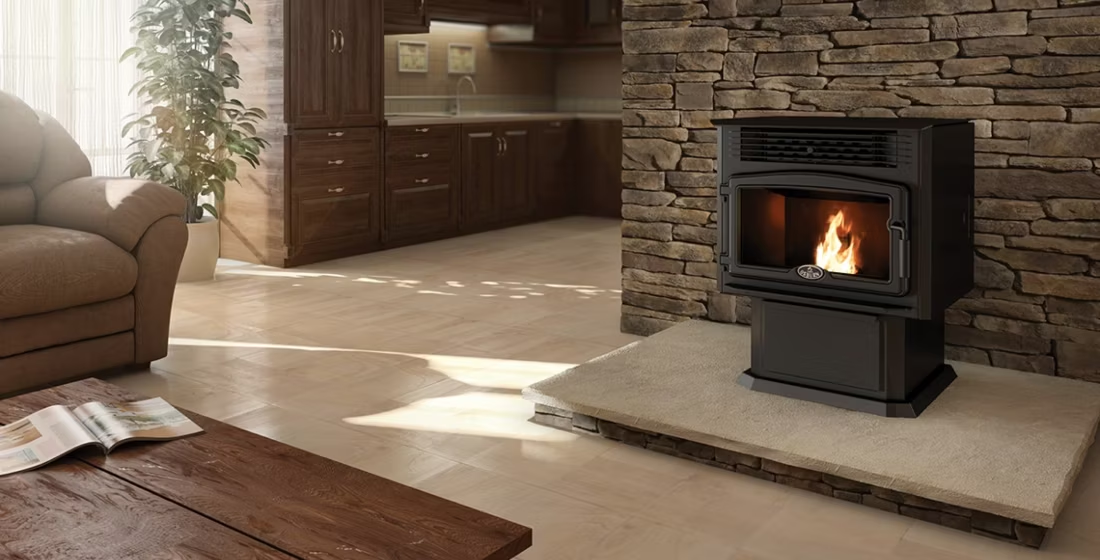
Pellet stoves are uncommon here—but not out of place.
Most homes in Menlo Park Terrace run on piped natural gas, so a pellet stove is a specialty choice—usually picked for a finished basement, a backup heat source, or a wood-look fire without chimney upkeep. We'll match you with a dealer who actually stocks and installs pellet equipment near Edison Township.
Every Project Starts From One of These Five Situations
Gas already runs most of this town. Pellet fills a smaller niche.
Menlo Park Terrace is a small, tightly built residential section of Edison Township in Middlesex County—about 3,100 people on a single zip code, 08840, a few miles from the site of Thomas Edison's original Menlo Park laboratory. At 118 feet elevation with a climate zone of 4A and a moderate winter heating load, winters here are moderate by Northeast standards: average lows around 24°F, nothing close to the sustained sub-zero stretches you'd see in Burlington, Vermont or Duluth, Minnesota. Most houses were built with (or later converted to) natural gas heat, which is why gas is the standard fuel choice locally and pellet appliances see far less demand.
That doesn't mean pellet heat has no place here. A handful of homeowners install a freestanding pellet stove or insert for supplemental zone heat in a finished basement or family room, for the ambiance of a real flame without a wood-handling routine, or as backup heat that doesn't depend on a gas line. Regional pellet brands like Energex, Hamer Pellet Fuel, and Greene Team Pellet Fuel are trucked in from mills in New York and Pennsylvania rather than sold at a dedicated local hearth shop, so sourcing fuel takes a little more planning than it would in a town where pellet heat is the norm. Given local hardwoods like oak, hickory, and maple are common in the area, some homeowners are surprised pellet fuel isn't milled closer—but availability through regional distributors is still reliable if you order ahead of the season.
Three steps. No salesperson until you're ready.
Tell us about your project
Your zip code, your situation, and the fuel you're leaning toward—or let the answers point you to one.
See what's actually available
The brands dealers within 100 miles genuinely carry—real options, never a catalog mirage.
Get your dealer & Project Guide
A trusted local dealer, plus the free Project Guide & Parts List that names every component of the job.
Frequently Asked Questions
Are pellet stoves actually common in Menlo Park Terrace?
Not especially. Menlo Park Terrace sits in a part of Middlesex County where natural gas is the default heating fuel, and most homes are already piped for it. Pellet stoves show up here as a secondary or supplemental choice—a basement zone heater, a backup for power-outage-prone winters, or a fireplace upgrade in a home without an existing chimney. If you're considering one, you're not chasing a local trend so much as solving a specific problem: extra heat, backup capability, or a certain look. A local dealer who actually installs pellet equipment in the area (rather than just selling gas inserts) will be able to tell you honestly whether it fits your situation.
How much does a pellet stove installation cost?
Installed pellet stoves in this part of New Jersey typically run in the $3,000 to $6,500 range, depending on the unit, whether it vents through an existing chimney or needs a new through-wall vent kit, and whether a hearth pad or floor protection is required for clearance. Because pellet appliances are less common here than gas units, fewer local dealers stock them, which can mean a slightly longer lead time on parts—worth factoring into your timeline if you're hoping to have it running before the coldest stretch of winter.
Where can I buy pellet fuel near Menlo Park Terrace?
Since pellet stoves aren't the dominant heating appliance locally, you won't find a dedicated pellet retailer on every corner. Regional brands like Energex, Hamer Pellet Fuel, and Greene Team Pellet Fuel are distributed through hardware stores, farm supply retailers, and home centers across the greater Middlesex County area, generally in the $250 to $320 per ton range. Because supply isn't as concentrated here as it is in more pellet-heavy parts of the Northeast, it's worth buying your season's supply—usually 2 to 4 tons for a supplemental-heat setup—early in fall rather than waiting for a cold snap to send everyone shopping at once.
Do I need a permit to install a pellet stove in Menlo Park Terrace?
Yes—as an unincorporated section of Edison Township, a new pellet stove or insert installation here requires a building permit through the Edison Township Construction Code Office, covering the appliance clearance, hearth protection, and venting termination. Most local hearth installers include the permit application as part of the install price. Because pellet installs are less frequent here than gas conversions, it's worth confirming your installer has actually pulled a pellet-specific permit before, since the venting requirements differ from a standard gas direct-vent unit.
Will my pellet stove keep working during a power outage?
No, not without a backup power source—and this matters more in this part of New Jersey than in some other regions given how often PSE&G's grid has taken multi-day hits during major Nor'easters and remnants of tropical storms. A pellet stove's auger, igniter, and combustion blower all run on electricity, typically drawing somewhere between 100 and 400 watts. Without power, the stove simply stops feeding pellets. If backup heat during outages is your main goal, either plan on a small generator or battery backup sized for the stove's draw, or consider that a wood-burning appliance (less common here, but still installable) doesn't have that dependency at all.
What's the difference between a pellet stove and a pellet insert?
A pellet stove is a freestanding appliance that sits on a hearth pad and vents through a wall or existing chimney—it can go almost anywhere in a room with the right clearances, which makes it a common choice for a basement or family room in homes like the ones in Menlo Park Terrace that don't have a masonry fireplace to begin with. A pellet insert is built to slide into an existing fireplace opening, which is more relevant for the town's older homes with a working masonry hearth. Since pellet is a niche fuel here, a local dealer will usually walk both options with you based on what you're actually working with rather than defaulting to one.
Does a pellet stove make sense if I already have gas heat?
It can, for specific reasons rather than as a wholesale replacement. Homeowners in Menlo Park Terrace who add a pellet stove alongside existing gas heat are usually after one of three things: heating a finished basement that the central system doesn't reach well, a backup heat plan that isn't tied to the same gas line as the furnace, or the appearance and ambiance of a real flame in a room that doesn't currently have a fireplace. If your goal is simply lower heating bills on your main living space, gas is already doing that job efficiently here—pellet is more of a targeted addition than a fuel switch.
How often does a pellet stove need to be cleaned and serviced?
Plan on emptying the ash pan every few days to weekly depending on use, a deeper cleaning of the burn pot and glass every few weeks during the heating season, and a full professional service and venting inspection once a year, ideally before the season starts. Because pellet appliances are less common in this area than gas units, it can take a little more searching to find a technician who services them regularly—ask your installing dealer whether they offer an annual service plan, since that's often the simplest way to make sure it gets done on schedule.
Pellet vs. electric—which makes more sense for my Menlo Park Terrace home?
Electric fireplaces and inserts are simpler to install (often just a standard outlet, no venting) and cost less upfront, which is part of why electric is a standard, widely used option here. But running costs matter: PSE&G's residential rate runs close to 20 cents per kWh, which is on the higher side nationally, so an electric heater used as a real secondary heat source can get expensive to run daily. Pellet fuel, even with fluctuating regional pricing, generally delivers more heat per dollar over a full winter if you're using the appliance for real supplemental warmth rather than just ambiance. If you mainly want a flame effect with occasional light heat, electric is the easier path. If you want a genuine secondary heat source for a basement or family room, pellet usually wins on operating cost.
What's the difference between an insert and a zero-clearance fireplace?
An insert is a fireplace that slides into a pre-existing wood-burning fireplace—if you don't have one, there's nothing to insert it into. A zero-clearance fireplace is built into a framed wall, which makes it the answer for remodels and new construction. Simple test: existing masonry fireplace means insert; blank or framed wall means zero-clearance.
How often does a pellet stove need cleaning?
A clean pellet stove is a happy pellet stove. Plan on cleaning the burn pot about once a week when you're burning regularly—ash and clinkers gum up the air holes just like a pellet barbecue. Most pellet stove problems trace back to skipped cleaning that nobody explained up front. Some designs make it easy with a trapdoor burn pot: pull a lever and the gunk drops into the ash pan.
Should the dealer who sells my fireplace also install it?
Ideally, yes. A fireplace project involves vent pipe, gas line, electrical, and often tile or stone. Hire three or four separate trades and you own the liability and the game of telephone between them. One company selling and installing means one accountable party, start to finish—ask about factory training, on-time completion records, and what happens if an inspection fails.
Can I install a fireplace myself?
If you're putting a fire in your house on purpose, it's best to work with an expert. Unless you're genuinely experienced in framing, gas line, vent pipe, and the national code on clearances to combustibles, have a professional do it—and ideally the same company that sells you the fireplace, so warranty, service, and liability all live under one roof.
Nearby Dealers
Hearth shops serving Menlo Park Terrace and the surrounding area. Every listing shows whether it is a WhyFire partner, a dealer we have verified as authorized for the brands we recommend, or a local business carrying hearth products. No manufacturer pays for placement. How we verify dealers →
Fireplaces R Us
Hot Concepts Fireplaces
Harris Hearth And Home
Costello's Hearth & Spa - Bernardsville
Appliance Brokers, Ltd.
Island Renovations
D & D Design Center
Builders Architectural Millwork
Fireside Pros/Awning Design
East Coast Energy Products Inc.
Central Jersey Masonry & Chimney Sweep
Fire Design
Pellet Brands Stocked Around Menlo Park Terrace
Manufacturers will point you to the nearest stocking dealer.
Find your pellet stove option in Menlo Park Terrace.
Tell us about your home and how you'd use it, and we'll put together a free Project Guide & Parts List—the exact parts, including the vent kit, and a trusted local dealer who actually installs pellet equipment near Edison Township.
Find Your Fireplace →