
Gas warmth built for Hudson County's rowhomes and high-rises.
From Jersey City brownstones to Hoboken waterfront condos, natural gas from PSE&G makes instant, vent-friendly heat the practical choice across Hudson County. Find the right unit and connect with a trusted local dealer.
Every Project Starts From One of These Five Situations
The fuel that fits a county with no yards, no chimneys, and 634,000 neighbors.
Hudson County is the most densely populated county in New Jersey—a string of tightly packed cities and towns (Jersey City, Hoboken, Union City, Bayonne, West New York, North Bergen, Weehawken, Secaucus, Kearny, Harrison) built on brownstones, brick rowhouses, and, increasingly, waterfront high-rises. Winters here are moderate by national standards—climate zone 4A, with a heating season comparable to places like Philadelphia or Baltimore, average lows near 25°F—but the housing stock itself is what shapes heating choices more than the weather does. Most condo associations and co-op boards prohibit solid-fuel appliances outright, and a large share of the county's newer construction has no chimney at all.
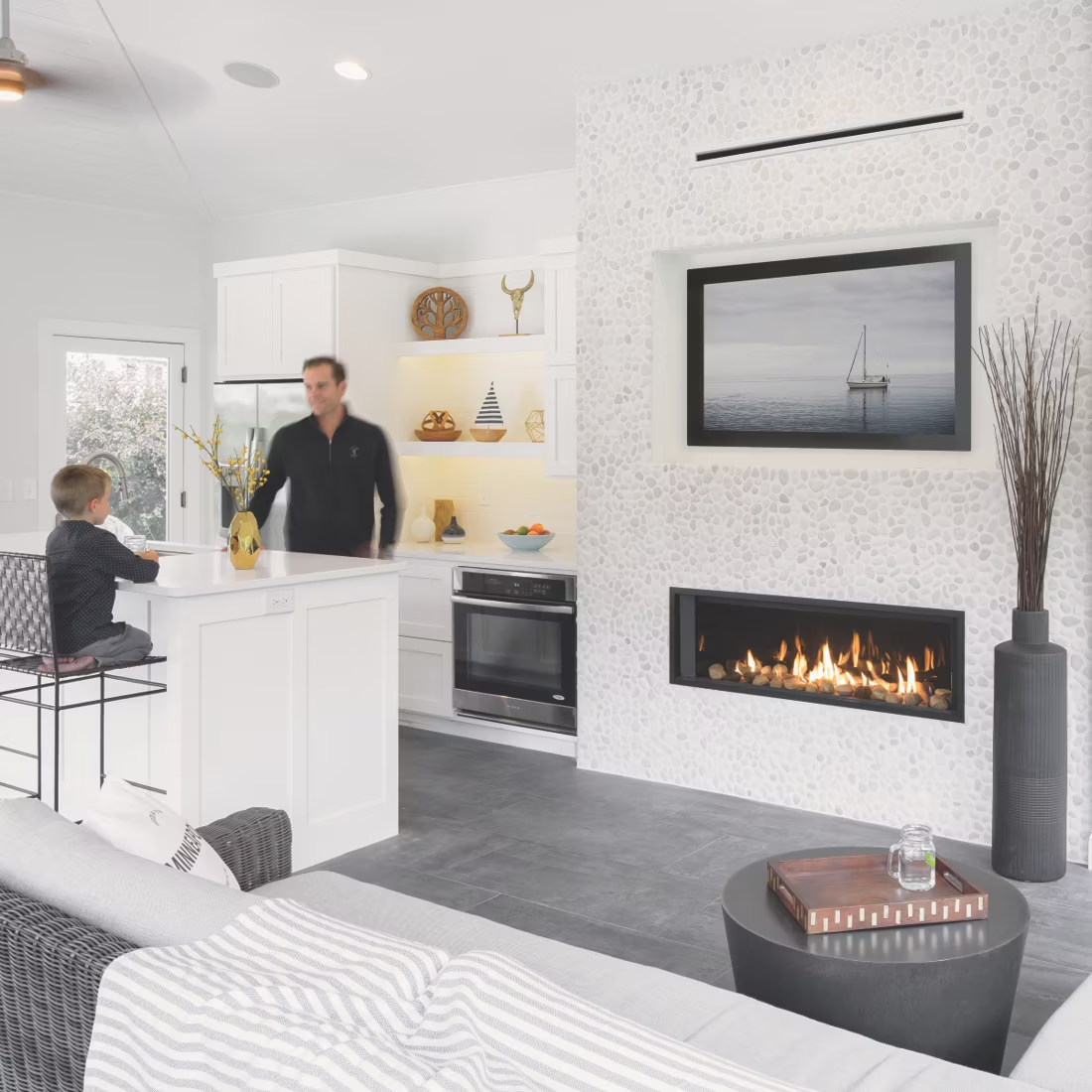
That's why gas is the standard hearth fuel here. PSE&G's natural gas network reaches deep into nearly every municipality in the county, and a direct-vent gas insert or fireplace can be run through an exterior wall in a rowhouse or condo without any masonry chimney required. For homeowners in a 19th-century Jersey City Heights brownstone with an existing but unused fireplace, a gas insert converts that opening into real, on-demand heat. For a Hoboken high-rise unit with no fireplace at all, a direct-vent gas fireplace built into a wall gives you flame and warmth without touching the building's structure. Wood and pellet stoves, by contrast, are essentially off the table here—not because of air quality restrictions (Hudson County has none of note), but because there's rarely a chimney, a place to store fuel, or a building policy that allows it.
Three steps. No salesperson until you're ready.
Tell us about your project
Your zip code, your situation, and the fuel you're leaning toward—or let the answers point you to one.
See what's actually available
The brands dealers within 100 miles genuinely carry—real options, never a catalog mirage.
Get your dealer & Project Guide
A trusted local dealer, plus the free Project Guide & Parts List that names every component of the job.
Frequently Asked Questions
How much does a gas fireplace installation cost in Hudson County?
Costs in Hudson County vary more by building type than by unit price. A direct-vent gas insert into an existing brownstone fireplace with a gas line already run to that wall is usually the most affordable path. A new direct-vent fireplace in a condo or rowhouse renovation—with wall coring, venting, and a fresh gas line—costs more, and high-rise installations sometimes require coordination with building management or an engineer sign-off for venting through an exterior wall. Get a firm number from a local installer after they've seen your specific unit or building, since Hudson County's older housing stock (especially pre-war brownstones) often has quirks that affect labor.
Can I convert my brownstone's existing fireplace to gas?
Yes—it's one of the most common projects for Jersey City, Hoboken, and Union City hearth retailers. Many Hudson County brownstones and rowhouses have decorative or bricked-up fireboxes that haven't burned wood in decades. A gas insert or gas log set can be fitted into that existing opening, often using the original chimney as a vent path with a liner, or converted to direct-vent depending on the flue's condition. The result keeps the historic mantel and surround intact while turning a non-functional fireplace into a real heat source—a popular upgrade during brownstone renovations across the county.
Is natural gas available everywhere in Hudson County, or do I need propane?
Natural gas service through PSE&G covers the overwhelming majority of Hudson County—Jersey City, Hoboken, Union City, Bayonne, West New York, North Bergen, Weehawken, Secaucus, Kearny, and Harrison are all well within the service area. Given the county's density, propane installations are rare and mostly limited to edge cases like older buildings without a gas meter or units where running a new gas line isn't feasible. If your building already has gas appliances—a stove, a water heater, a boiler—adding a gas fireplace is typically straightforward.
Will my gas fireplace still work if the power goes out?
Most modern gas fireplaces will, which matters in a county where older electrical infrastructure in some buildings can mean occasional outages during storms. Units with intermittent pilot ignition (IPI) run on a battery backup that kicks in automatically when power drops, so the fireplace lights on demand just like normal. Valor fireplaces take a different approach—their pilot assembly generates its own electricity through the thermocouple, so there are no batteries to remember at all. Ask your local dealer about the ignition system on any unit you're considering, especially if you're in an older Jersey City or Bayonne building with less reliable wiring.
What's the difference between a gas fireplace, gas insert, and gas stove for a Hudson County home?
A gas fireplace is a fully built-in unit framed into a wall—the common choice for high-rise condos and new construction across the Jersey City and Hoboken waterfront, since it doesn't require an existing masonry opening. A gas insert is sized to slide into an existing fireplace, which fits the brownstones and older rowhouses that make up much of the rest of the county. A gas stove is a freestanding unit on its own hearth pad, less common here given how tight floor plans tend to be, but occasionally used in ground-floor units with a bit more room. Most Hudson County homeowners with an existing fireplace opening go with an insert; those without one go built-in.
Do I need a permit to install a gas fireplace in Hudson County?
Yes, and because Hudson County is made up of a dozen individual municipalities, the permit is pulled through your specific town's construction code office—Jersey City, Hoboken, Union City, Bayonne, and the rest each run their own building department rather than a single county office. A gas fireplace install typically needs both a building permit and a gas line permit, and condo or co-op buildings often require an additional sign-off from the board or management before work starts. A local installer who's worked in your building type before can navigate both the municipal permit and any building-specific approval process.
What's the difference between vented and vent-free gas fireplaces, and which is allowed in Hudson County?
Vented gas fireplaces (direct-vent or B-vent) pull combustion air from outside and exhaust the byproducts back outside through a sealed pipe—this is the standard, code-compliant approach in every New Jersey municipality. Vent-free (ventless) units burn fuel directly into the room without exterior venting; they're legal in New Jersey under strict room-sizing and ventilation rules, but they're a harder sell in Hudson County's smaller, often tightly sealed rowhouse and condo units, where indoor air quality margins are already thin. Direct-vent units are by far the more common and more widely recommended choice here, and they're the easier install for a wall unit with no existing chimney.
How often should my gas fireplace be serviced?
An annual inspection is recommended for any gas fireplace or insert, even a lightly used one. A technician checks the burner, pilot assembly, venting termination, and gas connections, and cleans the glass and interior. This matters even more in Hudson County's rowhouse and brownstone stock, where older gas lines and shared walls make it worth confirming everything is sealed and venting properly each year. Local gas appliance service providers typically handle this as a routine appointment.
Gas vs. electric fireplace—which is right for my Hudson County condo or brownstone?
For a unit where you already have or can access natural gas, a direct-vent gas fireplace gives you real heat output and a genuine flame—a meaningful upgrade for a brownstone or rowhouse with drafty original windows. For a high-rise condo where the building prohibits any venting through the facade, or where running a gas line simply isn't practical, an electric fireplace is the fallback: no venting required, straightforward standard-outlet installation, and increasingly realistic flame effects from brands sold through local dealers. Electric units produce less usable heat than gas, so they work best as supplemental or ambiance-focused installs rather than a primary heat source. Wood and pellet stoves aren't realistic options for either building type in this county—there's rarely a chimney, and most condo and co-op boards prohibit solid fuel outright.
Why is my open fireplace making my house colder?
Open fireplaces suck—literally. As the fire burns, it consumes air your furnace already paid to heat and pulls it out through the chimney, so the house is actually colder after the fire goes out than before you lit it. An insert fixes this: it seals the chimney, puts fixed glass across the front, and turns that hole in your house into a real heat source.
What's the difference between an insert and a zero-clearance fireplace?
An insert is a fireplace that slides into a pre-existing wood-burning fireplace—if you don't have one, there's nothing to insert it into. A zero-clearance fireplace is built into a framed wall, which makes it the answer for remodels and new construction. Simple test: existing masonry fireplace means insert; blank or framed wall means zero-clearance.
Can a fireplace actually lower my heating bill?
Yes—by creating a comfort zone. A furnace heats every square foot of the house just to warm the one room you're in; a gas fireplace on low burns roughly a sixth of the gas a typical furnace does. Set the furnace around 55–60 degrees as a baseline, then heat the rooms your family actually uses. Families who heat this way commonly save $20–$60 a month.
Can I install a fireplace myself?
If you're putting a fire in your house on purpose, it's best to work with an expert. Unless you're genuinely experienced in framing, gas line, vent pipe, and the national code on clearances to combustibles, have a professional do it—and ideally the same company that sells you the fireplace, so warranty, service, and liability all live under one roof.
Stove and Fireplace Dealers in Hudson County
Listings include WhyFire partner dealers, dealers we have verified as authorized for the brands we recommend, and established local businesses that carry hearth products. Every listing shows which one it is. The ones marked Preferred run on WhyFire's software, so they can show you real pricing and book your appointment right here. No manufacturer pays for placement. How we verify dealers →
Harris Hearth And Home
Big Apple Fireplaces
Hot Concepts Fireplaces
D & D Design Center
Flue Tech
Fireplaces R Us
County Woodstoves Inc
All Shore Appliance
Costello's Hearth & Spa - Garden City Park
Kjb Fireplaces
Mcnamara Fireplace And Stove
Fire Design
L&R Fireplace & Barbecue
Find your gas fireplace in Hudson County.
Tell us about your home—brownstone, high-rise, or rowhouse—and we'll match you with the right gas fireplace or insert, plus a free Project Guide & Parts List with the exact vent kit and parts, and a trusted local dealer to install it.
Find Your Fireplace →