
Real Heat for Hoboken's Brownstones and High-Rises.
No chimney access, no yard for firewood, no problem. Find the direct-vent gas unit that fits your rowhouse or condo, and connect with a trusted local installer.
Every Project Starts From One of These Five Situations
Built for a one-square-mile, mostly vertical city.
Hoboken sits at 24 feet above sea level along the Hudson, with a climate that's genuinely mild compared to inland winter towns like Burlington, VT—winter lows average around 28°F and the city logs a winter heating load in the same range as places like Baltimore or Philadelphia. That's cold enough to want real supplemental heat in a pre-war brownstone with drafty single-pane windows, but nowhere near the deep-freeze territory that drives whole-home wood-heating culture farther north.
What actually shapes fireplace choice here is density, not how harsh the winters run. Most housing stock is brownstone rowhouses, walk-ups, and high-rise condos with no cutting access, no chimney chase in newer construction, and HOA or co-op boards that have opinions about anything involving open flame or exterior venting. Gas fits this housing stock: PSE&G already runs gas service to most Hoboken buildings for cooking and heat, and a direct-vent gas fireplace or insert can be sized and vented through a wall or existing flue without the wood storage, ash, or chimney maintenance that a brownstone simply has no room for.
Three steps. No salesperson until you're ready.
Tell us about your project
Your zip code, your situation, and the fuel you're leaning toward—or let the answers point you to one.
See what's actually available
The brands dealers within 100 miles genuinely carry—real options, never a catalog mirage.
Get your dealer & Project Guide
A trusted local dealer, plus the free Project Guide & Parts List that names every component of the job.
Frequently Asked Questions
How much does a gas fireplace installation cost in Hoboken?
In a typical Hoboken brownstone or condo, a direct-vent gas fireplace or insert installation runs roughly $4,500 to $10,000, with the spread driven mostly by venting complexity rather than the unit itself. Converting a decorative fireplace with an existing flue into a gas insert is usually on the lower end. Installing a new built-in unit in a high-rise unit—where the vent run has to be engineered through an exterior wall and coordinated with building management—sits at the higher end. Get a firm number from a local installer after they've seen your building's layout, because HOA and co-op sign-off requirements can add time and sometimes cost to the job.
Can I convert my old brownstone fireplace to gas?
Yes, and it's one of the most common jobs in Hoboken's older housing stock. Many pre-war brownstones have a decorative or non-functional masonry fireplace that was capped or bricked years ago. A local installer can typically run a liner through the existing chase and install a gas insert, restoring real heat output without opening up walls. If the original flue is unusable or was removed entirely, a direct-vent unit that exhausts through the exterior wall is the fallback—common in Hoboken rowhouses where the chimney was never rebuilt after a renovation.
Is natural gas available throughout Hoboken, or do I need propane?
Natural gas service is close to universal in Hoboken—PSE&G, the same utility that provides electric service to the city, runs gas lines throughout the housing stock for cooking, water heating, and central heat. If your building already has a gas meter, adding a fireplace is usually a matter of tapping an existing line rather than running new service. Propane is rarely used in Hoboken proper; it shows up mostly in a handful of freestanding units without gas hookups, and even then most owners opt to extend the existing natural gas line instead.
Will my gas fireplace still work if the power goes out?
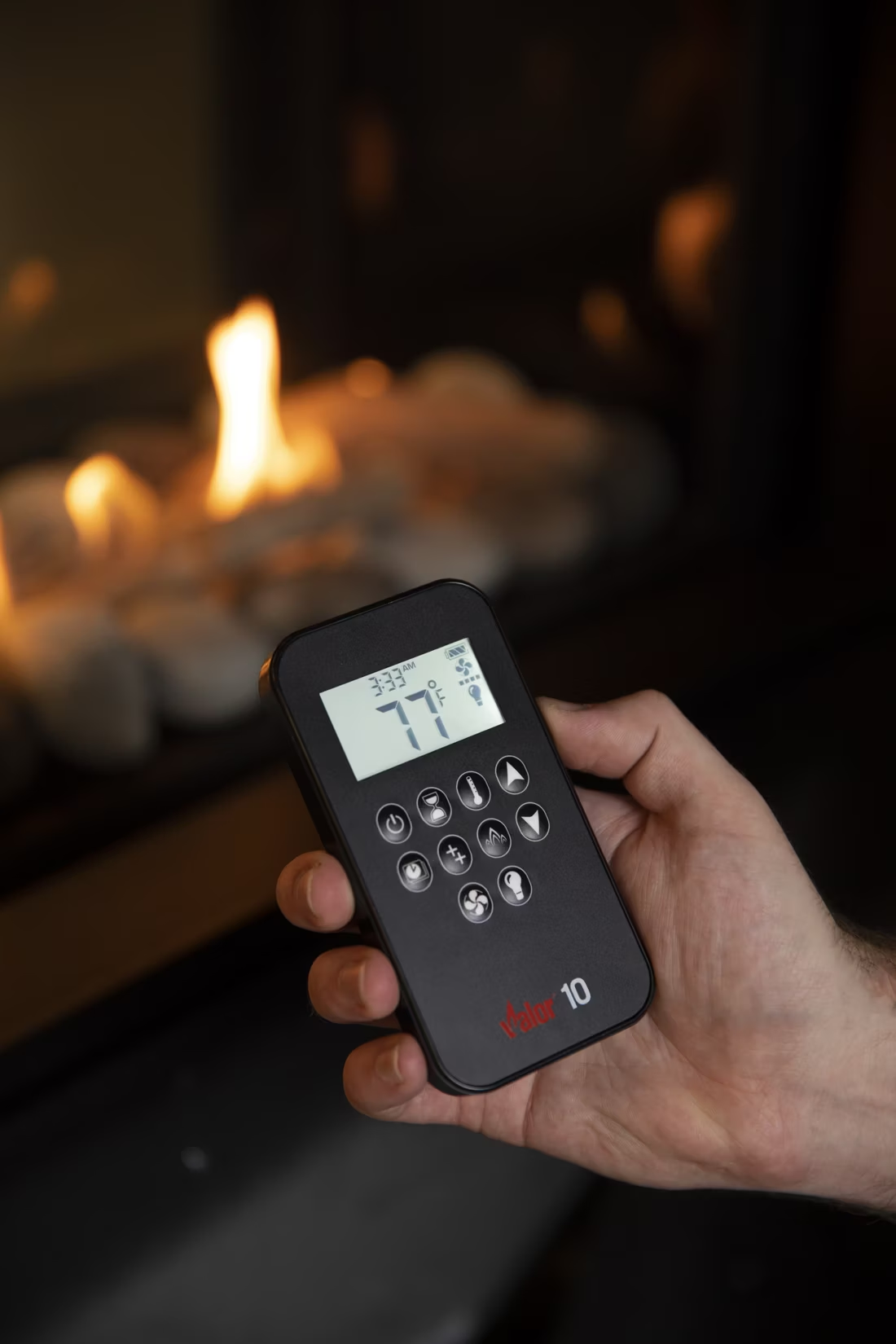
Most direct-vent gas fireplaces with intermittent pilot ignition (IPI) run on battery backup, so they'll still light and heat during a power outage—worth knowing in a coastal city where nor'easters and summer storms have knocked out PSE&G service for days at a time in past years. Just keep fresh batteries in the unit. Valor's gas fireplaces skip batteries entirely, generating their own current from the pilot's thermocouple, which is one less thing to maintain if backup heat during an outage matters to you. Ask your installer which ignition system a given model uses before you buy.
Fireplace, insert, or stove—which makes sense for a Hoboken apartment?
Space usually decides this in Hoboken. If you already have a masonry fireplace opening, a gas insert is the straightforward upgrade—it slides into the existing opening and uses the current chimney or a liner run through it. If you're in a unit with no fireplace at all, a compact direct-vent gas fireplace built into a wall cavity is the more common route in new-construction condos along the waterfront. Freestanding gas stoves are less common here simply because floor space in a typical Hoboken one-bedroom is tight, but they do show up in ground-floor units with room to spare.
Do I need a permit to install a gas fireplace in Hoboken?
Yes—any new gas fireplace or gas line work requires a permit through Hoboken's Construction Code office under New Jersey's Uniform Construction Code, and the gas connection itself has to be done by a licensed plumber or gas fitter. On top of the city permit, if you live in a condo or co-op, your building's board almost certainly has its own approval process for anything involving venting through a shared wall or roof penetration—that step trips up more Hoboken homeowners than the municipal permit does. A local installer experienced in Hudson County multi-unit buildings will typically walk both processes with you.
Can I install a vent-free gas fireplace in my Hoboken condo?
Vent-free (unvented) gas fireplaces are legal in New Jersey but come with strict room-size and ventilation requirements, and in practice they're a hard sell in Hoboken's smaller apartments and tightly sealed newer buildings, where indoor air quality and odor complaints are a real concern for co-op and condo boards. Many buildings restrict or prohibit them outright in their house rules. Direct-vent units, which draw outside air and exhaust combustion byproducts through a sealed pipe, are the standard choice locally and the one most installers will steer you toward regardless of building type.
How often does a gas fireplace need to be serviced?
Plan on an annual inspection, ideally before the first cold snap in November. A technician checks the burner, pilot assembly, venting, and gas connections, and cleans the glass—this matters even more in a sealed, energy-efficient apartment where combustion appliances need to be venting correctly. Local gas appliance service providers typically charge $150 to $250 for a standard annual visit, and most can coordinate the visit with building management if your unit's vent terminates on a shared exterior wall or roof.
Should I even consider wood heat instead of gas in Hoboken?
For nearly all Hoboken housing, no—wood-burning fireplaces and stoves are impractical here. There's no realistic firewood storage in a rowhouse or high-rise unit, no cutting access anywhere near the city, and most condo and co-op associations prohibit solid-fuel appliances outright due to shared-wall fire risk and smoke concerns in dense buildings. A small number of owners of freestanding houses in Hoboken's western edge or a vacation property elsewhere might still consider wood, but for the overwhelming majority of the city's brownstones and apartments, gas is the only fuel that fits the building stock.
Can I put a TV above my fireplace?
Yes—with an asterisk. Fireplaces are hot and TVs don't like heat. Either put a mantel between them to deflect rising warmth, or choose a fireplace with heat-management technology that creates a cool zone on the wall above—the wall stays around 125 degrees, barely warm, while the room still gets full heat. If you like clean lines and don't want a mantel, heat management is the answer.
Is my gas fireplace wasting gas?
If it was installed more than 15 years ago, probably. Older gas fireplaces keep a standing pilot light burning all the time, and that little flame can cost a couple hundred dollars a year. Newer models use pilot-on-demand ignition—the pilot lights only when you use the fireplace and goes out when you turn it off.
Can a fireplace actually lower my heating bill?
Yes—by creating a comfort zone. A furnace heats every square foot of the house just to warm the one room you're in; a gas fireplace on low burns roughly a sixth of the gas a typical furnace does. Set the furnace around 55–60 degrees as a baseline, then heat the rooms your family actually uses. Families who heat this way commonly save $20–$60 a month.
Can I install a fireplace myself?
If you're putting a fire in your house on purpose, it's best to work with an expert. Unless you're genuinely experienced in framing, gas line, vent pipe, and the national code on clearances to combustibles, have a professional do it—and ideally the same company that sells you the fireplace, so warranty, service, and liability all live under one roof.
Nearby Dealers
Hearth shops serving Hoboken and the surrounding area. Every listing shows whether it is a WhyFire partner, a dealer we have verified as authorized for the brands we recommend, or a local business carrying hearth products. No manufacturer pays for placement. How we verify dealers →
Big Apple Fireplaces
Harris Hearth And Home
D & D Design Center
Hot Concepts Fireplaces
Flue Tech
All Shore Appliance
Costello's Hearth & Spa - Garden City Park
County Woodstoves Inc
Fireplaces R Us
Mcnamara Fireplace And Stove
L&R Fireplace & Barbecue
Kjb Fireplaces
The Valley Fireplace
Westchester Fireplace
Find your gas fireplace in Hoboken.
Tell us about your building—brownstone, high-rise, or condo—and we'll send you a free Project Guide & Parts List: the exact parts, vent kit, and a trusted local dealer matched to your Hoboken gas fireplace project.
Find Your Fireplace →