
Warm Up East Newark Without the Woodpile.
In one of Hudson County's smallest, densest towns, gas delivers real heat without a chimney overhaul or a cord of firewood taking up your tiny lot. Find the right unit and connect with a trusted local dealer.
Every Project Starts From One of These Five Situations
Heat that fits a town built on shared walls.
East Newark packs about 2,718 people into roughly a third of a square mile along the Passaic River flats, and it shows in the housing stock—mostly attached and semi-attached row houses and two- and three-family homes built in the early 1900s, many sharing walls, roofs, and sometimes chimneys with the property next door. At 17 feet of elevation and with a moderate winter heating load, winters here are real but comparatively mild—nowhere near what a place like Burlington, VT sees with a winter heating load nearly half again as demanding—yet a solid stretch of nights still drop into the mid-20s. Wood heat has essentially no foothold in a town this compact: there's nowhere to store or season firewood, most lots have no yard to speak of, and shared-wall construction makes open wood burning impractical. Gas fills that gap.
Public Service Electric & Gas (PSE&G) serves East Newark for both electric and gas, and natural gas mains run through nearly every block of this small, fully built-out borough—meaning most homes already have a gas line feeding the furnace or water heater that a fireplace or insert can tap into. Many of the borough's older row houses still have their original decorative brick fireboxes, now mostly closed off or purely ornamental; a gas insert brings that fireplace back to life without the wood, ash, or chimney fire risk. Homes without an existing chimney do just as well with a direct-vent unit vented through the exterior wall—a common solution in attached housing where running a new masonry chimney isn't realistic.
Three steps. No salesperson until you're ready.
Tell us about your project
Your zip code, your situation, and the fuel you're leaning toward—or let the answers point you to one.
See what's actually available
The brands dealers within 100 miles genuinely carry—real options, never a catalog mirage.
Get your dealer & Project Guide
A trusted local dealer, plus the free Project Guide & Parts List that names every component of the job.
Frequently Asked Questions
How much does a gas fireplace installation cost in East Newark?
Most gas fireplace or insert installations in East Newark run somewhere between $4,000 and $10,000, with the biggest cost driver being how far the gas line has to travel from your existing meter or appliance run. In a typical East Newark row house, tapping into a gas line already feeding the furnace or water heater keeps costs toward the lower end. Installations that need a longer gas line run, new exterior venting through a shared or masonry wall, or work coordinated around an attached neighbor's property line tend to land higher. A local installer familiar with this borough's older housing stock can give you a firm number after seeing the space.
Can I convert my old decorative fireplace to gas?
Often, yes. A lot of the two- and three-family homes in East Newark that date to the early 1900s still have their original brick fireboxes, even if they've been closed off or never used for wood. In most cases a gas insert can be fitted into that existing masonry opening with a stainless liner run up the old flue, converting a decorative fireplace into a real heat source. If the chimney is shared with an attached neighbor or shows signs of deterioration, your installer will inspect it first—older shared chimneys in this housing stock sometimes need liner or structural work before a gas unit can go in.
Do I need natural gas, or is propane more common here?
Natural gas is the standard in East Newark. PSE&G's gas mains run through this small, fully built-out borough, and the vast majority of homes are already connected for heat and hot water—so adding a fireplace usually means extending off an existing line rather than starting from scratch. Propane is a rare exception here, really only relevant for a detached outbuilding or garage with no gas service. If your home already has a PSE&G gas meter, your fireplace project will almost certainly run on natural gas.
Will my gas fireplace still work if the power goes out?
Most modern gas fireplaces will, as long as they use an IPI (intermittent pilot ignition) system with battery backup—the AA batteries inside the unit take over automatically and the fireplace lights on demand just like normal. Valor units go a step further: their pilot generates its own electricity through the thermocouple, so there's no battery to remember at all. In a row house neighborhood like East Newark, where an ice storm or a downed line on a shared block can knock out power for a stretch, that battery-free operation is a real advantage worth asking your local dealer about.
Fireplace, insert, or stove—what fits an East Newark row house?
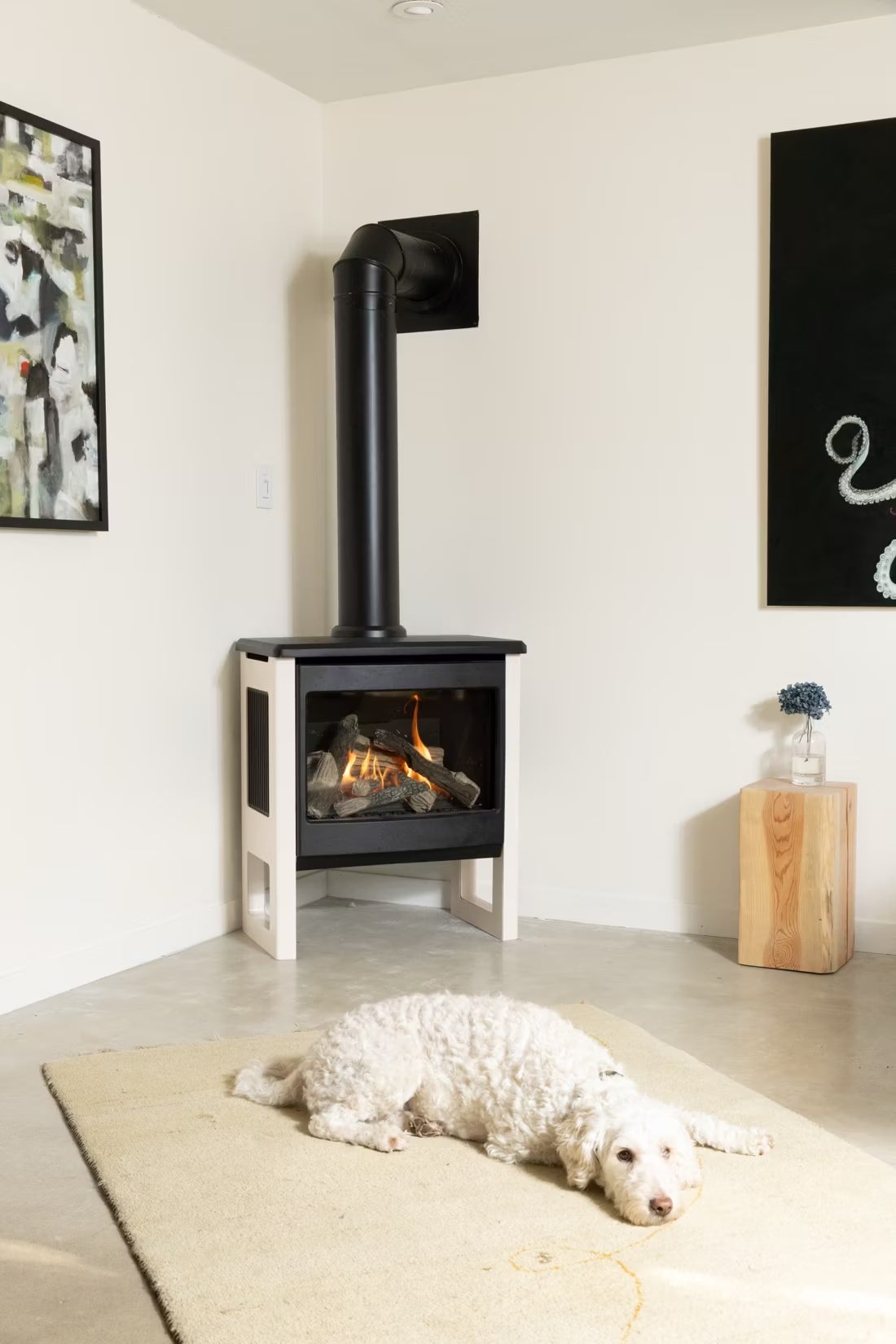
A gas insert is the most common fit here because it drops into an existing masonry firebox—many of which already sit in these older homes—and uses the flue you already have. A built-in gas fireplace is a full framed unit, better suited to a gut renovation or an addition where you're building the wall around it from scratch. A freestanding gas stove sits directly on the floor and vents through a nearby exterior wall, which works well in a home with no chimney and limited space to frame anything in. Given how tight lot lines and party walls are in East Newark, most homeowners end up with either an insert (if they have an old firebox) or a direct-vent stove (if they don't).
Do I need a permit to install a gas fireplace in East Newark?
Yes—a building permit and a gas line permit are both required, typically pulled through the East Newark Building Department, and the gas line work itself has to be done by a licensed gas fitter. Because so much of the borough is attached or semi-attached housing, inspectors pay particular attention to clearances from the unit and its venting to party walls and neighboring structures. A hearth dealer who's worked in East Newark or the surrounding Hudson County towns before will already know how to navigate that shared-wall review, which saves you from coordinating separate trades yourself.
What's the difference between vented and vent-free gas fireplaces?
Vented (direct-vent) gas fireplaces pull combustion air from outside and exhaust the exhaust gases back outside through sealed venting—they're the cleaner, safer, code-friendly option almost everywhere. Vent-free units burn directly into the room without any outside venting; New Jersey permits them in rooms that meet minimum square footage and ventilation requirements, but given how compact East Newark's bedrooms and living spaces tend to be in these older row houses, many local installers and insurers steer homeowners toward vented units instead. For most projects here, a direct-vent gas fireplace or insert is the practical, recommended choice.
How often does a gas fireplace need to be serviced?
Once a year is standard for any gas fireplace or insert—a technician checks the burner, pilot assembly, venting, and gas connections, and cleans the glass and interior. It's a much lighter job than chimney sweeping for a wood stove, but skipping it lets small issues like a weak pilot or a dirty burner turn into bigger problems. Expect to pay in the $150 to $250 range for an annual visit; several service providers covering Hudson County make regular stops in towns as small as East Newark.
Gas vs. electric fireplace—which makes more sense here?
Gas gives you real heat output, a genuine flame, and the ability to keep running on battery backup during an outage—worth having given how many East Newark homes share walls, meters, and sometimes even electrical service issues on older blocks. Electric fireplaces skip the gas line and venting entirely, which makes them the easier retrofit for a rented unit or a room where running new gas isn't practical, but they're supplemental ambiance rather than a real heat source, and PSE&G's residential rate of roughly $0.1981 per kWh makes them costlier to run hard than a comparable gas unit. For a primary heat source in a home you own, gas is usually the better fit; for a low-commitment upgrade in a rental or an upstairs room, electric can make sense.
Can I put a TV above my fireplace?
Yes—with an asterisk. Fireplaces are hot and TVs don't like heat. Either put a mantel between them to deflect rising warmth, or choose a fireplace with heat-management technology that creates a cool zone on the wall above—the wall stays around 125 degrees, barely warm, while the room still gets full heat. If you like clean lines and don't want a mantel, heat management is the answer.
Why is my open fireplace making my house colder?
Open fireplaces suck—literally. As the fire burns, it consumes air your furnace already paid to heat and pulls it out through the chimney, so the house is actually colder after the fire goes out than before you lit it. An insert fixes this: it seals the chimney, puts fixed glass across the front, and turns that hole in your house into a real heat source.
Can I install a fireplace myself?
If you're putting a fire in your house on purpose, it's best to work with an expert. Unless you're genuinely experienced in framing, gas line, vent pipe, and the national code on clearances to combustibles, have a professional do it—and ideally the same company that sells you the fireplace, so warranty, service, and liability all live under one roof.
How much should I budget for a fireplace?
For an average home—covering the fireplace, the vent pipe, and basic installation—a budget between $3,900 and $5,500 gives you a lot of options across wood, gas, and pellet. By the time you add finish work, gas line, and electrical, the average complete installation lands between $5,000 and $12,000 all-in. In a remodel or new build, a good rule is to put about 2.5% of the total project cost toward the fireplace.
Nearby Dealers
Hearth shops serving East Newark and the surrounding area. Every listing shows whether it is a WhyFire partner, a dealer we have verified as authorized for the brands we recommend, or a local business carrying hearth products. No manufacturer pays for placement. How we verify dealers →
Harris Hearth And Home
Hot Concepts Fireplaces
Fireplaces R Us
Big Apple Fireplaces
D & D Design Center
Fire Design
Flue Tech
Costello's Hearth & Spa - Bernardsville
Kjb Fireplaces
County Woodstoves Inc
Mcnamara Fireplace And Stove
Find your gas fireplace in East Newark.
Tell us a bit about your row house or unit and we'll put together a free Project Guide & Parts List—the right gas fireplace or insert, the exact vent kit for your space, and a trusted local dealer to install it.
Find Your Fireplace →